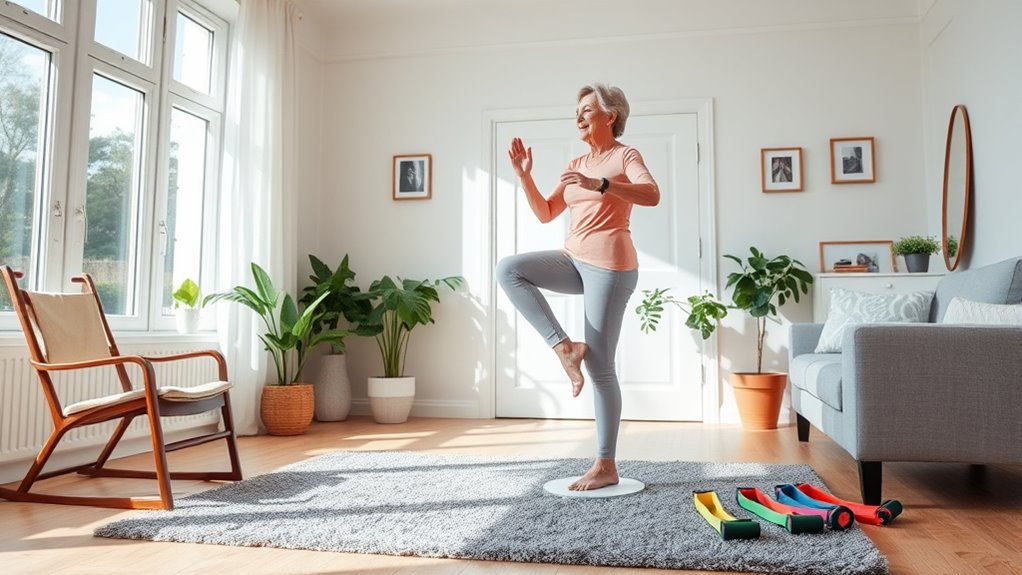

To prevent falls at home, focus on simple balance and strength exercises you can do daily. Practice standing on one leg, heel-to-toe walking, or Tai Chi poses like the tree pose. Incorporate bodyweight exercises such as squats, lunges, and wall push-ups to strengthen your muscles. Combining these activities improves stability, coordination, and confidence. Keep consistent, prioritize proper form, and soon you’ll see improvements that make daily movements safer. Explore more routines to stay steady and secure.
Key Takeaways
- Incorporate simple balance exercises like standing on one leg or heel-to-toe walking daily.
- Perform strength training with body weight, such as squats, lunges, and wall push-ups, to support joint stability.
- Combine balance and strength routines, like balancing after lunges, to improve coordination and reaction time.
- Practice Tai Chi or yoga poses, such as the tree pose, to enhance stability and flexibility.
- Ensure consistency, proper form, and variety in exercises to effectively reduce fall risk at home.
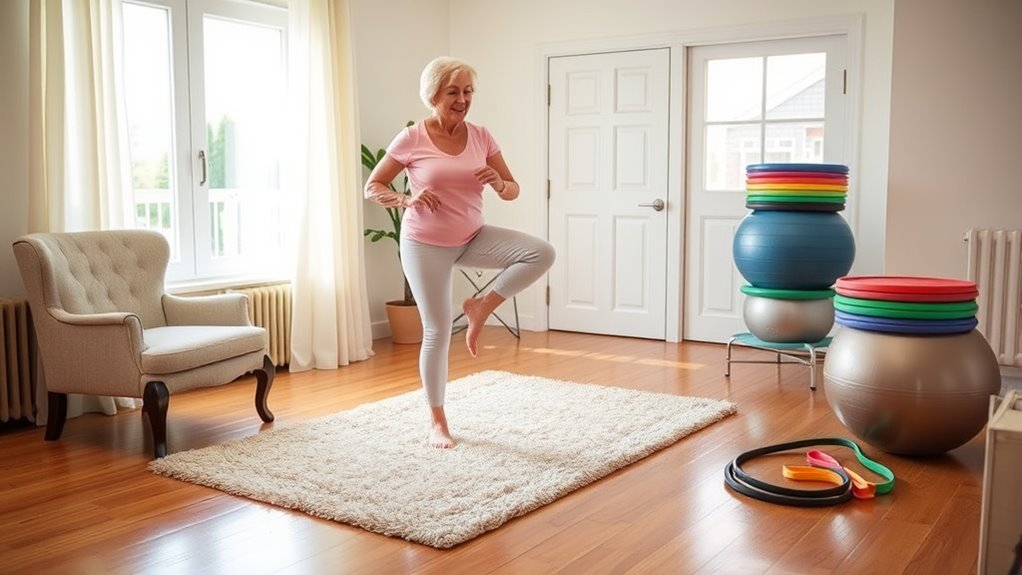
Working out at home can be both convenient and effective, even if you have limited space or equipment. You don’t need a gym membership or fancy machines to improve your balance and strength, which are essential for preventing falls. Incorporating simple balance training and strength exercises into your daily routine can make a significant difference in your stability and confidence. These exercises target key muscles and improve proprioception, helping you stay steady on your feet during everyday activities.
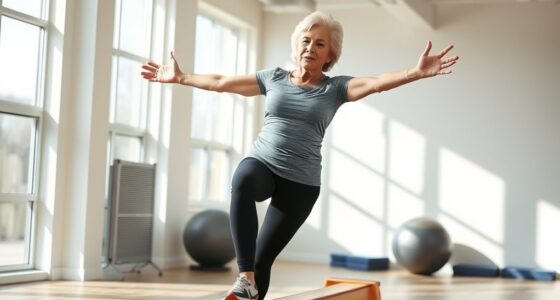
Balance training can be straightforward yet impactful. You might start by standing on one leg for 10 to 15 seconds, then switch to the other leg. To increase the challenge, try closing your eyes or standing on a soft surface like a cushion. Incorporate heel-to-toe walking—walking in a straight line placing the heel of one foot directly in front of the toes of the other—until it becomes easier. This movement enhances your core stability and coordination. You can also perform simple Tai Chi or yoga poses, like the tree pose, which promote mindfulness and improve your balance over time. Consistency is key; aim to practice these exercises daily or several times a week for noticeable improvements.
Start with standing on one leg for 10-15 seconds, then switch sides to improve balance and coordination.
Strength exercises are equally essential. They help build muscle mass, which supports your joints and improves overall stability. You don’t need weights to get started; your own body weight provides sufficient resistance. Squats and lunges are excellent for strengthening your legs and glutes, which are crucial for maintaining balance. Wall push-ups or modified push-ups on your knees target your upper body, helping you regain strength for daily tasks like pushing or pulling objects. Incorporate core exercises such as planks or seated marches to enhance your trunk stability. These exercises are simple, require minimal space, and can be modified to suit your fitness level.
Combining balance training with strength exercises creates a comprehensive routine that boosts your confidence on your feet. For example, after a set of lunges, you can hold a balance pose like standing on one leg. Over time, this integrated approach improves your muscle coordination and reaction time, which are essential when you stumble or need to recover your balance quickly. Remember, even small daily efforts add up. Prioritize proper form and gradual progression to avoid injury. With dedication, these routines can help you maintain independence, reduce fall risk, and enjoy your daily activities with greater ease and security.
Frequently Asked Questions
How Often Should I Perform These Exercises Weekly?
You should aim for an exercise frequency of at least three to five times per week to maintain your balance and strength. Incorporate these exercises into your weekly routine consistently, gradually increasing intensity as you become more comfortable. Regular practice helps prevent falls by strengthening muscles and improving coordination. Remember, staying active regularly is key, so find a schedule that fits your lifestyle and stick with it for the best results.
Are These Exercises Suitable for Seniors With Mobility Issues?
Imagine Mrs. Lee, who has limited mobility but still benefits from gentle chair exercises. These exercises are suitable for seniors with mobility issues when adapted with strategies like seated movements or support aids. You can incorporate alternative exercises such as seated leg lifts or arm stretches, which reduce fall risk. Always consult a healthcare provider to tailor adaptation strategies to your needs, ensuring safety and effectiveness.
Can These Exercises Be Done at Home Without Equipment?
Yes, you can do these exercises at home without equipment by using bodyweight routines and household items. Simple movements like standing leg lifts, heel raises, or gentle squats require no gear. You can also use sturdy chairs or walls for balance support. These exercises are effective and convenient, helping improve strength and balance to prevent falls without needing any special equipment.
What Should I Do if I Experience Pain During Exercises?
Did you know that 25% of adults over 65 experience falls each year? If you feel pain during exercises, stop immediately. Focus on pain management and don’t push through discomfort. Use modification strategies like reducing intensity or adjusting movements. Consult a healthcare professional to make sure your exercises are safe. Remember, listening to your body helps prevent injury and keeps you on track with your fall prevention routine.
How Quickly Can I Expect to See Improvements in Balance?
You can typically see improvements in balance within a few weeks of consistent muscle strengthening exercises and using visual cues, like a mirror or steady points in your environment. As you continue, your coordination and stability will enhance, reducing fall risk. Keep engaging in these exercises regularly, and you’ll notice gradual progress. Patience and consistency are key to achieving better balance and confidence in your movements.
Conclusion
Remember, just like Icarus learned when soaring too close to the sun, overconfidence can lead to a fall. By incorporating these simple home exercises into your routine, you’re building strength and balance to keep you steady on your feet. Stay proactive, stay cautious, and take control of your safety. With consistent effort, you can remain grounded and graceful—so don’t let caution turn into hesitation. Your future self will thank you for these small but powerful steps.