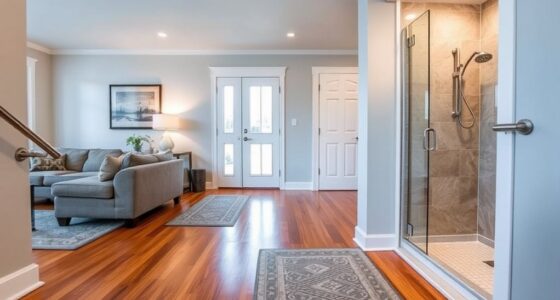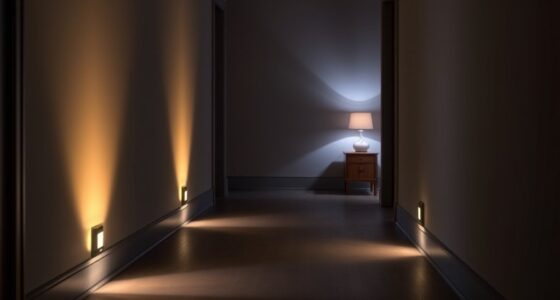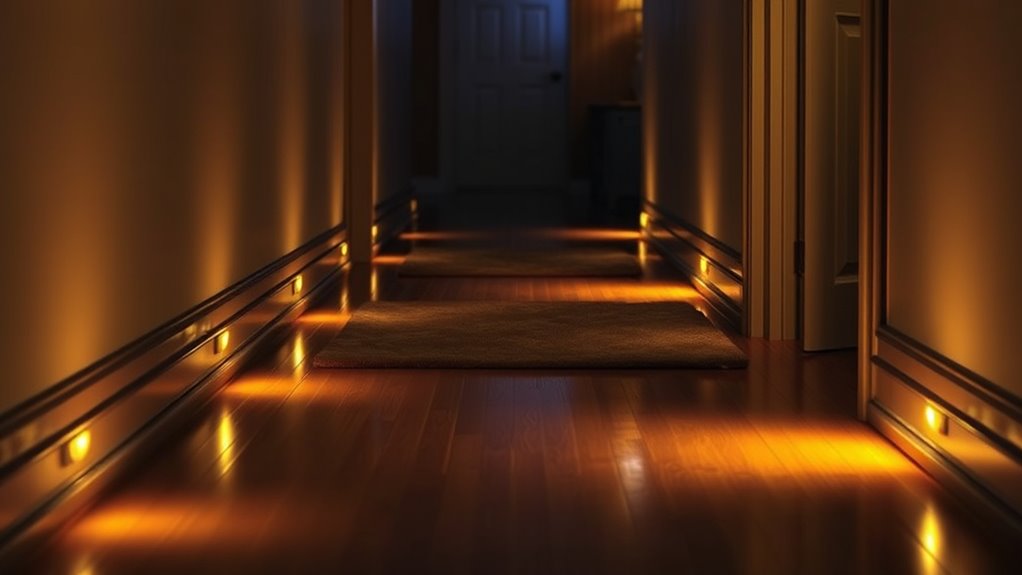
Installing nightlights in your home helps prevent falls during nighttime. They provide enough illumination to see obstacles, stairs, and uneven surfaces without disturbing your sleep. Place them along hallways, near stairs, and outside bedrooms for consistent safety. Choose sensor-driven or easy-to-switch models for convenience. Well-placed nightlights create a safer environment, especially for older adults or anyone with mobility issues. Keep going to discover more simple ways to make your home safer at night.
Key Takeaways
- Install nightlights in bedrooms, hallways, and staircases to ensure clear visibility during nighttime movement.
- Use motion-activated or sensor-based nightlights for automatic illumination and convenience.
- Position nightlights near doorways, steps, and obstacles to prevent tripping hazards.
- Remove clutter and secure loose rugs to reduce tripping risks along illuminated pathways.
- Choose soft, warm nightlights that provide sufficient light without disturbing sleep.
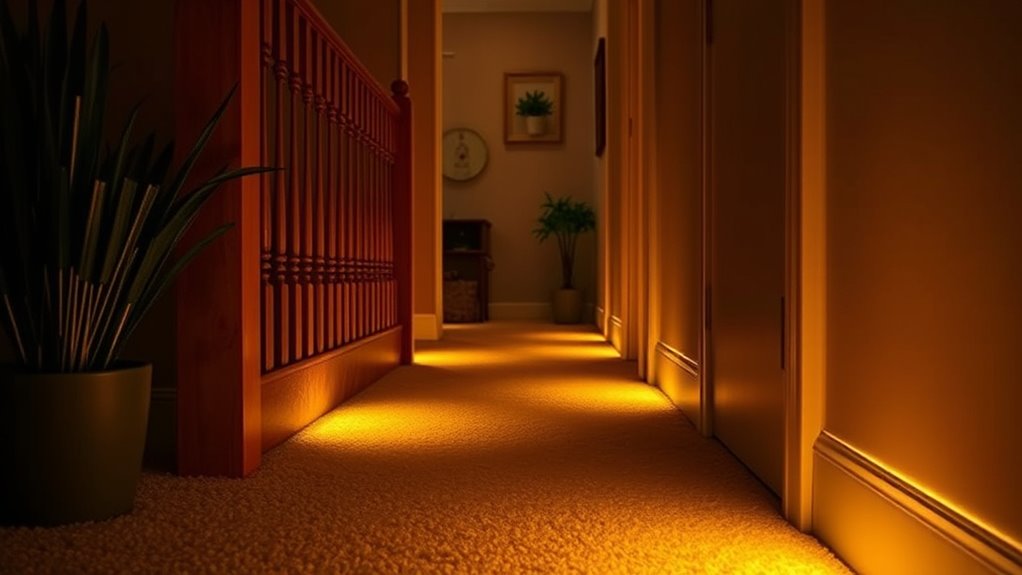
Falls during the night can happen suddenly and lead to serious injuries, especially for older adults or those with mobility issues. When you get up in the dark, the lack of proper lighting can make it difficult to see obstacles or uneven surfaces, increasing the risk of a fall. One effective way to prevent this is by guaranteeing your bedroom illumination is sufficient. A well-lit bedroom helps you navigate safely without fumbling for switches or bumping into furniture. Consider installing soft, warm nightlights that provide enough light to see your surroundings clearly, without disturbing your sleep. These lights should be easy to turn on and off, ideally with a sensor or a simple switch, so you can activate them without searching. Adequate bedroom illumination creates a safe environment, making it easier to locate essentials like your glasses, medications, or clothing, reducing the chance of accidents. Additionally, using appropriate lighting controls can help you customize lighting levels for different needs and times of night. Hallway safety plays an essential role in fall prevention, especially at night. Hallways often connect the bedroom to the bathroom, kitchen, or other parts of your home, and they tend to be darker than other areas. Installing nightlights along hallways ensures you can see clearly as you walk, helping you avoid tripping over shoes, rugs, or clutter. Position these lights at strategic points—near doorways, staircases, or any potential hazards—to provide consistent illumination. Motion-activated nightlights are particularly useful because they turn on automatically when you enter the hallway, eliminating the need to search for switches in the dark. This not only promotes safety but also prevents startling or waking others when you get up. Keep in mind that hallway safety isn’t just about lighting; it also involves removing obstacles, securing loose rugs, and ensuring handrails are sturdy if stairs are involved.
Frequently Asked Questions
What Are the Best Types of Nightlights for Elderly Safety?
You should choose LED nightlights to enhance safety, as they’re energy-efficient and long-lasting. Opt for plug-in models for continuous light near beds and hallways, or cordless ones for flexibility and easy placement wherever needed. Both options improve visibility, helping you avoid falls at night. Consider motion-activated LED nightlights too, so they turn on automatically, ensuring safe navigation without the hassle of manual operation.
Can Nightlights Help Prevent Falls During Nighttime Bathroom Visits?
Yes, nightlights can help prevent falls during nighttime bathroom visits by improving bathroom illumination. They enhance your elderly mobility by providing enough light to see clearly, reducing the risk of tripping or bumping into objects. Keep nightlights in strategic places like hallways and near the bathroom door. Use soft, warm lighting to avoid startling you and make sure of safe, easy navigation during those late-night trips.
How Bright Should a Nightlight Be to Ensure Safety Without Disturbing Sleep?
Ever wonder how to find the perfect balance for your nightlight? Keep the brightness levels low, around 4 to 10 lumens, to guarantee safety without disturbing your sleep. A gentle, warm glow guides your way without causing sleep disturbance. Bright enough to see clearly, yet soft enough to preserve your rest, this subtle illumination helps prevent falls without sacrificing your peaceful night’s sleep.
Are There Any Safety Concerns With Using Motion-Activated Nightlights?
Motion-activated nightlights are generally safe, but you should watch for sensor malfunctions that could cause the light to turn on unexpectedly or not at all. They might also increase energy consumption if they stay on longer than needed or activate frequently. To minimize these issues, choose models with reliable sensors and energy-efficient features. Regularly check and maintain your nightlight to guarantee it functions properly and keeps your space safe.
Do Nightlights Reduce Fall Risks in Children’s Bedrooms Effectively?
Think of nightlights as guiding stars in a child’s bedtime routine, creating a safe sleep environment. They can effectively reduce fall risks by illuminating dark corners and pathways, helping children navigate their room securely. Incorporating nightlights into bedtime routines encourages independence while ensuring safety. As the gentle glow becomes a part of their nightly ritual, it fosters trust and comfort, making bedtime a peaceful, fall-free experience.
Conclusion
By simply installing nightlights, you’ll transform your home into an almost impenetrable fortress against falls—so bright, so vigilant, it’s as if you’ve enlisted a squad of tiny, glowing guardians watching every step you take. No more stumble, no more tumble, just smooth, confident walks through the darkness. Embrace the power of those gentle lights, and watch your risk of falls vanish faster than you can say “safety first.” Your home will be safer than you ever imagined!