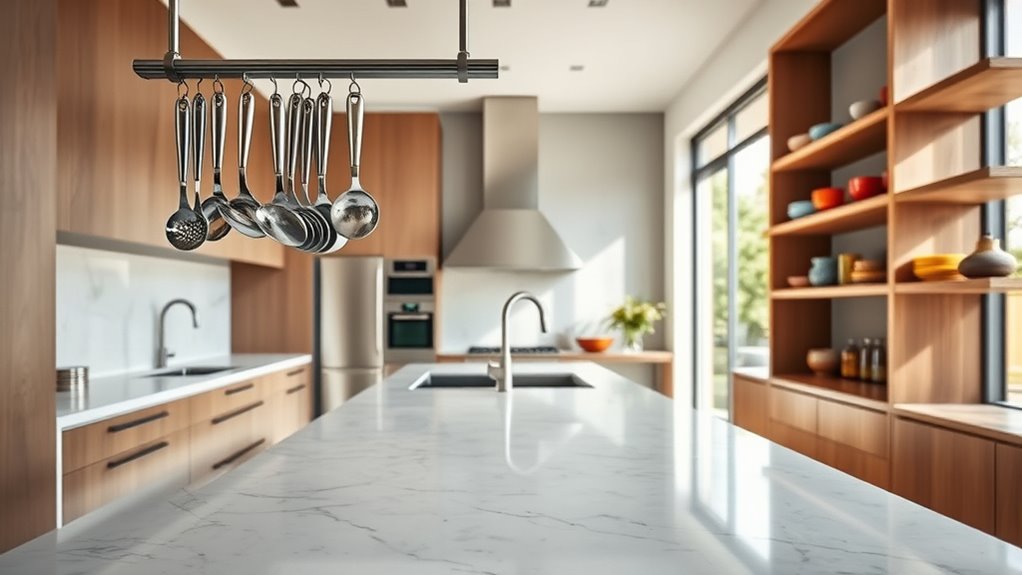

To avoid overreaching in your kitchen, organize your tools and appliances within easy reach by using pull-out shelves, lazy Susans, and tiered racks. Place frequently used items at waist level or below, and keep less-used items higher up. Incorporate vertical storage options like magnetic strips and wall-mounted racks to maximize space efficiently. A well-planned layout with a clear work triangle minimizes movement and fatigue. Explore more tips to create a safer, more accessible kitchen.
Key Takeaways
- Use pull-out shelves and drawers in high or deep cabinets for easy access without overreaching.
- Incorporate vertical storage solutions like wall-mounted racks and magnetic strips to maximize reachability.
- Design the kitchen with a compact, logical work triangle to minimize movement and stretching.
- Install tiered racks and lazy Susans to make items readily accessible at waist level.
- Use extendable grabbers and ergonomic tools to reach items on high shelves safely and comfortably.
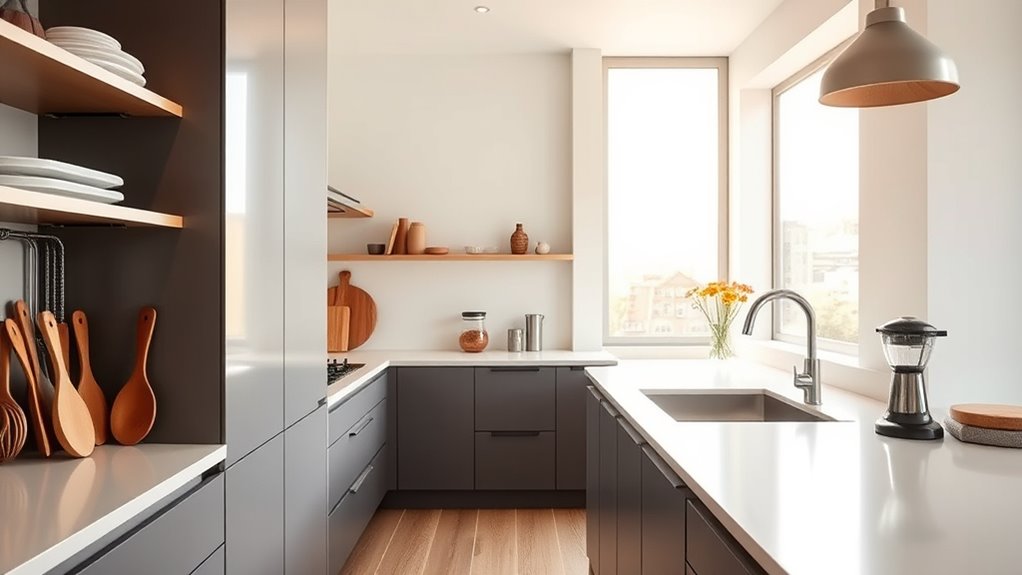
Reaching for items in the kitchen can be effortless and safe when you understand how to do so without overextending. The key lies in choosing the right tools and designing your space thoughtfully. When your kitchen is organized with accessibility in mind, you reduce the risk of accidents and make cooking more enjoyable. Start by evaluating your most frequently used items. Place these within easy reach, ideally at waist level or slightly below. This minimizes the need to stretch or strain, which can lead to falls or muscle fatigue. Use drawers and pull-out shelves to access pots, pans, and utensils comfortably. These features eliminate the need to bend or stretch into hard-to-reach corners, keeping everything within a natural arm’s reach. Incorporating ergonomic design principles can further enhance comfort and safety in your kitchen. Invest in tools that enhance reachability. Lazy Susans, corner turntables, or tiered racks are excellent for maximizing space and keeping items visible and accessible. Magnetic strips or wall-mounted racks help store knives, spices, or utensils vertically, freeing up counter space and keeping essential tools within arm’s length. When you’re selecting storage containers, opt for clear, stackable options that allow you to see contents at a glance. This prevents unnecessary reaching or rummaging through cluttered cabinets. Additionally, consider using extendable grabbers or reacher tools for those hard-to-reach shelves or high cabinets. These tools are lightweight, easy to operate, and reduce the need for overreaching, especially if mobility is an issue. Your kitchen layout plays a crucial role in preventing overreaching. Keep your cooking zones compact and logical. For instance, position your stove, sink, and refrigerator in a triangle formation, so everything you need is close together. Maintain open pathways and avoid cluttered countertops, which can cause you to stretch or reach awkwardly. Use lower or pull-out shelves in cabinets that are deep or high, so you don’t have to stretch across or into tight corners. When designing or remodeling, think vertically—install shelves and hooks up high for less-used items, while keeping everyday essentials at eye level or below. This way, you can quickly grab what you need without straining or risking a fall.

Stroller Organizer with Cup Holder, Non-Slip Stroller Caddy Baby Essentials
- Large Capacity Storage: Holds bottles, diapers, toys, snacks
- Ideal Baby Shower Gift: Perfect for new moms and dads
- Universal Compatibility: Fits Uppababy, Baby Jogger, more
As an affiliate, we earn on qualifying purchases.
Frequently Asked Questions
How Can I Optimize My Kitchen for Accessibility?
To optimize your kitchen for accessibility, start by organizing frequently used items within easy reach, ideally at waist level. Use pull-out shelves and lazy Susans to minimize bending or stretching. Install lever handles on faucets and drawers for easier operation. Make certain clear pathways, at least 36 inches wide, and consider adjustable lighting for better visibility. These adjustments make your kitchen safer and more comfortable for everyone.
What Are the Best Tools for Small Kitchen Spaces?
You should consider compact, multi-functional tools like a foldable cutting board, stackable cookware, and a magnetic spice rack to maximize space. Use slim, ergonomic utensils to make cooking easier, and opt for wall-mounted storage to keep essentials accessible without clutter. Small, space-saving gadgets like a handheld mixer or a compact blender work well. These tools help you stay organized and efficient without sacrificing functionality in your small kitchen.
How Do I Prevent Clutter in a Busy Kitchen?
Did you know that clutter can increase stress levels by up to 30%? To prevent it, focus on smart storage solutions like vertical shelving and drawer organizers. Keep only daily essentials on countertops, and regularly declutter to remove unused items. Use clear containers for easy identification, and assign designated spots for tools and ingredients. Staying organized helps you work efficiently and keeps your busy kitchen calmer and more inviting.
What Ergonomic Layouts Reduce Fatigue During Cooking?
To reduce fatigue during cooking, opt for an ergonomic layout that keeps everything within easy reach, minimizing unnecessary movement. Arrange your workspace in a triangle connecting the stove, sink, and fridge for efficiency. Use adjustable height counters and anti-fatigue mats to support comfort. Keep frequently used tools nearby, and organize utensils to avoid bending or stretching. This setup helps you stay comfortable and focused, making cooking less tiring and more enjoyable.
Are There Eco-Friendly Kitchen Organization Options?
Think of your kitchen like a garden—eco-friendly options help it flourish. You can start by using recycled or bamboo storage containers, reducing plastic waste. Incorporate energy-efficient appliances, and opt for biodegradable cleaning supplies. These choices not only lower your carbon footprint but also make your kitchen more sustainable. Just like tending a garden, small mindful actions cultivate a healthier environment, making your space both functional and eco-conscious.
Conclusion
Just as Da Vinci mastered balance and precision, you can craft a kitchen that flows seamlessly. By thoughtfully arranging your tools and optimizing your layout, you avoid the pitfalls of overreaching and unnecessary strain. Remember, a well-designed space isn’t just about convenience—it’s about harmony. With a little planning, your kitchen becomes a masterpiece of efficiency, allowing you to create without the chaos of excess movement, echoing the artistry found in every great work of craftsmanship.