
If stairs are an obstacle, you have practical options like indoor lifts, ramps, and re-routing your home layout. Indoor lifts, such as platform or chair lifts, require minimal changes and blend with your decor. Ramps are versatile, customizable, and safe with gentle slopes and non-slip surfaces. Re-routing involves redesigning your space for a barrier-free environment, offering long-term benefits. Keep exploring these solutions to find the best fit for your needs and home.
Key Takeaways
- Indoor lifts, such as platform and chair lifts, provide space-efficient mobility solutions with minimal structural changes.
- Ramps offer customizable, gentle transitions suitable for wheelchairs, strollers, and mobility challenges, enhancing safety and accessibility.
- Re-routing involves redesigning layouts to eliminate stairs, creating long-term, barrier-free, single-story or open-plan homes.
- These alternatives improve safety, inclusivity, and aesthetics while supporting aging residents and those with mobility issues.
- Incorporating mindfulness during installations reduces stress, ensuring a thoughtful, positive approach to home accessibility modifications.
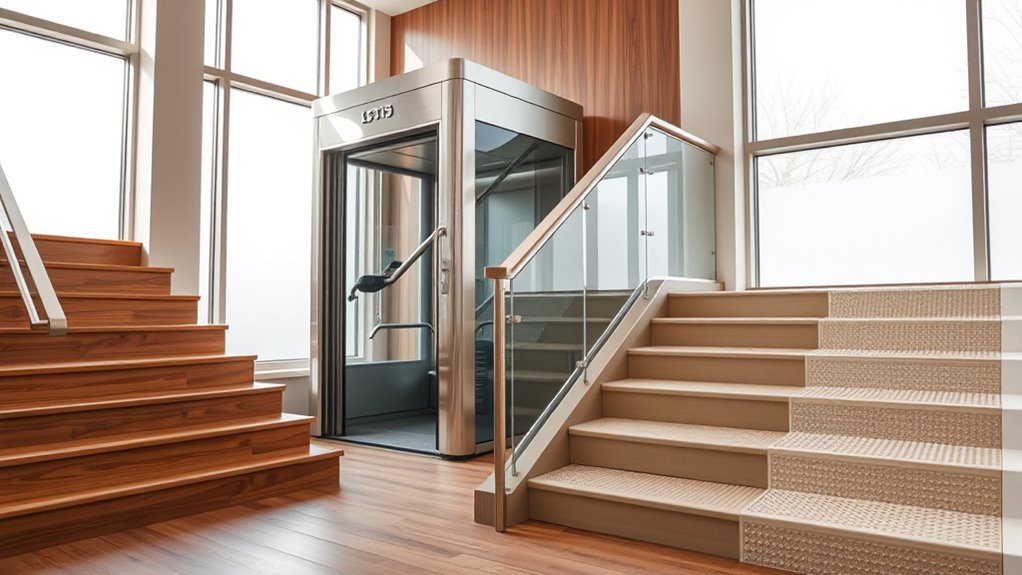
When traditional stairs aren’t an option, exploring stair alternatives can make your space more accessible and functional. Whether you’re designing for aging residents, those with mobility challenges, or simply rethinking your layout, these options open up new possibilities for movement. Indoor lifts, ramps, and re-routing can transform your home or office into a more inclusive environment, eliminating barriers and enhancing safety. Incorporating mindfulness techniques during installation or renovation can reduce stress and improve decision-making processes. Indoor lifts are a practical solution when space is limited but stairs are problematic. They come in various styles, from platform lifts to chair lifts, and can be installed with minimal structural changes. A platform lift allows wheelchair users to move between floors effortlessly, while chair lifts are ideal for individuals who need assistance but don’t require full wheelchair access. These lifts operate smoothly and quietly, often with controls that are easy to reach and understand. They’re especially useful in multi-story homes or buildings where adding a staircase isn’t feasible or desirable. Plus, modern lifts are sleek and unobtrusive, blending seamlessly into your decor. If your goal is to create a more gradual changeover between levels, ramps are an excellent choice. They’re versatile, easy to customize, and can be installed indoors or outdoors. Ramps are particularly beneficial for wheelchair users, stroller users, or anyone who finds stairs challenging. When designing a ramp, you’ll want to examine the slope—keeping it gentle enough to meet accessibility standards, typically a 1:12 ratio (for every inch of height, you need at least 12 inches of length). Using non-slip surfaces ensures safety in all conditions, and handrails on both sides provide extra support. Ramps can be built into existing spaces or as standalone features, and they often add a modern, sleek aesthetic to your environment. Re-routing is another effective approach, especially when structural changes are feasible. This involves redesigning the layout to avoid stairs altogether, perhaps by moving walls or reconfiguring rooms. For example, you might convert a split-level home into a single-story layout or rearrange hallways to create a more accessible flow. Re-routing can be more complex and costly upfront but offers a long-term solution that eliminates the need for lifts or ramps. It’s particularly useful if you’re undertaking a major renovation and want to create a more open, barrier-free space. Considering mindfulness during these modifications can help manage the emotional and physical stress associated with home improvements. Altogether, these stair alternatives provide flexible, practical options to improve accessibility. By choosing the right solution for your space and needs, you can foster a safer, more inclusive environment that caters to everyone’s mobility.
Frequently Asked Questions
What Are the Safety Standards for Indoor Lifts and Ramps?
You must guarantee indoor lifts and ramps meet safety standards like ADA compliance, which requires secure, non-slip surfaces and proper weight capacity. Install handrails on ramps and lifts for stability, and make sure controls are easy to reach and operate. Regular maintenance and inspections are essential to prevent accidents. Following these standards helps protect you and others, providing safe, accessible solutions for everyone.
How Much Do Stair Alternative Installations Typically Cost?
Installing stair alternatives can range from $1,500 to $15,000 or more, depending on the type and complexity. Imagine a simple ramp blending seamlessly into your home or a sleek lift that offers convenience and safety. You’ll find costs vary based on materials, customization, and professional installation. While the investment might seem high, these solutions markedly improve accessibility, making daily life safer and more comfortable for everyone.
Are There Any Legal Building Code Requirements for These Modifications?
Yes, there are legal building code requirements for stair modifications. You must guarantee your installation complies with local, state, and federal accessibility standards, like the ADA in the U.S. or equivalent regulations elsewhere. These codes specify minimum slope, width, safety features, and structural integrity. Before starting, check with your local building department to get the necessary permits and ensure your modifications meet all legal and safety standards.
How Long Does It Take to Install Indoor Lifts or Ramps?
Imagine opening a door to newfound independence—installing indoor lifts or ramps typically takes anywhere from a few days to a few weeks, depending on the complexity of your space. You’re the architect of your accessibility journey, and skilled professionals work diligently to bring your vision to life. Whether it’s a swift lift placement or a custom ramp, the process respects your time and transforms your home into a welcoming haven.
Can Stair Alternatives Be Customized to Fit Unique Home Layouts?
Yes, stair alternatives can be customized to fit your unique home layout. Skilled installers assess your space and work with you to design solutions that blend seamlessly with your decor and meet your mobility needs. Whether it’s a tailored ramp or a discreet lift, they guarantee the installation maximizes safety and functionality while respecting your home’s design. Custom options make sure you get the most practical and aesthetic solution for your situation.
Conclusion
Think of stair alternatives as a bridge over obstacles, guiding you smoothly to your destination. Indoor lifts, ramps, and re-routing options each offer a unique path tailored to your needs, making mobility effortless. By choosing the right solution, you’re building a staircase that suits your space and lifestyle, turning potential barriers into open pathways. Embrace these alternatives as your personal bridges, ensuring every step forward is safe, accessible, and confident.