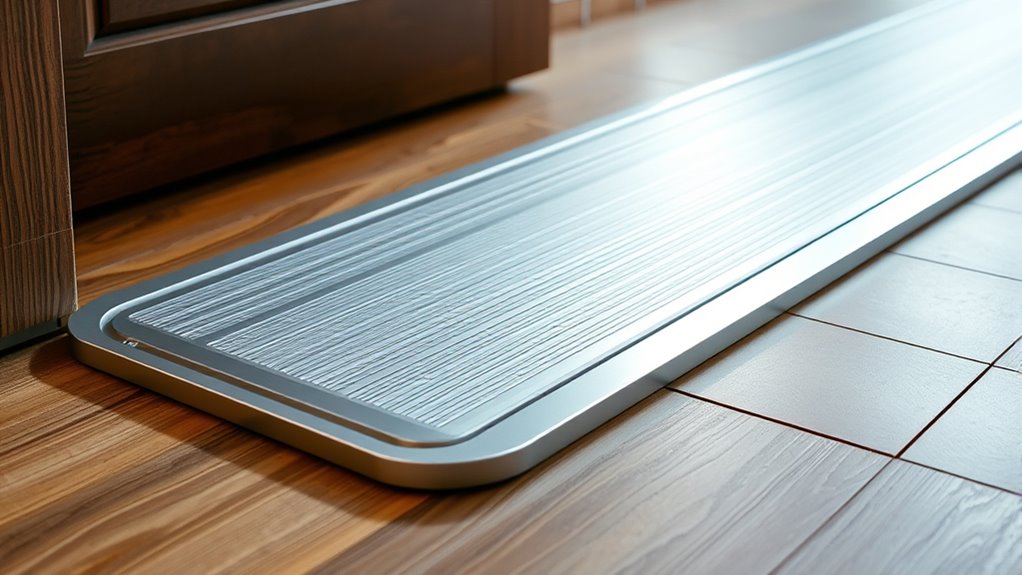
To save your toes and wheels, choose threshold ramps made from durable, slip-resistant materials like aluminum or rubber that provide gentle slopes—usually between 1:12 and 1:20. Properly installed ramps prevent shifting, reduce the risk of catching toes or wheels, and protect your mobility aids from damage. Ensuring the right size and secure fit enhances safety and ease of movement. Keep going to uncover tips on selecting the best ramps for your needs.
Key Takeaways
- Use ramps with gentle slopes (1:12 to 1:20) to prevent toes and wheels from catching or pinching.
- Choose durable, slip-resistant materials like rubber or textured aluminum for safety and reliability.
- Ensure proper installation and secure fit to maintain stability and prevent shifting during use.
- Opt for low-profile ramps that smoothly bridge thresholds without creating steep inclines.
- Select ramps designed with safety features such as non-slip surfaces to protect toes and wheels during transitions.
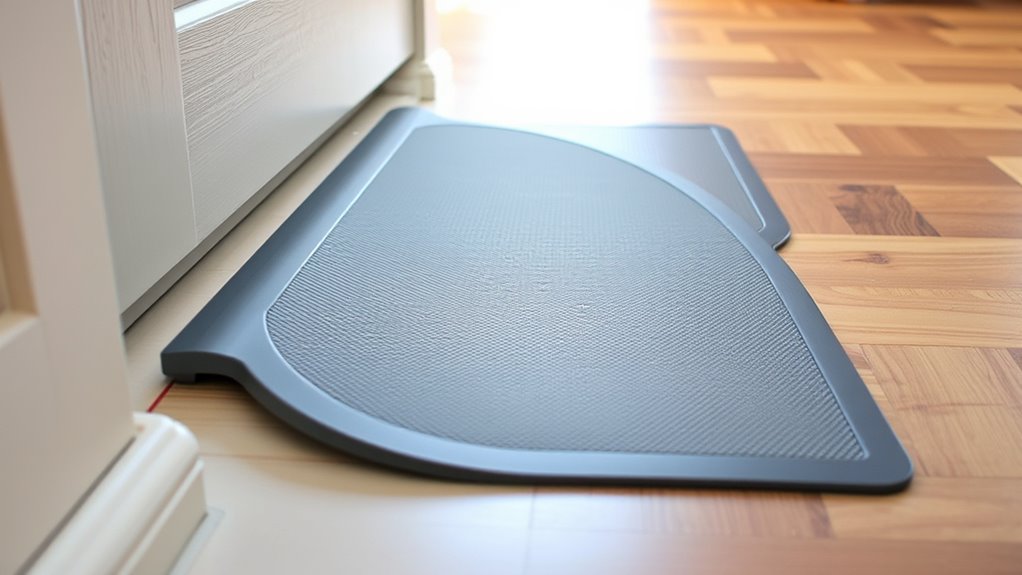
Have you ever struggled to move smoothly over a door threshold or uneven surface? If you’ve faced this challenge, you’re not alone. Small steps, uneven floors, and raised thresholds can turn simple crossings into frustrating obstacles. That’s where threshold ramps come in—they’re designed to make your daily movements safer and more effortless. But not all ramps are created equal, and choosing the right one can make a real difference in protecting your toes and wheels.
When you opt for a quality threshold ramp, you’re investing in your safety. These ramps provide a gentle incline that helps prevent your toes from catching or getting pinched, especially when navigating with mobility aids like walkers or canes. If you use a wheelchair or a rolling cart, a sturdy ramp ensures that your wheels won’t get caught or damaged as you transition from one surface to another. This simple addition can considerably reduce the risk of accidents or injuries that happen when your foot or wheel gets caught on a raised edge.
Threshold ramps that are specifically designed to save toes and wheels are often made from durable, slip-resistant materials. You’ll want one that can withstand daily wear and tear, so it remains reliable over time. Whether it’s aluminum, rubber, or a high-quality plastic, these materials provide a sturdy surface that grips well underfoot or wheel. The right ramp will also have a low profile, which means it won’t protrude too far into your living space or doorway, helping you maintain a natural gait without feeling like you’re climbing a steep hill.
Installation is usually straightforward, but it’s essential to choose a ramp with the proper dimensions. Measure the height of your threshold accurately, and pick a ramp that offers a gentle slope—usually between 1:12 and 1:20 ratio—to ensure smooth movement. When properly installed, these ramps stay securely in place, giving you confidence as you pass over them. Some ramps come with non-slip pads or textured surfaces that further enhance safety, especially in wet or icy conditions. Additionally, selecting a ramp made from durable, slip-resistant materials can greatly improve safety and longevity.
Using threshold ramps designed to protect toes and wheels not only improves safety but also increases independence. You won’t need to ask for help or worry about damaging your mobility devices. These ramps enable you to move freely from room to room, across patios, or into vehicles without hesitation. They turn what might feel like a hurdle into a seamless transition, making everyday life more comfortable and secure. In the end, investing in a well-made threshold ramp means fewer worries about slips, trips, or damage—allowing you to focus on what truly matters: enjoying your space with confidence.
Frequently Asked Questions
Are Threshold Ramps Suitable for Outdoor Use?
Yes, threshold ramps are suitable for outdoor use if you choose ones made from durable, weather-resistant materials like aluminum or heavy-duty plastic. They withstand rain, sun, and snow, ensuring safety and stability. Make sure to secure them properly to prevent slipping or shifting. Regular maintenance, such as cleaning and checking for damage, helps keep them in good condition and safe for outdoor use all year round.
How Do I Clean and Maintain Threshold Ramps?
You should regularly clean your threshold ramps with a damp cloth or mild soap and water to remove dirt and debris. Avoid harsh chemicals that could harm the surface. Check for cracks or damage periodically, and tighten any loose fittings. To maintain their safety and durability, keep the ramps dry and clear of obstructions. Proper upkeep ensures they remain functional and safe for everyone using them.
Can Threshold Ramps Be Customized for Unique Doorways?
Think of your doorway as a puzzle, and custom threshold ramps are the perfect pieces that fit seamlessly. Yes, you can customize threshold ramps for unique doorways. You’ll need to measure carefully, consider the door swing, and choose materials that match your environment. Many manufacturers offer tailored options, ensuring smooth progression and safety. By personalizing your ramp, you create an accessible entry that feels like it was made just for your space.
What Weight Capacities Do These Ramps Typically Support?
Most threshold ramps support weight capacities between 600 and 1,200 pounds, guaranteeing they can handle wheelchairs, walkers, and foot traffic. When choosing a ramp, you should check its specific weight limit to match your needs. If you or your equipment are heavier, opt for a ramp with a higher capacity. Always verify the manufacturer’s specifications to ensure safety and durability for your usage.
Are Threshold Ramps Portable for Travel Purposes?
Yes, threshold ramps are generally portable for travel purposes. Many models are lightweight and designed with handles or foldable features, making them easy to carry and pack. You can quickly set them up at different locations, ensuring safe and smooth passage over doorways or small steps wherever you go. Just check the specific product details to confirm its weight and portability features, so it suits your travel needs perfectly.
Conclusion
By choosing the right threshold ramp, you considerably reduce the risk of falls and injuries—up to 80% according to recent studies. This simple upgrade not only protects your toes and wheels but also boosts your confidence in maneuvering different surfaces. Remember, investing in quality ramps means fewer accidents and more independence. So, don’t wait until a mishap happens; make your home safer today and enjoy the peace of mind that comes with smarter choices.