
When planning spaces for wheelchairs, guarantee doorways are at least 32 inches wide, ideally 36 inches, and use lever handles for easier access. Maintain a minimum 60-inch diameter for turns to allow smooth navigation, and keep pathways clear of obstacles and furniture. Focus on creating open, unobstructed routes with gentle curves and proper space around fixtures. If you keep these principles in mind, you’ll create a comfortable, accessible environment; more tips await to help you optimize your space further.
Listen free for 30 days with Audible
Thousands of audiobooks and originals — cancel anytime.
As an affiliate, we earn on qualifying purchases.
Key Takeaways
- Ensure doorways are at least 32-36 inches wide with lever handles for easy access.
- Provide a minimum 60-inch diameter turning radius for smooth wheelchair maneuvering.
- Maintain unobstructed, wide pathways free of furniture or fixtures to facilitate movement.
- Maximize space efficiently by using vertical storage and planning flexible layouts.
- Design with seamless flow and regularly assess spaces to meet accessibility standards.
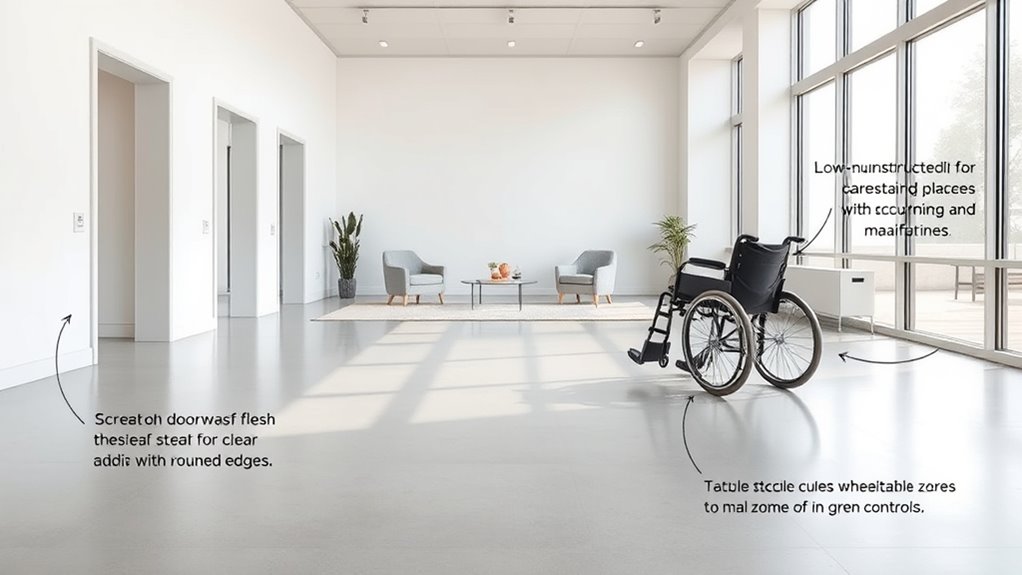
Designing spaces that accommodate wheelchairs requires careful planning to guarantee accessibility and ease of movement. One of the most critical aspects is ensuring that doorways are accessible. You need to aim for doorways that are at least 32 inches wide when the door is open, but ideally, they should be 36 inches to provide ample clearance. This size allows wheelchair users to pass comfortably without having to squeeze through or risk damage to the door frame. Installing lever handles instead of knobs can also make opening doors easier for individuals with limited hand strength. Additionally, consider the placement of door swings; swinging doors that open outward are preferable because they don’t obstruct walking paths or movement spaces. If possible, installing automatic or push-button doors can further enhance accessibility, especially in high-traffic areas.
Beyond doorways, paying attention to the turning radius is essential for creating an inclusive environment. A turning radius refers to the space a wheelchair needs to make a full turn comfortably. For most wheelchair users, a clear space of at least 60 inches in diameter is necessary to execute a 180-degree turn smoothly. This means you should plan for open, unobstructed areas in hallways, rooms, and around furniture. Avoid placing large furniture or fixtures in pathways that could restrict movement or force awkward turns. Instead, leave enough space for a natural flow, ensuring that any tight corners are widened or rounded to facilitate easier navigation. Incorporating gentle curves rather than sharp corners in hallways or furniture layouts can also help maintain a smooth, continuous path.
Additionally, incorporating vertical space utilization strategies can maximize functionality and comfort in accessible spaces. When designing for wheelchair accessibility, always think about the flow of movement from one area to another. The combination of accessible doorways and appropriate turning radii ensures that wheelchair users can move freely without assistance or inconvenience. You should measure and double-check these dimensions during the planning phase, especially if you’re renovating existing spaces. Remember, small adjustments can make a significant difference. For example, widening doorways slightly or adding a small turnaround space can drastically improve usability. It’s about creating an environment where everyone feels comfortable and independent. By prioritizing accessible doorways and ensuring proper turning radii, you lay the foundation for a space that welcomes all users and promotes genuine inclusivity.
Frequently Asked Questions
How Do I Measure for Wheelchair Space Requirements Accurately?
To measure for wheelchair space requirements accurately, start by measuring doorway widths to make certain they’re at least 32 inches wide. Then, calculate the turning radii needed; a standard wheelchair needs about 60 inches of clear space to turn comfortably. Use a tape measure to check these dimensions, and always add extra room for maneuvering, making certain your space is accessible and compliant with mobility standards.
Are There Specific Building Codes for Wheelchair Accessibility?
Did you know that over 61 million adults in the U.S. experience some form of disability? Building code compliance and accessibility standards are essential for ensuring safe, inclusive spaces. Yes, there are specific building codes for wheelchair accessibility, like the ADA Standards for Accessible Design. These codes detail requirements for door widths, ramp slopes, and restroom facilities, helping you create environments that are safe and welcoming for everyone.
What Materials Are Best for Wheelchair-Friendly Flooring?
You should choose flooring materials with high durability and slip resistance to guarantee wheelchair accessibility. Options like vinyl, rubber, or textured tile work well because they provide a smooth surface for easy movement and reduce the risk of slips. These materials are also easy to maintain and withstand frequent use, making them ideal for creating a safe, functional environment that accommodates wheelchairs comfortably.
How Can I Improve Lighting for Wheelchair Users?
Imagine opening the curtains to a room filled with golden sunlight, akin to a peaceful sunrise. You can enhance lighting for wheelchair users by maximizing natural illumination through larger windows or skylights. Supplement this with strategically placed adjustable fixtures and task lighting to eliminate shadows. This approach creates a welcoming, well-lit environment, ensuring ease of movement and safety, much like basking in the comforting glow of a summer dawn.
What Are Cost-Effective Solutions for Wheelchair Space Planning?
You can improve wheelchair space planning cost-effectively by optimizing furniture arrangements to maximize open pathways and using versatile storage solutions that keep clutter out of walkways. Rearrange existing furniture to create wider clearance areas and choose multi-functional pieces that serve dual purposes. These strategies require minimal investment, making your space more accessible without breaking the bank, while ensuring comfort and safety for wheelchair users.
Conclusion
By now, you see how vital proper space planning is for wheelchair accessibility. Every doorway, turn, and clearance matters in creating an inclusive environment. Are you willing to overlook these details and risk limiting someone’s independence? Thoughtfully designing your space not only meets regulations but also shows genuine care and respect. Remember, accessibility isn’t just a feature—it’s a reflection of your commitment to equality. Will you take the steps to make your space truly welcoming for everyone?
NFL season / tailgating Picks
team gear
As an affiliate, we earn on qualifying purchases.