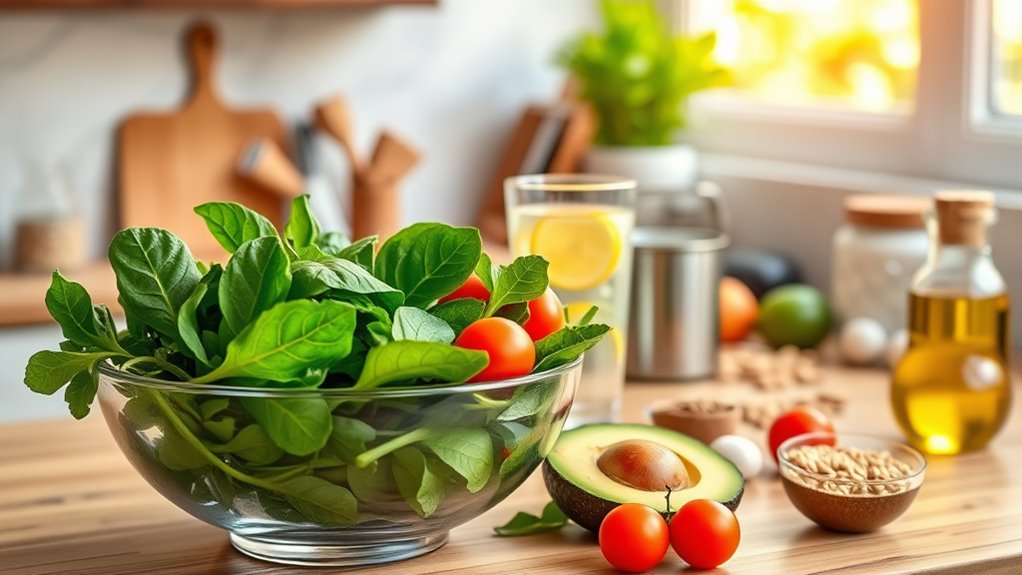

To manage your blood pressure through diet, cut back on salt by eating fewer processed foods and seasoning with herbs or lemon instead. Increase your intake of potassium-rich fruits and vegetables like bananas, spinach, and oranges, which help relax blood vessels and counteract sodium effects. Combining these steps with consistent healthy habits can markedly improve your heart health. Keep exploring for more tips on creating a balanced, heart-friendly diet that works for you.
Key Takeaways
- Reduce salt intake by avoiding processed foods and flavoring with herbs or lemon instead.
- Increase consumption of potassium-rich fruits and vegetables to help relax blood vessels.
- Balance sodium and potassium levels through whole, unprocessed foods for better blood pressure control.
- Gradually decrease salt to allow taste buds to adapt and maintain sustainable dietary changes.
- Combine dietary adjustments with healthy lifestyle habits like exercise and stress management for optimal results.

Managing blood pressure effectively often begins with making smart dietary choices. One of the most impactful steps you can take is reducing your salt intake. Consuming too much salt causes your body to retain water, which increases blood volume and puts extra pressure on your arteries. To lower your blood pressure, aim to cut back on processed foods, salty snacks, and restaurant meals, all of which tend to be high in sodium. Instead, flavor your dishes with herbs, spices, and lemon juice to satisfy your taste buds without adding salt. Reading nutrition labels helps you identify foods that are high in sodium, so you can make better choices and avoid hidden salt traps.
Reducing salt intake helps lower blood pressure and improves heart health naturally.
Alongside salt reduction, increasing your potassium intake plays a *vital* role in managing blood pressure. Potassium helps balance the effects of sodium in your body by relaxing your blood vessel walls, which promotes smoother blood flow and reduces pressure. You can boost your potassium levels by incorporating more fruits and vegetables into your diet—think bananas, oranges, spinach, sweet potatoes, and tomatoes. These foods are naturally rich in potassium and provide essential nutrients that support overall heart health. If you’re not already eating enough produce, gradually adding more servings each day can make a significant difference.
It’s important to note that balancing your salt and potassium intake isn’t just about adding more of one and cutting back on the other; it’s about creating a harmony between the two. When you reduce salt and increase potassium, your body is better equipped to regulate blood pressure naturally. This balance can help prevent hypertension from developing or worsening. Be mindful of your overall diet—avoid processed and fast foods that are often loaded with salt and low in potassium. Instead, focus on whole, unprocessed foods to give your body the nutrients it needs to maintain healthy blood pressure levels. Additionally, understanding the role of electrolytes in blood pressure regulation can further empower your dietary choices.
Making these dietary adjustments isn’t always easy at first, but consistency is key. Over time, your taste buds will adapt, and you’ll start to prefer less salty foods. Pairing reduced salt with increased potassium-rich foods creates a *potent* strategy to control blood pressure naturally. Combining these habits with other healthy lifestyle choices, like regular exercise and stress management, will further enhance your efforts. Remember, small changes can lead to big improvements in your heart health, and taking control of your diet is a *significant* step toward maintaining healthy blood pressure levels.
Frequently Asked Questions
Can Certain Foods Cause Sudden Blood Pressure Spikes?
Yes, certain foods can cause sudden blood pressure spikes, especially if you’re salt sensitive or affected by caffeine effects. Foods high in salt, like processed snacks or fast food, can quickly raise your blood pressure. Caffeine from coffee or energy drinks may also cause temporary spikes. Being aware of these triggers helps you manage your blood pressure better, so choose your foods wisely and monitor how your body reacts.
How Long Does It Take to See Dietary Changes Affect Blood Pressure?
You might start noticing blood pressure changes within just a few days, but for most, the full effects of dietary adjustments show up in about two to four weeks. The timing of effects depends on how strictly you follow your new diet and your body’s response. Stay consistent, and you’ll likely see improvements sooner than you think—don’t underestimate the power of small, steady changes over time.
Are There Specific Diets Recommended for Different Age Groups?
Yes, there are age-specific nutrition guidelines tailored to promote healthy blood pressure levels. For children and teens, focus on balanced diets rich in fruits, vegetables, and whole grains, following pediatric dietary guidelines. Adults should prioritize low-sodium, heart-healthy foods, while seniors benefit from nutrient-dense options that support aging. Adjusting your diet according to age-specific nutrition guarantees better blood pressure management, aligning with dietary guidelines for your stage of life.
Can Dietary Supplements Replace Medication for Blood Pressure Control?
Supplements can’t replace medication for blood pressure control, as their efficacy varies. For example, a person might try natural remedies like garlic or omega-3s, but these often have limited effects compared to prescribed drugs. While supplements can support health, they shouldn’t be relied on solely. Always consult your doctor before replacing medication, as they understand the importance of tailored treatment plans for effective blood pressure management.
How Does Hydration Influence Blood Pressure Levels?
Hydration plays a key role in maintaining blood pressure because it influences your electrolyte balance and fluid retention. When you’re well-hydrated, your body keeps electrolytes like sodium and potassium in check, helping prevent fluid retention that can raise blood pressure. Conversely, dehydration can lead to electrolyte imbalances, causing blood pressure fluctuations. Drinking enough water supports steady blood pressure levels, reducing the risk of hypertension and promoting overall cardiovascular health.
Conclusion
Remember, you are what you eat. By choosing a balanced diet rich in fruits, vegetables, and whole grains, you can effectively manage your blood pressure. Cutting back on salt and processed foods makes a real difference too. Keep in mind the adage, “A healthy outside starts from the inside.” Stay consistent with healthy choices, and you’ll see positive changes in your blood pressure and overall well-being. Your health is worth the effort.