
Batch cooking and freezing are great ways to avoid waste and always have homemade meals ready for one. Prepare versatile dishes like soups, stews, or grains in larger quantities, then portion into airtight containers. Label everything with dates to keep track, and freeze in single servings for easy reheating. Thaw in the fridge and enjoy fresh, flavorful meals anytime. Keep exploring tips to maximize your meal prep success and enjoy less waste and more convenience.
Key Takeaways
- Plan simple, versatile recipes that store well and can be easily reheated for single servings.
- Use airtight containers to portion meals into single servings, reducing waste and preventing spoilage.
- Freeze cooked ingredients like grains and vegetables in small, labeled portions for quick meal assembly later.
- Thaw meals in the fridge overnight and reheat efficiently to maintain freshness and minimize waste.
- Incorporate batch-cooked ingredients into varied meals to avoid leftovers and streamline weekly meal prep.
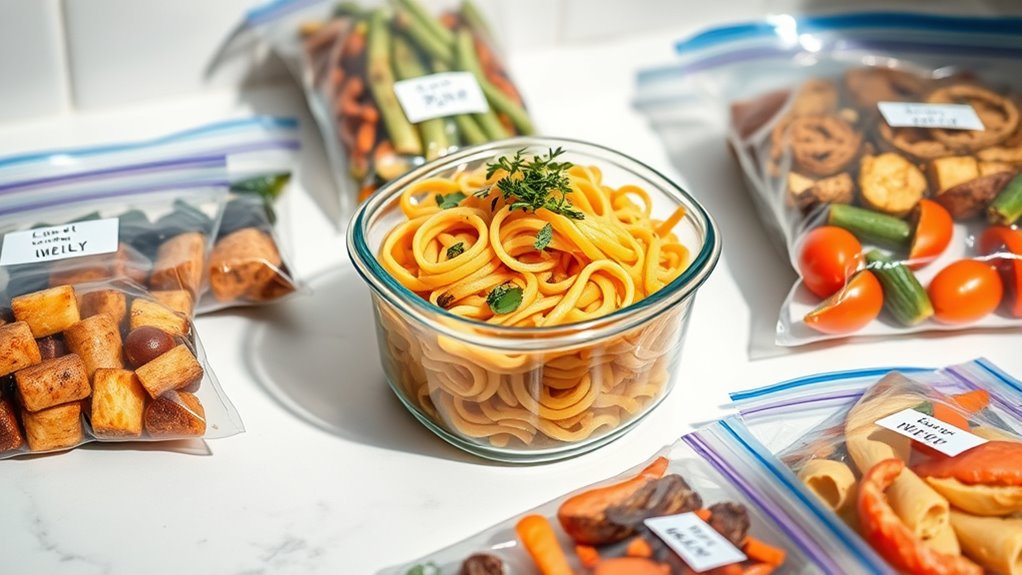
Cooking for one can be challenging, especially when trying to avoid waste. You want to enjoy fresh, home-cooked meals without ending up with leftover ingredients that spoil or dishes that sit unused in your fridge. One effective strategy is to cook in larger quantities—what’s often called batch cooking—and then freeze portions for later. This approach saves you time, reduces waste, and ensures you always have a homemade meal ready when you’re busy or just don’t feel like cooking from scratch.
Start by selecting recipes that lend themselves well to batch preparation. Stews, soups, casseroles, and cooked grains like rice or quinoa are perfect because they store easily and reheat well. When cooking, increase the recipe size slightly, but be mindful not to overdo it. Use standard measurements and avoid making enormous portions that won’t fit in your freezer or that you won’t be able to consume in a reasonable time. Once cooked, let the dishes cool completely before portioning them into individual servings. Investing in good-quality, airtight containers or freezer-safe bags helps prevent freezer burn and keeps flavors fresh.
Choose versatile recipes like stews and grains, increase batch size slightly, and store in airtight containers for easy reheating.
Label each container with the date and contents so you can keep track of what’s inside and use the oldest items first. When freezing, leave some space at the top of containers or bags, as liquids expand when frozen. This prevents breakage or cracking. You might find it helpful to portion out meals based on your typical serving size—single servings, of course—so you can defrost exactly what you need and avoid reheating leftovers you don’t want.
To maximize efficiency, plan your meals around ingredients that freeze well. Cook larger batches of versatile ingredients—like roasted vegetables, cooked beans, or shredded chicken—and then combine them into different meals throughout the week. For example, a batch of cooked chicken can turn into salads, wraps, or stir-fries. When you’re ready to eat, simply remove a portion from the freezer, thaw it in the fridge overnight, and reheat in the microwave or on the stove. This method not only saves cooking time but also helps you avoid the temptation of takeout or quick fixes that often lead to waste.
Frequently Asked Questions
How Long Can I Safely Freeze Cooked Meals?
You can safely freeze cooked meals for up to 3 to 4 months. To guarantee quality and safety, store your meals in airtight containers or freezer bags, removing excess air. Label each with the date. While they’ll remain safe beyond that, flavors and textures might decline. Always reheat thoroughly to an internal temperature of 165°F (74°C) before eating. This keeps your meals safe and delicious.
What Are the Best Containers for Freezing Single Servings?
You should choose airtight, BPA-free containers or resealable freezer bags for freezing single servings. Look for containers made of glass or durable plastic with tight-fitting lids to prevent freezer burn and leaks. Silicone muffin cups or portioned silicone molds are great for smaller servings. Label each with the date to keep track of freshness. These options help maintain flavor, prevent waste, and make reheating easy.
How Do I Prevent Freezer Burn on Frozen Meals?
Prevent freezer burn by properly packing and protecting your portions. Seal meals securely in airtight containers or double-wrap with plastic wrap and foil to fend off frost. Label and date each package, so you use the oldest first. Keep your freezer consistently cool at 0°F, and avoid frequent door openings. This diligent dedication diminishes dryness and dehydration, ensuring your frozen feasts stay fresh, flavorful, and fantastic for longer.
Can I Freeze Cooked Pasta Without It Becoming Mushy?
Yes, you can freeze cooked pasta without it becoming mushy. To do this, drain the pasta well and toss it with a little olive oil to prevent sticking. Pack it in airtight containers or resealable bags, removing excess air. When you’re ready to eat, reheat gently with a splash of water or sauce. This method helps maintain the pasta’s texture and flavor.
How Do I Reheat Frozen Meals Without Losing Flavor?
Reheating frozen meals is like waking up a sleeping bear—gentle and steady. You should thaw your meal in the fridge overnight or use the microwave’s defrost setting. Then, reheat it slowly on the stove or in the oven, stirring occasionally. This keeps the flavors vibrant and prevents dryness. Cover your dish to trap moisture, ensuring your meal stays flavorful and delicious, just like it was fresh.
Conclusion
By batch cooking and freezing your leftovers, you’re really killing two birds with one stone—saving time and reducing waste. It’s a smart way to make sure you never cook more than you need, while still enjoying fresh, homemade meals. Remember, a little planning goes a long way. When you master this approach, you’ll find it’s easier to stay on track and keep your kitchen clutter-free. So, get cooking and make waste a thing of the past!