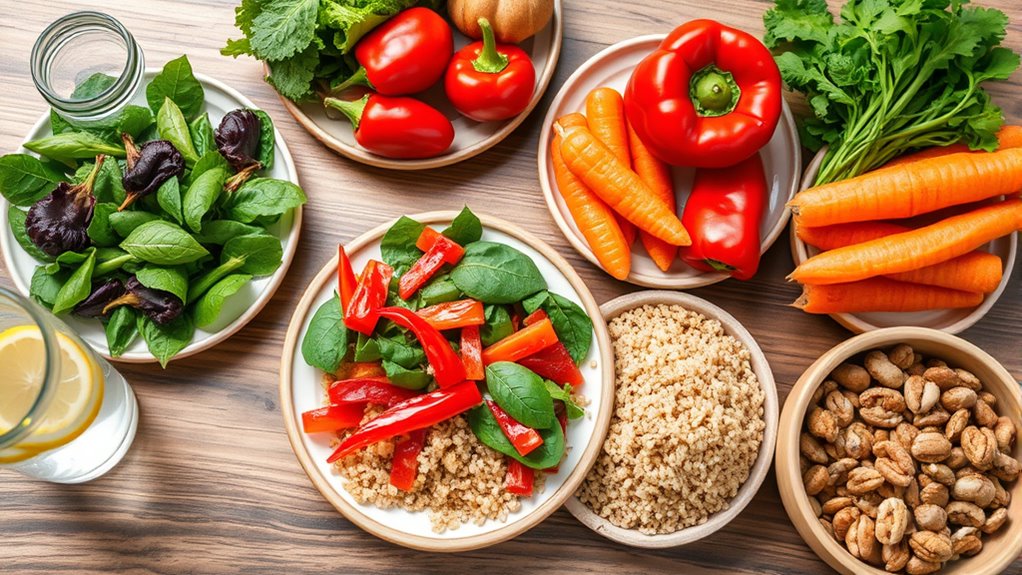

To manage diabetes through nutrition, focus on planning your meals to keep blood sugar levels stable. Count carbs accurately using labels or apps, and choose whole grains, lean proteins, and healthy fats. Incorporate small, frequent meals with plenty of non-starchy vegetables to prevent spikes. Monitoring your blood sugar helps you adjust your diet as needed. If you want to gain more insights into effective strategies, you’ll find useful tips that can make a difference in your health.
Key Takeaways
- Prioritize meal planning with balanced, portion-controlled meals to stabilize blood sugar levels and prevent spikes or drops.
- Count carbohydrates carefully using charts or apps to manage intake and ensure consistent blood glucose control.
- Choose nutrient-dense foods like non-starchy vegetables, lean proteins, and whole grains to support stable blood sugar.
- Incorporate healthy fats and pair carbs with proteins to slow digestion and minimize blood sugar fluctuations.
- Regularly monitor blood sugar levels to personalize dietary adjustments and maintain effective diabetes management.
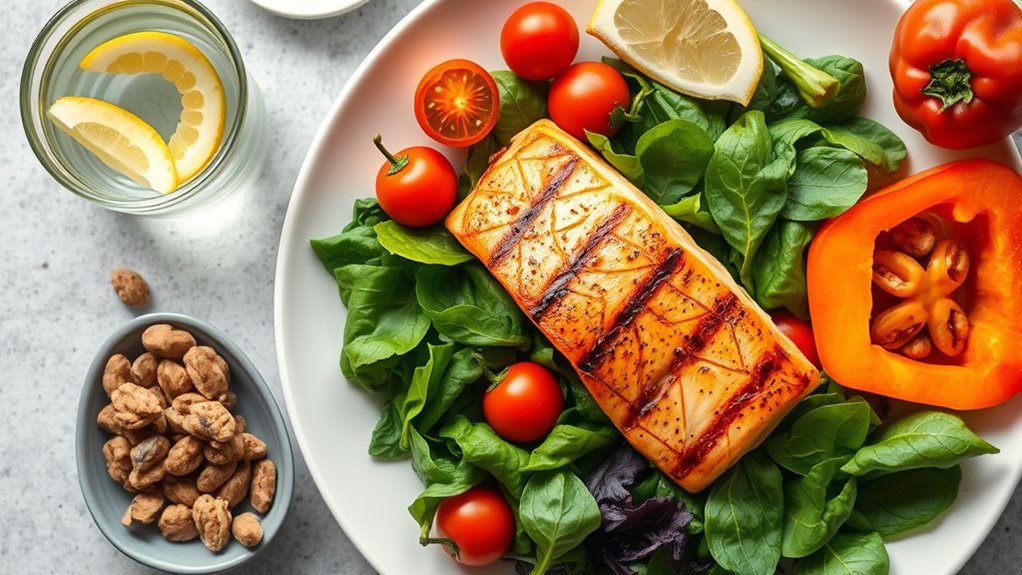
Managing diabetes effectively often begins with making smart nutritional choices. Your approach to meal planning is essential, as it helps regulate blood sugar levels and supports overall health. When you focus on creating balanced meals, you can better manage your condition and avoid dangerous spikes or drops in blood glucose. Start by understanding the importance of carbohydrate counting, which involves tracking the amount of carbs you consume in each meal. Carbohydrates have the most immediate impact on blood sugar, so knowing how much you’re eating allows you to make adjustments and stay within your target range. Using tools like carbohydrate counting charts or mobile apps can simplify this process, giving you a clear picture of what’s on your plate.
Effective meal planning means choosing foods that stabilize your blood sugar, such as non-starchy vegetables, lean proteins, and healthy fats. Incorporate whole grains like brown rice, oats, or whole wheat bread, which digest more slowly and cause less fluctuation in blood sugar. Avoid high-sugar processed foods and sweetened beverages, as they can lead to rapid increases in blood glucose. Instead, aim for small, frequent meals throughout the day to keep your energy steady and prevent hunger from causing overeating or blood sugar spikes. When you plan your meals ahead of time, you eliminate impulsive choices that might derail your management efforts.
Carbohydrate counting isn’t just about avoiding sweets; it’s a flexible tool that empowers you to enjoy a variety of foods while maintaining control. Learn to read nutrition labels carefully, paying close attention to serving sizes and total carbs per serving. Practice estimating portions when eating out or preparing meals at home, so you stay consistent. Pair carbs with proteins or healthy fats to slow digestion and reduce post-meal blood sugar spikes. For example, combine an apple with a handful of nuts or add avocado slices to your sandwich. These small adjustments can make a significant difference in your blood sugar management. Additionally, incorporating blood sugar monitoring into your routine helps you understand how different foods affect your levels and tailor your diet accordingly.
Frequently Asked Questions
Can Specific Foods Cure Diabetes?
No, specific foods can’t cure diabetes, but natural remedies and smart food timing can help manage it effectively. You should focus on a balanced diet with low glycemic index foods, and eat at regular intervals to stabilize blood sugar levels. While certain foods support your health, they won’t eliminate the need for medical treatment. Always consult your healthcare provider before making significant dietary changes for diabetes management.
How Does Alcohol Affect Blood Sugar Levels?
Think of alcohol as a double-edged sword; it influences your blood sugar like a unpredictable tide. When you drink, alcohol metabolism slows, causing blood sugar fluctuations. Initially, it may lower your blood sugar, but later, it can cause spikes or drops. You need to be mindful, especially if you have diabetes, because alcohol’s effects can mask symptoms of low blood sugar and make management trickier. Always monitor and consult your healthcare provider.
Are Sugar Substitutes Safe for Diabetics?
Yes, sugar substitutes are generally safe for diabetics when used in moderation. Artificial sweeteners like aspartame and sucralose can help satisfy your sweet cravings without raising blood sugar. Natural alternatives such as stevia and monk fruit are also good options, providing sweetness without the spike in glucose. Just remember to read labels carefully and consult your healthcare provider to guarantee these options fit your overall diabetes management plan.
How Often Should Blood Sugar Be Monitored?
You should check your blood sugar at least once or twice daily, but your healthcare provider might recommend more frequent monitoring based on your blood sugar targets and treatment plan. Use monitoring techniques like fingerstick tests or continuous glucose monitors to track your levels accurately. Regular monitoring helps you stay within your blood sugar targets, allowing you to make timely adjustments to your diet, activity, or medication for better diabetes management.
Can Dietary Changes Replace Medication?
Dietary changes and natural remedies can help manage blood sugar, but they shouldn’t replace medication without your doctor’s approval. Incorporate healthy exercise routines and a balanced diet to support your treatment plan. Focus on fiber-rich foods and limit processed sugars. Always talk to your healthcare provider before making significant changes, as medication may still be necessary for ideal blood sugar control and to prevent complications.
Conclusion
So, next time you reach for that candy bar, remember, your pancreas isn’t exactly throwing a party. With smart nutrition choices, you can keep your blood sugar in check and avoid turning your life into a sugar-coated circus. Who knew that managing diabetes could be as simple as swapping fries for greens and counting carbs? Think of it as giving your body the VIP treatment—minus the sugar rush, plus the health boost. Cheers to smarter snacking!