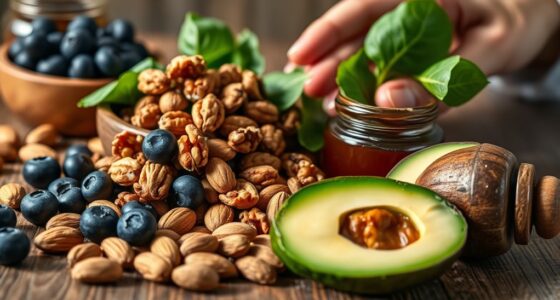

To support your heart health, focus on eating plenty of fresh fruits, vegetables, whole grains, and lean proteins like poultry, beans, and fish rich in omega-3s. Use healthy fats like olive oil and nuts, and minimize processed foods, red meats, and sugary snacks. Incorporate herbs and spices to reduce salt, and stay active and hydrated. Keep these habits consistent, and you’ll discover more ways to improve your cardiovascular well-being.
Key Takeaways
- Prioritize fruits, vegetables, and whole grains to boost antioxidants and fiber, supporting heart health.
- Incorporate healthy fats from olive oil, nuts, seeds, and fatty fish like salmon for cardiovascular benefits.
- Choose lean proteins such as poultry, beans, and legumes to minimize saturated fat intake.
- Limit processed foods, red meats, and sugary snacks to reduce cholesterol and blood pressure risks.
- Combine a heart-healthy diet with regular physical activity and lifestyle habits for optimal cardiovascular wellness.
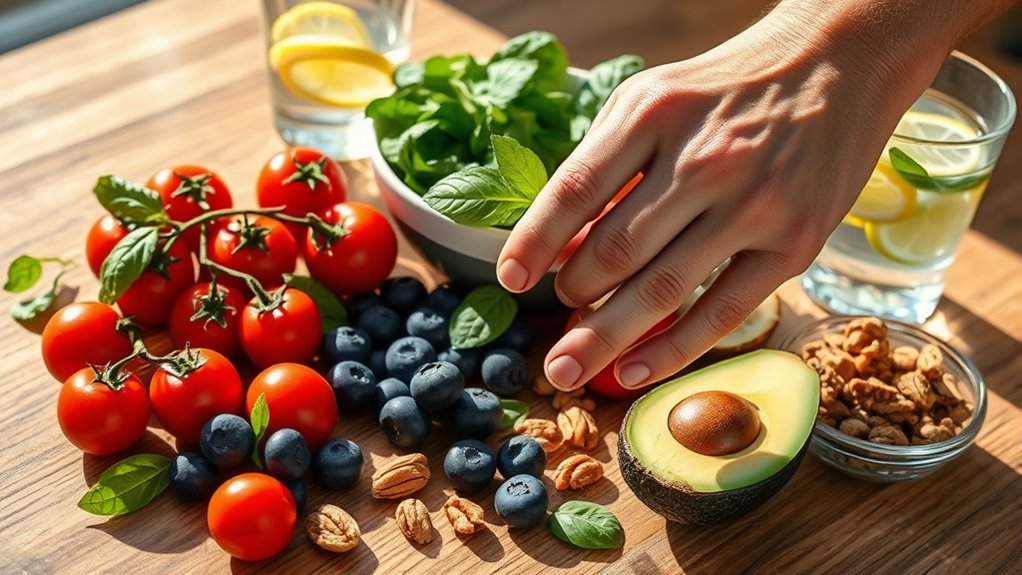
As you age, maintaining a heart-healthy diet becomes essential for reducing the risk of cardiovascular problems and supporting overall well-being. One of the best approaches is adopting a Mediterranean diet, which emphasizes fresh fruits and vegetables, whole grains, lean proteins, and healthy fats. This diet isn’t just flavorful; it’s scientifically proven to improve heart health by lowering bad cholesterol levels and reducing inflammation. Incorporating plenty of olive oil, nuts, and seeds provides monounsaturated fats that promote better blood vessel function. Additionally, eating fish rich in omega-3 fatty acids, like salmon, mackerel, and sardines, can considerably benefit your heart. Omega-3s help decrease triglycerides, lower blood pressure, and prevent blood clots, reducing the risk of heart attack and stroke. Regularly including these healthy fats in your meals can make a noticeable difference in your cardiovascular health over time.
You should aim to fill your plate with colorful vegetables and fruits, which are packed with antioxidants and fiber. These nutrients help keep your arteries clear and support overall circulation. Whole grains like oats, brown rice, and whole wheat bread are excellent choices because they stabilize blood sugar levels and prevent spikes that strain your heart. Lean proteins such as poultry, beans, and legumes provide necessary nutrients without excess saturated fat. Limiting processed foods, red meats, and sugary snacks is also essential, as these can elevate cholesterol and blood pressure, increasing your cardiovascular risk. Instead, opt for herbs and spices to flavor your meals, reducing the need for salt, which can raise blood pressure. Engaging in regular physical activity further boosts your heart health by improving circulation and strengthening your cardiovascular system.
Hydration plays an important role in maintaining heart health. Drinking plenty of water and limiting alcohol intake helps keep your blood pressure in check. Regular physical activity complements a heart-healthy diet by improving circulation and helping control weight, which further reduces strain on your heart. Combining these lifestyle choices creates a powerful defense against cardiovascular disease. Remember, small, consistent changes often lead to the best results, so start by incorporating more fish and vegetables into your meals and experimenting with heart-friendly recipes. Over time, these habits will become second nature, making it easier to sustain your health as you age. By prioritizing your diet with these strategies, you’re actively investing in a healthier, longer life with a stronger, more resilient heart. Recognizing the importance of cultural intelligence can also help you effectively navigate diverse healthcare environments and improve communication with medical professionals from different backgrounds.
Frequently Asked Questions
How Can Seniors Manage Food Allergies While Maintaining Heart Health?
You can manage food allergy triggers by carefully reading labels and avoiding known allergens. When meal planning, focus on heart-healthy, allergy-safe options like fresh fruits, vegetables, and whole grains. Use herbs and spices to flavor dishes instead of allergenic ingredients. Consult with your healthcare provider or a dietitian to create a safe, balanced plan that supports your heart health while avoiding foods that could cause allergic reactions.
What Are Budget-Friendly Heart-Healthy Foods for Seniors?
Think of budget-friendly heart-healthy foods like treasures you can find easily. Focus on affordable produce such as seasonal fruits and veggies, which are rich in antioxidants. Incorporate whole grains like oats, brown rice, and whole wheat bread to boost your fiber intake. These options support your heart and won’t break the bank, making it simple to eat healthy every day without overspending.
How Does Hydration Impact Heart Health in Older Adults?
Staying hydrated helps maintain your electrolyte balance, which is vital for heart function. Proper hydration timing guarantees your body stays balanced, preventing dehydration that can strain your heart. When you drink enough fluids throughout the day, you support healthy blood flow and reduce the risk of irregular heartbeats. Keep sipping water regularly, especially during hot weather or physical activity, to protect your heart and overall health as you age.
Are There Specific Cooking Methods Recommended for Seniors’ Heart Health?
Think of cooking methods like gentle winds steering your boat—using the right techniques keeps your heart safe. You should prioritize baking, steaming, grilling, or sautéing with minimal oil. Ingredient substitutions, like olive oil instead of butter, boost heart health. These techniques reduce saturated fats and sodium, helping you manage blood pressure. Embracing these methods makes your meals flavorful without compromising your heart’s well-being.
How Can Seniors Enjoy Social Dining While Following a Heart-Healthy Diet?
You can enjoy social dining by sharing meals with friends and family at restaurants that offer heart-healthy options. Look for places with nutritious menu choices, and don’t hesitate to ask for modifications like grilled instead of fried dishes. Use restaurant tips like choosing water instead of sugary drinks and controlling portion sizes. This way, you stay connected socially while maintaining your heart-healthy diet effortlessly.
Conclusion
By adopting these heart-healthy habits, you’ll be practically invincible against heart disease! Imagine your arteries saying, “Wow, you’ve outsmarted us all,” as you enjoy vibrant salads, whole grains, and lean proteins every day. No more tired mornings or chest pains—just unstoppable energy and a heart so strong, it could probably bench press a car! Take charge now, and watch your heart become the superhero of your body. You’re basically a heart-healthy legend in the making!