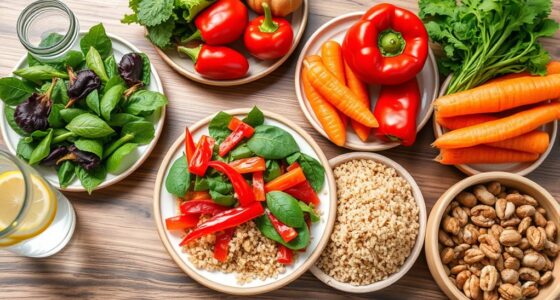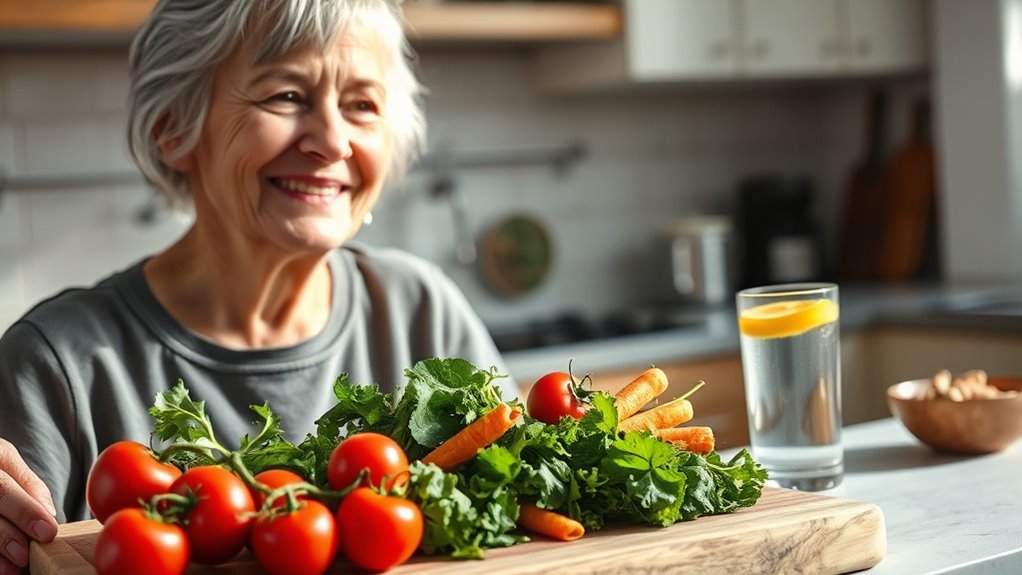

To support your health as you age, focus on eating a variety of nutrient-rich foods like fruits, vegetables, whole grains, lean proteins, and healthy fats. Stay well-hydrated by drinking water regularly and including hydrating foods like melons and soups. Plan your meals ahead to guarantee balance and avoid last-minute less nutritious choices. Maintaining good nutrition and hydration helps boost energy, prevent deficiencies, and promotes overall well-being—keep exploring to learn more about staying healthy at every age.
Key Takeaways
- Prioritize nutrient-dense foods like fruits, vegetables, whole grains, lean proteins, and healthy fats to meet evolving nutritional needs.
- Plan balanced meals ahead to ensure variety, prevent deficiencies, and reduce reliance on less nutritious last-minute options.
- Maintain regular hydration by drinking water and hydrating foods, and set reminders to combat decreased thirst sensation.
- Incorporate hydration strategies such as carrying a water bottle and pairing drinks with meals to support digestion and overall health.
- Adjust fluid intake based on activity, medication, and weather to stay properly hydrated and promote optimal bodily functions.

As you age, maintaining proper nutrition becomes increasingly vital for preserving your health and energy levels. One of the most effective ways to do this is through thoughtful meal planning. When you plan your meals ahead of time, you can guarantee you’re including a variety of nutrient-dense foods that support your changing needs. Focus on incorporating plenty of fruits, vegetables, whole grains, lean proteins, and healthy fats. Planning helps you avoid last-minute choices that might lead to less nutritious options, and it allows you to balance your meals to prevent nutrient deficiencies common in older adults, such as calcium, vitamin D, and B12. By setting aside some time each week to organize your meals, you also reduce stress and make healthier eating habits more manageable.
Hydration strategies are equally vital since aging can diminish your sense of thirst, increasing the risk of dehydration. You might not feel thirsty as often, but your body still needs water to function properly, aiding digestion, regulating temperature, and supporting joint health. To stay well-hydrated, develop a routine that encourages regular fluid intake throughout the day. Carry a water bottle with you and set reminders to drink water at specific times, such as with each meal and snack. Incorporate hydrating foods like cucumbers, melons, oranges, and soups into your diet. Limit beverages that can dehydrate you, like those high in caffeine or alcohol, which can interfere with hydration and overall health. Additionally, understanding the importance of adequate hydration can help you better recognize your body’s needs and prevent dehydration-related issues.
Balancing meal planning with hydration strategies means paying attention to both what you eat and how much fluid you consume. For example, if you’re planning a hearty dinner, include a glass of water or herbal tea to complement the meal. Keep track of your daily water intake to ensure you’re meeting your needs, which generally increase with physical activity, medication use, or hot weather. Remember, hydration isn’t just about drinking water; it’s about maintaining consistent fluid levels to support your body’s functions. When you prioritize these strategies, you’re not only making smarter food choices but also supporting your overall well-being. Properly planned meals together with effective hydration can boost your energy, improve digestion, and help you maintain a healthier, more active lifestyle well into your later years.

Baby Loves Science Board Boxed Set
As an affiliate, we earn on qualifying purchases.
Frequently Asked Questions
How Can I Improve My Appetite as I Age?
To improve your appetite as you age, focus on appetite stimulation by eating smaller, more frequent meals instead of large ones. Enhance flavors with herbs and spices to make food more appealing, and try adding nutrient-dense, flavorful ingredients. Stay active, as it can boost your desire to eat. Also, stay hydrated, but avoid drinking large amounts before meals, which can reduce your hunger.
What Are the Best Snacks for Seniors?
You should choose healthy snack options like nuts, yogurt, fruit, and whole-grain crackers. These provide essential nutrients and are easy to digest. Practice portion control strategies by pre-measuring snacks to avoid overeating and keep your calorie intake in check. Incorporate a variety of options to keep snacks interesting and guarantee you get a balanced mix of vitamins, minerals, and fiber, supporting your overall health and well-being.
How Does Hydration Affect Older Adults’ Health?
Hydration is the fuel that keeps your engine running smoothly, especially as you age. Staying well-hydrated supports your cognition and helps prevent dehydration, which can cause confusion, weakness, and falls. To avoid dehydration, follow simple strategies like drinking water regularly, eating water-rich foods, and setting reminders. Proper hydration keeps your mind sharp and body energized, making everyday activities easier and more enjoyable.
Are There Specific Nutrients to Support Bone Health?
To support your bone health, focus on maintaining adequate calcium intake and keeping your Vitamin D levels ideal. Calcium is essential for strong bones, so include dairy products, leafy greens, and fortified foods in your diet. Vitamin D helps your body absorb calcium effectively, so spend some time outdoors or consider supplements if needed. Regularly monitoring these nutrients can help prevent osteoporosis and maintain your overall skeletal strength.
How Can I Manage Dietary Restrictions Due to Medication?
Did you know that over 50% of seniors take at least five medications daily? To manage dietary restrictions caused by medication interactions, you should consult your healthcare provider or dietitian for personalized advice. Use dietary adjustment strategies like timing meals to separate medication intake, avoiding certain foods that interfere with drug absorption, and incorporating nutrient-rich alternatives. Staying informed and proactive helps you maintain proper nutrition without compromising your medication effectiveness.
Conclusion
By following these nutrition tips, you can support your health and essentiality as you age. Remember, about 50% of adults over 65 experience at least one nutrient deficiency, emphasizing the importance of a balanced diet. Staying mindful of your nutritional intake helps maintain energy, strength, and overall well-being. So, prioritize wholesome foods and regular check-ins with your healthcare provider to enjoy a healthier, more vibrant life in your golden years.