
As you age, taking the right vitamins and supplements can help fill nutritional gaps, support your overall health, and counteract decreased absorption of nutrients like B12 and iron. It’s important to choose high-quality products that are safe and properly formulated, and to consult with a healthcare provider about your specific needs. Supplementing wisely, alongside a balanced diet and healthy lifestyle, can make a real difference—continue exploring to discover more tailored strategies.
Key Takeaways
- Supplements can address nutrient absorption issues caused by reduced stomach acid in older adults.
- Choose high-quality, third-party tested vitamins to ensure safety, potency, and purity.
- Consult healthcare providers to determine appropriate types and dosages for individual health needs.
- Supplements should complement a balanced diet rich in fruits, vegetables, and whole grains.
- Regular blood tests help monitor nutrient levels and adjust supplement use accordingly.
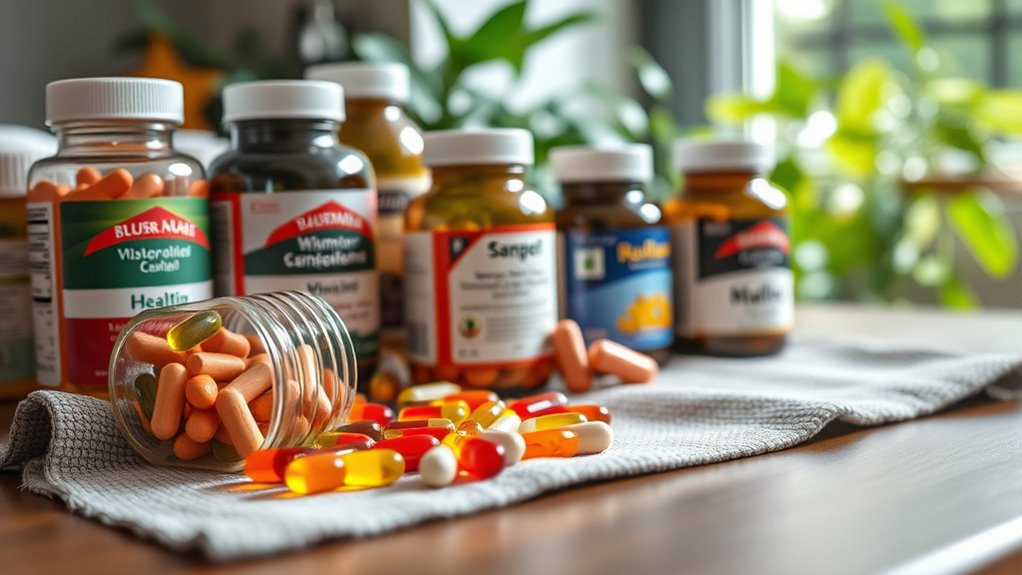
Are vitamins and supplements necessary for maintaining health as you age? As you grow older, your body’s ability to absorb nutrients can decline, making it more challenging to get enough vitamins and minerals from food alone. This is where supplements can play a key role, helping to fill nutritional gaps and support your overall well-being. However, before adding any new supplement to your routine, it’s important to consider nutrient absorption and supplement safety. Not all supplements are created equal, and some may not be absorbed properly if your digestive system isn’t functioning at its best. For example, aging can reduce stomach acid production, which is necessary for absorbing certain nutrients like vitamin B12 and iron. If your body isn’t absorbing these nutrients efficiently, taking supplements might be beneficial, but it’s essential to consult with your healthcare provider to determine the appropriate form and dosage. Proper formulation can help guarantee that the nutrients you take are bioavailable, meaning your body can effectively use them. When thinking about supplement safety, you should be aware of potential interactions with medications or other supplements you’re already taking. Some vitamins and minerals can interfere with the absorption or effectiveness of prescription drugs, so it’s important to seek professional guidance. Additionally, over-supplementation can lead to toxicity, especially with fat-soluble vitamins like A, D, E, and K, which are stored in your body’s fat tissues and liver. Excessive intake can cause harmful side effects, so following recommended daily limits is essential. Quality control is another aspect of supplement safety—look for reputable brands that adhere to strict manufacturing standards and have third-party testing. This helps guarantee that what’s on the label is actually in the bottle, free from contaminants or inaccurate dosing. While supplements can be an effective way to support your nutritional needs, they shouldn’t replace a balanced diet rich in fruits, vegetables, whole grains, lean proteins, and healthy fats. Instead, think of supplements as an adjunct to your healthy lifestyle, especially if you have specific deficiencies or conditions that impair nutrient absorption. Regular check-ups and blood tests can help monitor your nutrient levels and guide adjustments to your supplement routine. In brief, as you age, being mindful of nutrient absorption and supplement safety is essential for maintaining your health. With careful selection and professional advice, supplements can be a safe and effective part of your strategy to stay strong and healthy well into your later years.
Frequently Asked Questions
Are There Any Risks of Overdose With Common Supplements?
Yes, you can overdose on common supplements if you’re not careful. Overdose risks vary depending on the supplement and your intake, so supplement safety is important. Taking too much of certain vitamins, like A, D, or iron, can lead to serious health issues. Always follow recommended doses and consult your healthcare provider to avoid overdose risks and guarantee you’re using supplements safely.
How Do Supplements Interact With Prescription Medications?
Supplements can dramatically influence how your medications work, like a tornado swirling around a calm town. You need to be aware of supplement interactions that might boost or diminish medication efficacy. Always consult your healthcare provider before adding new supplements, as some can interfere with prescription drugs, risking serious side effects or reduced treatment benefits. Staying informed helps you maintain safe, effective medication use and ideal health.
Should I Take Supplements if I Have Chronic Health Conditions?
You should consult your healthcare provider for a personalized assessment before taking supplements with chronic health conditions. Medical supervision guarantees that supplements won’t interfere with your medications or worsen your conditions. Your doctor can recommend safe options tailored to your specific needs, helping you avoid potential risks. Always prioritize professional guidance to manage your health effectively and safely when considering supplements.
What Are the Best Supplements for Cognitive Health?
Your brain’s potential is incredible, so choosing the right supplements is key. Focus on brain-boosting nutrients like omega-3 fatty acids, B vitamins, and antioxidants, which support memory and mental clarity. Memory-enhancing supplements such as ginkgo biloba or phosphatidylserine can also help sharpen your focus. Always consult your healthcare provider before starting new supplements, but incorporating these into your routine could be the game-changer your brain needs.
How Do I Choose High-Quality Vitamins and Supplements?
To choose high-quality vitamins and supplements, look for products with quality certification from reputable organizations like NSF or USP. Check ingredient transparency to guarantee you know exactly what’s inside, avoiding unnecessary fillers or additives. Trust brands that provide clear labels, detailed ingredient lists, and third-party testing. This way, you can confidently select supplements that are safe, effective, and meet high standards for purity and potency.
Conclusion
As you consider vitamins and supplements, remember that about 60% of older adults take them regularly, highlighting their significance. While they can support your health, always consult with your healthcare provider to make certain you’re choosing the right options. Staying informed and proactive can help you maintain vigor and prevent deficiencies. Prioritize a balanced diet first, but supplements can be a helpful addition to your wellness routine as you age.