To install non-slip stair treads, first choose a suitable material like rubber, vinyl, or textured metal based on your needs. Clean and dry your stairs thoroughly, then carefully follow the manufacturer’s instructions for adhesion or fastening. Confirm each tread is securely attached without shifting or curling. Regularly inspect and maintain the treads to keep them effective and safe. If you continue, you’ll discover detailed steps to achieve a secure, long-lasting installation.

Turn the school run and nap time into listening time
- Thousands of audiobooks, podcasts and originals
- Listen on your phone, tablet or Echo — also offline
- Cancel anytime
Key Takeaways
- Choose a suitable non-slip material such as rubber, vinyl, or textured metal based on your stairs’ location and usage.
- Measure stair tread dimensions accurately to select or cut the appropriate size for a secure fit.
- Follow manufacturer installation instructions carefully, ensuring treads are securely adhered or fastened without shifting.
- Clean and dry stair surfaces before installation to enhance adhesion and prevent future slipping issues.
- Regularly inspect and maintain the treads, cleaning them and replacing any damaged or worn pieces promptly.
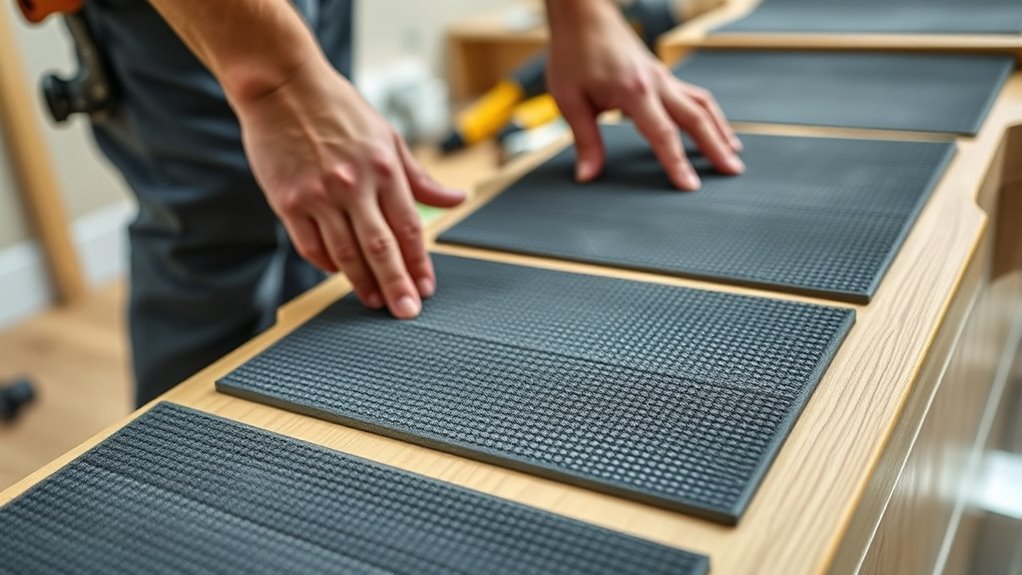
Installing non-slip stair treads is an effective way to enhance safety on your stairs. When choosing the right treads, material selection plays a critical role in ensuring durability, grip, and ease of maintenance. You want materials that can withstand regular foot traffic without wearing down quickly or becoming slippery over time. Common options include rubber, carpet, vinyl, and metal with textured surfaces. Rubber stair treads are popular because they offer excellent traction and cushioning, making them ideal for households with children or elderly residents. Carpet treads provide a softer feel and can add a decorative touch, but they may require more maintenance to stay clean and safe. Vinyl treads are budget-friendly, easy to install, and resistant to moisture, while textured metal treads are highly durable and resistant to slipping, especially in commercial or outdoor settings. Think about where your stairs are located and how much foot traffic they get to determine the best material for your needs.
Once you’ve selected the appropriate material, proper installation is essential for safety and longevity. Follow manufacturer instructions carefully, ensuring the treads are securely adhered or fastened to prevent any shifting or curling that could pose a tripping hazard. Proper material selection paired with correct installation techniques guarantees that your non-slip treads will function effectively over time. Additionally, choosing a non-slip surface designed for your specific material can further enhance safety and reduce the risk of accidents.
Maintenance tips are equally important to keep your stair treads safe and in top condition. Regularly inspect your treads for signs of wear or damage, such as peeling, curling, or loss of grip. Cleaning your treads frequently helps maintain traction; for example, rubber and vinyl surfaces can usually be cleaned with a damp cloth and mild detergent, while carpet treads may need vacuuming or spot cleaning. Avoid abrasive cleaners or harsh chemicals that could degrade the material or reduce its non-slip properties. If your treads are removable, consider removing and cleaning them periodically to prevent dirt buildup that could compromise grip. For permanent installations, keeping the surface free of dust, dirt, and spills is key. For added safety, you might also apply a non-slip coating or treatment recommended by the manufacturer, especially if you notice the surface becoming slick over time. Proper maintenance not only prolongs the lifespan of your stair treads but also guarantees they continue to provide reliable traction, reducing the risk of slips and falls.
Frequently Asked Questions
How Long Do Non-Slip Stair Treads Typically Last?
Non-slip stair treads typically last 3 to 5 years, depending on durability factors like material quality and foot traffic. To prolong their lifespan, follow maintenance tips such as regular cleaning with gentle solutions and avoiding abrasive tools. Also, inspect them periodically for wear or damage, and replace them when they show significant signs of wear to ensure safety and effectiveness. Proper care helps maximize their durability and performance.
Are Non-Slip Treads Suitable for Outdoor Stairs?
Yes, non-slip treads are suitable for outdoor stairs, but their durability depends on weather resistance and UV stability. If you choose treads designed for outdoor use, they’ll withstand rain, sun, and temperature fluctuations. Without proper weatherproofing, they might wear faster. So, always opt for non-slip treads specifically made for exterior conditions to guarantee safety and longevity, no matter what the weather throws at you.
Can Non-Slip Stair Treads Be Removed Easily?
Yes, non-slip stair treads can be removed easily. To do so, you should use proper removal methods like gently heating the adhesive or applying a solvent to loosen the adhesive residues. Carefully peel back the treads, avoiding damage to your stairs, and then clean away any leftover adhesive residues with a suitable cleaner. This process guarantees a smooth removal without leaving behind stubborn adhesive residues.
Do Non-Slip Treads Damage Hardwood Stairs?
Non-slip treads can damage a wood surface if you don’t remove them carefully. When you take them off, adhesive residue may stay behind, potentially harming the finish or causing scratches. To prevent damage, gently heat the treads to soften the adhesive, then carefully lift them without pulling or scraping. This approach helps protect your hardwood stairs while ensuring you remove the non-slip treads effectively.
Are There Color Options Available for Non-Slip Treads?
Yes, non-slip treads come in a variety of color options, so you can match or complement your stairs’ aesthetic. Many brands offer color customization, allowing you to choose shades that blend seamlessly with your décor or stand out for safety. This variety helps you maintain your stairs’ visual appeal while ensuring safety. You’ll find non-slip treads in neutral, bold, or custom colors to suit your style and needs.
Conclusion
Now that you’ve installed your non-slip stair treads, you can walk safely with confidence. For example, imagine Sarah, a busy mom, who installed treads in her home’s basement stairs. Afterward, she no longer worries about her kids slipping. By taking these simple steps, you’ve created a safer environment for everyone. Remember, regular checks keep your treads secure, ensuring lasting safety. With your new treads, you’re all set for secure, slip-free steps every day.
Fall Picks
fall essentials
As an affiliate, we earn on qualifying purchases.