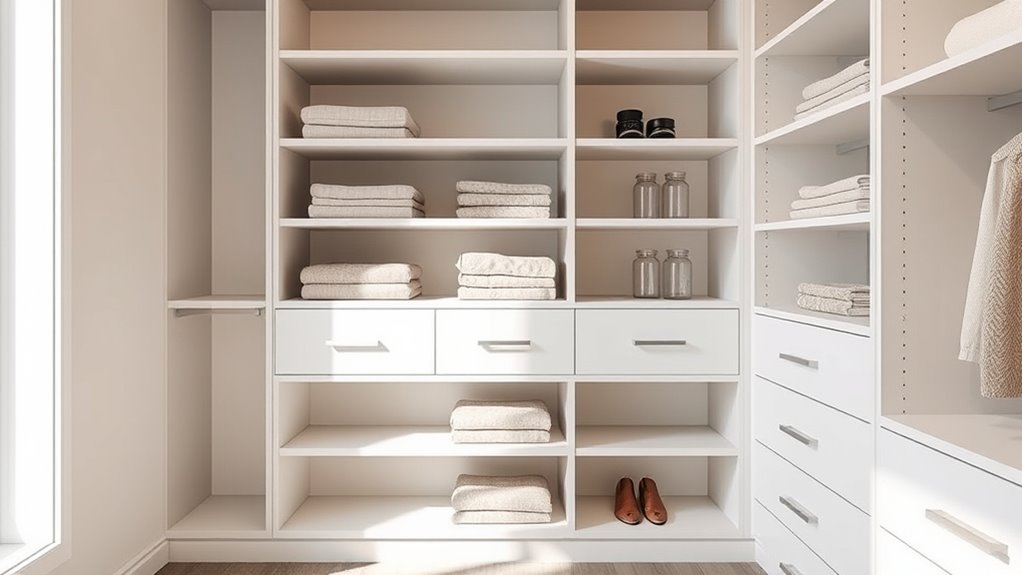

To master minimalist storage and organization, start by decluttering your space, sorting items into keep, donate, or discard piles. Use multi-purpose furniture and vertical storage solutions like shelves and labeled bins to maximize space. Keep surfaces clear, and regularly reassess your setup to prevent clutter from building up. Creating a harmonious environment involves balancing functionality with aesthetic simplicity. If you want to discover more practical tips, explore further to transform your space into a peaceful, efficient haven.
Key Takeaways
- Use multi-purpose, space-saving furniture to maximize functionality and reduce clutter.
- Incorporate vertical storage solutions like wall-mounted shelves and tall cabinets.
- Regularly declutter by sorting items into keep, donate, or discard categories.
- Utilize clear, labeled containers and bins for easy visibility and organization.
- Maintain a minimal, calm environment by reassessing storage needs and avoiding unnecessary items.
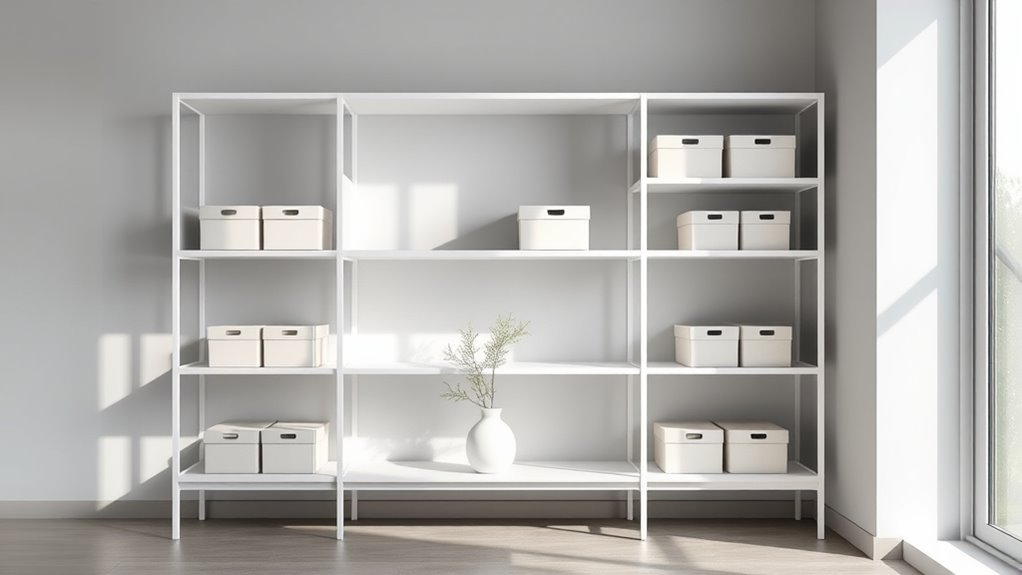
In today’s cluttered world, embracing minimalist storage and organization can transform your space into a peaceful, functional haven. When you focus on decluttering techniques, you clear out unnecessary items, making room for what truly matters. This process not only simplifies your environment but also boosts your mental clarity. To maximize space, consider incorporating space-saving furniture, which is designed to serve multiple purposes while taking up minimal room. For example, a bed with built-in drawers or a fold-out desk can free up valuable square footage, making your space feel larger and more open. These pieces are especially useful in small apartments or rooms where every inch counts.
Decluttering techniques are your first step toward a minimalist lifestyle. Start by sorting your belongings into categories—keep, donate, or discard. Be honest with yourself about what you truly need and use regularly. If an item hasn’t been used in months, it’s probably best to let it go. As you eliminate clutter, you’ll find it easier to organize what remains. Once you’ve reduced your possessions, look for smart storage solutions that keep things tidy and accessible. Stackable boxes, wall-mounted shelves, and under-bed storage are excellent options to keep your space neat without sacrificing style.
Start by sorting belongings into keep, donate, or discard categories for a clutter-free space.
Space saving furniture plays an essential role in maintaining an organized environment. Opt for pieces that maximize functionality without overwhelming your room. For instance, a sofa bed provides seating during the day and transforms into a bed at night, saving space in a studio apartment. Modular furniture systems allow you to customize your setup based on your needs, making your room adaptable and clutter-free. When selecting these pieces, prioritize clean lines and neutral tones to enhance the minimalist aesthetic, which promotes calmness and order. Additionally, incorporating multi-purpose furniture can further enhance your organization efforts by serving dual functions.
Incorporate vertical storage to further declutter your space. Wall-mounted shelves or pegboards make use of vertical surfaces, freeing up floor space and keeping your belongings within easy reach. Use clear containers or labeled bins to keep everything organized and visible at a glance. Regularly reassess your storage solutions to make sure they still serve your needs, and don’t be afraid to pare down further if your space begins to feel cramped again. By combining effective decluttering techniques with thoughtful, space-saving furniture, you create a harmonious environment that’s both functional and aesthetically pleasing. This approach helps you maintain a minimalist ethos, reducing stress and making your daily routine more efficient.
Frequently Asked Questions
How Do I Start Decluttering My Belongings Effectively?
Start decluttering by setting clear goals, like wardrobe editing or digital decluttering. Tackle one area at a time, sorting items into keep, donate, or discard piles. Be honest about what you truly need and use. Use boxes or bags to contain items for donation. Regularly review your belongings to prevent clutter from building up. Staying consistent and focused makes decluttering more manageable and effective.
What Are the Best Materials for Minimalist Storage Solutions?
You’ll want to choose sustainable materials like bamboo or recycled plastic for your storage solutions, offering eco-friendly benefits without sacrificing durability. Versatile storage options like stackable bins or modular shelves help keep your space organized and adaptable. These materials blend sustainability with function, making your minimalist approach practical and eco-conscious. By selecting versatile, eco-friendly materials, you create a clutter-free space that’s both stylish and kind to the environment.
How Can I Maintain a Minimalist Organization Long-Term?
To maintain a minimalist organization long-term, you should develop sustainable habits and stick to consistent organizational routines. Regularly declutter your space to prevent accumulation of unnecessary items, and set aside time each week to reassess your belongings. Keep only what truly adds value or serves a purpose. By making these routines automatic, you’ll effortlessly sustain a minimalist environment that stays clean, functional, and clutter-free over time.
Are There Eco-Friendly Options for Minimalist Storage?
Yes, you can choose eco-friendly minimalist storage options made from recycled materials or biodegradable storage solutions. Look for containers and organizers crafted from bamboo, reclaimed wood, or biodegradable plastics, which reduce environmental impact. By selecting these sustainable choices, you support eco-conscious living while maintaining a clutter-free space. Incorporate these materials into your organization system, ensuring your storage solutions are both functional and environmentally responsible.
How Do I Handle Sentimental Items in Minimalism?
To handle sentimental keepsakes in minimalism, you should prioritize quality over quantity and only keep items with deep emotional attachment. Take time to select a few meaningful pieces that truly bring you joy. Consider photographing or digitizing sentimental items you can’t keep. Store these carefully in a dedicated box or display that highlights their importance. This way, you honor your emotional attachment while maintaining a clutter-free, minimalist space.
Conclusion
By embracing minimalist storage and organization, you create a calmer, more intentional space. But remember, some argue that minimalism isn’t just about decluttering; it’s a mindset that encourages mindful consumption and sustainability. As you simplify, consider whether your choices support a balanced, purposeful life. Ultimately, minimalism isn’t a one-size-fits-all approach—it’s about finding what truly enhances your well-being and aligns with your values, making your space and life more meaningful.