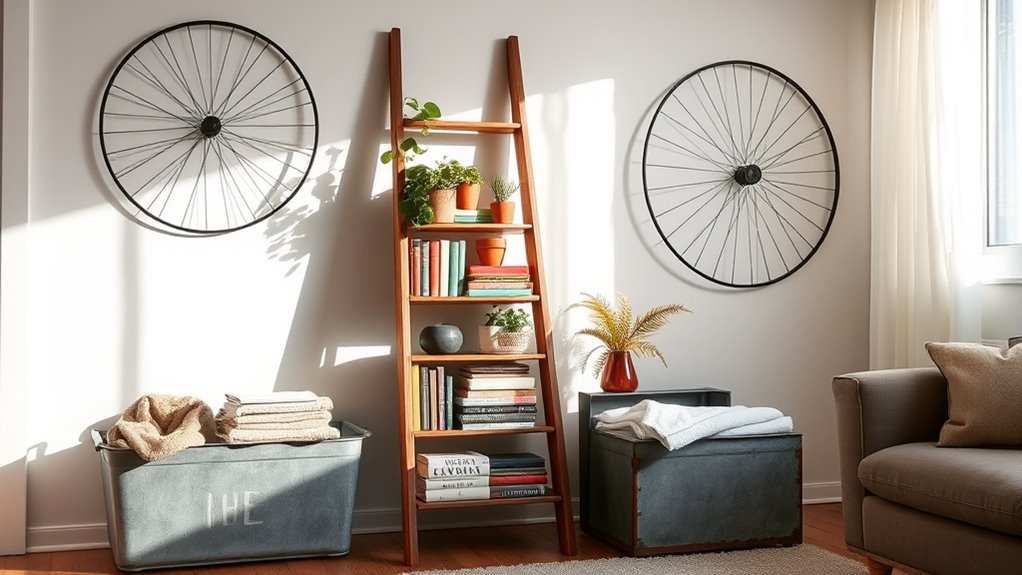

To create a decluttered home through repurposing, start by transforming items like old jars into storage or decorating pallets for furniture. Turn textiles into bags or quilts and paint cans into planters or organizers. These simple projects save money, reduce waste, and add a personal touch to your space. By exploring creative ways to reuse everyday items, you’ll make your home more functional and stylish—stick around to discover more easy upcycling ideas.
Key Takeaways
- Use old jars and containers to organize and store small household items, reducing clutter.
- Repurpose wooden pallets into functional furniture or storage solutions to maximize space.
- Turn textiles and clothing into reusable bags or decorative cushions, freeing up wardrobe space.
- Transform tin cans and corks into planters or coasters to add style and organization to your home.
- Create customized storage bins from cardboard boxes for a tidy, clutter-free environment.

Have you ever considered giving your old items a new purpose instead of tossing them away? Repurposing items is a smart way to declutter your home while adding a personal touch to your space. Instead of throwing things out, you can turn them into something useful or decorative through DIY crafts and upcycling ideas. This approach not only reduces waste but also saves you money and sparks your creativity.
Start by looking at what you already have around the house. Old jars, for example, can become charming storage containers for spices, buttons, or craft supplies. With a little paint or ribbon, you can transform plain jars into attractive pieces that suit your style. Similarly, unused wooden pallets can be repurposed into coffee tables or garden planters. Just a bit of sanding and some paint, and you’ve got a piece that adds character to your home. These upcycling ideas are simple, cost-effective, and incredibly satisfying to create.
Transform jars and pallets into charming, personalized home decor with simple DIY projects.
Clothing and textiles offer another avenue for repurposing. Old t-shirts can be turned into reusable shopping bags or cozy quilts. Tattered sheets or curtains can find new life as cleaning rags or cushion covers. Look for DIY crafts that allow you to breathe new life into worn fabrics, giving them a second purpose instead of sending them to the landfill. Not only will you reduce waste, but you’ll also end up with custom items that reflect your style.
Small household items like tin cans, wine corks, or cardboard boxes are also perfect candidates for upcycling ideas. Tin cans can be painted and used as planters or pen holders. Wine corks can be crafted into coasters or bulletin boards. Cardboard boxes can be transformed into storage bins or decorative organizers. These projects are easy to do and require minimal supplies, making them ideal for quick home upgrades.
Frequently Asked Questions
How Do I Determine if an Item Is Suitable for Repurposing?
To determine if an item is suitable for repurposing, check its condition first—ensure it’s still sturdy and functional. Consider its sentimental value; if it holds emotional significance, think about ways to preserve that while giving it a new purpose. If the item is damaged beyond repair or no longer meaningful, it might be better to recycle or donate. Trust your instincts and be honest about its potential for a new life.
Are There Safety Concerns When Repurposing Certain Household Items?
Yes, you should consider safety concerns when repurposing household items. Check for chemical hazards, especially if items contain residues from cleaning products or chemicals. Also, assess the structural integrity to make certain the item can safely serve its new purpose without breaking or collapsing. If in doubt, research the materials or consult an expert to prevent accidents and protect your home’s safety.
What Tools Are Essential for Effective Repurposing Projects?
You’ll need essential DIY tools like scissors, a hammer, screwdrivers, and a glue gun to tackle repurposing projects effectively. Craft supplies such as paint, brushes, and tape also come in handy for customization and finishing touches. These tools help you cut, assemble, and decorate items easily, making your projects smoother and more enjoyable. With the right tools, you can transform everyday items into functional and stylish pieces effortlessly.
How Can I Organize My Repurposed Items for Maximum Space?
Streamline, sort, and store your repurposed items using smart storage solutions and labeling techniques. You’ll want stackable bins, clear containers, and designated drawers to maximize space and easily access what you need. Label each storage spot clearly, so you can quickly identify and organize items. Consistent categorization keeps your space tidy and prevents clutter from creeping back, ensuring your home stays organized and efficient.
Are There Eco-Friendly Methods for Disposing of Unrepurposed Items?
You can practice eco-friendly disposal by recycling or donating items whenever possible, reducing waste and supporting sustainable waste management. Look for local recycling centers that accept specific materials and consider composting organic waste. Avoid sending items straight to landfills by repurposing or finding new uses. By choosing eco-friendly disposal methods, you’ll minimize environmental impact and contribute to a greener, more sustainable lifestyle.
Conclusion
By repurposing items, you not only declutter your home but also give new life to things you might otherwise toss away. With a little creativity, you can transform everyday objects into functional decor or storage solutions. Remember, “A stitch in time saves nine”—taking small actions now prevents bigger messes later. Embrace repurposing as a smart, sustainable way to maintain an organized, stylish space that reflects your resourcefulness.