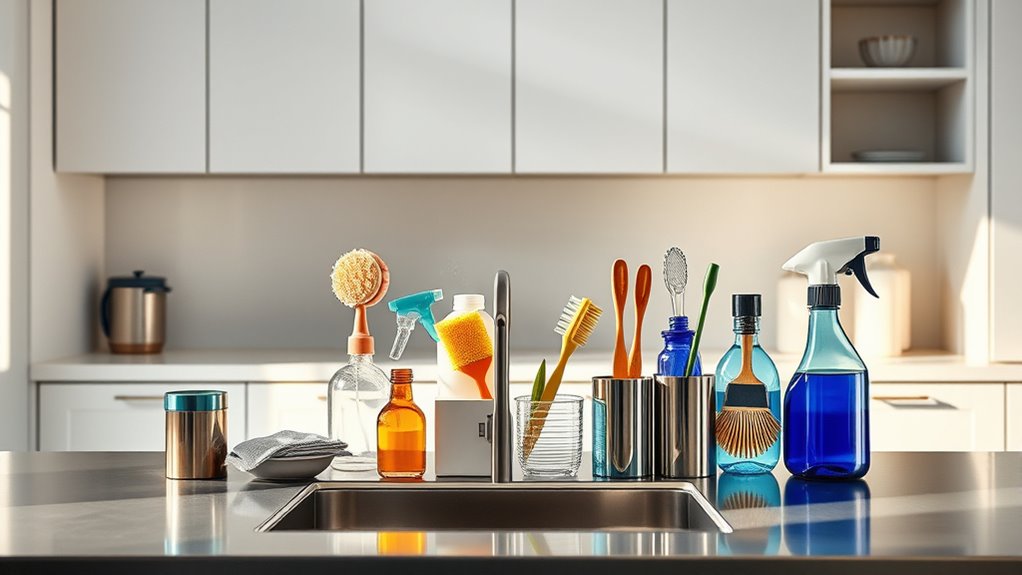

Creating a conflict-free kitchen cleanup starts with dividing your space into specific zones for cooking, prepping, cleaning, and storage. Keep essential tools nearby—like microfiber cloths, brushes, and cleaners—to streamline your routine. Organize supplies in baskets or containers, and develop habits such as wiping surfaces immediately and washing dishes after use. These simple steps promote teamwork, reduce clutter, and make tidying less stressful. Keep going to discover more tips for maintaining a harmonious kitchen environment.
Key Takeaways
- Designate specific zones for cooking, prep, cleaning, and storage to streamline workflow and reduce clutter.
- Organize cleaning tools like microfiber cloths and brushes in accessible caddies for quick, conflict-free cleanup.
- Keep utensils and pots near the stove to improve efficiency and prevent messes from spreading.
- Develop habits like wiping surfaces immediately and washing dishes right after use to maintain order.
- Promote teamwork by involving household members in organizing zones and shared responsibilities for cleanliness.

A cluttered or messy kitchen can quickly lead to tension and frustration, but with a conflict-free approach to cleanup, you can restore order without the stress. One effective way to do this is by dividing your kitchen into specific zones, making cleanup more manageable and less overwhelming. Think of your kitchen as a series of areas dedicated to different tasks: the cooking zone, the prep area, the cleaning station, and the storage spaces. When you assign each zone a clear purpose, it becomes easier to focus on what needs attention without feeling like you’re constantly juggling everything at once. For example, keep your cooking utensils and pots near the stove, and store cutting boards and knives close to your prep area. This minimizes clutter and streamlines your workflow, preventing messes from spiraling out of control. Creating designated zones also helps in organizing your storage spaces, making it easier to maintain order over time.
Next, equip your kitchen with the right tools that support a conflict-free cleanup process. Stock up on simple, effective supplies such as microfiber cloths, scrub brushes, and spray cleaners that make tidying quick and straightforward. Having designated tools for specific tasks reduces the chances of cross-contamination and keeps your space hygienic. Use a caddy or a small container to organize your cleaning supplies, so everything you need is within easy reach when it’s time to tidy up. This prevents the frustration of hunting for the right cloth or brush and keeps your cleanup routine efficient. Additionally, consider investing in stackable containers or baskets for storing utensils, pantry items, and even cleaning supplies. When each item has a designated place, it’s easier to put things away and maintain order.
Developing a habit of cleaning as you go can further reduce clutter and conflict. For instance, wipe down surfaces after preparing meals or wash dishes immediately after use. Keeping your tools and ingredients in their zones means you don’t have to spend extra time searching for them or relocating items. When you approach cleanup with a mindset of small, consistent efforts, it becomes less intimidating and more routine. Remember to involve everyone in the household by establishing clear zones and organizing tools so that each person knows where everything belongs. This shared effort fosters cooperation rather than conflict and makes maintaining a tidy kitchen a team activity rather than a chore.

Stroller Organizer with Cup Holder, Non-Slip Stroller Caddy Baby Essentials
- Large Capacity Storage: Holds bottles, diapers, toys, snacks
- Ideal Baby Shower Gift: Perfect for new moms and dads
- Universal Compatibility: Fits Uppababy, Baby Jogger, more
As an affiliate, we earn on qualifying purchases.
Frequently Asked Questions
How Can I Train Family Members to Follow Zone Guidelines?
You can train your family members to follow zone guidelines by clearly explaining each zone’s purpose and demonstrating how to use the tools properly. Make it fun and involve everyone in setting up the zones. Consistently remind them of the rules, praise their efforts, and gently correct mistakes. Regularly reviewing and practicing together helps reinforce good habits, making cleanup more efficient and less stressful for everyone.
What Are Eco-Friendly Tools for Conflict-Free Kitchen Cleanup?
Imagine a sparkling countertop with eco-friendly tools in hand—bamboo scrub brushes, biodegradable sponges, and stainless steel scrubbers. These tools help you clean efficiently while caring for the planet. Opt for plant-based dish soaps, reusable cloths, and compostable trash bags. They’re gentle on the environment and perfect for maintaining a conflict-free, harmonious kitchen. By choosing sustainable tools, you turn cleanup into a mindful, eco-loving routine everyone can enjoy.
How Often Should I Reorganize Kitchen Zones?
You should reorganize your kitchen zones whenever you notice clutter, inefficiency, or when your needs change—generally every few months. Regularly assess if your current setup still works well for your cooking habits. If you find yourself spending extra time searching for tools or ingredients, it’s time for a reorganization. Keeping zones intuitive and accessible makes cleanup easier and keeps your kitchen conflict-free, so don’t hesitate to make adjustments as needed.
Are There Digital Apps to Manage Kitchen Cleanup Schedules?
Yes, there are plenty of digital apps to help you manage kitchen cleanup schedules. Apps like Todoist, Trello, and Any.do let you create tasks, set reminders, and organize cleaning routines easily. You can customize these apps to fit your schedule, assign tasks to family members, and track progress. Using these tools keeps everyone accountable and makes sure your kitchen stays tidy without the hassle of manual planning.
How Do I Handle Stubborn Stains in a Conflict-Free Manner?
Imagine you’re a knight facing a stubborn stain like a dragon. To handle it conflict-free, gently apply a stain remover or a mix of baking soda and water. Let it sit for a few minutes, then scrub softly with a sponge or brush. Avoid harsh chemicals or aggressive scrubbing, which can cause more conflict. Patience and gentle persistence will help you conquer even the most stubborn stains peacefully.
Conclusion
By organizing your kitchen into zones and using the right tools, you turn chaos into harmony—like a symphony where each instrument plays its part. When everyone knows their zone and uses designated tools, cleanup becomes smooth and conflict-free. Think of your kitchen as a well-oiled machine, running seamlessly with each task fitting perfectly into place. With a little planning, you’ll enjoy a cleaner, calmer space where teamwork makes the dream work.