A paper and digital hybrid calendar system helps bridge generational gaps by combining the visual, tangible benefits of paper with the convenience and syncing abilities of digital tools. It allows everyone to have quick access, reminders, and easy updates while respecting traditional preferences. Family members can check schedules at a glance and stay informed across devices. Keep exploring to discover how this flexible approach can keep your household effortlessly organized.
Key Takeaways
- A hybrid calendar combines a physical paper calendar with a digital app for seamless schedule synchronization.
- Digital calendars offer reminders and easy updates, while paper calendars provide quick visual overviews.
- Family members can access and update schedules via both methods, ensuring everyone stays informed.
- Using both calendars minimizes conflicts and improves coordination across different age groups.
- Implementing a flexible hybrid system promotes better organization and communication for multi-generational households.
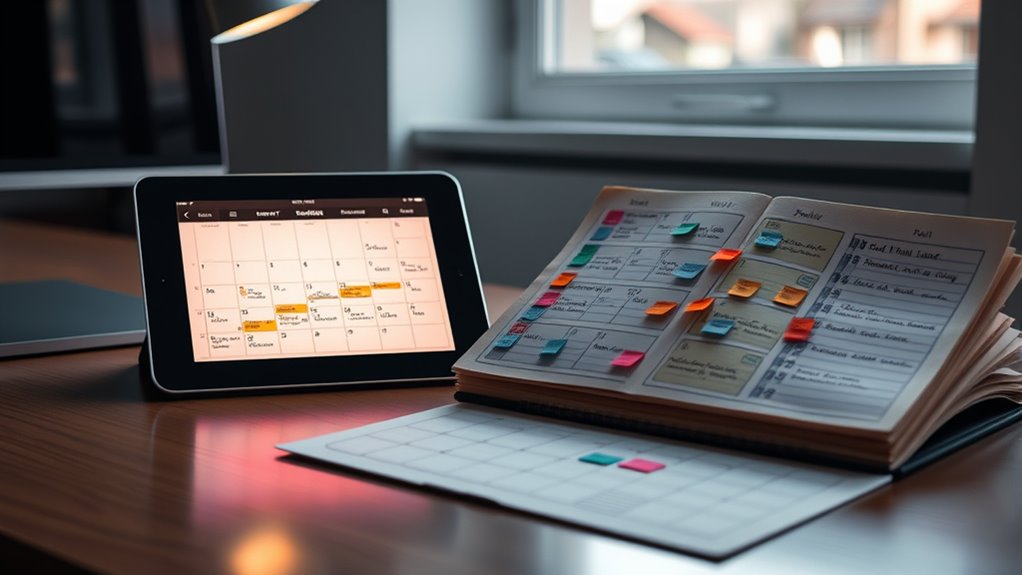
In today’s fast-paced world, coordinating schedules across multiple generations can feel like a formidable task. Everyone has their preferred way of keeping track of appointments, events, and important dates. Some people still rely on traditional paper calendars, appreciating their tactile, straightforward nature. Others prefer digital calendars, which offer flexibility, reminders, and instant updates. The challenge arises when trying to accommodate both preferences within one family or team. That’s where a hybrid approach—combining paper and digital calendars—becomes invaluable.
Balancing traditional and digital calendars helps families stay organized across generations.
A paper calendar provides a tangible, visual overview of upcoming events. Many individuals, especially older generations, find comfort in writing things down and seeing their schedule in a physical format. It’s easy to jot down appointments, birthdays, or reminders without worrying about tech glitches or battery life. Plus, a paper calendar can serve as a central family or household fixture, encouraging everyone to check it regularly. It’s a simple, reliable way to keep everyone on the same page without the need for devices or apps.
On the other hand, digital calendars bring dynamic features that paper calendars simply can’t match. They offer automatic reminders, easy rescheduling, and the ability to share events instantly with others. For busy families juggling multiple activities, digital calendars help prevent double bookings and missed appointments. They sync seamlessly across smartphones, tablets, and computers, making it easier to access your schedule anywhere, anytime. Notifications pop up to remind you of upcoming events, so you’re less likely to forget important dates. Plus, many digital calendars allow integration with other apps, from weather forecasts to task managers, streamlining your planning process.
The beauty of a hybrid system is that it leverages the strengths of both worlds. You might use a paper calendar on your wall to get a quick, at-a-glance view of the month. Simultaneously, you can keep a digital calendar on your phone for detailed planning, updates, and instant sharing. Family members can check the paper calendar for a quick overview, while digital reminders keep everyone informed of last-minute changes. This combination minimizes the frustration of incompatible schedules and reduces the risk of missed deadlines.
Implementing a paper + digital hybrid calendar doesn’t mean you have to abandon one entirely. It’s about creating a flexible, accessible system tailored to different preferences and tech comfort levels. It ensures everyone, regardless of age or tech-savviness, stays connected and organized. By bridging the gap between traditional and modern planning methods, you foster smoother communication and a more harmonious schedule across generations. This balanced approach turns what could be chaos into coordinated harmony, keeping your family or team moving seamlessly forward. Incorporating digital tools can also help extend the functionality of your hybrid system by providing additional features like weather updates or task management.
Frequently Asked Questions
How Do Hybrid Calendars Improve Long-Term Planning?
Hybrid calendars improve long-term planning by combining the best of both worlds. You get the tactile benefits of writing on paper for quick notes and visualizing schedules, while digital features like reminders and easy updates keep your plans flexible and organized. This synergy helps you stay on top of deadlines and appointments, reduces forgetfulness, and enhances your ability to adapt plans over time, making your planning more efficient and reliable.
Can Digital Calendars Integrate With Multiple Paper Formats?
Yes, digital calendars can integrate with multiple paper formats through various methods. You can sync your digital calendar with apps that allow printing or exporting to different formats, such as PDF or CSV. Some digital tools also support scanning handwritten notes or using smart pens, which convert your paper entries into digital data. This seamless integration helps you keep your schedule synchronized across both formats effortlessly.
What Are Common Challenges in Maintaining a Hybrid Calendar System?
Maintaining a hybrid calendar system is like juggling flaming torches—you need focus and coordination. Common challenges include syncing updates accurately across formats, avoiding double bookings, and staying consistent with entries. You might find it tricky to keep paper and digital calendars aligned, especially when changes happen quickly. Time management becomes more complex, and without regular checks, your schedules can easily fall out of sync, causing confusion.
How Secure Is My Data in Digital Components of Hybrid Calendars?
Your data in digital components of hybrid calendars is generally secure, but it depends on the platform’s security measures. Most reputable services use encryption and multi-factor authentication to protect your information. However, you should stay vigilant by using strong passwords, enabling two-factor authentication, and keeping software updated. Regularly backing up your data also helps safeguard against potential breaches or data loss, ensuring your schedule remains protected.
Are There Specific Tools Recommended for Syncing Paper and Digital Calendars?
Yes, you can use tools like Fantastical, Google Calendar, or Microsoft Outlook to sync your digital calendar. To integrate with your paper planner, consider using scanning apps like Evernote or Notability, which let you digitize handwritten entries. You might also explore apps like Day One or Notion that support manual entries and reminders. These tools help keep your schedules aligned across both formats effectively.
Conclusion
By embracing a paper and digital hybrid calendar, you access the ultimate scheduling powerhouse—combining timeless reliability with modern flexibility. This seamless sync isn’t just a convenience; it’s a game-changer that’ll transform how you organize your life, making chaos feel like a distant memory. Don’t settle for anything less than this perfect blend—you’re about to revolutionize your planning routine and conquer every day with the precision of a master strategist. The future of calendars is in your hands!