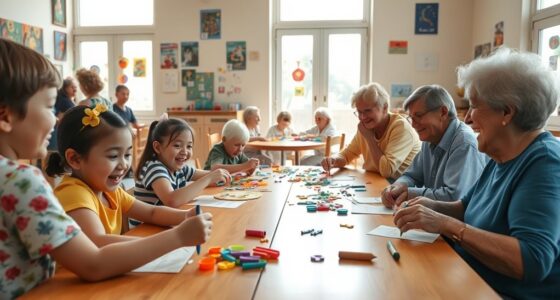
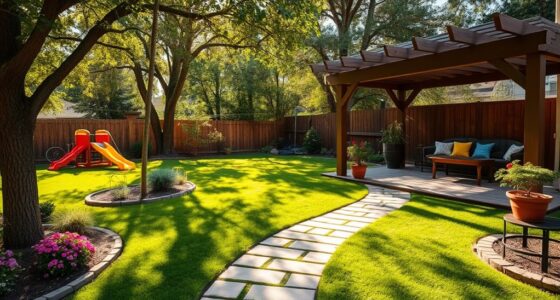
To create multigenerational outdoor spaces, you should design a safe, inviting environment that balances beauty and functionality. Incorporate different zones like play areas, relaxing spots, and dining spaces, ensuring they seamlessly connect. Use level surfaces, slip-resistant materials, and proper lighting for safety and accessibility. Select plants and furniture that are easy to maintain and non-toxic, and consider local regulations. Keep exploring to learn how to make your outdoor space truly welcoming for all generations.
Listen free for 30 days with Audible
Thousands of audiobooks and originals — cancel anytime.
As an affiliate, we earn on qualifying purchases.
Key Takeaways
- Design distinct zones like play areas, relaxing nooks, and dining spaces to cater to all age groups.
- Incorporate safety features such as level surfaces, slip-resistant materials, and secure water features.
- Use natural barriers and landscaping to separate zones while maintaining visual appeal and safety.
- Ensure proper lighting with energy-efficient and motion-activated options for evening safety.
- Prioritize accessibility with wide, level walkways and consider local regulations for compliance.

Designing outdoor spaces that serve multiple generations can be both rewarding and practical. When you approach landscape design with this goal in mind, you’ll want to create an environment that balances beauty, functionality, and safety. Start by considering the diverse needs of your family members—whether they’re young children, active seniors, or teenagers—and plan spaces that accommodate each group’s activities while seamlessly blending into a cohesive outdoor area. A well-thought-out landscape design will include different zones, such as a play area, a relaxing sitting nook, and a dining space, so everyone can find something that appeals to them.
Safety considerations are vital in multigenerational outdoor spaces. You need to think about mobility, accessibility, and potential hazards. For example, choosing level ground for walking paths and eliminating steep slopes helps prevent falls, especially for seniors or those with mobility challenges. Installing sturdy, slip-resistant surfaces on walkways and patio areas adds an extra layer of safety, making navigation easier and reducing the risk of accidents. When selecting outdoor furniture, opt for pieces with rounded edges and secure anchoring to prevent tipping. Additionally, make sure that any water features, like ponds or fountains, are properly fenced or designed to prevent accidental falls or injuries, particularly for young children.
Prioritize level surfaces, slip-resistant materials, and secure water features for safe, accessible multigenerational outdoor spaces.
Lighting is another key element to enhance safety and usability, especially during evening hours. Incorporate well-placed, energy-efficient lighting along pathways, stairs, and seating areas to ensure visibility and reduce the likelihood of trips or falls. Think about adding motion-activated lights near entrances or dark corners for added security. When planning landscaping, avoid thorny plants or toxic flora near walkways or play areas to prevent injuries or health issues. Regular maintenance, like trimming bushes and removing debris, also plays a role in keeping the space safe and inviting for everyone.
Incorporating safety considerations into your landscape design doesn’t mean sacrificing aesthetics. Instead, it’s about finding the right balance between beauty and function. Use natural barriers, such as shrubs or low fences, to delineate different zones while adding visual interest. Select plants that are non-toxic and easy to maintain, reducing the need for constant upkeep. Additionally, understanding building permits and inspections can help ensure your outdoor enhancements meet safety standards and local regulations. By thoughtfully integrating safety features into your landscape design, you create a welcoming outdoor environment where all generations can gather comfortably and securely, making your backyard a true extension of your home’s family life.
Top picks for "creat multigenerational outdoor"
As an affiliate, we earn on qualifying purchases.
Frequently Asked Questions
How Can I Ensure Safety for Children and Seniors in My Outdoor Space?
To guarantee safety for children and seniors, install childproof fencing around play areas to prevent unsupervised access, and choose senior-friendly seating with supportive, stable designs. Keep pathways clear of obstacles and add non-slip surfaces to reduce falls. Regularly inspect the space for hazards, and consider adding shaded areas for sun protection. These steps create a secure, accessible outdoor environment everyone can enjoy comfortably.
What Are Budget-Friendly Options for Designing Multigenerational Outdoor Areas?
Think of your outdoor space as a blank canvas waiting for your creative touch. You can craft a vibrant multigenerational haven using affordable materials like reclaimed wood, pavers, and budget-friendly plants. Embark on DIY projects such as building benches or planters to personalize the area without breaking the bank. These affordable options turn your outdoor space into a welcoming oasis for all ages, made by your own hands.
How Do I Incorporate Universal Design Principles Effectively?
To incorporate universal design principles effectively, you should choose adaptive furniture that’s easy to use and comfortable for everyone. Make certain accessible pathways are wide and smooth, allowing easy navigation for all ages and abilities. Position seating and features close to pathways for convenience, and use non-slip surfaces. Focus on simplicity and safety, creating an inclusive outdoor space where every family member can comfortably enjoy and move around effortlessly.
What Are Low-Maintenance Landscaping Ideas for Busy Families?
Think of your yard as a peaceful retreat; choosing drought-tolerant plants like succulents and ornamental grasses keeps maintenance low, symbolizing resilience. Incorporate simple water features like a small fountain or birdbath that offer soothing movement without much upkeep. These choices reduce your chores, giving you more time to enjoy your outdoor space. With thoughtful plant selection and water features, your landscape becomes a haven that’s easy to care for yet full of life.
How Can I Create Privacy While Maintaining an Open Feel?
You can create privacy screening with tall, slender plants or decorative screens that block views without closing off the space. Use strategic placement of trees or hedges to maintain open sightlines while providing a sense of seclusion. Incorporate low fences or lattice panels that add privacy without making the area feel enclosed. By balancing these elements, you’ll enjoy privacy while keeping your outdoor space open and inviting.
Conclusion
So, after all this talk about designing perfect multigenerational outdoor spaces, you might think it’s just about adding a few chairs and a grill. But here’s the irony—you could spend all that time creating a stunning area, only to realize the real magic is in those unexpected moments of shared laughter and chaos. Sometimes, the best memories happen when everyone’s just winging it outdoors. Now, go ahead—your perfect backyard awaits.
Fall Picks
fall essentials
As an affiliate, we earn on qualifying purchases.