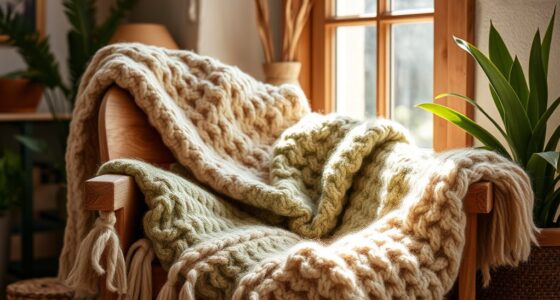
To craft cozy, inviting interiors with warm, textured fabrics, focus on combining materials like plush velvets, knits, and boucle for depth and tactile richness. Use a warm color palette—think caramel, rust, and beige—to enhance the inviting atmosphere. Layer different textures to create visual interest without overwhelming the space, balancing matte and shiny finishes. Paying attention to these details can help you achieve a harmonious, textured environment—explore further to discover how to master this design approach.

Turn the school run and nap time into listening time
- Thousands of audiobooks, podcasts and originals
- Listen on your phone, tablet or Echo — also offline
- Cancel anytime
Key Takeaways
- Combine plush velvets with rougher linens or textured knits for a layered, inviting look.
- Use warm tones like caramel, rust, and mustard alongside textured fabrics to evoke coziness.
- Balance matte and shiny fabrics to create subtle contrast and visual interest.
- Layer different textures within a cohesive color palette to deepen and enrich the space’s warmth.
- Consider tactile and visual harmony when pairing fabrics for an inviting, curated interior design.
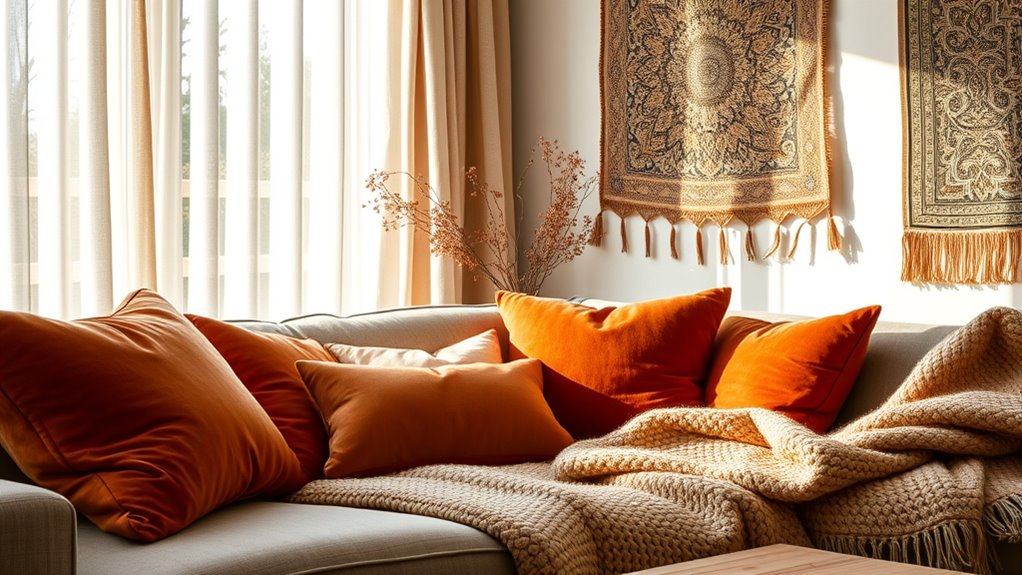
Creating inviting interiors often begins with choosing the right fabrics. When you’re aiming to craft a space that feels warm and welcoming, the fabric combinations you select play a vital role. Think about how different textures and materials can complement each other to add depth and interest. Combining plush velvets with rougher linen or textured knits can create a layered look that invites touch and adds visual richness. The key is to balance these textures so they don’t compete but instead work harmoniously. For example, pairing a smooth, matte fabric with a slightly shiny, textured one can generate subtle contrast that enhances the overall aesthetic. When you’re exploring fabric combinations, consider how they interact with your color palette choices. Warm tones like caramel, rust, and mustard naturally evoke coziness, but layering these with textured fabrics amplifies the effect. A deep amber velvet sofa, for instance, immediately creates a sense of warmth, especially when paired with soft, woven throws or cushions in complementary shades. Your color palette choices should reinforce the mood you want to establish—warm hues paired with textured fabrics make spaces feel intimate and inviting. If you prefer a more subdued look, incorporating neutral shades like taupe, warm grey, or beige with textured fabrics such as boucle or chenille can still deliver warmth without overwhelming the senses. Remember, the textures you choose can also influence how the colors appear. Rich, textured fabrics tend to deepen and enrich the hues, making even lighter shades feel more grounded. When you’re selecting fabrics, think about the overall ambiance you want to create and how each piece contributes to that feeling. Combining different fabric textures within your chosen color palette allows for versatility and visual interest, making your space feel layered rather than flat. Don’t hesitate to mix and match; just keep a cohesive foundation with your color palette choices, which is essential for achieving a harmonious and inviting interior. This approach guarantees your interiors look thoughtfully curated and inviting. As you build your design, experiment with different fabric combinations—consider both the tactile quality and the visual impact—and always keep your color palette choices in mind. The right pairing will transform your space into a warm, textured haven that beckons you to relax and enjoy. With careful consideration of fabric combinations and color choices, you’re well on your way to creating interiors that radiate comfort and personality.
As an affiliate, we earn on qualifying purchases.
Frequently Asked Questions
How Do Textured Fabrics Affect Room Acoustics?
Textured fabrics improve your room’s acoustics by enhancing sound absorption, which helps reduce echoes and background noise. When you incorporate these fabrics into your space, they act as natural sound barriers, making the environment more comfortable and quieter. Their varied surfaces scatter sound waves, leading to better noise reduction. So, using textured fabrics not only adds visual warmth but also creates a more acoustically balanced and inviting atmosphere in your room.
What Are the Best Maintenance Tips for Textured Upholstery?
To keep textured upholstery looking its best, stick to regular cleaning routines like vacuuming with a brush attachment to remove dust and debris. Address stains immediately to prevent them from setting, using a gentle cleaner suitable for the fabric. Avoid harsh chemicals that could damage the texture. Protect your furniture from direct sunlight and spills, and consider using slipcovers or throws for extra stain prevention and easier maintenance.
Can Warm Fabrics Be Combined With Cool-Toned Decor?
Did you know that 85% of interior designers successfully blend warm fabrics with cool-toned decor? You can absolutely combine them for a balanced look by focusing on color harmony and fabric layering. Use warm fabrics like textured upholstery to add coziness, then layer with cool-toned accents to create contrast. This combination enhances depth and interest, making your space feel inviting while maintaining a modern, sophisticated vibe.
Are There Eco-Friendly Textured Fabric Options Available?
Yes, eco-friendly textured fabric options are available. You can choose textiles made from natural fibers like organic cotton, hemp, or linen, which are sustainably sourced. These materials not only add warmth and texture to your interior but also reduce environmental impact. Look for brands that prioritize sustainable sourcing and transparent supply chains to guarantee you’re making eco-conscious choices that align with your values.
How Do Textured Fabrics Influence Room Temperature Perception?
Like a trusty steed, textured fabrics influence your room’s temperature perception by adding fabric tactile comfort and visual warmth. Their rich, tactile surface makes a space feel cozier, inviting you to relax. The visual warmth from textured patterns tricks your mind into perceiving a warmer environment, even if the actual temperature stays constant. So, choosing textured fabrics can make your space feel warmer and more inviting without raising the thermostat.
Conclusion
By incorporating warm, textured fabrics into your interiors, you create a cozy haven that beckons comfort and serenity. Think of these fabrics as the gentle hand that wraps your space in a soft embrace, turning a house into a heartfelt home. When you choose rich textures and inviting hues, you’re weaving a tapestry of warmth that soothes your soul and invites connection. Embrace these tactile treasures—your space will become a sanctuary where every detail tells a story of comfort.
Fall Picks
fall essentials
As an affiliate, we earn on qualifying purchases.