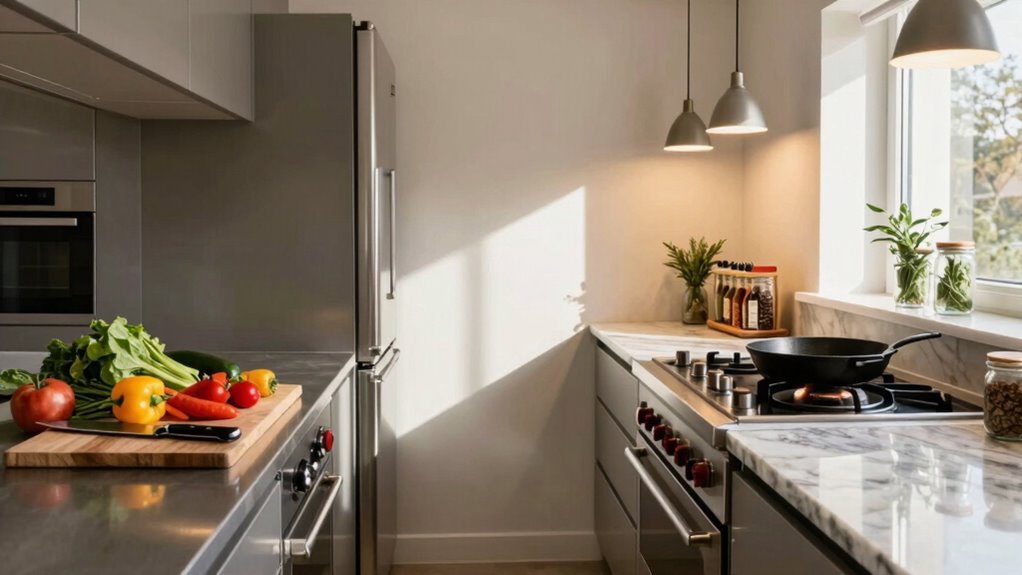

To make a shared kitchen work smoothly for two serious cooks, organize appliances and tools in designated, easily accessible spots, using labels or containers to prevent confusion. Establish a cleaning schedule that both follow and share responsibilities fairly, promoting respect and teamwork. Communicate openly about maintenance issues and space needs, and invest in smart storage solutions like drawer dividers or racks to maximize space. Keep the kitchen efficient and respectful—your shared culinary journey will become much more enjoyable if you explore these strategies further.
Key Takeaways
- Designate specific appliance and tool storage spots to prevent clutter and streamline access.
- Establish a clear cleaning schedule and divide responsibilities for maintenance and cleanliness.
- Use storage solutions like drawer dividers and shelf risers to maximize space and organize efficiently.
- Communicate openly about routines, issues, and boundaries to foster mutual respect.
- Regularly reassess the setup to improve workflow and accommodate evolving cooking habits.
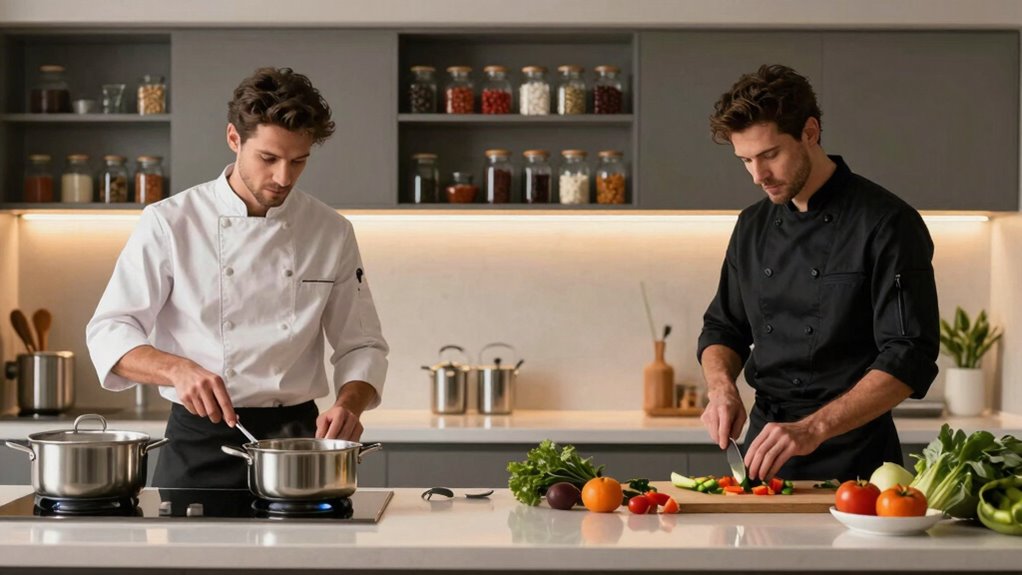
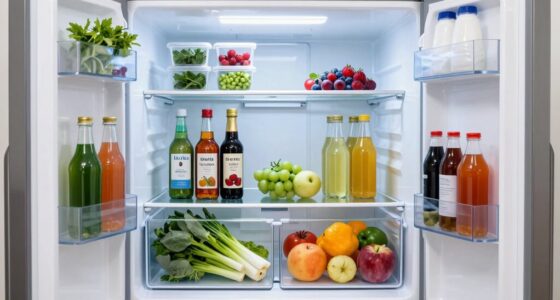
Ever wondered how to make sharing a kitchen smooth and stress-free? When two serious cooks share a space, it’s essential to establish clear routines and respect each other’s workflows. One of the best ways to do this is by focusing on appliance organization. Make sure each of you knows exactly where the main appliances—like the blender, toaster, or mixer—are stored, and keep them in designated spots. Use labels or clear containers to prevent confusion and save time searching for tools. When appliances are well-organized, you both spend less energy on cleanup and more on creating great meals.
Creating a cleaning schedule is equally important. Agree on a routine that works for both of you—whether it’s a daily wipe-down or a weekly deep clean. Stick to this schedule to prevent buildup of clutter or grime, which can cause frustration and delays. Assign specific tasks to each person, like cleaning the countertops after cooking or emptying the dishwasher, so responsibilities are clear. When you both participate in maintaining cleanliness, it fosters respect and keeps the shared space inviting. Additionally, establishing a shared responsibility helps ensure that chores are evenly distributed and understood.
Communication is key. If one of you notices an appliance isn’t working well or needs maintenance, bring it up promptly. Likewise, if you see clutter piling up or a cleaning task has been overlooked, address it gently. Open dialogue helps prevent small issues from becoming bigger conflicts. Respect each other’s cooking styles by giving space to experiment with ingredients or methods, but also set boundaries so that one person’s mess doesn’t interfere with the other’s workflow. Promoting effective communication can further enhance your shared kitchen experience.
Keep the kitchen organized by investing in storage solutions that suit your needs. Use drawer dividers, shelf risers, or hanging racks to maximize space. This way, you both can easily find what you need without rummaging through clutter. When appliances and tools have designated homes, it minimizes chaos and makes cooking more efficient. Regularly reassess your setup—what works now might need tweaking as your routines evolve. Additionally, understanding the importance of appliance organization can significantly improve your shared kitchen experience.

SpaceAid Bamboo Drawer Dividers with Inserts and Labels, Kitchen Adjustable Drawer Organizers, Expandable Organization for Home, Office, Dressers, 4 Dividers with 9 Inserts (17"-22" Natural)
- 4 Drawer Dividers with 9 Inserts: Customize your drawer with our…
- 30 Label Stickers Included: Identify drawer contents instantly with…
- Adjustable Expandable Organization: Each drawer divider is 2.35"…
As an affiliate, we earn on qualifying purchases.
As an affiliate, we earn on qualifying purchases.
Frequently Asked Questions
How Do We Handle Different Cooking Styles?
You handle different cooking styles by respecting each other’s cooking traditions and preferences. Communicate openly about your favorite techniques and ingredients, and plan meals together to accommodate both styles. Use separate prep areas if possible, and organize your shared space to keep ingredients and tools accessible. By blending your traditions and planning meals collaboratively, you create an environment where both cooks feel valued and excited to share the kitchen.
What if We Have Conflicting Ingredient Preferences?
Did you know 65% of shared households face ingredient conflicts? When dealing with conflicting ingredient preferences, you should focus on ingredient compromises and shopping coordination. Communicate openly about your must-haves and dislikes, and create a shopping list that reflects both your needs. Consider designated sections for each person’s favorite ingredients, and plan meals that incorporate shared favorites to keep everyone satisfied and the kitchen running smoothly.
How Can We Prevent Kitchen Space From Becoming Crowded?
To prevent your shared kitchen from becoming crowded, prioritize storage organization by using clear containers, labeled shelves, and designated zones for each cook’s tools. Incorporate appliance sharing by creating a schedule for using shared appliances, like the blender or toaster, to avoid bottlenecks. Keep countertops clear and tidy, encouraging both of you to clean as you go. This way, space stays open, functional, and stress-free for everyone.
What Are Effective Ways to Share Cleaning Responsibilities?
It’s best to approach cleaning responsibilities with a gentle nudge rather than a shove. Use effective storage solutions to keep the space organized, making cleaning easier for both of you. Communicate openly and regularly about your expectations and schedules. By sharing tasks fairly and keeping the lines of communication open, you’ll create a harmonious environment where cleaning feels like a team effort, not a chore.
How Do We Manage Kitchen Timing for Busy Schedules?
To manage kitchen timing with busy schedules, you should coordinate meal prep times and share pantry organization. Plan meals together ahead of time, assigning prep tasks to avoid overlaps. Use a shared calendar or planning app to track cooking slots and grocery needs. Keep the pantry well-organized so ingredients are easy to find, speeding up meal prep. Communicate regularly to adjust plans based on your changing schedules, ensuring smooth kitchen flow.
Conclusion
So, there you have it—your foolproof guide to surviving a shared kitchen without losing your mind or your favorite spatula. Remember, patience, communication, and a dash of humor are your secret ingredients. Because, let’s face it, nothing says “peaceful coexistence” like agreeing that the toaster is a sacred relic and that “borrowing” your special spice is an unforgivable offense. Happy cooking, and may your kitchen battles be short and your culinary victories many!