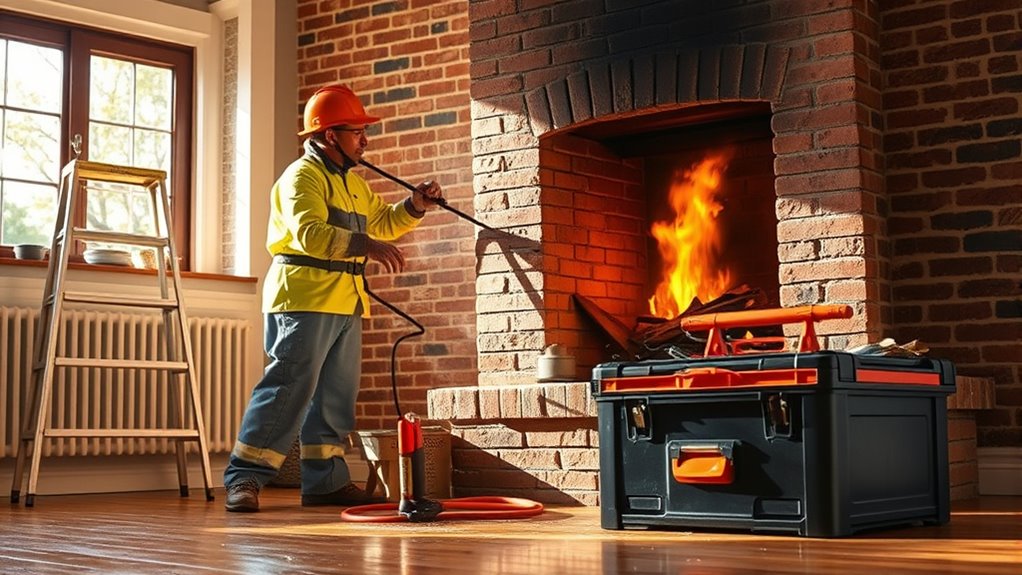

Scheduling annual chimney and fireplace cleaning is vital for your safety and home efficiency. Regular cleaning removes creosote, soot, and debris that can cause fires or block proper venting. It also helps detect issues like cracks or deterioration early, saving you costly repairs down the line. By maintaining your chimney annually, you keep your fireplace functioning safely and efficiently. If you want to learn more about how to protect your home and loved ones, keep exploring this important topic.
Key Takeaways
- Regular cleaning prevents creosote buildup, reducing fire risk and ensuring safe chimney operation.
- Annual maintenance improves fireplace efficiency and heat output while minimizing environmental pollution.
- Routine inspections identify cracks, blockages, or deterioration early, preventing costly repairs later.
- Professional or DIY cleaning maintains chimney structural integrity and prolongs its lifespan.
- Prioritizing yearly chimney care ensures safe, reliable operation and peace of mind during use.

Regular chimney and fireplace cleaning is essential for maintaining safety and efficiency in your home. Over time, creosote buildup and debris can compromise your chimney’s integrity, making it more prone to dangerous fires or carbon monoxide leaks. By scheduling annual cleaning, you guarantee your chimney remains a safe channel for venting smoke and gases outdoors. This proactive approach is a cornerstone of good fireplace maintenance, helping you avoid costly repairs and potential hazards.
Regular chimney cleaning ensures safety, efficiency, and prevents costly hazards in your home.
When you neglect chimney safety, you risk letting creosote deposits ignite, which can cause chimney fires that spread quickly and threaten your home and loved ones. Regular cleaning removes these flammable substances, reducing the risk drastically. It also gives you the opportunity to inspect your chimney for cracks, blockages, or deterioration that could impede proper venting. Without proper inspection and cleaning, these issues can go unnoticed until they cause serious problems, such as smoke backdraft or dangerous leaks of carbon monoxide into your living space.
In terms of fireplace maintenance, annual cleaning is your best defense against inefficient operation. A dirty chimney restricts airflow, causing your fire to burn less effectively and producing more smoke and soot. This not only diminishes the heat output but also pollutes the air inside your home. By clearing away soot and creosote, you improve the fireplace’s efficiency, ensuring that you get the most heat from your fuel and reduce environmental impact. Plus, a clean fireplace looks and functions better, giving you a cozy, inviting atmosphere without the unpleasant smell of accumulated debris.
Performing or scheduling professional chimney cleaning every year also helps extend the lifespan of your entire chimney system. Regular maintenance catches minor issues before they escalate into costly repairs or replacements. It keeps the chimney structurally sound and prevents deterioration caused by moisture or creosote corrosion. When you prioritize annual cleaning, you’re actively protecting your investment and ensuring safe, reliable operation season after season.
Ultimately, consistent chimney safety and fireplace maintenance aren’t just about compliance—they’re about safeguarding your family and home. It’s a simple, effective step that brings peace of mind, knowing that your chimney is in excellent condition. Whether you do it yourself or hire a professional, make this annual task a priority. Your home’s safety, efficiency, and longevity depend on it. By staying vigilant and attentive to your chimney and fireplace, you create a warm, safe environment you can enjoy worry-free every winter.
Frequently Asked Questions
How Often Should I Inspect My Chimney for Damages?
You should inspect your chimney for damages at least once a year, ideally before the burning season begins. Regular chimney inspection helps you detect damage early, preventing costly repairs. Look for signs of damage such as cracks, rust, or creosote buildup. Performing damage detection during your inspection guarantees your chimney’s safety and efficiency. Don’t forget, frequent inspections can extend your chimney’s lifespan and keep your home safe.
Can I Clean My Chimney Myself Safely?
You can clean your chimney yourself, but it’s essential to prioritize chimney maintenance and fireplace safety. Use the right tools, like a chimney brush and safety gear, and follow proper procedures to avoid accidents. However, if you notice significant damage or buildup, it’s better to hire a professional. Regular inspections help guarantee your chimney is safe and functioning efficiently, reducing fire risks and keeping your home secure.
What Are the Signs of Chimney Fire Risk?
You should watch for signs of chimney fire hazards like excessive creosote buildup, black soot, or unusual smoke. If you notice loud noises, glowing spots, or a strong burning smell, it indicates a higher risk. Use risk assessment techniques such as inspecting for cracks or obstructions regularly. Staying vigilant helps prevent chimney fires and guarantees your chimney remains safe, reducing potential hazards before they become serious.
Do Different Chimney Types Require Different Cleaning Methods?
Yes, different chimney types require specific cleaning techniques based on their material. For example, clay tile chimneys need gentle brushing to avoid damage, while metal chimneys may require more robust cleaning methods. You should tailor your approach to the chimney material to guarantee effective cleaning and prevent damage. Always use the appropriate tools and techniques for your chimney type, or consult a professional to get the best results.
How Can I Prevent Creosote Buildup in My Chimney?
A stitch in time saves nine, so to prevent creosote buildup, you should regularly maintain your chimney cap and practice soot removal techniques. Keep your chimney dry by installing and maintaining a sturdy chimney cap, which prevents moisture and debris that promote creosote formation. Additionally, burn seasoned wood and avoid smoldering fires. Regular inspections and cleanings help catch buildup early, keeping your chimney safe and efficient.
Conclusion
Regular chimney and fireplace cleaning isn’t just a good idea—it’s your biggest defense against dangerous fires and toxic fumes. Skipping this essential task could turn your cozy home into a blazing inferno faster than you can say “fire hazard.” Don’t let neglect turn your warm haven into a disaster zone. Make annual cleanings a priority, and enjoy peace of mind knowing your fireplace is safe, efficient, and ready to warm your family all season long.