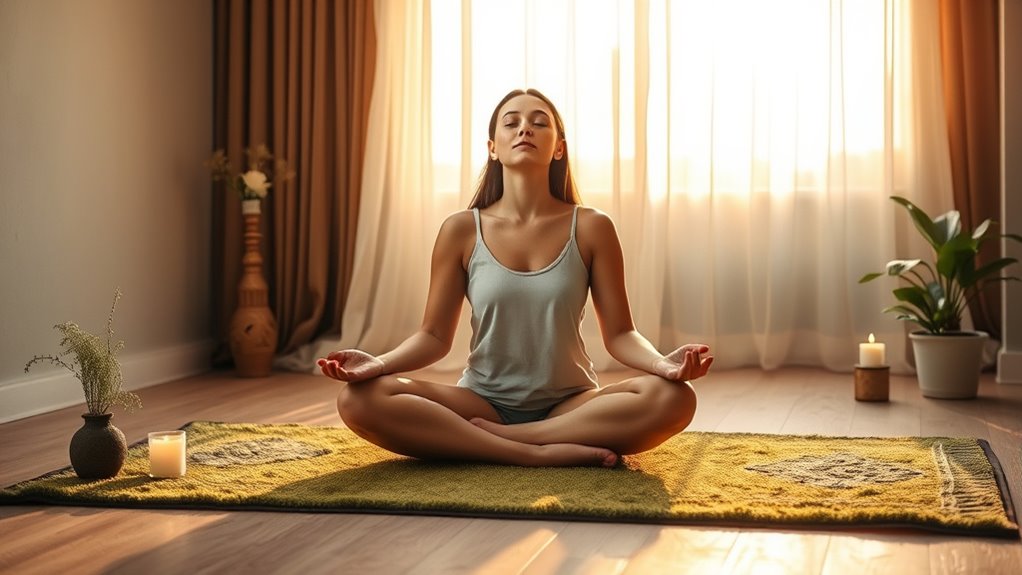

Breathing exercises are an effective way to achieve deep relaxation and reduce stress. By focusing on slow, controlled inhales and exhales, you stimulate your nervous system to relax and quiet an anxious mind. Techniques like diaphragmatic or box breathing help you stay present and foster emotional stability. Making these exercises part of your routine can improve mental clarity and resilience over time. Keep exploring to discover how simple practices can transform your sense of calm.
Key Takeaways
- Breathing exercises activate the parasympathetic nervous system, promoting deep relaxation and reducing stress.
- Techniques like diaphragmatic and box breathing help calm the mind and improve emotional stability.
- Focusing on present-moment awareness during breathing enhances mindfulness and mental clarity.
- Regular practice of controlled breathing routines can significantly lower anxiety and enhance overall well-being.
- Incorporating breathing exercises into daily routines fosters resilience and a sustained sense of calmness.
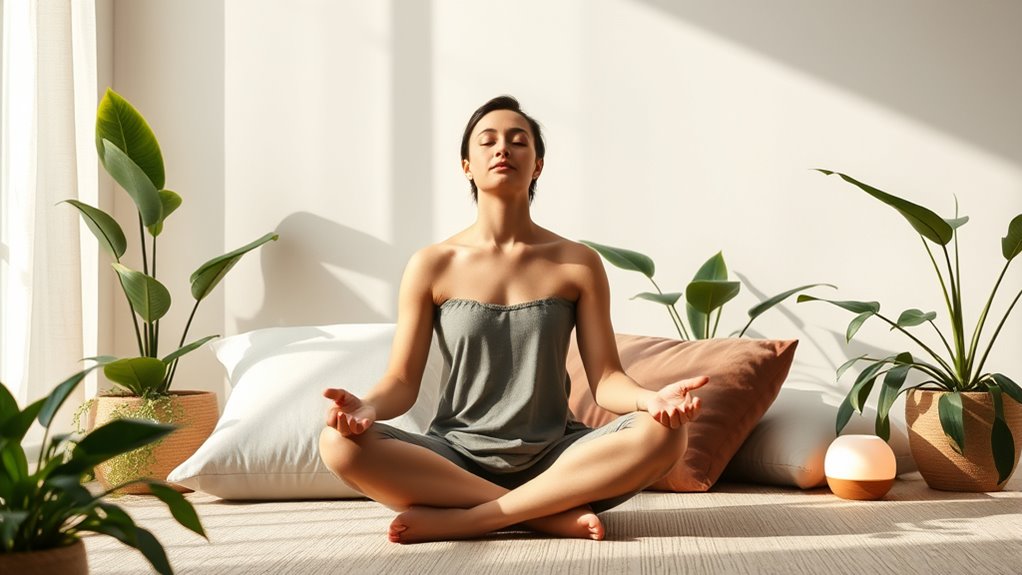
Breathing exercises are simple yet powerful tools you can use to reduce stress, improve focus, and enhance overall well-being. When you practice these techniques, you’re engaging in mindfulness techniques that help anchor your awareness in the present moment. This form of mindful breathing encourages you to pay close attention to each inhale and exhale, creating a calming rhythm that can substantially lower your stress levels. By consciously slowing down your breath, you send signals to your nervous system that it’s safe to relax, which is a fundamental aspect of stress reduction. This process helps quiet an overactive mind and reduce feelings of anxiety, making it easier for you to regain control during tense moments.
Practicing mindful breathing helps calm your mind and lower stress levels effectively.
As you incorporate breathing exercises into your daily routine, you’ll notice that they serve as effective tools for managing stress. When life feels overwhelming, taking a few deep, intentional breaths can interrupt the cycle of worry and tension. Focus on inhaling slowly through your nose, filling your lungs completely, then exhaling fully through your mouth or nose. This deliberate breathing stimulates your parasympathetic nervous system, responsible for relaxation, and helps diminish the production of stress hormones like cortisol. Over time, these mindful breathing practices become natural responses to stressful situations, helping you stay centered and composed.
Deep relaxation through breathing exercises also enhances your mental clarity and emotional stability. When you set aside a few moments to breathe deeply, you’re giving yourself a chance to reset your nervous system and calm your racing thoughts. This pause can improve your concentration and decision-making, especially when faced with challenges. Furthermore, consistent practice fosters a sense of resilience, making you better equipped to handle daily stressors. You might find that incorporating simple techniques like diaphragmatic breathing or box breathing into your routine can create a profound shift in your overall mood and mental health.
Practicing mindful breathing also reinforces the importance of present-moment awareness, which can extend beyond your breathing exercises into everyday life. Ultimately, the key to harnessing the full benefits of breathing exercises lies in regular practice. Whether you dedicate a few minutes in the morning, during a break at work, or before bed, these mindful techniques can become a reliable source of stress reduction and relaxation. As you get comfortable with controlling your breath, you’ll discover that this simple act can profoundly influence your physical and emotional health. Breathing exercises are accessible tools that empower you to cultivate calmness, clarity, and resilience in your everyday life, making relaxation a natural part of your routine.
Frequently Asked Questions
Can Breathing Exercises Help With Chronic Anxiety?
Yes, breathing exercises can help with chronic anxiety by promoting anxiety reduction. When you practice breathing techniques, you activate your body’s relaxation response, calming your mind and reducing stress levels. Regularly using these techniques allows you to manage anxiety more effectively, especially during stressful moments. Incorporate deep, slow breaths into your daily routine to experience the calming benefits and gain better control over your anxiety over time.
How Often Should I Practice Deep Relaxation Techniques Daily?
You should practice deep relaxation techniques daily, ideally twice a day, to see the benefits. Incorporate mindful breathing into your relaxation routines, dedicating 10-15 minutes each session. Consistency helps your body recognize relaxation cues and reduces stress over time. By making mindful breathing a regular part of your day, you’ll enhance your overall sense of calm and better manage anxiety and tension.
Are There Any Risks Associated With Breathing Exercises?
You might experience potential dizziness or hyperventilation risks if you breathe too quickly or hold your breath excessively. For example, someone practicing deep breathing without proper guidance could feel lightheaded or anxious. To avoid these risks, start slowly, maintain a relaxed pace, and listen to your body. If you feel uncomfortable, stop immediately and consult a healthcare professional. Proper technique minimizes these risks and guarantees safe, beneficial practice.
What Are the Best Times of Day to Practice Relaxation Methods?
You should practice relaxation methods during your morning routines and evening practices. Doing so helps set a calm tone for the day and unwind before bed. Morning sessions boost alertness, while evening practices promote better sleep. Consistency is key, so find a time that fits your schedule and stick with it. This way, relaxation becomes a natural part of your daily routine, enhancing overall well-being.
Do Breathing Exercises Improve Sleep Quality Long-Term?
Yes, breathing exercises like diaphragmatic breathing and mindfulness meditation can enhance your sleep quality over time. By calming your nervous system and reducing stress, you create a peaceful mental landscape that promotes restful sleep. Regular practice helps train your body to relax more easily, making it easier to fall asleep and stay asleep. Incorporate these techniques into your nightly routine, and you’ll likely notice long-term improvements in your sleep health.
Conclusion
Now that you’ve learned these simple breathing exercises and relaxation techniques, you’re equipped to reduce stress anytime. By taking just a few minutes each day to focus on your breath, you can feel calmer and more centered. Isn’t it worth trying to create peace within yourself? Remember, your breath is always there for you, ready to help you find calm amidst life’s chaos. So, why not start today and make relaxation a daily habit?