Practicing gratitude can boost your mental well-being by helping you focus on positive experiences and reducing stress. By regularly noticing and appreciating small moments, you create a mindset of optimism and resilience. Journaling about what you’re thankful for or practicing mindfulness deepens your feelings of gratitude, anchoring it in the present. Over time, this habit can transform your outlook, making it easier to face challenges with a balanced and hopeful perspective. Keep exploring how gratitude can enrich your life.
Key Takeaways
- Regular gratitude practice boosts mental well-being by fostering positivity and reducing stress.
- Journaling thankful moments shifts focus from stress to abundance, enhancing happiness.
- Mindfulness exercises deepen gratitude by increasing awareness of present-moment experiences.
- Combining mindfulness with gratitude helps anchor appreciation in real-time, strengthening emotional resilience.
- Viewing challenges as growth opportunities promotes a long-term, optimistic outlook on life.
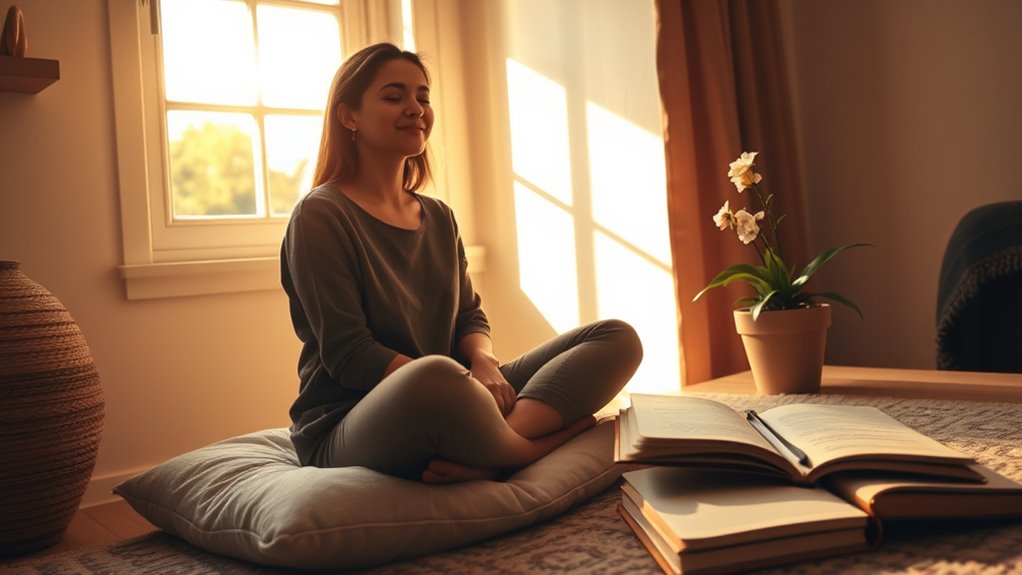
Have you ever noticed how focusing on what you’re grateful for can transform your outlook on life? Practicing gratitude is a powerful way to boost your mental well-being, and it doesn’t need to be complicated. One effective method is gratitude journaling, where you take a few moments each day to jot down things you’re thankful for. This simple practice helps shift your focus from what’s lacking or stressful to what’s abundant in your life. By consistently recording positive moments or aspects of your day, you begin to rewire your brain to notice and appreciate the good more often. Over time, this habit can lead to increased happiness, reduced stress, and a more optimistic mindset.
Alongside gratitude journaling, incorporating mindfulness exercises into your routine can deepen your sense of gratitude. Mindfulness involves paying close attention to the present moment without judgment. When you practice mindfulness exercises—such as breathing techniques, body scans, or mindful walking—you become more aware of your thoughts and feelings. This awareness allows you to recognize gratitude in everyday experiences that might otherwise go unnoticed. For example, you might notice the warmth of sunlight on your face or the soothing rhythm of your breath. These small moments, when acknowledged intentionally, create a sense of appreciation that can uplift your mood and foster resilience.
Combining gratitude journaling with mindfulness exercises creates a powerful synergy. As you write about what you’re thankful for, you also cultivate an attitude of presence and acceptance. This helps you to anchor your gratitude in real-time experiences rather than just reminiscing about past blessings. When you’re mindful during your journaling, you notice your emotions and sensations more clearly, which can deepen your feelings of thankfulness. For instance, pausing before writing and taking a few deep breaths can ground you in the present, making your gratitude more genuine and impactful. Additionally, understanding the role of contrast ratio in visual experiences highlights how subtle differences can enhance emotional responses, much like how gratitude can deepen your appreciation of life’s small moments.
Practicing gratitude regularly also encourages a shift in perspective, helping you to see challenges as opportunities for growth rather than insurmountable problems. It’s about training your mind to find the silver linings, even during difficult times. Whether it’s a supportive friend, a beautiful sunset, or a simple cup of coffee, recognizing these moments through gratitude journaling and mindfulness exercises can create a more balanced, positive outlook. Over time, these habits become second nature, reinforcing your mental resilience and overall well-being. In essence, they serve as daily reminders that life’s richness often lies in the small, everyday blessings.
Frequently Asked Questions
Can Gratitude Improve Mental Health for Everyone Equally?
Gratitude can improve mental health, but it doesn’t affect everyone equally. Cultural differences influence how you express and experience gratitude, shaping its impact. Your individual experiences also matter—what feels meaningful to one person might not to another. While practicing gratitude benefits many, some might need tailored approaches. Recognizing these factors helps you understand that mental health strategies should consider personal and cultural nuances for better effectiveness.
How Long Does It Take to See Benefits From Gratitude Practices?
You might start noticing measurable outcomes from gratitude practices within a few weeks, but timing expectations vary. Some people see benefits in as little as two weeks, while others may take longer. Consistency is key—you need to regularly focus on positive aspects. Keep practicing daily, and over time, you’ll likely experience improved mood, reduced stress, and a greater overall sense of well-being.
Are There Specific Times of Day Best for Practicing Gratitude?
You can practice gratitude anytime, but mornings and bedtime rituals are especially effective. Starting your day with gratitude helps set a positive tone, boosting your mental well-being. Incorporating gratitude into your bedtime routine allows you to reflect on the good moments, promoting restful sleep. Consistently practicing during these times helps reinforce your mindset, making gratitude a natural part of your daily life and speeding up the benefits you experience.
Can Gratitude Reduce Feelings of Anxiety and Depression?
Yes, practicing gratitude can reduce feelings of anxiety and depression. When you incorporate gratitude into your routine through mindfulness meditation, you strengthen your emotional resilience, making it easier to handle stress. Regularly focusing on positive aspects helps shift your mindset, lowering negative emotions. By actively practicing gratitude, you foster a calmer outlook, which diminishes anxiety and depression over time, promoting better mental well-being.
What Are Common Challenges When Starting a Gratitude Practice?
When starting a gratitude practice, you might face mindset shifts that feel uncomfortable or unnatural at first. Consistency barriers, like forgetting or losing motivation, can also make it tough to stick with it. You may struggle to see immediate results or feel awkward sharing what you’re thankful for. Overcoming these challenges requires patience, gentle reminders, and gradually building the habit until it becomes second nature.
Conclusion
By practicing gratitude daily, you could open a happiness so powerful, it might just shake your entire universe! Imagine feeling so grateful that even the tiniest blessings feel like life-changing miracles. When you embrace gratitude, you’re not just improving your mood—you’re transforming your entire world into a brighter, more joyful place. So start now, and watch as gratitude turns your life into a nonstop celebration of everything incredible around you!