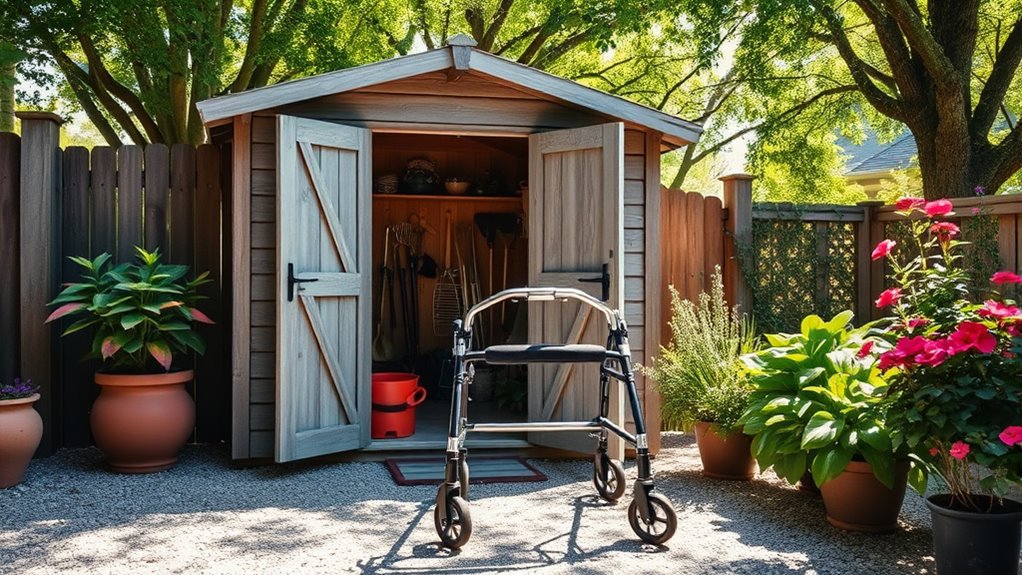

To navigate a tool shed with a walker, choose one with a wide, gentle ramp entrance, slip-resistant flooring, and at least 36 inches of clear space inside. Keep frequently used tools at waist level and use wall-mounted organizers for easy reach. Well-lit, clutter-free areas help prevent accidents, while level surfaces like sealed concrete make movement smoother. Want to discover more tips to create an accessible shed? Keep exploring for helpful ideas on making your shed safer and more comfortable.

Turn the school run and nap time into listening time
- Thousands of audiobooks, podcasts and originals
- Listen on your phone, tablet or Echo — also offline
- Cancel anytime
Key Takeaways
- Ensure shed entry has a wide, gentle ramp with slip-resistant surface for walker access.
- Design interior with clear, 36-inch wide pathways and accessible shelving at waist level.
- Use level, non-slip flooring materials like sealed concrete or vinyl for safety.
- Install bright, even lighting to improve visibility inside the shed.
- Opt for a spacious layout with ample room to maneuver and additional accessible features.

If you rely on a walker, maneuvering traditional tool sheds can be challenging. Narrow doorways, uneven floors, and cluttered spaces make it difficult to access your tools safely and comfortably. You might find yourself frustrated or even at risk of falling. That’s why designing or choosing a shed with mobility in mind is essential. An accessible shed isn’t just about having ample space; it’s about creating a layout that accommodates your needs, ensuring you can reach everything without straining or risking injury.
Start by considering the shed’s entry points. Installing a wide, ramped entry instead of steps can make a significant difference. A gentle slope, at least 36 inches wide, allows your walker to roll in smoothly without having to lift or strain. Avoid thresholds or uneven surfaces at the doorway, as these can cause wobbling or stumbling. Smooth, slip-resistant flooring inside the shed is equally important. Durable, level surfaces such as sealed concrete, vinyl, or rubber mats provide stability and reduce the risk of slips, making it safer to move around with your walker.
Installing a wide, slip-resistant ramp at the shed entrance ensures safe, easy access for walkers without lifting or stumbling.
Inside, the layout should prioritize accessibility. Keep frequently used tools within easy reach—preferably at waist level—so you don’t have to bend down or stretch up. Install shelving units that are open and shallow, avoiding deep corners or high shelves that require climbing or reaching over obstacles. Consider using pegboards or wall-mounted organizers to keep tools visible and within arm’s reach. Clear pathways—at least 36 inches wide—give you enough space to maneuver comfortably. Keep the floor clutter-free to prevent tripping hazards and make navigation easier. Incorporating accessible design principles can further enhance safety and usability for individuals with mobility aids.
Lighting also plays a vital role. Well-lit interiors help you see what you’re working on and avoid accidents. Install bright, even lighting fixtures that illuminate the entire space without shadows. Motion-activated or switch-controlled lights can add convenience, especially if you tend to move around the shed frequently. Good lighting combined with a clutter-free environment and appropriate flooring creates a safer, more user-friendly workspace.
Finally, consider the shed’s overall size. A larger, more open design allows you to turn around easily and access tools without feeling cramped. If space permits, adding a small workbench at a comfortable height can make tasks more manageable. Remember, the goal is to make your shed a safe haven where your mobility needs are prioritized, giving you independence and confidence while managing your gardening or DIY projects.
Products Worth Considering

Roborock Robot Vacuum and Mop with LiDAR Navigation and 10,000 Pa Suction

Dyson Ball Animal 3 Extra Upright Vacuum

Philips Hue Large Smart Light Tube, Black – White and Color Ambiance LED Color-Changing Light – 1 Pack
As an affiliate, we earn on qualifying purchases.
Frequently Asked Questions
Are Tool Sheds Accessible for Wheelchair Users?
Yes, tool sheds can be accessible for wheelchair users if they’re designed with wide, smooth pathways and low or no thresholds. You’ll want to look for sheds with ample space inside to maneuver comfortably. Installing ramps and adjustable shelves makes accessing tools easier. If you’re considering a shed, guarantee it’s tailored for wheelchair access, so you can reach everything safely and comfortably without obstacles blocking your way.
What Safety Features Are Recommended for Walker-Friendly Sheds?
You should install slip-resistant flooring to prevent falls, guarantee wide, unobstructed pathways for easy maneuvering, and add sturdy, accessible shelves at waist level for safety and convenience. Bright lighting helps you see clearly, while handrails along walls provide extra support. Keep tools organized and stored securely to avoid accidents. Regularly inspect the shed for hazards, and consider adding a stable ramp if there’s a step or uneven surface at the entrance.
Can Storage Solutions Be Adapted for Limited Mobility?
Yes, storage solutions can be adapted for limited mobility. You can install lower shelves, pull-out drawers, and accessible hooks to make items easier to reach. Use clear containers for visibility, and add labels for quick identification. Consider wall-mounted racks or pegboards to save floor space. By customizing your storage, you’ll improve safety and convenience, ensuring you can access your tools comfortably without risking injury or strain.
How Do I Modify a Shed for Easy Walker Access?
Did you know that nearly 40% of seniors experience mobility challenges? To modify your shed for easy walker access, widen the doorway to at least 36 inches, ensuring smooth, level flooring with no thresholds or steps. Install grab bars near the entrance for support, and clear the pathway of clutter. These simple modifications make your shed more accessible, safer, and easier to navigate with your walker.
Are There Specific Tools to Assist Navigation Inside Sheds?
Yes, there are specific tools to help you navigate inside sheds. You can install grab bars or handrails along walls to provide support, making it easier to move around safely. Using a small, rechargeable flashlight or LED work light can improve visibility. Consider placing a lightweight, portable mirror to check your surroundings. Keep tools organized on wall-mounted racks or pegboards to avoid tripping hazards, ensuring easy access and safe navigation.
Conclusion
Steering a tool shed with a walker might seem daunting at first, but with thoughtful design, it becomes manageable. Imagine it’s like steering a gentle boat through calm waters—you just need the right balance and space. One user shared how widening doorways transformed their shed into a haven of independence. With a few simple modifications, you’ll find your shed isn’t just a storage space but a place where you can confidently work and create, no matter your mobility level.