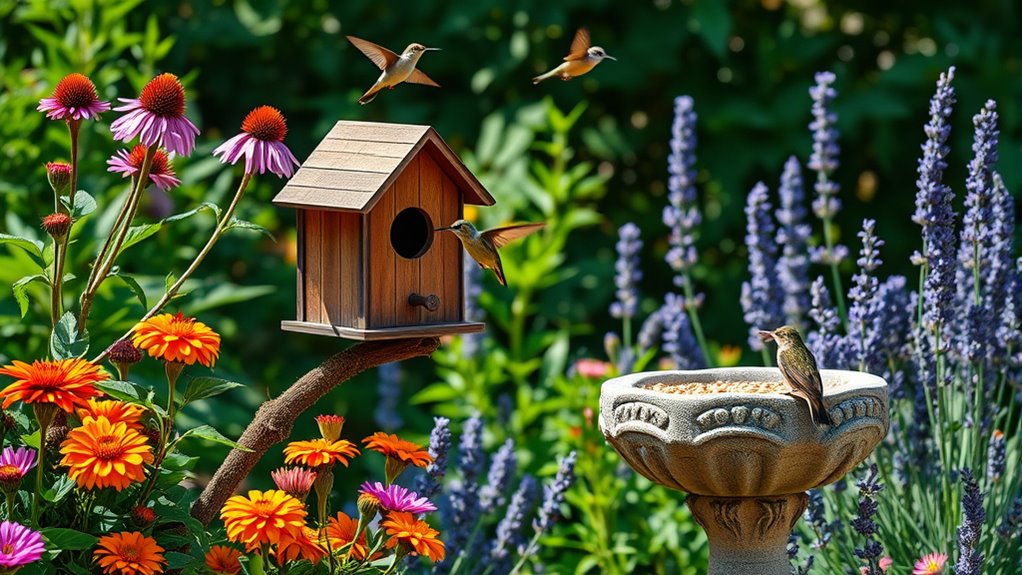

Creating a bird-friendly garden involves planting native species that provide food, shelter, and water for local birds. Position feeders and water features in sheltered, safe spots to encourage visits and nesting. Use sustainable practices by avoiding pesticides and chemicals, and include diverse plant layers like shrubs, trees, and ground cover to attract different species. Adding water sources like birdbaths or small ponds enhances habitat quality. Keep exploring to discover more simple ways to make your garden a haven for birds.
Key Takeaways
- Plant native shrubs, trees, and flowering plants to provide food and shelter for local bird species.
- Incorporate water features like birdbaths or small ponds, ensuring regular cleaning and shallow edges for easy access.
- Place feeders and water sources in sheltered, predator-safe areas with nearby dense shrubs or brush piles.
- Avoid pesticides and chemicals by using organic gardening practices to protect bird health and food sources.
- Create multiple habitat layers with ground cover, shrubs, and trees to support diverse bird populations.
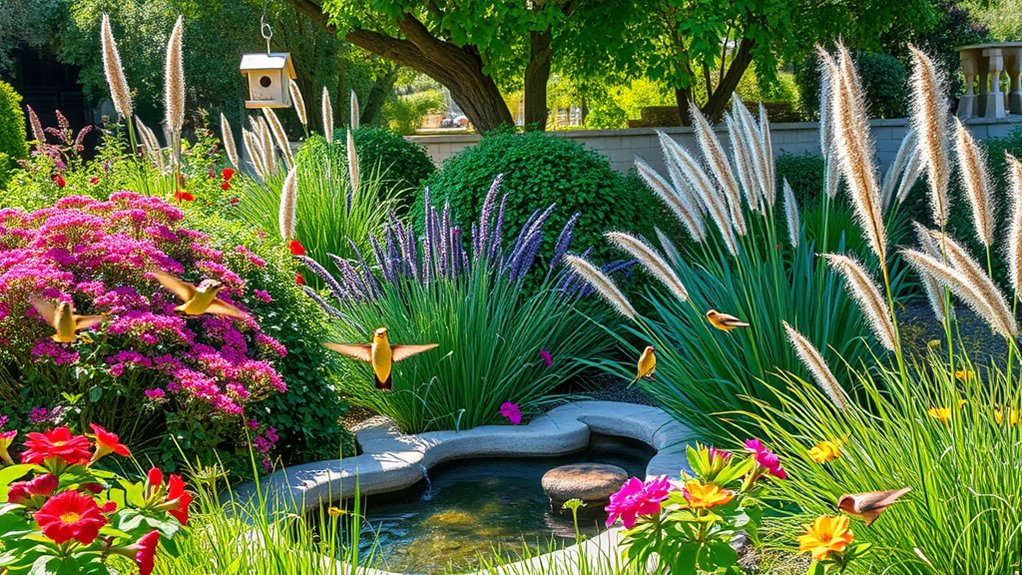
Creating a bird-friendly garden is an easy and rewarding way to support local wildlife while enhancing your outdoor space. When you design your garden with birds in mind, you create a welcoming environment that provides food, shelter, and water—key elements that attract a variety of species. One of the most effective ways to do this is by planting native plants. Native plants are adapted to your local climate and soil, which means they require less maintenance and provide the best nutrition for the birds that live nearby. They produce the berries, seeds, and insects that many bird species depend on for sustenance. Incorporate a mix of shrubs, trees, and flowering plants to offer year-round food sources and shelter. For example, native berry-producing shrubs like serviceberries or elderberries attract thrushes and waxwings, while native conifers provide roosting sites during colder months.
Adding water features is another essential step in creating an inviting habitat for birds. Birds need clean, accessible water for drinking and bathing, especially during hot or dry periods. Installing a small pond, birdbath, or fountain can transform your garden into a haven. Ensure your water feature has shallow edges, so smaller birds can perch easily, and clean it regularly to prevent algae buildup and mosquito breeding. Moving water, like a bubbling fountain or dripper, attracts more birds because the sound signals fresh water availability and helps deter predators. Position your water feature where it’s visible from inside your home, so you can enjoy observing the activity and stay vigilant for any predators nearby.
Think about the placement of your water features and native plants to maximize their effectiveness. Position feeders and water sources in sheltered areas, protected from wind and predators. Incorporate dense shrubbery or brush piles nearby to give birds a safe place to hide and nest. By creating multiple layers of habitat—ground cover, shrubs, and trees—you increase the diversity of bird species that can thrive in your garden.
Finally, avoid using pesticides or chemicals that could harm birds or their food sources. Instead, choose organic gardening practices to maintain a healthy ecosystem. With a thoughtful combination of native plants and water features, you’ll quickly see your garden come alive with the vibrant activity of local birdlife. Not only will you enjoy the sights and sounds, but you’ll also contribute meaningfully to conservation efforts by providing safe habitat for these beautiful creatures.
Frequently Asked Questions
What Are the Best Native Plants for Attracting Specific Bird Species?
You should select native plants based on bird species preferences to attract them effectively. For example, if you want hummingbirds, plant bee balm and trumpet vine. To attract orioles, choose serviceberry and black cherry. Native plant selection is key to supporting local birds’ food and nesting needs. By understanding these preferences, you create a habitat that draws specific bird species and encourages a diverse, thriving bird community in your garden.
How Can I Prevent Cats From Harming Visiting Birds?
To prevent cats from harming visiting birds, you can use cat deterrents like motion-activated sprinklers or ultrasonic devices. Installing bird-safe fencing around your garden also helps keep cats out without harming them. Keep cats indoors or supervised when outside, especially during bird activity peaks. By combining deterrents, fencing, and responsible pet care, you create a safer environment for your feathered visitors while keeping your cats safe.
What Are Eco-Friendly Ways to Maintain a Bird-Friendly Garden?
Think of your garden as your personal sanctuary for birds. To keep it eco-friendly, use composting techniques to enrich the soil naturally and garden mulching to retain moisture and suppress weeds. These methods reduce chemical use and support local wildlife. Avoid synthetic fertilizers and pesticides, and choose native plants that attract insects and provide food. Your efforts create a safe, sustainable haven where birds thrive, all while protecting the environment.
How Do Seasonal Changes Affect Bird Attraction in Gardens?
Seasonal changes influence bird attraction by prompting seasonal migration, meaning different species visit your garden at various times of the year. To stay appealing, you should provide habitat consistency through year-round food sources and shelter, even during off-peak seasons. Adjust your garden with native plants and feeders that cater to migratory birds, ensuring they find familiar, inviting habitats regardless of the season, which keeps your garden a vibrant bird haven year-round.
Can Urban Gardens Be Made More Inviting for Birds?
Urban gardens can be made more inviting for birds by thoughtfully placing bird houses where they feel safe and undisturbed, like shaded corners or sheltered spots. Add garden water features such as small ponds or birdbaths to attract birds seeking hydration and a place to bathe. Juxtapose the busy city backdrop with natural elements, creating a peaceful oasis that draws in a variety of feathered visitors.
Conclusion
By transforming your garden into a bird’s paradise, you open a window to a world of vibrant songs and fluttering wings. Your small act of kindness becomes a sanctuary where feathered friends find refuge and joy. With each seed planted and branch nurtured, you weave a tapestry of life that sings with hope and harmony. Together, you create a haven where nature’s symphony can flourish, filling your heart with wonder and the sky with life.