
To practice low-impact gardening, focus on composting kitchen scraps and yard waste to enrich your soil naturally while reducing landfill waste. Choose native plants that need less water, fertilizer, and pesticides, supporting local ecosystems. Mulch around your plants to conserve moisture and collect rainwater for irrigation. Use natural pest control methods instead of chemicals, and make simple changes to minimize your environmental impact. Keep exploring these eco-friendly techniques to create a healthier, more sustainable garden.
Key Takeaways
- Incorporate composting to recycle organic waste and enrich garden soil naturally.
- Use native plants adapted to local conditions to reduce water and chemical needs.
- Practice mulching and rainwater harvesting to conserve water and maintain soil moisture.
- Implement natural pest control methods, like encouraging beneficial insects, instead of chemicals.
- Choose low-impact gardening techniques that minimize resource use and environmental footprint.
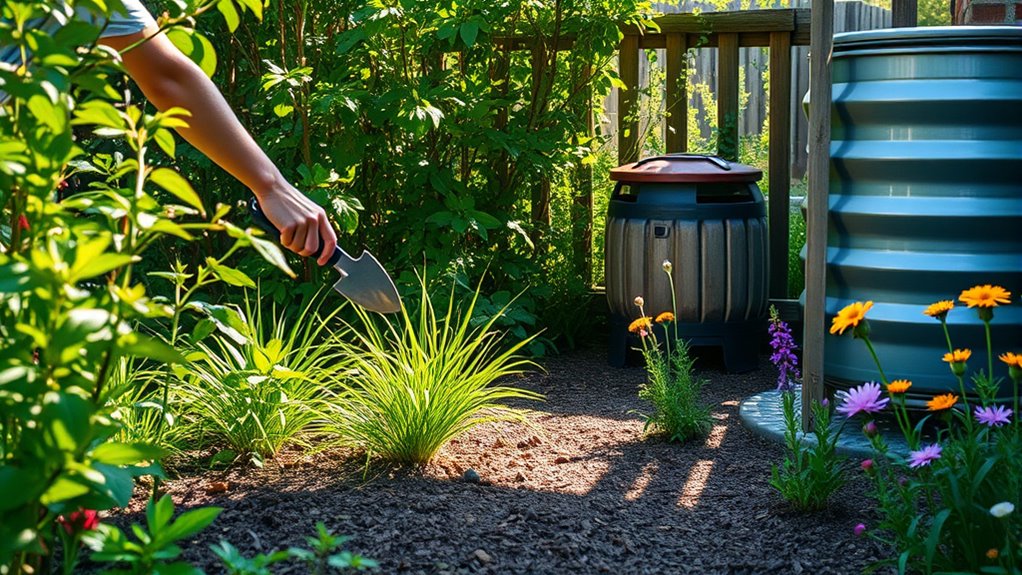
Gardening is a rewarding way to enjoy the outdoors and get your hands dirty, whether you’re planting flowers, vegetables, or herbs. One of the best ways to keep your gardening low-impact is by embracing sustainable practices that protect the environment and conserve resources. Composting techniques, for example, allow you to recycle organic waste into nutrient-rich soil, reducing landfill waste and decreasing the need for chemical fertilizers. You can start small, composting kitchen scraps like vegetable peels and coffee grounds, and gradually expand to include yard waste such as grass clippings and leaves. Not only does composting improve your soil health, but it also minimizes the carbon footprint associated with waste disposal.
Embrace composting to enrich soil, reduce waste, and support sustainable gardening practices.
Another effective way to lessen your garden’s environmental impact is through native plant selection. Native plants are adapted to your local climate and soil conditions, so they require less water, fertilizer, and pesticides to thrive. By choosing plants that naturally grow in your area, you support local ecosystems and promote biodiversity. Native plants also tend to be more resilient against pests and diseases, which means you won’t need to rely heavily on chemical interventions. This sustainable approach not only conserves water and reduces chemical runoff but also creates a more balanced and healthy garden environment.
Incorporating these low-impact activities into your routine doesn’t require a major overhaul. Simple shifts, like implementing composting techniques and prioritizing native plant selection, can make a significant difference. For instance, when planting new beds, research which native species flourish in your region and select a variety that blooms across multiple seasons, providing food and habitat for local pollinators and wildlife. When maintaining your garden, focus on natural pest control methods such as encouraging beneficial insects or manually removing pests, rather than resorting to chemical treatments.
Additionally, you can reduce your garden’s water usage by mulching around plants. Mulch helps retain soil moisture, suppresses weeds, and keeps your garden healthier with less watering. Pair this with rainwater harvesting if possible, collecting rain for your garden instead of relying solely on municipal water supplies. These practices not only lower water bills but also lessen the energy used in water treatment and transportation.
Frequently Asked Questions
What Tools Are Best for Low-Impact Gardening?
You should use hand tools like trowels, weeders, and cultivators for low-impact gardening. These tools help you work gently without disturbing the soil too much. Organic mulching is also essential; it protects plants, retains moisture, and improves soil health naturally. By combining hand tools with organic mulching, you minimize soil disruption and promote eco-friendly gardening practices, ensuring a sustainable and gentle approach to cultivating your garden.
How Can I Compost Sustainably in My Garden?
You can compost sustainably by placing your compost bin in a shady, well-drained spot to regulate moisture and temperature naturally. Regularly monitor the composting temperature to make certain of efficient decomposition without overworking the environment. This practice aligns with the idea that nature’s balance, when maintained, creates rich soil effortlessly. By respecting these principles, you turn waste into valuable nourishment for your garden, supporting eco-friendly growth and reducing landfill contributions.
Are Native Plants More Eco-Friendly for Gardens?
Native plants are more eco-friendly for gardens because they offer numerous native plant benefits, like supporting local pollinators and requiring less water and fertilizers. By choosing native plants, you promote eco-friendly gardening practices, reduce chemical use, and create a sustainable environment. These plants naturally thrive in your local climate, making your garden more resilient and beneficial for the ecosystem without extra effort or resources.
How Do I Prevent Soil Erosion Naturally?
So, you want to stop soil from washing away? Easy! Use mulching techniques to cushion the soil from rain’s tantrums and prevent erosion. Mulch retains moisture, supports water conservation, and keeps your garden looking tidy. Plant ground covers or deep-rooted natives to hold soil in place. With these eco-friendly tips, your garden stays lush, and the soil stays put—no magic required, just smart, natural solutions.
Can I Garden Without Using Chemical Fertilizers?
Yes, you can garden without chemical fertilizers by using organic pest control methods and rainwater harvesting. Organic pest control keeps pests away naturally, reducing the need for chemicals. Rainwater harvesting provides a sustainable water source, helping plants grow healthy without chemical inputs. Focus on composting, mulching, and natural amendments to enrich your soil, ensuring your garden thrives organically and sustainably.
Conclusion
By choosing low-impact garden activities like composting or native plant gardening, you help protect the environment while enjoying nature’s benefits. Did you know that gardens with native plants require 30% less water and maintenance? Incorporating these sustainable practices not only preserves our ecosystems but also creates a peaceful, productive space for you. So, start small, stay mindful, and make a positive difference—your garden and the planet will thank you.