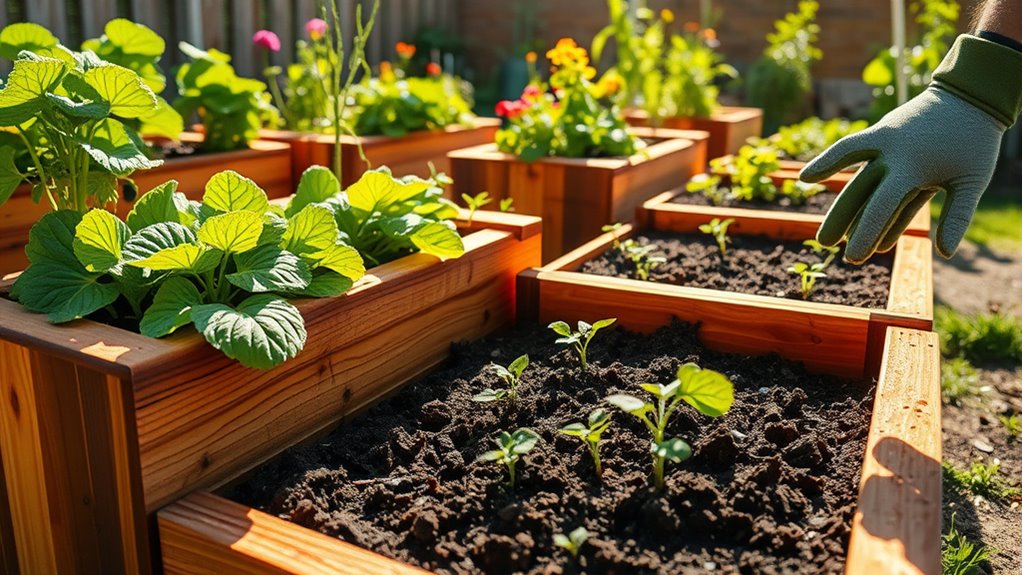

Raised garden beds make gardening much easier by improving soil drainage, which helps prevent water pooling and root rot. They also provide better access for planting, maintenance, and pest inspection, reducing the need for chemicals. Their height acts as a physical barrier to pests like slugs and burrowing critters. Plus, you can control the soil quality for healthier plants. Keep exploring to discover even more ways raised beds can transform your gardening experience.
Key Takeaways
- Raised beds improve accessibility, reducing bending and strain for easier planting and maintenance.
- Enhanced soil drainage prevents waterlogging, promoting healthier plant growth with less effort.
- Elevated structures act as pest barriers, minimizing pest problems and reducing chemical treatments.
- Defined borders and better organization simplify garden management and early pest detection.
- Customizable soil mixes in raised beds optimize growing conditions, leading to more productive and healthier plants.

Have you ever considered how raised garden beds can transform your gardening experience? These elevated structures aren’t just stylish—they offer practical benefits that can make tending your plants easier and more enjoyable. One of their main advantages is improved soil drainage. Unlike in-ground beds, where water can pool and cause root rot or other problems, raised beds allow excess water to drain quickly and efficiently. This means you can avoid soggy soil that hampers plant growth and promotes disease. Better drainage also means you have more control over the soil conditions, so you can tailor the mix to suit specific plants, whether they need well-draining sandy soil or moisture-retentive compost. This control leads to healthier plants and a more productive garden overall.
In addition to drainage, raised beds help you manage pest control more effectively. Because you build the beds above ground level, you create a physical barrier that makes it harder for pests like slugs, snails, and certain insects to reach your plants. You can also install protective covers or netting more easily around the beds to keep out pests that might otherwise cause damage. This proactive approach reduces the need for chemical treatments, making your garden safer for beneficial insects, birds, and your family. Furthermore, since you’re working with defined borders, it’s simpler to monitor and remove pests early before they cause significant harm. The elevation itself can also discourage burrowing pests like voles or gophers, especially if you add a wire mesh underneath the bed.
Another way raised beds contribute to pest control is through better soil health. Because you’re in charge of the soil composition, you can avoid contaminated or poor-quality soil that might harbor pests or diseases. Regularly adding fresh compost and organic matter boosts soil vitality, encouraging vigorous plant growth that’s more resistant to pests. Additionally, the ease of access makes it simpler to inspect your plants regularly, catching pest problems early before they spread. This proactive management keeps pest populations under control naturally, reducing the need for pesticides.
Frequently Asked Questions
What Materials Are Best for Raised Garden Bed Construction?
You should choose durable materials like cedar or composite wood for your raised garden bed, as they resist rot and last longer. Metal options, such as galvanized steel or aluminum, are also excellent because they’re sturdy and weather-resistant. Both materials require minimal maintenance and can withstand the elements, ensuring your garden bed stays solid and functional for years. Consider your aesthetic preference and budget when selecting the best material for your needs.
How Deep Should a Raised Garden Bed Be for Root Vegetables?
For root vegetables, you should make your raised garden bed at least 12 to 18 inches deep. This bed depth requirements allow enough space for roots to grow comfortably and prevent crowding. If you’re planting larger root vegetables like carrots or parsnips, opting for a depth closer to 18 inches is ideal. Always consider the specific root vegetable’s depth needs to guarantee healthy growth and a good harvest.
Can Raised Beds Be Used Indoors or in Shaded Areas?
Like a cozy nook for your plants, raised beds work indoors and in shaded areas. You can use them for indoor gardening, where they bring sunlight and soil closer to you, making planting easier. In shaded spots, they help optimize limited sunlight, helping your plants thrive. Just guarantee your plants get enough light, and you’ll transform any shaded corner into a lush oasis, no matter the weather outside.
What Are the Cost Differences Between DIY and Pre-Made Raised Beds?
You’ll find that the cost comparison between DIY and pre-made raised beds varies based on materials and size. DIY options are usually cheaper upfront, letting you choose affordable wood or repurpose materials, which can save you money. Pre-made raised beds, however, cost more due to manufacturing and convenience fees. If you want quick setup and durability, pre-made might be worth the extra expense, but DIY often offers better savings.
How Often Should I Replace or Upgrade the Soil in My Raised Beds?
You should replace or upgrade your soil in raised beds every 2 to 3 years. To maintain healthy plants, focus on soil rejuvenation by regularly incorporating compost, which adds essential nutrients. Over time, nutrients deplete, so mixing in fresh compost helps improve soil structure and fertility. Keep an eye on plant growth; if you notice poor performance, it’s a sign it’s time to rejuvenate your soil.
Conclusion
By choosing raised garden beds, you’re gently opening the door to a more comfortable, inviting gardening experience. They softly lift your plants closer to the sun’s warm embrace, making tending easier and more enjoyable. With each passing season, you’ll find your garden flourishing in a cozy, well-defined space that’s kind to your back and your plants alike. Embrace this simple upgrade, and watch your gardening journey blossom into something truly delightful.