Removing clutter is essential for maintaining a safe environment. When you clear walkways and organize items using shelves, bins, or hooks, you reduce the risk of trips, falls, and injuries. Regularly identifying hazards like loose cords or scattered tools helps keep your space safe. Consistently maintaining an organized area not only prevents accidents but also makes hazard detection easier. Continue exploring how effective storage solutions and routine checks can make your space safer every day.
Key Takeaways
- Identify and remove hazards like loose cords, scattered tools, and obstructed walkways.
- Use proper storage solutions such as shelves, bins, and hooks to organize items and reduce clutter.
- Regularly reassess the environment to prevent clutter buildup and maintain safety.
- Keep pathways clear and avoid overloading shelves to prevent trips and falls.
- Incorporate technology like AI security systems for ongoing hazard detection and environment monitoring.
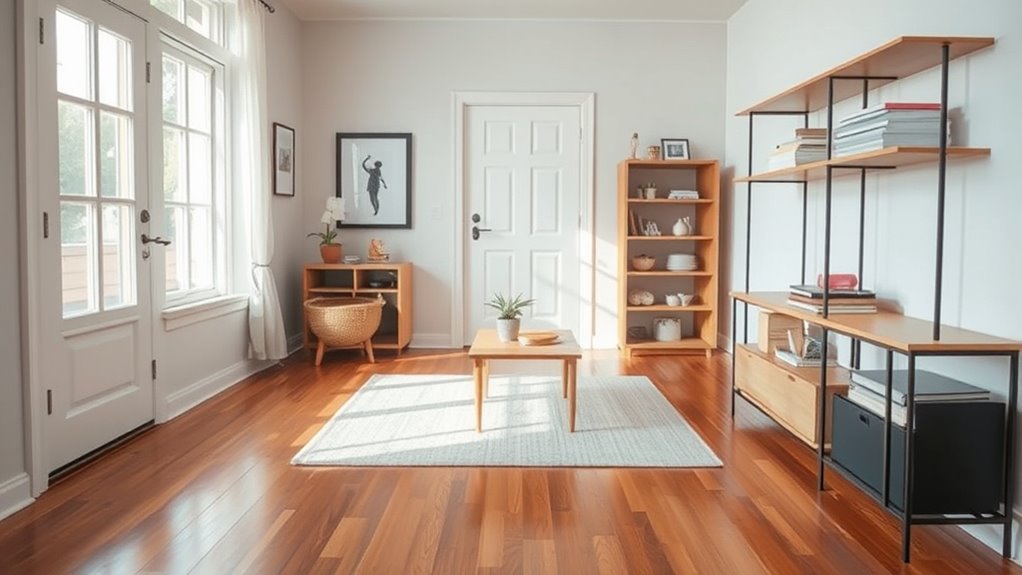
Clutter can considerably increase the risk of accidents in your home or workplace, making it essential to keep spaces organized. When clutter accumulates, it becomes harder to spot potential hazards, increasing the chance of trips, falls, or other injuries. To effectively manage clutter, you need to implement practical storage solutions that not only help contain items but also make hazard identification easier. Good storage options—like shelves, bins, cabinets, or hooks—keep belongings out of walkways and prevent dangerous piles from forming. When everything has a designated place, you can quickly assess your environment for hazards and address them before they cause harm.
The first step in reducing clutter is to prioritize hazard identification. Take a close look at your space and identify items that could cause accidents if left lying around. For example, loose cords, scattered tools, or cluttered walkways all pose risks. Once you recognize these hazards, you can decide how best to organize or remove them. Storage solutions should be tailored to your specific needs—small containers for loose screws, sturdy racks for tools, or labeled bins for seasonal items. Clear, labeled storage not only keeps clutter at bay but also makes it easier to locate things quickly, reducing the temptation to leave items strewn about.
As you implement storage solutions, keep pathways clear and accessible. Avoid overloading shelves or piling items haphazardly, which can lead to falling objects or unstable stacks. Regularly reassess your environment to ensure clutter doesn’t reaccumulate. This habit of routine hazard identification and organization helps maintain a safer space over time. When you’re consistent, you’ll notice fewer near-misses or accidents stemming from misplaced objects or obstructed walkways.
In workplaces, safety regulations often emphasize the importance of organized storage and hazard identification. Using proper storage solutions ensures that dangerous substances or equipment are stored securely, minimizing accidental contact or spills. Maintaining clear and organized environments also simplifies safety inspections and emergency responses, as hazards are less likely to be hidden beneath clutter. Your proactive approach in identifying hazards and choosing suitable storage solutions not only protects you but also others around you, creating a safer environment for everyone.
Ultimately, removing clutter is about more than tidiness; it’s a vital step in accident prevention. By consistently applying effective storage solutions and honing your hazard identification skills, you create an environment where hazards are minimized, and safety is prioritized. Keeping your space organized helps you move freely and confidently, knowing that potential dangers are kept in check. Regular maintenance and vigilance will ensure your home or workplace remains safe and clutter-free for the long term. Incorporating AI security into your safety practices can also enhance hazard detection and monitoring, further reducing risks.
Frequently Asked Questions
How Often Should Clutter Be Assessed for Safety Risks?
You should assess clutter for safety risks regularly, ideally weekly or whenever a space’s use changes. During hazard identification, focus on clutter categorization—identify which items pose tripping or fire risks. Frequent checks help you spot hazards early, preventing accidents. By staying vigilant and systematically reviewing clutter, you guarantee your environment remains safe, reducing the likelihood of injuries and maintaining a secure space for everyone.
What Tools Are Best for Clearing Clutter Safely?
You don’t need fancy tools to clear clutter safely—just practical storage solutions and effective decluttering techniques. Use sturdy boxes, labels, and a trash bag for quick sorting. A broom or handheld vacuum helps clean as you go, preventing dust buildup. Always lift with your legs, not your back, and wear gloves to protect your hands. These simple tools and techniques make decluttering safer, easier, and more efficient.
How Can I Motivate Family Members to Declutter?
To motivate your family members, try using motivational strategies like setting small, achievable decluttering goals and celebrating progress together. Make decluttering fun by turning it into a challenge, offering rewards, or playing music during the process. Address decluttering challenges by understanding their concerns and involving everyone in decision-making. Keep communication positive and encouraging, so they feel motivated rather than overwhelmed, making the process more enjoyable for everyone.
Are There Specific Safety Standards for Clutter Removal?
Yes, there are safety standards for clutter removal to reduce fire hazards and improve organization. You should use proper storage solutions like cabinets, shelves, and bins to keep items off floors and pathways. Regularly check for and eliminate fire hazards, such as overloaded outlets or flammable materials. Following local safety codes and guidelines helps guarantee your space remains safe, organized, and compliant with safety standards.
How Do I Handle Sentimental Items During Decluttering?
Oh, the noble quest of sentimental preservation! When handling sentimental items, you should gently decide what truly sparks joy and preserve those memories. Consider creating a dedicated space or photo album for keepsakes, allowing you to declutter without losing the essence of your past. If an item no longer serves a purpose, it’s okay to let it go — your memories aren’t stored in clutter but in your heart.
Conclusion
By clearing clutter, you’re clearing a path through a dense forest, making safety your well-lit trail. Every item you remove sharpens your environment, transforming chaos into calm. Think of your space as a ship’s deck—an uncluttered deck keeps you steady and secure amid rough waters. When you tidy up, you’re not just organizing; you’re creating a sanctuary where hazards can’t hide. Embrace this simple act, and let safety sail smoothly into your life.