To safely use step stools and ladders, always place them on flat, stable surfaces and check for damage before each use. Maintain three points of contact when climbing and keep your body centered between the rails. Avoid overreaching or leaning, and don’t carry items in your hands—use a tool belt instead. Make sure all locks and stabilizers are secure. Following these tips can prevent accidents; there’s more to know to keep you safe.
Key Takeaways
- Always inspect ladders and step stools for damage before use.
- Place on stable, level surfaces and avoid uneven or slippery grounds.
- Maintain three points of contact and keep your body centered during climbing.
- Do not overreach or lean excessively; move the ladder as needed.
- Follow manufacturer guidelines for weight limits and proper setup.
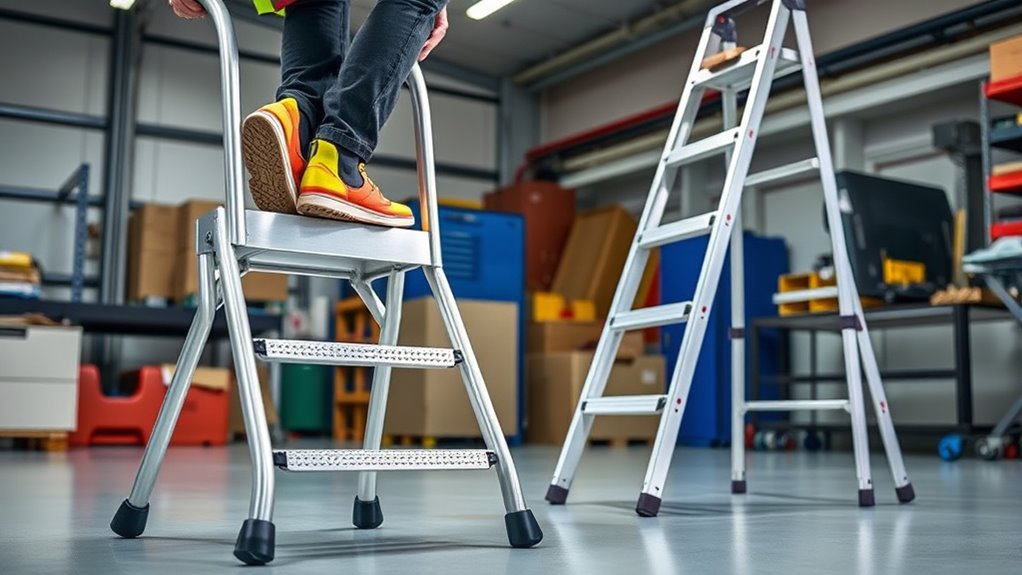
Using step stools and ladders safely is essential to prevent falls and injuries in both home and workplace settings. One of the most important aspects of safe ladder use is ensuring stability. Stability tips are your first line of defense against accidents. Before climbing, always check that the ladder is on a flat, solid surface. If the ground is uneven, use shims or a leveling device to steady the base. Never place a ladder on loose objects, furniture, or unstable materials, as these can shift and cause slips or falls. When ascending or descending, maintain three points of contact—two hands and one foot or two feet and one hand—to keep your balance. Keep your body centered between the side rails, avoiding leaning or overreaching, which can cause the ladder to tip over. Regular inspection routines are crucial to identify potential hazards before they cause injury. Before each use, thoroughly examine the ladder for any damage or defects. Look for cracks, bent rungs, loose or missing hardware, or corrosion, especially on metal ladders. Wooden ladders should be checked for splits, rot, or splinters. If you find any damage, do not use the ladder until it’s repaired or replaced. Ensure locking mechanisms, hinges, and stabilizers function correctly and securely. A sturdy, well-maintained ladder reduces the risk of unexpected failure during use. Incorporate inspection routines into your regular safety checks—this means inspecting the ladder before each use and scheduling thorough inspections periodically, especially if the ladder is used frequently or stored in harsh environments. Additionally, understanding the importance of Stability tips can significantly enhance your safety practices during ladder use. When setting up your ladder, always follow manufacturer guidelines for height and weight limits. Extend the ladder fully and lock all braces securely. Maintain three points of contact while climbing, and never carry heavy tools or objects in your hands—use a tool belt or hoist items up after you’ve reached your working height. Keep the area around the base clear of clutter, cords, or slippery substances to prevent tripping hazards. If you need to work at a height for an extended period, consider using a platform ladder or scaffolding designed for stability and comfort. Remember, safety isn’t just about your current task; it’s about creating a routine of thorough inspections, proper setup, and awareness of stability tips that protect you every time you use a ladder or step stool.
Frequently Asked Questions
How Often Should Step Stools and Ladders Be Inspected for Damage?
You should inspect your step stools and ladders before each use for damage assessment. Regular inspection frequency is essential to identify cracks, loose rungs, or other signs of wear. If you notice any damage, avoid using the equipment until it’s repaired or replaced. Proper, frequent inspections help guarantee safety and prevent accidents, so make it a habit to check thoroughly every time you plan to use your step stool or ladder.
Are There Weight Limits for Different Types of Step Stools and Ladders?
Did you know that most step stools and ladders have weight capacities ranging from 200 to 375 pounds? You should always check the label for specific weight limits, which depend on material strength and design. Exceeding these limits can cause accidents or damage. Always select a ladder or stool with a suitable weight capacity for your task, ensuring safety and durability every time you work at height.
Can Step Stools Be Used on Uneven or Slippery Surfaces Safely?
You shouldn’t use step stools on uneven or slippery surfaces without addressing stability concerns. To do so safely, first prepare the surface by leveling or adding non-slip mats. Always check the stool’s feet for grip and stability before climbing. If the surface remains unstable, it’s best to find a more secure location or use equipment designed for uneven terrain, preventing falls and injuries.
What Should I Do if a Ladder or Step Stool Is Damaged?
If you notice damaged equipment, stop using the ladder or step stool immediately. You should inspect it carefully and follow proper repair procedures, which often involve reporting the damage to your supervisor or maintenance team. Never attempt to fix damaged equipment yourself unless you’re trained. Using damaged equipment can lead to accidents, so make certain it’s repaired or replaced before resuming work to stay safe.
Are There Specific Safety Tips for Children Using Step Stools?
Think of guiding a child on a step stool as steering a tiny ship through calm waters. You must keep a close eye, providing constant child supervision, and guarantee they understand proper training. Show them how to stand steadily, keep both hands on the rails, and never rush. By doing so, you turn a simple step stool into a safe adventure, preventing falls and building their confidence safely.
Conclusion
Using step stools and ladders safely isn’t just about following rules; it’s about understanding that stability and caution are especially important to reduce accidents. Some experts believe that the human brain’s perception of height can influence risk-taking behavior, making vigilance even more essential. By staying alert, inspecting your equipment, and using them properly, you align with both safety guidelines and the natural tendency of the mind to seek security. Ultimately, your careful approach transforms potential hazards into safe, productive tasks.