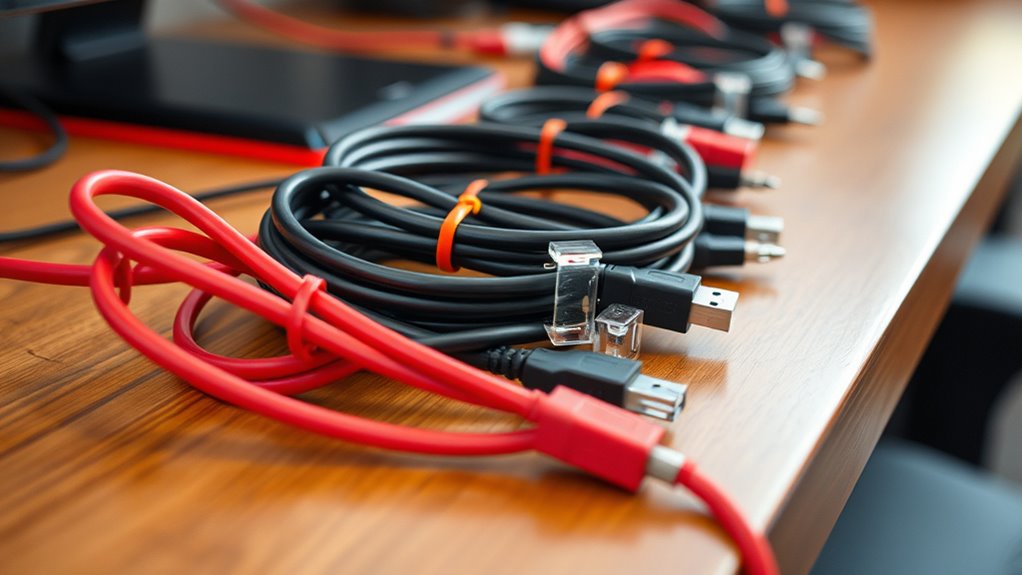

To properly secure electrical cords and wires, gather all your cables and identify the ones needing attention. Use cable clips, raceways, or adhesive mounts to attach cords along walls or furniture, keeping them out of walkways. Bundle excess length with Velcro straps or cable ties to reduce clutter. Regularly inspect your cords for damage and replace any frayed or exposed wires to guarantee safety. Taking these steps can greatly improve your space’s safety and organization—continue to learn more about effective cord management strategies.
Key Takeaways
- Use adhesive cable clips or raceways to secure cords along walls and furniture for a neat, safe setup.
- Bundle excess cord length with cable ties or Velcro straps to prevent tangling and tripping hazards.
- Route cords away from walkways and crossing points to reduce trip risks and clutter.
- Label cords for easy identification, troubleshooting, and to minimize unnecessary unplugging.
- Regularly inspect cords for damage and replace any frayed or exposed wires immediately to ensure safety.

Have you ever tripped over a loose electrical cord or worried about wires shorting out? If so, you’re not alone. Many people overlook the importance of proper cord management, which can lead to accidents and damage. When you focus on cable organization, you create a safer, more efficient environment. The first step is understanding how to keep your cords tidy and secure so they don’t become a hazard.
Start by gathering all your cords and wires in one place. This helps you see what you’re working with and identify which cords need the most attention. Use cable organizers or clips to keep cords aligned and prevent them from tangling. For longer cables, consider using cable ties or Velcro straps to bundle excess length. Not only does this look cleaner, but it also reduces the risk of tripping or accidental unplugging. When you’re managing cords, always aim for a system that allows easy access when you need to disconnect or move devices.
Gather and organize all cords to prevent tangles and improve accessibility.
Applying cable management techniques also means routing cords along walls or behind furniture. Use adhesive cable clips or raceways to secure cords along baseboards or behind desks. This keeps them out of the way and prevents them from hanging loosely where someone might trip. When cords are properly routed, you’re less likely to stumble over them or accidentally pull out a plug. Additionally, avoiding crossing cords across walkways minimizes clutter and creates a safer space.
Another vital aspect of cable organization is labeling. When you have multiple cords running to different devices, label each one so you can identify them quickly. This saves you time and frustration, especially when troubleshooting or rearranging your setup. Proper labeling also discourages unnecessary unplugging, which can cause wear and tear on the cords and sockets.
Remember to check your cords regularly for signs of damage, such as fraying or exposed wires. Damaged cords should be replaced immediately to prevent electrical hazards. When cords are in good condition and well-organized, your home or workspace becomes safer and more functional. Taking the time to implement effective cord management and cable organization practices pays off in the long run, reducing accidents and prolonging the life of your electronics. Incorporating safety precautions like inspecting cords regularly enhances overall electrical safety.
Frequently Asked Questions
Are There Specific Safety Codes for Securing Outdoor Electrical Cords?
Yes, there are safety codes for securing outdoor electrical cords. You should use weatherproof connectors to prevent moisture from entering connections and guarantee reliable insulation techniques to protect against weather elements. Secure cords properly, keeping them off the ground and away from foot traffic or sharp objects. Following these safety guidelines helps prevent electrical hazards, reduces wear and tear, and complies with local electrical codes for outdoor wiring.
How Often Should I Inspect Secured Cords for Wear or Damage?
You should inspect secured cords for wear or damage at least once a month. Regular damage inspections help catch issues like frayed wires, cracks, or loose connections early, preventing potential electrical hazards. If you notice any cord wear or damage during inspections, replace or repair the cord immediately. Consistent checks guarantee your outdoor electrical setup remains safe and reliable, reducing the risk of electrical shocks or fires.
Can Securing Cords Affect Their Electrical Performance?
Securing cords properly doesn’t negatively affect their electrical performance if you avoid tight bends or pinching, which can reduce cord flexibility and hinder electrical conductivity. When you secure cords loosely and avoid sharp edges, you maintain ideal flexibility and conductivity, ensuring safe and efficient operation. Properly secured cords prevent damage and tripping hazards without compromising their electrical performance, keeping your space safe and cords functioning smoothly.
What Are the Best Materials for Cord Management in Humid Environments?
Think of your cords like delicate plants in a rainforest; they need protection from moisture. In humid environments, water-resistant tapes and corrosion-resistant clips are your best materials. These resist moisture, preventing rust and short circuits. I once used waterproof tape to secure outdoor wires, and it held up perfectly. Selecting these materials guarantees your cords stay dry, safe, and functional, even in damp conditions.
Are There DIY Methods Recommended for Securing High-Voltage Wires Safely?
For DIY solutions to secure high-voltage wires safely, you should prioritize high-voltage safety standards. Use insulated hooks or clips designed for high-voltage applications to keep wires organized and off the floor. Avoid makeshift solutions like duct tape or cheap fasteners, as they can compromise safety. Always guarantee wires are properly insulated and grounded, and consult a professional if you’re unsure. Safety first—don’t take shortcuts with high-voltage wiring.
Conclusion
By securing your cords and wires, you’re weaving a safety net that catches accidents before they happen. Think of your space as a carefully choreographed dance, where cords stay neatly in place, guiding your steps smoothly. When you take the time to organize and secure, you’re not just preventing harm—you’re creating a safe, harmonious environment. Keep those wires tamed, and watch your home become a sanctuary where safety flows as effortlessly as a gentle breeze.