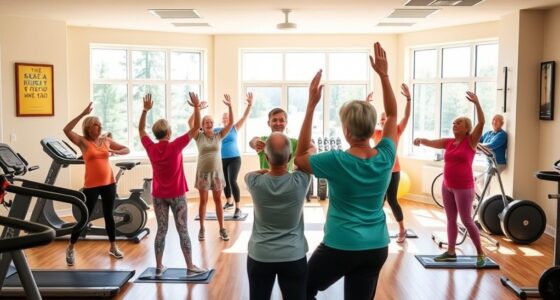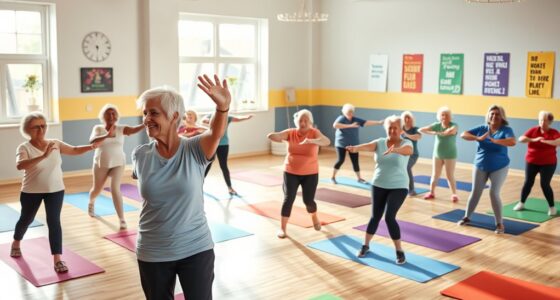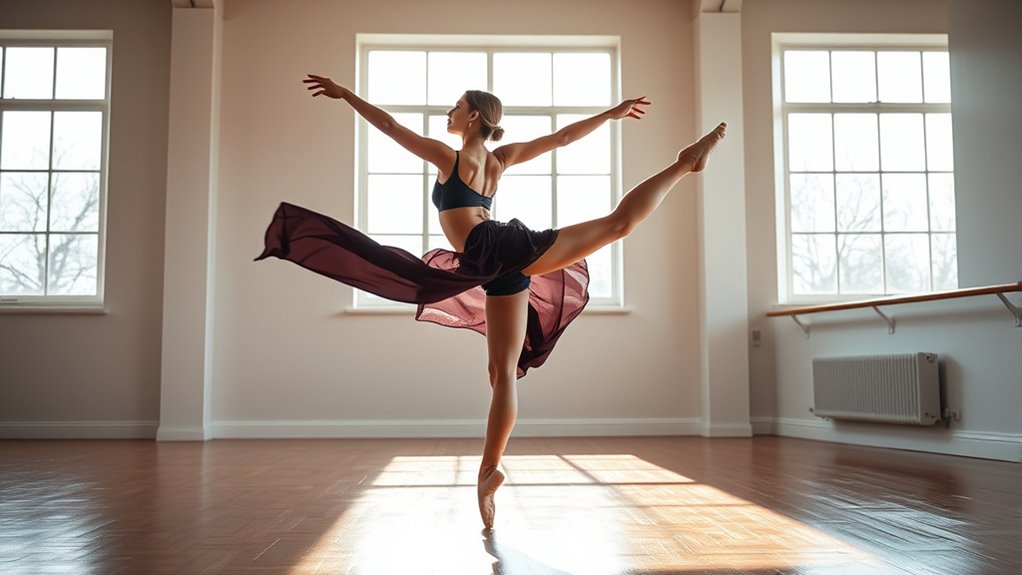

Practicing dance is a fun way to boost both your strength and balance simultaneously. It engages multiple muscle groups through dynamic movements, improving muscle endurance, stability, and coordination. Dance challenges your proprioception and stabilizer muscles, helping you stay steady on uneven surfaces and during daily activities. The repetitive routines build muscle capacity and control while enhancing body awareness. Keep exploring, and you’ll discover even more ways dance can strengthen your body and boost your confidence.
Key Takeaways
- Dance enhances muscle endurance and stability through repetitive, controlled movements that strengthen core, leg, and arm muscles.
- It improves proprioception and body awareness, aiding in better balance and coordination during various routines.
- Dynamic footwork and weight shifts challenge stability, helping to develop neuromuscular control and precise movement.
- Repeated dance routines foster endurance, allowing muscles to resist fatigue and support sustained strength.
- The engaging nature of dance boosts motivation and confidence in maintaining balance and strength in daily activities.
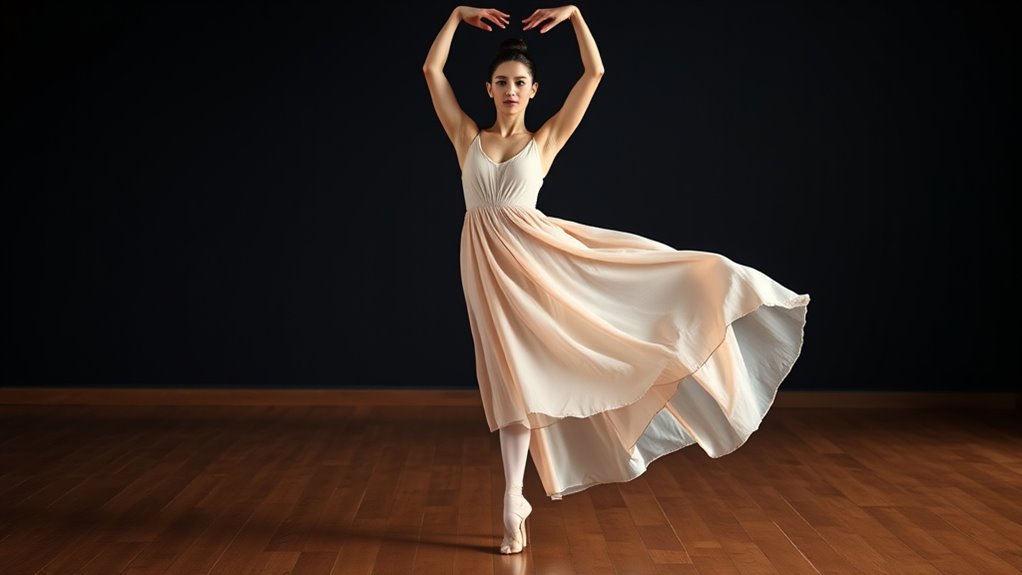
Dance is an enjoyable way to improve both strength and balance, making it a perfect addition to your fitness routine. When you immerse yourself in dance choreography, you’re not just moving to the rhythm—you’re actively engaging muscles that support your stability and overall strength. Through repeated practice of dance routines, you develop muscle endurance, enabling you to perform movements with greater control and less fatigue over time. This combination of skill and stamina makes dance a dynamic way to enhance physical fitness without feeling like a chore.
Dance combines rhythm, strength, and balance to boost fitness and endurance seamlessly.
As you learn new dance choreography, you challenge your body in ways that traditional exercises might not. Coordinating complex footwork, arm movements, and shifts in weight requires focus and control, which directly contribute to better balance. The more you practice, the more your proprioception—the sense of your body’s position—improves. This heightened awareness helps you stay steady on uneven surfaces or when performing daily activities, reducing the risk of falls and injuries. Dance routines often incorporate balance-intensive moves like pirouettes, lunges, and isolations, all of which strengthen stabilizer muscles that keep you upright and aligned.
Engaging in dance also pushes your muscular endurance to new heights. As you repeat choreography sequences, your muscles adapt to sustain prolonged effort, increasing their capacity to resist fatigue. This endurance is essential for maintaining good posture and stability, especially as you age. The continuous flow of movement in dance challenges your core muscles, legs, and arms, forcing them to work together efficiently. Over time, this leads to improved muscle tone, joint stability, and overall strength. Unlike isolated strength training, dance makes these benefits functional, translating directly into better performance in everyday activities.
Furthermore, dance’s rhythmic nature encourages you to move in a controlled, deliberate manner. This control enhances your neuromuscular coordination, which is essential for both strength and balance. As you master dance choreography, you become more attuned to your body’s movements, learning to distribute your weight properly and activate muscles precisely when needed. This heightened coordination not only boosts your physical capabilities but also makes movements feel more natural, fluid, and confident. The integration of balance and strength training in dance aligns with the principles of AI-powered virtual reality in e-learning, providing immersive and engaging methods to develop these skills.
Incorporating dance into your fitness routine is a smart way to build muscle endurance and improve balance simultaneously. You gain strength through repetitive, controlled movements, and your balance improves as you develop better muscle coordination and proprioception. The joy of dancing keeps you motivated, helping you stay consistent and enjoy the process. Over time, you’ll notice increased stability, strength, and confidence—qualities that benefit all aspects of your life.
Frequently Asked Questions
Can Dance Improve Balance for Seniors?
Yes, dance can improve your balance as a senior. Through dance therapy, you engage in rhythmic movement that strengthens muscles and enhances coordination. These activities challenge your stability, helping you develop better control and confidence. Regular participation in dance exercises promotes flexibility and proprioception, reducing fall risk. So, if you incorporate dance into your routine, you’ll likely notice improved balance and overall physical well-being over time.
What Are the Best Dance Styles for Strength?
Think of your muscles as the foundation of a sturdy house; dance styles like ballet, jazz, and tap serve as essential beams that bolster strength. These styles, through dance conditioning and strength training, target diverse muscle groups, building endurance and power. By engaging in these energetic forms, you activate your core and limbs, turning movement into a symphony of strength that keeps you resilient and vibrant.
How Often Should I Practice Dance for Benefits?
You should practice dance at least three to four times a week to see consistent benefits. Following frequency guidelines helps improve your strength, balance, and overall fitness faster. Staying consistent with your practice guarantees you build muscle memory and avoid setbacks. Even short sessions can be effective if done regularly. Prioritize quality over quantity, and you’ll notice progress in your strength and balance sooner.
Are There Any Safety Concerns During Dance Practice?
Yes, there are safety concerns during dance practice. To prevent injuries, follow safety guidelines like warming up properly, using correct technique, and listening to your body. Avoid pushing through pain and make sure your practice area is clear of hazards. Injury prevention is key, so take regular breaks and stay hydrated. If you’re unsure about moves, consult a dance instructor to reduce risks and stay safe while enjoying your dance sessions.
Can Dance Help Recover From Injury?
Yes, dance can aid recovery from injury by promoting rehabilitation exercises that improve strength and flexibility. It helps prevent future injuries through injury prevention techniques and controlled movements. By working closely with healthcare professionals, you can tailor dance routines to your recovery needs, making the process enjoyable and effective. Just guarantee you listen to your body and avoid pushing too hard, allowing proper healing while regaining your strength and balance.
Conclusion
Don’t worry if you’re not a professional dancer — anyone can enjoy the benefits of practicing strength and balance through dance. It’s a fun way to stay active and improve your coordination, no matter your age or skill level. Just give yourself permission to move freely and enjoy the rhythm. Remember, the goal is to have fun and feel stronger each day. So put on your favorite song and start dancing your way to better balance!