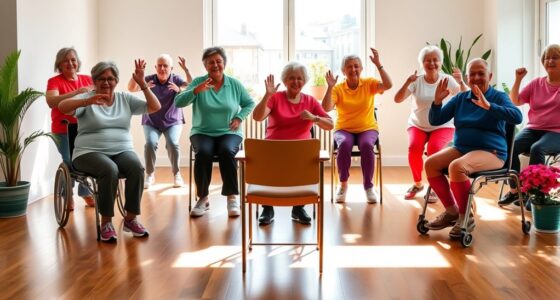
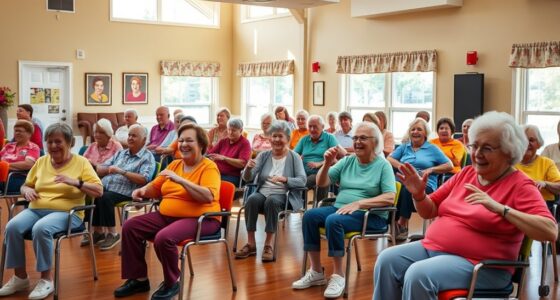
Practicing Tai Chi combined with balance exercises helps you improve stability, reduce fall risk, and boost both physical and mental well-being. By engaging in slow, mindful movements with controlled breathing and meditation, you enhance body awareness, strengthen core muscles, and promote relaxation. Focusing on steady breath and mindful movement creates better coordination and core stability. Keep exploring these techniques to learn how integrating breath control and mindfulness can elevate your balance and overall health.
Key Takeaways
- Tai Chi enhances stability by promoting slow, deliberate movements that improve body awareness and coordination.
- Incorporating breathing techniques during exercises increases oxygen flow and supports smooth, controlled movements.
- Meditation practices boost focus and mindfulness, helping to develop better balance and reduce fall risk.
- Combining breathing and meditation with Tai Chi strengthens core muscles and improves posture for greater stability.
- Practicing in a calming environment with sustainable materials fosters relaxation, concentration, and safer balance training.
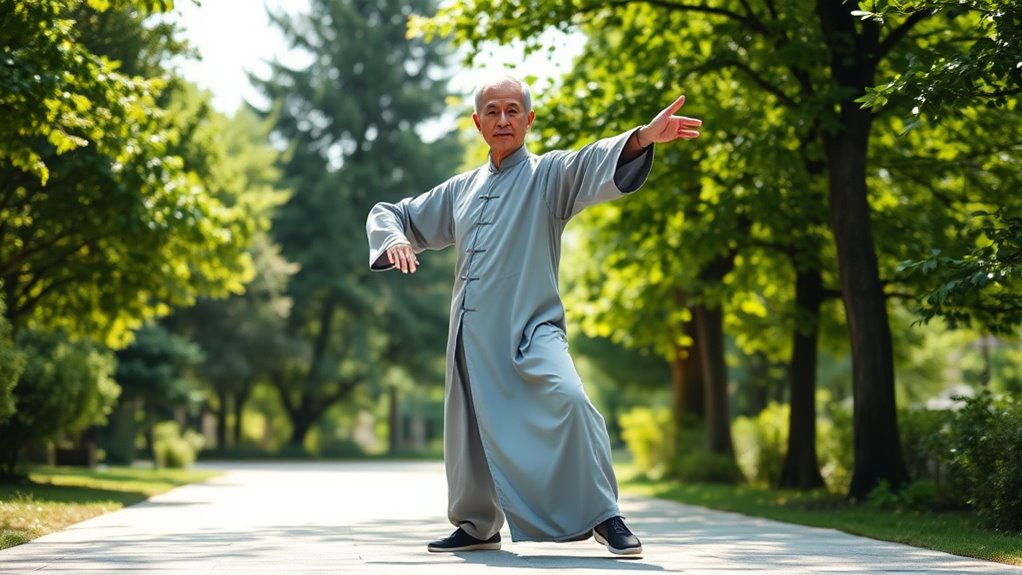
Tai Chi and balance exercises are effective ways to improve stability and reduce the risk of falls. When you practice Tai Chi, you engage in slow, deliberate movements that enhance your body awareness and coordination. These gentle motions help strengthen your core muscles and improve your posture, both of which are essential for maintaining balance as you age. To deepen your practice, incorporating breathing techniques can make a significant difference. Deep, controlled breaths during your movements not only calm your mind but also increase oxygen flow to your muscles, helping you stay relaxed and focused. Proper breathing also supports your body’s natural energy flow, making your movements more fluid and stable. Meditation practices, when combined with Tai Chi, can further enhance your sense of balance. By practicing mindfulness and cultivating a calm, centered mindset, you become more aware of your body’s position and movements, which translates into better stability in daily activities. Meditation encourages you to focus on your breath and bodily sensations, reducing anxiety and improving concentration—both indispensable factors for preventing falls. Additionally, incorporating recycled materials into your practice environment can promote sustainability and a calming atmosphere conducive to mindful exercises.
When you integrate breathing techniques into your balance exercises, you’ll notice a greater sense of control and relaxation. Inhale slowly through your nose, allowing your lungs to fill completely, then exhale gently through your mouth or nose. This rhythmic breathing helps synchronize your movements and stabilizes your nervous system. As you perform Tai Chi movements, focus on maintaining a steady, even breath; this helps you stay present and minimizes unnecessary tension that could compromise your balance. Meditation practices, such as mindful breathing or body scans, can be practiced before or after your physical exercises. These techniques help you develop a heightened awareness of your body’s alignment and your environment, making you less likely to lose your footing.
Frequently Asked Questions
Can Tai Chi Help Improve Balance for Seniors With Disabilities?
Yes, Tai Chi can help improve balance for seniors with disabilities. It promotes fall prevention by enhancing your stability and coordination. The gentle movements also support muscle strengthening, which is essential for maintaining mobility. Regular practice helps you develop better body awareness and confidence, reducing the risk of falls. So, if you’re looking to stay safe and active, Tai Chi is a great way to strengthen muscles and improve your balance.
How Often Should I Practice Tai Chi for Optimal Balance Benefits?
Imagine your balance as a delicate dance—you control the rhythm. To achieve ideal benefits, practice Tai Chi at least 3 to 5 times a week, dedicating about 20 to 30 minutes each session. Consistency is key, so maintaining this practice frequency helps strengthen your stability and coordination over time. Stick with this routine, and you’ll likely notice improvements in your balance, confidence, and overall well-being.
Are There Specific Tai Chi Styles Better for Balance Improvement?
You should focus on Tai Chi styles like Yang and Chen, which emphasize slow, deliberate movements that enhance balance improvement techniques. These styles are particularly effective because they promote stability, coordination, and core strength. By practicing these styles regularly, you’ll develop better proprioception and muscle control. Incorporating balance improvement techniques within these Tai Chi styles helps you achieve ideal results and reduces the risk of falls and injuries.
What Equipment or Space Is Needed for Effective Balance Exercises?
A journey of a thousand miles begins with a single step. To perform effective balance exercises, you only need some props like a sturdy chair or a mat, and a suitable environment—preferably a flat, clutter-free space. Make certain there’s enough room to move freely without obstructions. With a safe setting and minimal props, you can focus on improving your balance and stability effectively.
Can Beginners With No Previous Experience Start Tai Chi Safely?
Yes, beginners with no previous experience can start tai chi safely. Focus on beginner safety by learning tai chi basics from a qualified instructor or reputable videos. Start slowly, pay attention to your body’s signals, and avoid pushing yourself too hard. Practicing in a calm, open space helps you stay safe and comfortable. With patience and proper guidance, you’ll build confidence and improve your balance safely.
Conclusion
Incorporate Tai Chi and balance exercises into your routine to improve stability, boost confidence, and enhance overall well-being. Feel the strength in your stance, enjoy the flow of your movements, and embrace the calm in your mind. By practicing regularly, you’ll gain better balance, increased coordination, and a greater sense of control. Make these exercises a part of your daily life, and watch as your balance, confidence, and health flourish together.