
Health apps and telehealth services make managing your healthcare more convenient by giving you instant access to medical advice, appointment scheduling, and health monitoring from home. They enhance your ability to track symptoms and stay on top of treatments while offering secure platforms to protect your personal data. Good usability and strong privacy policies are key to maximizing these tools’ benefits. Keep exploring to discover how these digital solutions can truly improve your health management experience.

Turn the school run and nap time into listening time
- Thousands of audiobooks, podcasts and originals
- Listen on your phone, tablet or Echo — also offline
- Cancel anytime
Key Takeaways
- Health apps enable remote management, symptom tracking, and appointment scheduling, enhancing convenience and access to care.
- Telehealth services facilitate virtual consultations, improving healthcare accessibility and reducing the need for in-person visits.
- Strong data security and privacy policies are essential to protect sensitive health information shared through apps and telehealth platforms.
- User-friendly interfaces and clear instructions increase engagement and ensure effective use of digital health tools.
- Seamless integration with healthcare providers optimizes care coordination and improves health outcomes.
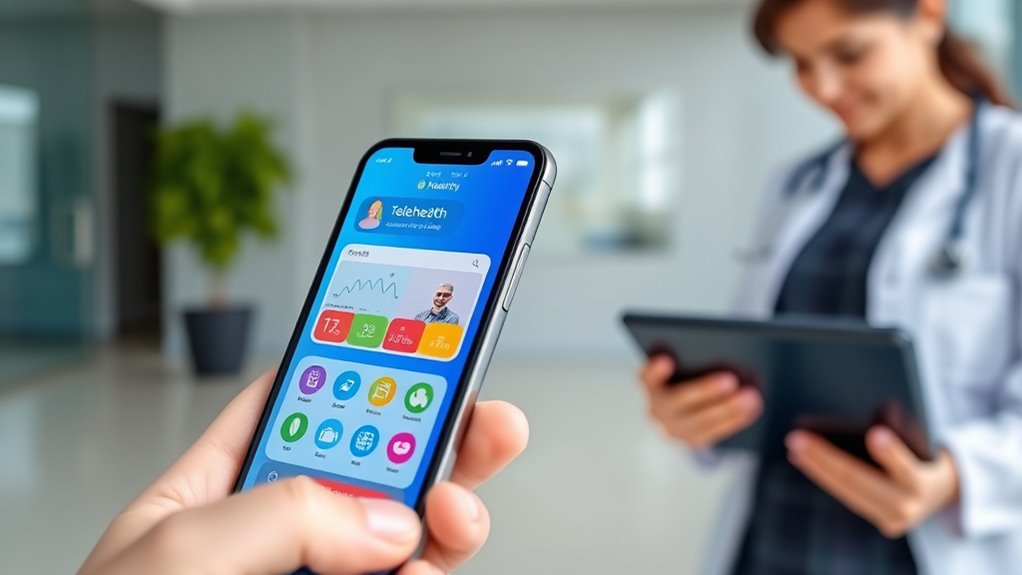
Have you ever wondered how technology is transforming healthcare? Today, health apps and telehealth services are making it easier for you to manage your health from the comfort of your home. These tools give you instant access to medical advice, appointment scheduling, and health monitoring, all at your fingertips. But as convenient as they are, they also bring some important considerations, especially around privacy concerns and app usability.
Digital health tools offer quick access to advice and management but require careful attention to privacy and usability.
When you use health apps, your personal health information becomes part of a digital ecosystem that’s often stored on servers or shared with healthcare providers. Privacy concerns naturally come into play because sensitive data like your medical history, prescriptions, or even biometric information could be vulnerable to breaches or unauthorized access. You want to make sure the apps you choose have strong security measures, like encryption and strict privacy policies, to protect your data. It’s also worth reading the fine print about how your information is used and shared. Being informed helps you maintain control over your personal health details and reduces the risk of misuse.
App usability is another critical factor. If an app isn’t user-friendly, it can be frustrating and may even lead you to abandon it altogether. Good health apps should have a clean, intuitive interface that makes navigation simple. Features like quick access to your medical records, easy appointment booking, or straightforward symptom tracking are essential for making the experience seamless. If an app’s design feels cluttered or complicated, you might find it difficult to get the information you need, which defeats the purpose of using digital health tools in the first place.
Moreover, app usability isn’t just about aesthetics; it’s also about functionality. Reliable performance, quick load times, and clear instructions ensure you stay engaged and confident in managing your health. When an app is well-designed, it encourages consistent use, helping you stay on top of your wellness goals or medical treatments. A thorough understanding of telehealth services and how they integrate with your existing healthcare can further enhance your experience. Conversely, poor usability might lead to errors, missed appointments, or overlooked health alerts, which can jeopardize your health outcomes.
Frequently Asked Questions
How Secure Are My Health Data on These Platforms?
Your health data is generally secure on these platforms, but it depends on the provider. They usually use data encryption to protect your information during transmission and storage. However, you should always review their privacy policies to understand how your data is used and shared. Staying informed helps you guarantee your sensitive health details remain private and protected from unauthorized access.
Can Telehealth Replace In-Person Doctor Visits Entirely?
Telehealth can’t fully substitute in-person doctor visits yet, especially for complex or emergency care. Virtual consultations work well for minor issues, follow-ups, and advice, but you’ll still need in-person visits for certain exams, procedures, or emergencies. You might find telehealth convenient for routine check-ins, but for urgent or intricate health needs, seeing your doctor face-to-face remains essential to guarantee proper diagnosis and treatment.
Are Health Apps Suitable for Managing Chronic Conditions?
Think of health apps as your personal compass through the complex terrain of chronic conditions. They’re well-suited for managing your health, helping you stay on course with medication adherence and lifestyle tracking. You can monitor symptoms, set reminders, and analyze patterns, turning data into insight. While they won’t replace your healthcare team, they serve as essential tools, guiding you to better health and empowering you to take control every day.
What Are the Costs Associated With Telehealth Services?
The costs of telehealth services vary based on different cost structures, including consultation fees, subscription plans, and additional service charges. Insurance coverage often helps reduce your out-of-pocket expenses, but it depends on your provider and policy. Some plans fully cover telehealth visits, while others require copayments. Always check with your insurer beforehand to understand what’s covered, so you can plan accordingly and avoid unexpected costs.
Do Health Apps Comply With Privacy Regulations Like HIPAA?
You might think health apps are totally secure, but some aren’t fully HIPAA compliant. They often overlook vital safeguards like data encryption and user authentication, risking your private info. While many apps endeavor to follow privacy rules, others still fall short, risking your sensitive health data. Always check if an app uses strong data encryption and robust user authentication to guarantee your privacy stays protected. Don’t settle for less!
Conclusion
Embracing health apps and telehealth services transforms your healthcare journey, much like Icarus soaring toward new heights—though with caution, you can harness their power without risking the fall. These tools empower you to take control, offering convenience and connection in ways once only dreamed of. As the digital age unfolds, remember that, like Pandora’s box, these innovations hold great potential—unlock their benefits wisely, and you’ll navigate your wellness path with confidence and clarity.
Fall Picks
fall essentials
As an affiliate, we earn on qualifying purchases.