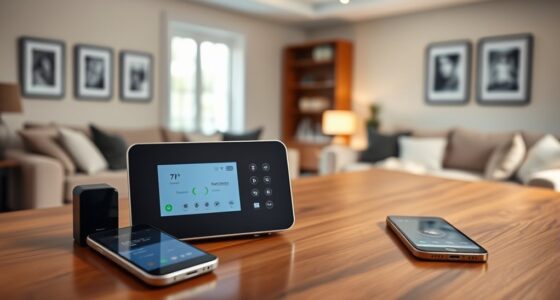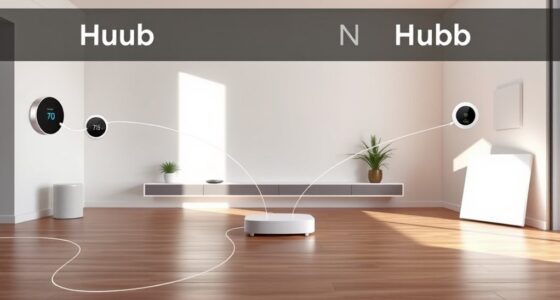
Safety and security smart devices keep you constantly informed and protected. They send instant alerts for break-ins, fires, or gas leaks, so you can respond quickly. Surveillance cameras give live video feeds with night vision, while motion detection and recording features help you catch suspicious activity. Two-way audio lets you communicate or deter intruders remotely. By combining these tools, you create a robust security shield around your home. Discover more ways to enhance your safety easily.
Key Takeaways
- Real-time alerts notify homeowners instantly of threats like break-ins, fires, or gas leaks via phone or smart hub notifications.
- Surveillance cameras provide high-definition live feeds with night vision and motion detection for continuous property monitoring.
- Devices integrate alerts with video recordings and two-way audio, enabling quick verification and communication during incidents.
- Customizable notifications allow users to tailor alerts based on zones, times, or specific events, reducing unnecessary alerts.
- Overall, these smart devices enhance home security, offering peace of mind, proactive safety measures, and remote monitoring capabilities.

Smart devices have revolutionized how you protect your home and loved ones, offering real-time monitoring and instant alerts. With these innovations, you can stay informed about what’s happening around your property no matter where you are. Emergency alerts are a key feature, designed to notify you immediately if there’s a potential threat, such as a break-in, fire, or gas leak. These alerts pop up on your phone or send notifications directly to your smart hub, allowing you to respond swiftly. This rapid communication can be the difference between a small incident and a disaster.
Smart devices provide instant alerts to protect your home and loved ones anytime, anywhere.
Surveillance cameras are a fundamental part of these smart security systems. They provide live video feeds that you can access from your smartphone, tablet, or computer. Whether you’re at work, on vacation, or just relaxing at home, surveillance cameras keep you connected to your property. High-definition footage ensures you can clearly see who’s approaching your front door, what’s happening in your backyard, or if someone is attempting to tamper with your property. Many cameras come equipped with night vision, ensuring visibility even in complete darkness, and motion detection features that trigger alerts when movement is detected. This way, you’re notified immediately about suspicious activity, giving you the chance to intervene or contact authorities.
The integration of emergency alerts with surveillance cameras enhances your overall security. For instance, if a camera detects unusual movement during odd hours, it can trigger an alert and start recording, giving you concrete evidence of what’s happening. Some systems even allow you to communicate directly with visitors or intruders through two-way audio, which can deter potential threats without you needing to be physically present. This combination of real-time alerts and visual monitoring creates a thorough security shield around your home.
Furthermore, these devices often come with customizable settings, so you can tailor alerts based on your preferences. You might want to be notified only during certain hours or when specific zones are triggered. This flexibility ensures you’re not overwhelmed with unnecessary notifications but still stay aware of critical events. Additionally, understanding the significance of dreams related to safety and security can help you interpret potential signs of stress or concern in your daily life, further empowering your proactive security measures. With smart security devices, you gain peace of mind knowing that your home is constantly monitored and that you’ll be alerted immediately if anything unusual occurs. By leveraging emergency alerts and surveillance camera systems, you’re building a proactive approach to safety — one that keeps you informed, prepared, and in control, no matter the time or place.
Frequently Asked Questions
How Do Smart Devices Handle Emergency Power Outages?
When a power outage occurs, your smart devices rely on battery backups to stay operational. These backups provide power resilience, guaranteeing your security system continues functioning without interruption. You should regularly check and maintain these batteries to ensure they’re ready when needed. By doing so, you can trust your devices will respond effectively during emergencies, keeping your home safe and secure even when the main power grid fails.
Can Smart Security Devices Be Easily Hacked or Compromised?
Think of your smart security device as a guarded castle; while it’s designed to protect, it can sometimes be vulnerable. Hackers might exploit encryption vulnerabilities or bypass user authentication if weak. To keep your fortress secure, regularly update firmware, use strong, unique passwords, and enable two-factor authentication. Staying vigilant guarantees your device remains a reliable protector, not an open door for unwelcome visitors.
What Are the Data Privacy Concerns With Smart Security Devices?
You should be aware that smart security devices can raise data privacy concerns, especially if data isn’t properly protected. Hackers might access your footage or personal info if data encryption isn’t strong. Also, manufacturers might collect data without your clear user consent, risking your privacy. To stay protected, choose devices with robust data encryption and review privacy policies carefully to make sure your personal info remains secure and your consent is respected.
How Do Smart Devices Integrate With Existing Home Security Systems?
Getting smart devices to work seamlessly with your existing home security system can be tricky, but it’s worth the effort. You might face integration challenges and compatibility issues, especially if the devices use different protocols or brands. To avoid hitting a wall, check if your system supports the new device’s technology and look for compatible products. With a little research, you can create a unified, smart security setup you can trust.
Are There Any Health Risks Associated With Long-Term Use of Smart Security Devices?
Long-term exposure to smart security devices generally poses minimal health risks, but some people worry about electromagnetic fields (EMFs) emitted by these gadgets. You might experience mild symptoms like headaches or fatigue if you’re sensitive, but scientific evidence hasn’t confirmed serious health risks. To stay cautious, limit your device exposure and guarantee proper usage. If you’re concerned, consult a healthcare professional to address any potential long-term effects.
Conclusion
By choosing smart devices for safety and security, you gain peace of mind and control over your home. Some worry these devices might invade privacy, but with proper security measures, you can enjoy their benefits without concern. Remember, staying proactive with updates and strong passwords keeps your data safe. Investing in smart security isn’t just convenient—it’s a smart way to protect what matters most. Take control today and secure your home confidently.