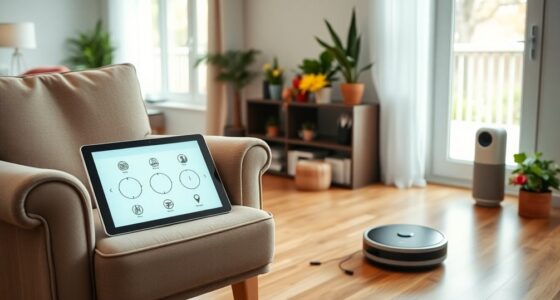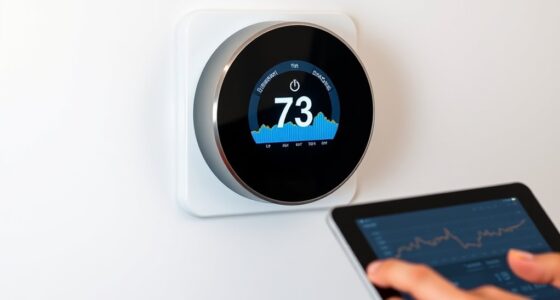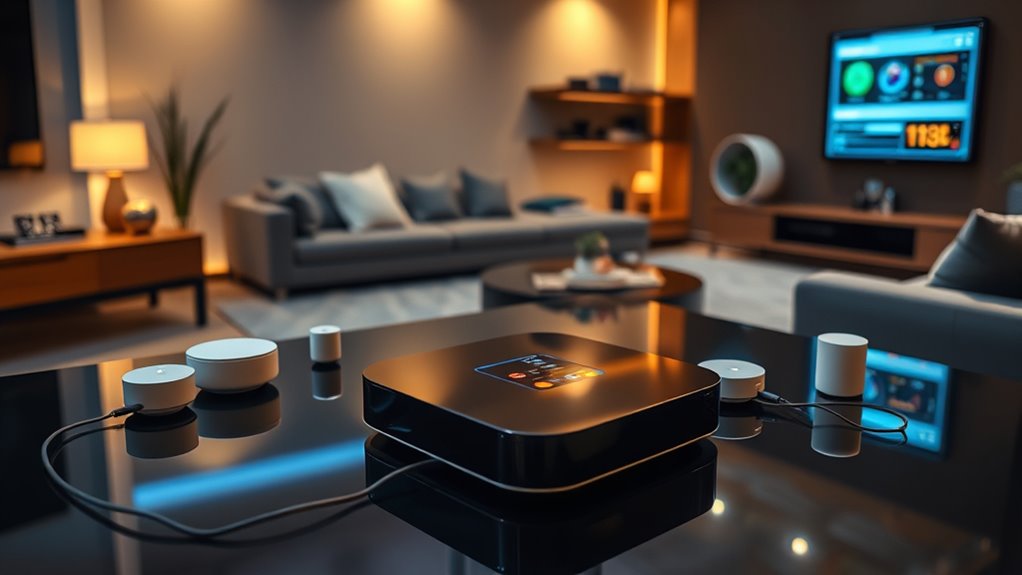

Smart home hubs act as central controllers that connect and manage various devices using standard protocols like Zigbee, Z-Wave, and Wi-Fi. They simplify control by offering a single interface and support customizable voice commands, making it easier to automate routines like turning off lights or locking doors. With seamless integration and flexibility, these hubs reduce the need for multiple apps and enhance your home’s responsiveness. To discover how these features can work for you, keep exploring what smart home hubs can do.
Key Takeaways
- Central control hubs unify management of multiple smart devices, eliminating the need for separate apps.
- They support standards like Zigbee, Z-Wave, and Wi-Fi for broad device compatibility and interoperability.
- Advanced hubs enable customizable voice commands and personalized routines for a more natural user experience.
- Integration simplifies device management, enhances home responsiveness, and improves overall smart home automation.
- These hubs future-proof setups, allowing easy addition of new devices and seamless interoperability across brands.
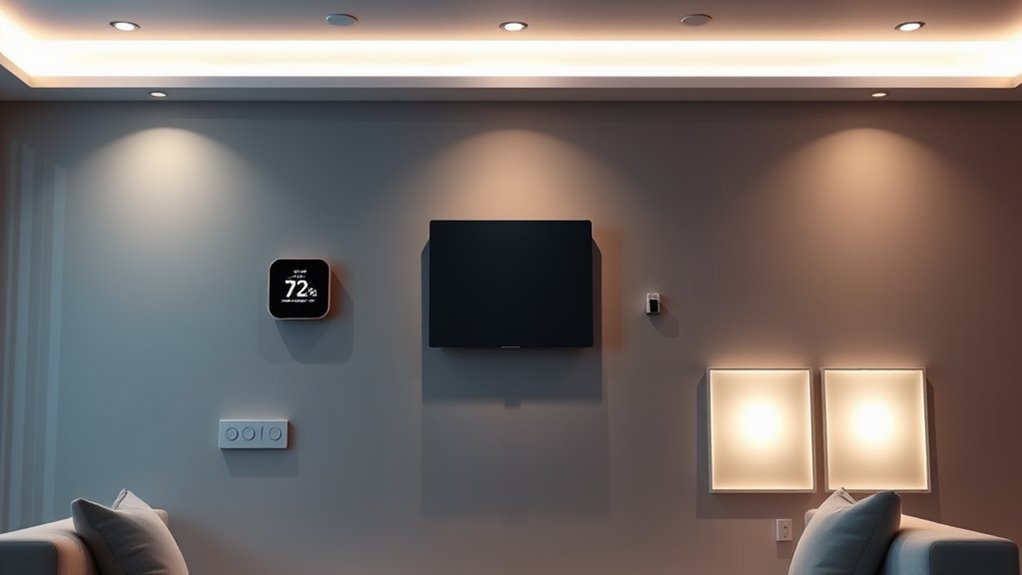
Have you ever wondered how to simplify managing multiple smart devices in your home? It can feel overwhelming juggling different apps, settings, and voice commands for each device. That’s where a smart home hub comes in, acting as a central control point that streamlines everything. With a good hub, you don’t have to open separate apps or remember individual device commands. Instead, you can control multiple devices through a single interface, making your smart home more intuitive and responsive.
One of the key features to look for in a smart home hub is its support for voice command customization. Not all hubs are equal here. Some allow you to tailor voice commands to suit your preferences, creating more natural and personalized interactions. For example, you might set a voice command like “Good night” to turn off the lights, lock doors, and lower the thermostat all at once. Customization makes controlling your devices feel less robotic and more seamless, saving you time and effort. Plus, when you can craft commands that fit your speech patterns, it’s easier to remember and use them regularly, enhancing your overall smart home experience.
Support for customizable voice commands enhances your smart home experience and makes device control more natural and effortless.
Device compatibility standards are another essential aspect. A smart home hub’s usefulness depends heavily on its ability to communicate with a broad range of devices. Many manufacturers adopt standards like Zigbee, Z-Wave, or Wi-Fi, which enable different brands and types of devices to work together smoothly. When your hub supports these compatibility standards, you won’t be limited to a single brand or type of device. Instead, you can mix and match products to suit your needs and preferences, knowing they’ll all work together under one cohesive system. This flexibility not only saves you money but also future-proofs your smart home setup, allowing you to add new devices without hassle.
In essence, choosing a smart home hub that offers robust support for voice command customization and adheres to device compatibility standards is vital. These features empower you to create a more personalized, integrated, and easy-to-manage smart home environment. With the right hub, you’ll find managing your smart devices becomes less of a chore and more of a natural extension of your daily routine. You’ll enjoy the convenience of controlling everything effortlessly, making your home smarter and more responsive to your needs. Understanding smart home compatibility can help you make better choices for your setup.
Frequently Asked Questions
Can Smart Home Hubs Operate Offline Without Internet?
Yes, some smart home hubs can operate offline, providing offline functionality and local control. When your internet is down, these hubs still allow you to manage compatible devices directly through the hub itself. This means you can turn on lights, adjust thermostats, or lock doors without an internet connection. However, features like remote access or cloud-based services won’t work offline, so it’s good to choose a hub with robust local control options.
Which Smart Home Hub Is Most Compatible With Third-Party Devices?
Surprisingly, the Samsung SmartThings hub takes the crown for device compatibility and brand interoperability. While it’s often seen as the most versatile, don’t expect perfect harmony with every third-party device. Still, it supports a wide range of brands, making your smart home dreams more achievable. You’ll find it’s a pragmatic choice, allowing you to integrate various gadgets seamlessly, even if perfection isn’t guaranteed.
How Secure Are Smart Home Hubs Against Hacking?
Smart home hubs are generally secure but aren’t foolproof against hacking. You should stay aware of privacy concerns, as vulnerabilities can expose personal data. Make sure your hub uses strong encryption standards to protect your connections. Regularly update firmware and change default passwords. By taking these precautions, you minimize risks and keep your smart home environment safer from potential cyber threats.
Do Smart Hubs Support Voice Control in Multiple Languages?
Think of your smart hub as a global translator, capable of handling multiple languages. Yes, many hubs support voice control in various languages, making it easier to communicate naturally. They often feature multi-language support, enhancing voice command accuracy across different dialects. For example, some hubs recognize accents and regional variations, ensuring you get seamless control no matter your language. This flexibility helps create a truly personalized smart home experience.
Can Smart Home Hubs Integrate With Existing Security Systems?
Yes, smart home hubs can integrate with your existing security system, but compatibility varies. You’ll want to check your security system’s compatibility with the hub to guarantee smooth integration. Be aware of potential integration challenges, like differing protocols or proprietary technologies, which could complicate setup. To avoid issues, research compatible devices and consider professional assistance if needed, ensuring your security system works seamlessly with your smart hub.
Conclusion
Did you know that over 60% of smart home users now prefer hubs to unify their devices? By choosing the right smart home hub, you simplify control, enhance security, and make your home more efficient. Integration isn’t just a convenience—it’s a game-changer. So, take charge of your smart home today and enjoy seamless connectivity. With the right hub, your smart living experience becomes smarter, safer, and more enjoyable.