
Smart lighting and climate systems automatically adapt your home environment for greater convenience, energy savings, and personalized comfort. You can control and schedule lighting scenes, adjust temperatures, and even use voice commands to make daily routines easier. These systems help reduce energy costs by turning off devices when rooms are unoccupied and optimizing settings based on your habits. To discover how these innovative features can enhance your home, keep exploring the latest advancements.
Key Takeaways
- Smart lighting and climate systems enhance convenience through automation, remote control, and personalized settings.
- These systems improve energy efficiency by scheduling, dimming, and turning off unused devices.
- Users can customize lighting scenes and temperature zones to match their preferences and routines.
- Voice control and integration with home automation platforms provide hands-free, accessible operation.
- Future trends focus on advanced automation, increased personalization, and seamless system integration for smarter homes.

Smart lighting and climate systems are transforming the way you manage your home’s environment, offering greater convenience, energy efficiency, and customization. With these intelligent solutions, you can easily adapt your living space to match your daily routines and preferences. Imagine arriving home after a long day, and your lights turn on softly to welcome you, while your thermostat adjusts to a comfortable temperature automatically. This seamless integration not only enhances your comfort but also helps you save energy by reducing unnecessary usage. These systems learn your habits over time, optimizing settings to ensure you’re always comfortable without wasting resources.
Smart systems learn your habits to optimize comfort and save energy effortlessly.
Energy efficiency is at the core of smart lighting and climate systems. Traditional bulbs and thermostats often run longer or use more power than needed, which can hike up your energy bills. Smart systems, however, allow you to set schedules, control devices remotely, and even automate based on occupancy or time of day. For instance, you can program your lights to turn off when no one’s in a room, or set your heating and cooling to operate only when necessary. This targeted control minimizes waste, reduces your carbon footprint, and keeps your utility costs in check. Plus, many smart bulbs and thermostats are compatible with energy-saving features like dimming or eco modes, further enhancing efficiency.
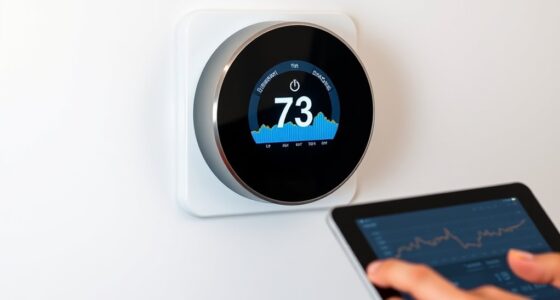
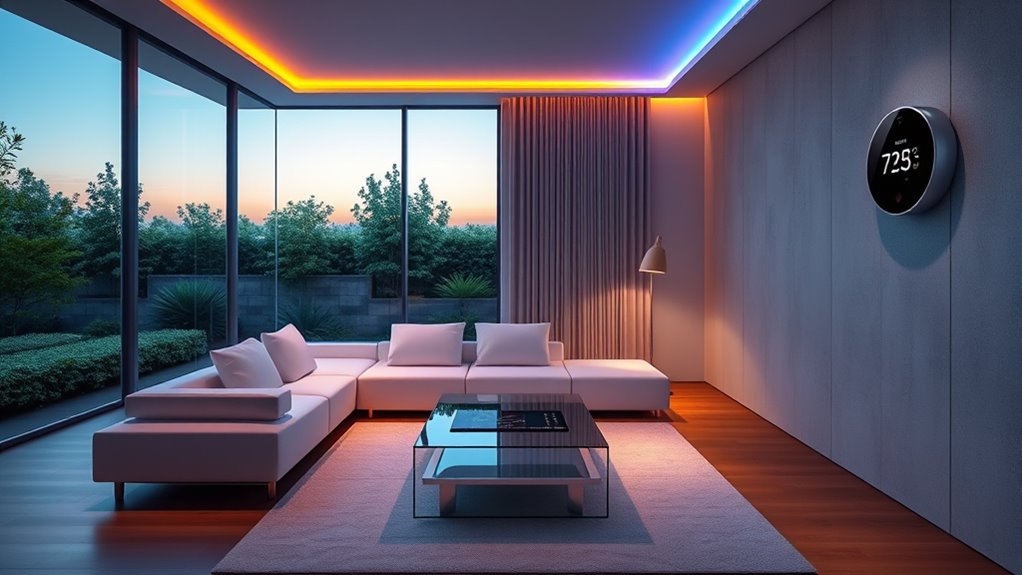
User customization is another significant benefit. These systems empower you to personalize your environment effortlessly. You can select different lighting scenes for various moods or activities—bright and energizing for working, soft and warm for relaxing, or dimmed for movie nights. Climate controls can also be tailored to your preferences, with the ability to set specific temperatures for different zones in your home. Many smart devices come with intuitive apps that let you fine-tune settings, create schedules, and even receive alerts if something’s amiss. This level of control means you’re not limited to generic settings; instead, you craft an environment that perfectly fits your lifestyle.
Furthermore, smart lighting and climate systems improve accessibility and convenience. Voice commands through virtual assistants like Alexa or Google Assistant make adjustments simple, even when your hands are full. You can change the lighting, adjust the thermostat, or turn devices on and off just by speaking. This ease of use encourages more frequent engagement with your home’s energy-saving features, boosting overall efficiency and comfort. As technology advances, expect even more sophisticated options for user customization, seamlessly blending comfort, savings, and personal preference into your daily life. Additionally, integrating home automation technology can further optimize your system’s performance and responsiveness.
Frequently Asked Questions
How Do Smart Lighting Systems Impact Energy Consumption Long-Term?
Smart lighting systems boost your energy efficiency by adjusting brightness and turning off lights when not needed, leading to significant long-term cost savings. You’ll notice reduced electricity bills as these systems optimize usage based on your habits and presence. Over time, their adaptive features make certain you use less energy, helping you save money and reduce your environmental impact, making them a smart investment for sustainable living.
What Security Measures Protect Smart Climate Systems From Cyber Threats?
Ironically, your smart climate system’s greatest threat isn’t the weather but cyber threats. You protect it with robust encryption protocols that scramble your data, making it unreadable to hackers. Access controls limit who can adjust your settings, ensuring only trusted users have entry. Combining these measures creates a fortress, but remember, no system is invincible. Staying vigilant and updating security practices is your best defense against evolving cyber threats.
Can Smart Lighting and Climate Systems Be Integrated With Existing Home Automation?
Yes, smart lighting and climate systems can be seamlessly integrated with your existing home automation. You’ll enjoy smooth home integration, allowing all devices to work together effortlessly. Plus, you get user customization options, so you can tailor lighting and climate settings to your preferences. This integration simplifies managing your home environment, enhances convenience, and creates a cohesive smart home experience that adapts to your lifestyle.
What Are the Costs Associated With Installing Smart Lighting and Climate Systems?
Installing smart lighting and climate systems costs between $1,500 and $5,000 upfront. For example, a family in California spent around $3,000 to upgrade their home, enjoying energy savings afterward. Keep in mind, installation costs include equipment and professional setup, while maintenance expenses are relatively low, mostly for bulb replacements and system updates. These investments improve comfort and can save money over time.
How Do These Systems Adapt to Different Climate Zones or Seasons?
You benefit from climate zone customization and seasonal adaptation strategies, which allow these systems to automatically adjust based on your local climate and changing seasons. They use sensors and algorithms to optimize lighting and temperature, ensuring comfort and efficiency year-round. This means you can save energy and maintain a consistent environment, as the system intelligently responds to temperature variations, humidity, and daylight hours specific to your climate zone and seasonal needs.
Conclusion
As you step into your home, imagine the gentle glow of smart lighting softly guiding your way, while the climate system intuitively adjusts to your comfort. These intelligent systems create a seamless harmony, transforming your space into a haven of coziness and efficiency. With just a touch or a voice command, you craft an environment that feels perfectly tailored to you—bright, warm, and inviting—making every moment indoors feel like a personalized retreat.