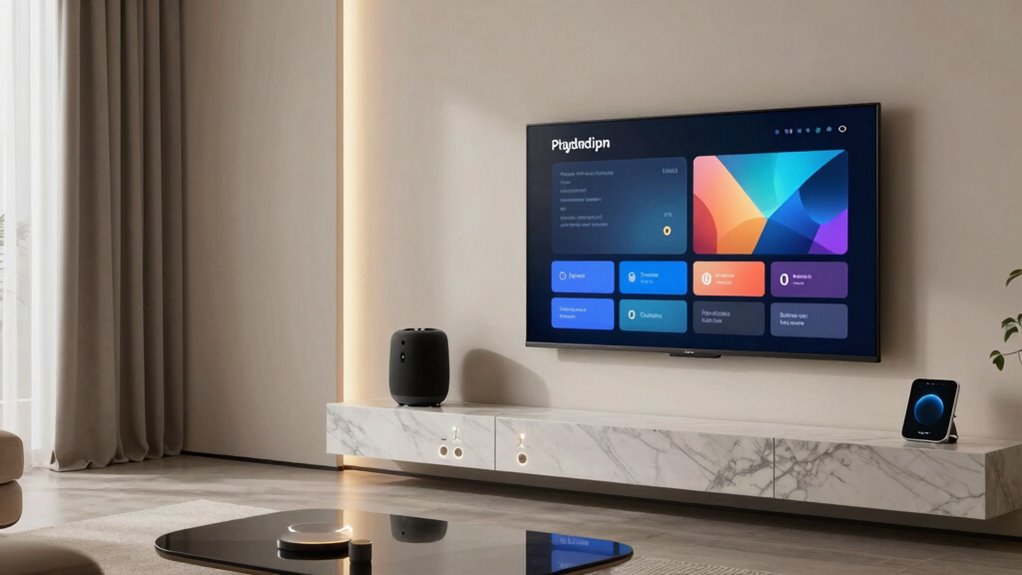

A smart home feels faster and more reliable when it uses advanced automation, optimized networks, and seamless device coordination. Powerful processors, quick-response protocols, and intelligent routines reduce lag and manual tasks. Modern wireless tech and Quality of Service (QoS) prioritize critical commands, ensuring stable connections. Smart sensors and energy-efficient devices work together for instant reactions and stability. Keep exploring to discover how these elements create a smooth, effortless living environment tailored to your needs.
Key Takeaways
- Advanced processors and optimized networks ensure quick response times and minimal lag.
- Prioritized network traffic through QoS protocols reduces delays for critical devices.
- Seamless device integration automates routines, minimizing manual adjustments and delays.
- Smart sensors and energy-efficient devices maintain stable, responsive performance.
- Robust system management prevents network congestion and ensures consistent reliability.
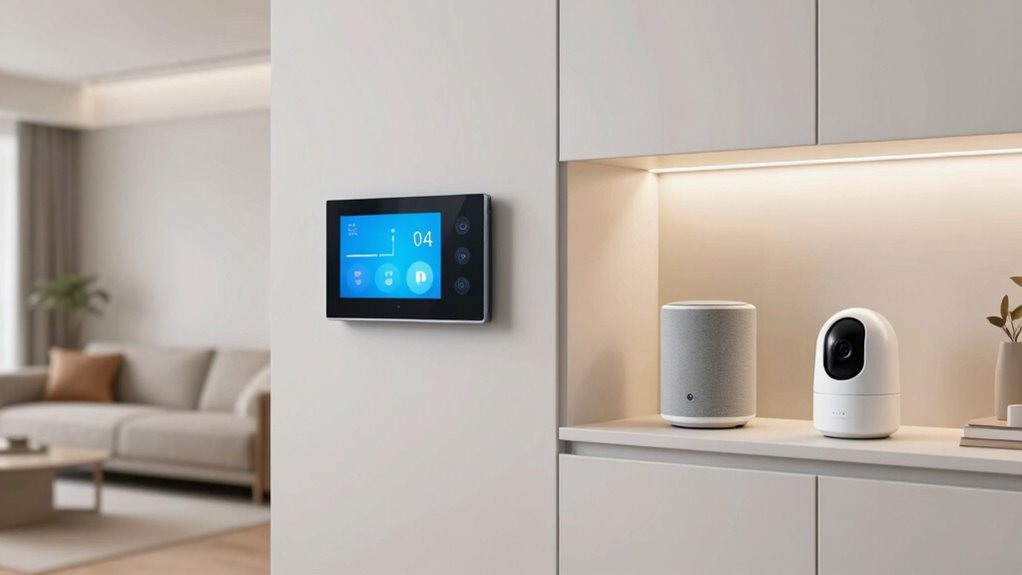
Smart homes are evolving rapidly, delivering faster and more dependable technology that enhances everyday living. When you walk into a well-designed smart home, you notice how smoothly everything works—lights turn on instantly, thermostats adjust seamlessly, and your devices communicate without delay. For instance, home automation systems are now built to prioritize quick responses and stable connections. These systems leverage powerful processors, optimized networks, and smart software to minimize lag, ensuring that your commands are executed immediately. This means you don’t have to wait for devices to catch up or deal with frustrating hiccups, making your experience feel effortless and intuitive.
Smart homes deliver seamless, fast responses through advanced automation and optimized networks, ensuring effortless everyday living.
One of the main reasons some smart homes feel faster and more reliable is the focus on robust home automation. Automated routines are pre-programmed to respond to your habits, reducing the need for manual input and enabling devices to work together seamlessly. For example, your smart lighting and climate control might coordinate to create the perfect ambiance when you arrive home, without you having to adjust anything manually. This level of integration is designed to optimize performance, so you experience fewer delays and interruptions. Additionally, a well-structured home automation setup minimizes network congestion by intelligently managing device communication, which contributes to faster response times. Efficient network management is crucial for maintaining a responsive and reliable smart home environment. Incorporating modern networking technology can further enhance overall responsiveness and stability. Implementing quality of service (QoS) protocols helps prioritize critical device traffic, ensuring smooth operation even during high network demand. Moreover, continuous advancements in wireless communication protocols support faster and more stable connections, further improving overall smart home reliability.
Energy efficiency also plays a significant role in creating a smart home that feels faster and more reliable. When your system is designed with energy-saving features — like smart sensors that detect occupancy or natural light — it can operate more efficiently, reducing unnecessary data traffic and power consumption. This efficiency helps maintain a stable network environment, preventing overloads that could slow down your devices. In turn, this stability ensures your home automation functions without hiccups, making every command feel instant. Plus, energy-efficient devices tend to be built with modern technology that’s optimized for speed, further enhancing the overall performance.
Ultimately, the homes that feel faster and more reliable are those where technology is thoughtfully integrated, with a focus on responsive home automation and energy efficiency. You benefit from a system that not only responds quickly but also sustains that speed over time. These homes are designed to adapt to your lifestyle, providing a seamless experience that saves you time, reduces frustration, and makes everyday tasks simpler. When your smart home is optimized for performance, it becomes more than just a collection of devices—it transforms into an intuitive environment that works for you, effortlessly and reliably.

Home Assistant Green | Smart Home hub with Advanced Automation | Official Home Assistant Hardware
- Easy Setup: Plug in power and Ethernet to start
- Official Hardware: Supported by Nabu Casa
- Home-Friendly Design: Compact, fanless, silent operation
As an affiliate, we earn on qualifying purchases.
As an affiliate, we earn on qualifying purchases.
Frequently Asked Questions
How Do Smart Home Devices Prioritize Network Traffic?
Smart home devices prioritize network traffic by using Quality of Service (QoS) settings, which allocate bandwidth to essential devices. You should guarantee device compatibility with your router, as some may not support advanced prioritization features. Additionally, minimizing signal interference from other electronics or networks helps devices communicate more efficiently. By managing these factors, you improve your smart home’s speed and reliability, making sure critical devices get the bandwidth they need first.
What Role Does Firmware Updates Play in Performance?
Imagine updating your smart thermostat, which improves its response time and stability. Firmware updates play a vital role in performance by optimizing firmware, fixing bugs, and enhancing security patches. These updates guarantee your devices run smoothly, reducing lag and increasing reliability. Regular firmware optimization keeps your smart home devices current, protecting against vulnerabilities, and making your entire system faster and more dependable, giving you peace of mind.
Can Smart Home Hubs Reduce Latency?
Yes, smart home hubs can reduce latency by optimizing voice commands and enhancing device interoperability. When you use a hub, it acts as a central controller, processing commands faster and guaranteeing devices communicate seamlessly. This minimizes delays, making your smart home feel more responsive. Proper voice command optimization within the hub helps it interpret your requests more accurately, while improved device interoperability ensures everything works together smoothly, delivering a quicker, more reliable experience.
How Does Device Placement Affect Network Speed?
You’ll notice that device placement considerably impacts network speed—studies show that proper placement can boost Wi-Fi coverage by up to 50%. When devices are too close or too far from your router, device congestion and signal interference increase, slowing your network. Keep your smart devices centrally located, away from thick walls and metal objects, to minimize congestion and interference, ensuring faster, more reliable performance throughout your home.
Are Wired Connections Better Than Wireless for Reliability?
Wired connections are generally more reliable than wireless, reducing issues like interference and lag. However, you should consider security concerns, as wired setups are less vulnerable to hacking, and energy consumption, since wired devices often use less power. While wired connections improve stability, weigh these factors to decide what best suits your smart home’s needs, balancing reliability with security and energy efficiency.
Conclusion
To enjoy a smart home that feels faster and more reliable, you need to stay proactive and keep everything updated. Regularly check your devices and network to avoid issues before they arise. Remember, a well-maintuned system is like a well-oiled machine—smooth and dependable. When you put in the effort, your smart home will run seamlessly, making your life easier and more enjoyable, proving that sometimes, you truly get what you put into it.