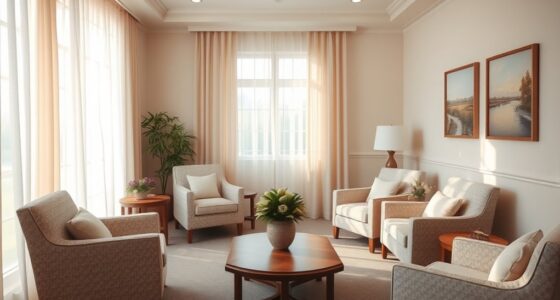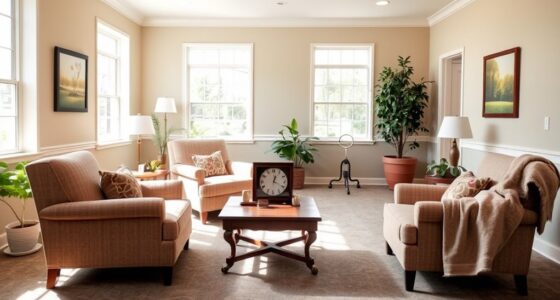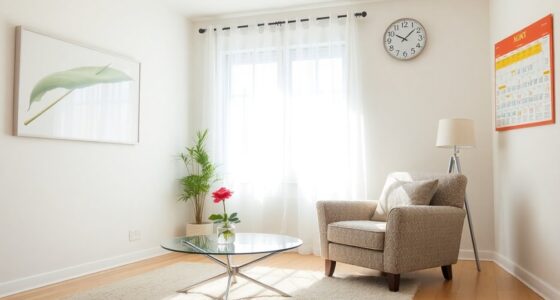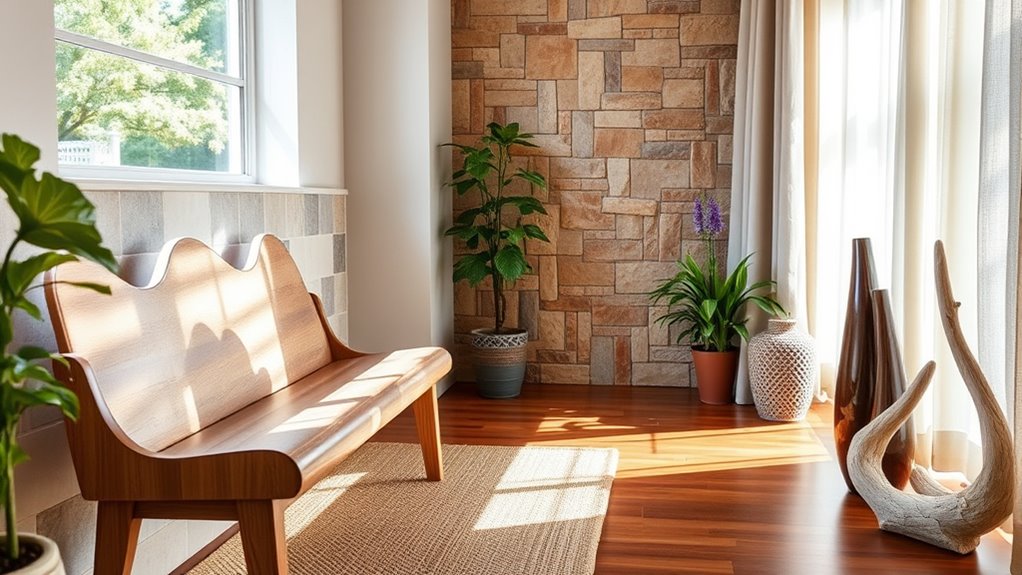

Using natural materials in memory care design helps create calming, familiar spaces that support residents’ emotional well-being. Incorporate textures like wood, stone, or bamboo to evoke warmth and comfort, stimulating senses without overwhelm. These elements foster a safe environment, reducing feelings of confusion and isolation. By blending biophilic features with tactile experiences, you promote tranquility and connection to nature. Continue to explore how natural materials can transform your space into a supportive, restorative haven.
Key Takeaways
- Natural materials create calming, familiar environments that support residents’ emotional well-being and reduce feelings of confusion or isolation.
- Incorporating textures and colors from wood, stone, and bamboo stimulates senses and promotes engagement without overwhelming residents.
- Natural fiber textiles and seamless indoor-outdoor transitions foster feelings of safety and comfort in memory care settings.
- Using natural materials reduces chemical exposure, promoting healthier spaces with fewer allergens and irritants.
- Thoughtful integration of biophilic elements enhances cognitive function, emotional stability, and overall quality of life for residents.

Designing memory care spaces with natural materials creates a calming environment that supports residents’ well-being. When you incorporate biophilic elements, you introduce natural textures, colors, and patterns that foster a sense of familiarity and comfort. These elements help residents feel more connected to the outdoors, reducing feelings of isolation or confusion. Using wood, stone, or bamboo in furniture and accents brings warmth and authenticity to the space, making it more inviting and less clinical. The tactile experience of these materials engages the senses, encouraging residents to touch and explore their surroundings, which can stimulate memories and promote overall engagement.
Sensory engagement is a vital aspect of memory care design, especially when paired with natural materials. You want to create an environment that stimulates multiple senses without overwhelming residents. Natural materials naturally have varied textures—smooth, rough, soft—that invite touch and exploration. For example, a wooden handrail or a stone sculpture can serve as calming focal points, encouraging residents to engage physically and mentally. The colors found in natural materials—earth tones, greens, and blues—also help anchor residents in a familiar and soothing palette, which can lessen agitation and anxiety. Incorporating calming design elements based on these materials can further enhance a sense of tranquility.
Incorporating biophilic elements through natural materials also supports residents’ cognitive and emotional health. When you select materials that mimic nature, you help foster a sense of safety and stability. For instance, using natural fiber textiles like linen or wool for upholstery and curtains adds softness and comfort, while also providing visual cues grounded in nature. These materials can help create a seamless transition between indoor and outdoor spaces, blurring boundaries and making residents feel more at ease.
Furthermore, natural materials tend to be healthier choices, as they generally contain fewer chemical treatments than synthetic options. This reduces potential irritants and allergens, promoting better respiratory health for residents. When you design with these materials, you’re not only emphasizing aesthetics but also prioritizing safety and well-being. Combining biophilic elements with sensory engagement creates a holistic environment that actively supports residents’ independence, comfort, and mental health.
Ultimately, by thoughtfully integrating natural materials into memory care spaces, you craft environments that are both functional and nurturing. These spaces become more than just safe havens—they transform into restorative places where residents can reconnect with nature, engage their senses, and find peace amid their daily routines.
Frequently Asked Questions
How Do Natural Materials Impact Residents’ Mood and Behavior?
Natural materials positively impact your residents’ mood and behavior by promoting emotional well-being and behavioral stability. When residents are surrounded by wood, stone, and other natural elements, they feel calmer and more relaxed. These materials connect residents to nature, reducing feelings of anxiety or agitation. As a result, their overall mood improves, and they exhibit more consistent, stable behaviors, creating a more comforting and supportive environment for everyone.
Are Natural Materials Cost-Effective for Large-Scale Memory Care Facilities?
Think of natural materials as a wise old tree—initially costly, but sturdy and long-lasting. You’ll find that their durability reduces replacement expenses over time, making them cost-effective for large-scale memory care facilities. While the upfront cost comparison might seem high, their resilience and low maintenance save money in the long run. So, investing in natural materials can be a smart, sustainable choice that benefits both residents and your budget.
What Maintenance Is Required for Natural Material Surfaces?
You need to establish regular cleaning routines to keep natural material surfaces looking their best. Use gentle, non-abrasive cleaners suited for the specific material to prevent damage. Durability considerations are essential; some materials may require sealing or protective coatings to withstand daily wear. By maintaining consistent cleaning and addressing durability needs, you guarantee natural surfaces remain safe, functional, and visually appealing for residents in memory care environments.
How Do Natural Materials Influence Infection Control in Memory Care Settings?
Natural materials can both challenge and support infection control in memory care settings. Their antimicrobial properties help reduce bacteria, yet their material durability determines how well they withstand cleaning. You should prioritize durable natural surfaces that resist wear and microbial buildup, ensuring a safer environment. By choosing materials with inherent antimicrobial benefits and high durability, you create a space where infection risks diminish, promoting health and well-being for residents.
Can Natural Materials Be Customized to Accommodate Specific Sensory Needs?
Yes, natural materials can be customized to meet specific sensory needs by leveraging their material flexibility. You can select different textures, colors, and finishes to create a calming or stimulating environment tailored to individual residents. This sensory customization helps improve comfort and engagement. Natural materials like wood, stone, or woven fibers allow you to adapt their use, ensuring the environment supports each person’s unique sensory preferences and needs effectively.
Conclusion
So, after all, it’s funny how natural materials—things you might overlook—actually hold the key to better memory care. While sleek, modern designs try to impress, it’s the warmth of wood and the calm of stone that truly comfort residents. Ironically, in a world obsessed with high-tech solutions, sometimes the simplest, most natural elements do the most heavy lifting. After all, isn’t it nature’s way of reminding us what truly matters?