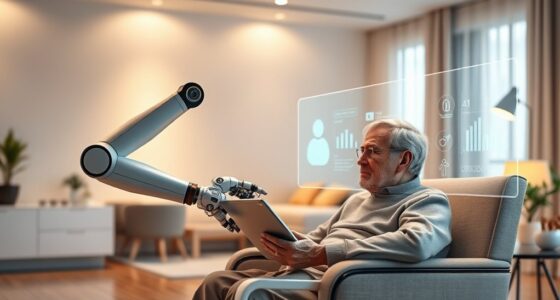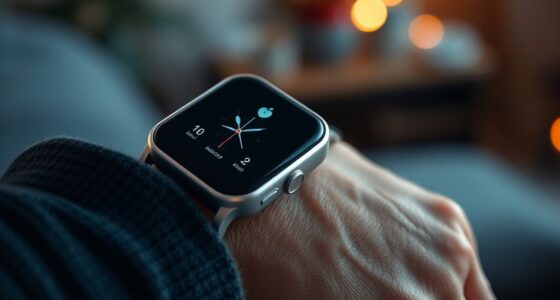
AI-driven fall detection systems use wearable devices with sensors and advanced machine learning algorithms to monitor your movements in real time. They quickly identify falls by analyzing patterns like acceleration and orientation, triggering instant alerts to caregivers or emergency services. This technology helps prevent injuries and makes certain of prompt assistance when it matters most. If you want to discover how these systems work and their benefits, keep exploring the innovations shaping safer, smarter health monitoring.
Key Takeaways
- Utilize wearable devices with sensors to continuously monitor movements and detect falls in real time.
- Employ machine learning algorithms to analyze sensor data and differentiate falls from normal activities.
- Provide immediate alerts to caregivers or emergency services to ensure rapid response.
- Incorporate additional health monitoring features, such as activity tracking and mobility assessment.
- Enhance safety and peace of mind for vulnerable populations through reliable, unobtrusive fall detection technology.

As falls among seniors and vulnerable populations continue to pose serious health risks, AI-driven fall detection systems have emerged as a crucial tool for ensuring quick assistance and reducing injury severity. These systems leverage wearable technology, such as smart belts, wristbands, or patches, to continuously monitor a person’s movements. By integrating sensors into everyday devices, they provide real-time data that can detect even the slightest imbalance or sudden change in posture. When a fall occurs, the system immediately triggers alerts to caregivers, family members, or emergency services, enabling rapid response and potentially saving lives.
AI fall detection systems use wearable tech to monitor movements and alert caregivers instantly, helping prevent injuries.
The core of these systems lies in machine learning algorithms, which analyze patterns in sensor data to distinguish between normal movements and actual falls. Unlike traditional alarm systems that rely on manual activation, AI-powered solutions learn from vast amounts of data, improving their accuracy over time. This ability to adapt means fewer false alarms and more reliable detection, giving you peace of mind knowing that help will arrive promptly when needed. As the algorithms process data from wearable technology, they consider factors like acceleration, orientation, and velocity, making the detection process both swift and precise.
Wearable technology plays a vital role because it offers continuous, unobtrusive monitoring. You can wear devices comfortably throughout the day without feeling encumbered, ensuring consistent data collection. These devices are often equipped with wireless capabilities, allowing seamless communication with mobile apps or centralized monitoring systems. This connectivity ensures that alerts reach the appropriate responders immediately, regardless of your location within a home or care facility. Additionally, the integration of wearable tech with machine learning algorithms means the system can learn your typical movement patterns, making it more adept at identifying deviations indicative of a fall.
Moreover, AI-driven fall detection systems are increasingly sophisticated, often incorporating additional features such as activity tracking and health monitoring. This comprehensive approach not only detects falls but also provides valuable insights into your overall mobility and health status. For caregivers, this translates into better management and personalized care plans. For you, it offers reassurance that assistance is always within reach, even if you’re unable to call for help yourself.
Frequently Asked Questions
How Accurate Are Ai-Driven Fall Detection Systems in Real-World Settings?
You’ll find that AI-driven fall detection systems are quite accurate in real-world settings, but their effectiveness depends on proper sensor calibration. When sensors are well-calibrated, false alarm rates drop markedly, making the system more reliable. However, if calibration is off, false alarms can increase, reducing trust in the system. Overall, with good calibration, these systems provide dependable detection, helping keep you safe and informed.
What Are the Privacy Concerns Associated With AI Fall Detection Technology?
You should know that 78% of users worry about data privacy when using fall detection tech. Privacy concerns include how data is stored, who has access, and the risk of surveillance. These systems often collect sensitive health info, raising surveillance concerns. To protect your privacy, guarantee the technology uses encryption and transparent data policies, so you stay informed and in control of your personal data.
How Do AI Systems Differentiate Between Falls and Daily Activities?
You can trust AI systems to differentiate falls from daily activities by analyzing sensor calibration and activity patterns. They monitor motion data, looking for sudden, unusual movements characteristic of falls. The system compares real-time data with known activity patterns to identify anomalies. This helps guarantee accurate detection while minimizing false alarms, giving you confidence that the system responds correctly during emergencies.
Can AI Fall Detection Systems Be Integrated With Existing Healthcare Devices?
You can absolutely integrate AI fall detection systems with your existing healthcare devices, creating a seamless network that enhances safety. Focus on device interoperability to guarantee smooth communication, and prioritize data security to protect sensitive information. This integration can offer peace of mind, knowing your health data stays secure while providing real-time alerts. Embracing these technologies helps you stay connected and proactive about your well-being, making safety an effortless part of daily life.
What Is the Cost Comparison Between Ai-Driven and Traditional Fall Detection Methods?
You’ll find that AI-driven fall detection systems tend to have a higher initial cost compared to traditional methods due to advanced technology and sensors. However, a thorough cost analysis shows they can be more affordable long-term, thanks to reduced false alarms and quicker response times. Affordability factors include device durability, maintenance, and integration costs, making AI systems a potentially cost-effective choice for enhanced safety and efficiency.
Conclusion
You now see how AI-driven fall detection systems can be a game-changer, offering real-time alerts and increasing safety. Did you know that falls are the leading cause of injury among older adults, with over 37 million falls reported annually? By using these advanced systems, you can reduce risks and guarantee timely help. Embracing this technology means you’re taking a proactive step toward safer living environments for yourself or your loved ones.