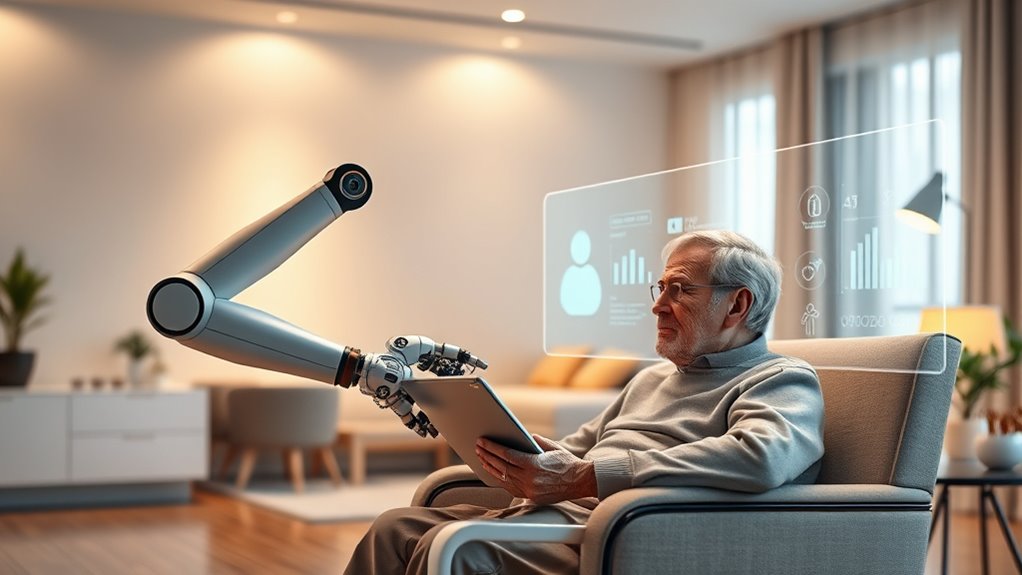

Emerging AI tools for caregiving include advanced robot companions that offer emotional support and daily assistance, and health monitoring devices that track essential signs in real time to catch issues early. These tools personalize care, reduce manual effort, and improve safety through instant alerts. They also help create engaging environments at home and enable remote healthcare oversight. To discover how these innovations can benefit your caregiving approach, explore the latest advancements shaping the future of personalized care.
Key Takeaways
- Advanced robots support emotional well-being and daily tasks, adapting over time for personalized caregiving.
- AI-powered health monitors analyze vital signs continuously for early detection of health issues.
- Integration of AI tools with immersive technologies enhances at-home caregiving environments.
- AI-driven alerts and remote monitoring enable proactive healthcare interventions and reduce hospital visits.
- Future AI tools will become more sophisticated, offering increased personalization and improved caregiving efficiency.
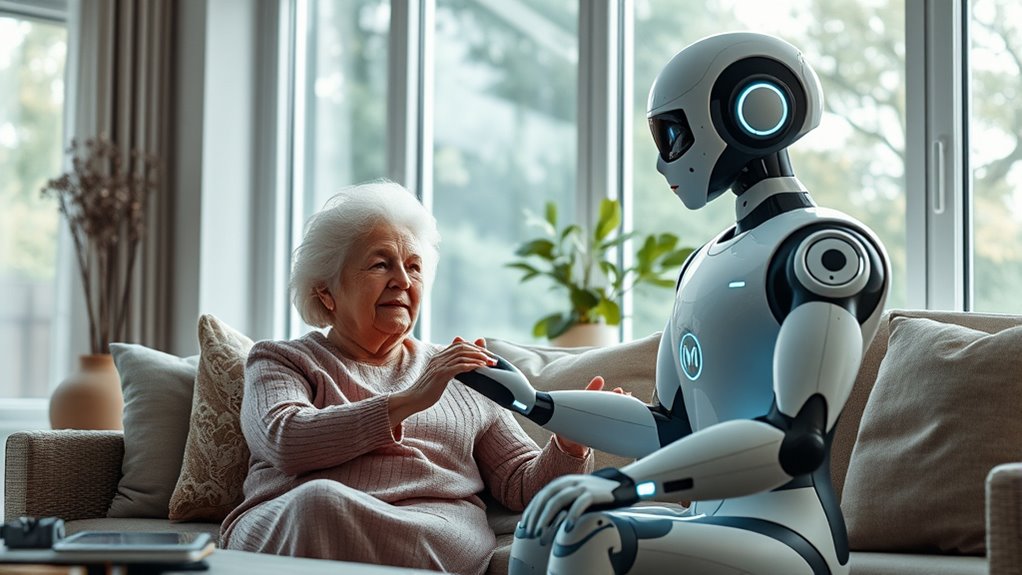
As technology advances, AI tools are transforming caregiving by making it more efficient and accessible. One of the most noticeable innovations is the rise of robot companions, which are designed to support both the emotional and practical needs of individuals requiring care. These robots are equipped with advanced sensors and AI algorithms that enable them to recognize and respond to human emotions, offer companionship, and even assist with daily tasks. They can remind you to take medications, help with mobility, or provide conversation to reduce feelings of loneliness. With their ability to learn and adapt, robot companions become more personalized over time, creating a sense of familiarity and comfort. This not only enhances the quality of care but also reduces the burden on human caregivers, allowing them to focus on more complex aspects of caregiving.
Alongside robot companions, health monitoring tools are revolutionizing how you keep track of your or your loved one’s well-being. These AI-powered devices continuously analyze vital signs such as heart rate, blood pressure, oxygen levels, and temperature, providing real-time data that can be indispensable for early detection of health issues. Instead of waiting for scheduled check-ups, you get immediate insights into potential health concerns, enabling you to act promptly or seek medical attention when necessary. Many of these tools are connected to smartphones or cloud platforms, allowing you to access your health information anytime, anywhere. This connectivity not only empowers you with more control over health management but also facilitates remote monitoring by healthcare professionals, who can intervene before minor issues escalate into emergencies.
AI-driven health monitoring systems can also identify patterns over time, helping you and your healthcare team understand underlying health trends. For example, if your blood pressure consistently spikes at certain times of the day, you can adjust medication or lifestyle choices accordingly. These tools often come with alerts that notify you or caregivers if readings fall outside safe ranges, reducing the risk of overlooked symptoms. The integration of AI in health monitoring also means fewer hospital visits and less reliance on manual tracking, which can be prone to errors. Additionally, advancements in projector technology are making it easier to create immersive caregiving environments at home. Overall, these advancements make caregiving more proactive and personalized, giving you peace of mind knowing that your loved ones are under continuous, intelligent supervision. As AI continues to evolve, these tools will become more sophisticated, further empowering you to provide better care and maintain independence for those who need it most.
Frequently Asked Questions
How Do AI Tools Ensure User Privacy and Data Security?
AI tools protect your privacy and data security by implementing strong privacy safeguards and data encryption. They guarantee your information remains confidential by encrypting data both during transmission and storage. Regular security updates and strict access controls prevent unauthorized access. You’re kept informed about how your data is used, and many tools allow you to control your privacy settings, giving you confidence that your personal information stays protected.
What Are the Costs Associated With Implementing These AI Caregiving Tools?
You might find it surprising, but the costs of implementing AI caregiving tools vary widely. A thorough cost analysis considers software, hardware, training, and maintenance. Funding options like grants, government programs, or partnerships can ease expenses. While initial investments may seem high, long-term savings and improved care quality often justify costs. You should evaluate these factors carefully to determine the most feasible approach for your caregiving needs.
Can AI Tools Replace Human Caregivers Entirely?
AI tools can’t substitute human caregivers entirely because they lack the ability to provide genuine emotional support and understand complex human emotions. Ethical considerations also prevent full reliance on AI, as they can’t replicate the empathy and moral judgment humans offer. While AI can assist with tasks, you still need compassionate caregivers to address emotional needs, build trust, and ensure ethical standards are upheld in caregiving.
How Accessible Are These AI Solutions for Rural or Underserved Communities?
Like the pioneers crossing uncharted territories, you’ll find that AI solutions face hurdles in rural areas. Limited rural connectivity and affordability challenges make access difficult, especially in underserved communities. While some programs aim to bridge this gap, widespread adoption remains slow. To truly empower all, investments in infrastructure and affordable tech are essential, ensuring everyone benefits from the promise of AI caregiving tools.
What Training Is Required for Caregivers to Effectively Use AI Tools?
To effectively use AI tools, you need some training requirements focused on skill development. You’ll learn how to operate the technology, interpret data, and troubleshoot issues. Often, training involves hands-on workshops, online courses, or tutorials that build your confidence and competence. By developing these skills, you guarantee you can integrate AI seamlessly into caregiving tasks, ultimately improving care quality and efficiency for those you support.
Conclusion
As you explore these emerging AI tools, think of them as guiding stars lighting your caregiving journey. They can help you navigate challenges with confidence, offering support and connection when you need it most. While technology isn’t a replacement for human compassion, it acts as a trusted compass, making your path smoother. Embrace these innovations, and you’ll find yourself better equipped to care with heart and clarity amid the ever-changing landscape.