
Wearables that actually help include devices with fall detection, heart rhythm alerts, and oxygen level monitoring. These gadgets automatically recognize emergencies, send instant alerts, and keep your loved ones informed. They operate seamlessly in the background, giving you peace of mind without constant oversight. With reliable health tracking and emergency features, they support your safety and well-being in everyday life. Keep exploring how these advanced tools can protect you when it matters most.
Key Takeaways
- Advanced fall detection devices automatically alert emergency contacts, ensuring rapid response and reducing injury risks.
- Wearables with ECG and heart rate monitoring identify irregular heart rhythms and notify users immediately.
- Real-time oxygen saturation and blood pressure tracking help manage respiratory conditions and prevent emergencies.
- Integrated alerts for caregivers enhance safety, providing peace of mind for vulnerable individuals.
- Continuous health monitoring features support proactive care, preventing severe health events and improving overall safety.
Have you ever wondered if all those wearables truly make a difference? It’s easy to think they’re just gadgets, but many are designed with real safety and health benefits that can genuinely improve your life. Take fall detection devices, for example. If you’re aging or living with mobility challenges, a fall can be devastating. Wearables equipped with accelerometers and gyroscopes can instantly recognize a fall and automatically send alerts to your emergency contacts or medical services. This quick response can be the difference between getting timely help and suffering serious injuries. The best part? You don’t have to do anything—the device works behind the scenes, giving you peace of mind without constant monitoring.
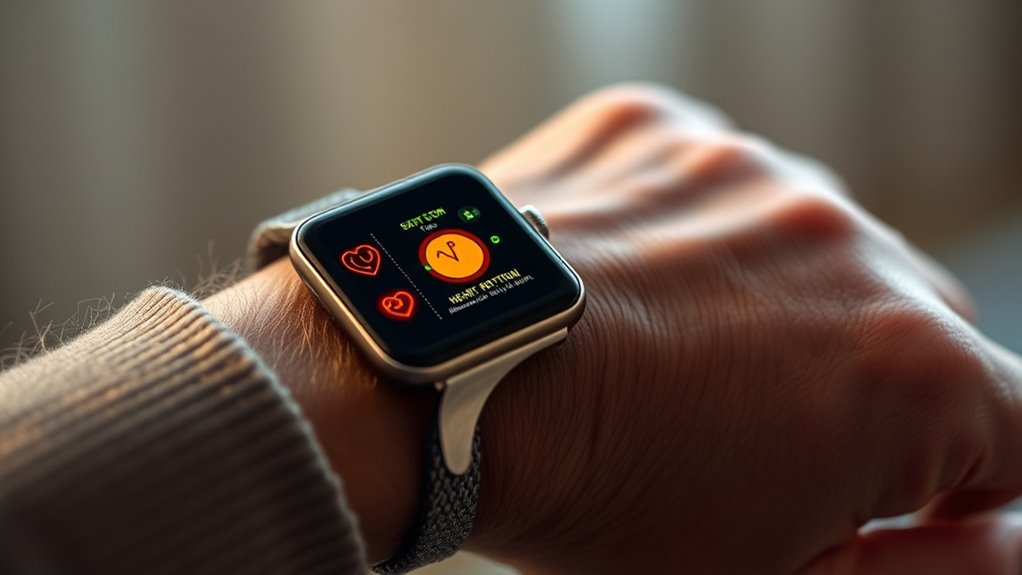
Heart rhythm alerts are another all-encompassing feature. Wearables like smartwatches and fitness trackers often include ECG capabilities or heart rate monitoring features. These tools track your heartbeat continuously, so if your device detects irregularities—like atrial fibrillation or unusually high or low heart rates—it can notify you immediately. That early warning allows you to seek medical advice before symptoms become severe. It’s like having a tiny, personal cardiologist on your wrist, constantly vigilant and ready to alert you to potential issues. For many people, this early detection can prevent serious health events and provide reassurance, especially if they have a family history of heart problems.
Additionally, wearables that monitor oxygen levels and blood pressure contribute to an all-inclusive health picture. If your device notices a sudden drop in oxygen saturation, it can alert you to potential respiratory issues. This is particularly helpful for those with asthma, COPD, or other breathing conditions. By providing real-time data, these wearables empower you to act promptly, whether that means adjusting medications or seeking emergency care. They also often sync with your smartphone, allowing you to track trends over time and share data with your healthcare provider, making ongoing management more efficient and personalized.
Furthermore, research shows that detecting passive voice in your writing can significantly improve clarity and engagement, emphasizing the importance of clear communication in health-related information. The importance of these features goes beyond just individual health. For caregivers and family members, these alerts provide an extra layer of security, ensuring loved ones aren’t left alone in emergencies. The combination of detection and instant communication creates a safety net that wasn’t available before. As technology advances, these wearables are becoming more accurate, more reliable, and more integrated into our daily routines. They’re not just fancy accessories—they’re practical tools that help you stay safe, monitor your health, and take proactive steps. If you’re considering a wearable, look for these life-saving features. They’re the ones that truly make a difference when it counts the most.
Frequently Asked Questions
How Accurate Are Wearables in Detecting Medical Emergencies?
Wearables are fairly accurate in detecting medical emergencies, but their effectiveness varies. They use sensors and algorithms to monitor essential signs and activity, alerting you or your caregivers if something’s wrong. However, false alarms can happen, and they aren’t perfect substitutes for professional medical equipment. You should always follow up with healthcare providers for confirmation, but overall, wearables offer a valuable, real-time safety net.
Can Wearables Replace Regular Medical Check-Ups?
No, wearables can’t replace regular medical check-ups. They provide useful real-time data and early warnings, but they lack the extensive analysis a healthcare professional offers. You should still see your doctor regularly for thorough assessments, tests, and personalized advice. Wearables are great tools for monitoring your health daily, but they complement, not substitute, professional medical care. Keep up with scheduled check-ups to ensure your overall well-being.
Are Wearables Suitable for Children and Teenagers?
Sure, wearables are perfect for kids and teens—because nothing says “fun” like constant tracking of your every move. These gadgets can monitor heart rates, steps, and even sleep, making sure you’re always under surveillance. While they can promote healthy habits, they might also turn your carefree adolescence into a high-tech monitoring session. Just remember, sometimes it’s healthier to disconnect and enjoy your youth without a digital watchdog!
How Is Data Privacy Maintained With Health Wearables?
You can trust that your health data stays private because manufacturers often use encryption to protect your information. They also follow strict privacy laws and policies to prevent unauthorized access. When you use health wearables, you should review privacy settings and permissions, ensuring only trusted apps and services access your data. Staying informed about how your data is handled helps you maintain control and confidence in your wearable device.
What Are the Costs Associated With Advanced Health Wearables?
Advanced health wearables can cost anywhere from $100 to over $500, depending on features and brand. You might also face additional expenses for subscription services, app integrations, or regular updates. Keep in mind that investing in a more sophisticated device usually means better accuracy and more extensive health data. To get the best value, compare features carefully and consider any ongoing costs before making your decision.
Conclusion
Imagine wearing a device that alerts you instantly if it detects a dangerous heart rhythm or a fall. These wearables don’t just track your steps—they can genuinely protect your health. For example, Sarah received a heart rhythm alert that led her to see a doctor in time, potentially saving her life. With these innovative devices, you’re equipped for safer, more confident living. Embrace technology that truly makes a difference in your everyday health and safety.