

Voice journaling is an easy, accessible way to boost your cognitive health using simple technology like your smartphone’s voice recorder or specialized apps. By speaking your thoughts and feelings regularly, you can track mood patterns, improve emotional clarity, and support mental well-being. It encourages reflection without the hassle of writing, making consistency easier. If you keep exploring, you’ll discover more tips on how this simple tech can make a big difference in your mental health journey.

Turn the school run and nap time into listening time
- Thousands of audiobooks, podcasts and originals
- Listen on your phone, tablet or Echo — also offline
- Cancel anytime
Key Takeaways
- Voice journaling offers an accessible, low-effort way to regularly track mental and cognitive health.
- Using simple tech like smartphones makes journaling convenient anywhere, encouraging consistent practice.
- Audio recordings capture emotional nuances, aiding in emotional access and expression.
- Analyzing voice patterns can reveal mood shifts and cognitive patterns over time.
- Regular voice journaling promotes self-awareness and early identification of cognitive or emotional changes.
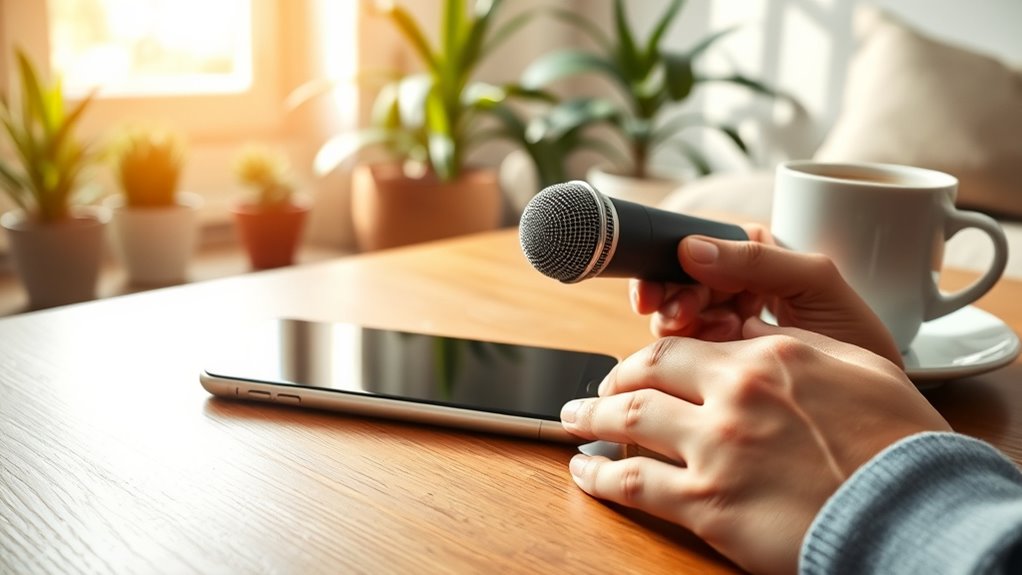
Voice journaling is becoming an increasingly popular tool for supporting cognitive health because it offers a simple, accessible way to track your mental well-being. Instead of relying on traditional written diaries, voice journals let you speak your thoughts, feelings, and experiences aloud. This method taps into your natural way of communicating, making it easier to express complex emotions and reflect on your day without the barriers of typing or writing. Plus, it’s incredibly convenient—whether you’re on the go, at home, or even during a break at work, you can record your voice whenever it suits you.
Voice journaling makes tracking mental well-being simple, natural, and accessible anywhere you are.
One of the key benefits is that voice journaling minimizes the effort involved in documenting your thoughts. You don’t need to find a pen or sit at a desk; simply speaking into your device is enough. This ease encourages consistency, which is crucial for noticing patterns in your mental health over time. As you record regularly, you begin to see trends in your mood, stress levels, or cognitive clarity, helping you understand what influences your mental state. Over time, these insights can guide you in making healthier choices or seeking help when needed.
Another advantage is that voice journaling engages different parts of your brain compared to writing. Speaking activates areas associated with language and emotion, making it easier to access and process feelings you might struggle to articulate in writing. This can especially benefit those experiencing anxiety or depression, as verbalizing emotions often provides relief and clarity. Additionally, voice recordings capture your tone, pitch, and emphasis, giving you more nuanced insight into your emotional state. Listening back to your recordings can help you recognize subtle shifts in mood or thought patterns that might otherwise go unnoticed.
Modern technology has made voice journaling easy and effective. Many smartphones and tablets come with built-in voice recording apps, and several specialized apps are designed specifically for journaling. Some even incorporate AI features that analyze your voice for stress or mood indicators, providing additional insights into your mental health. These tools often allow you to tag recordings, add context, or organize entries in a way that makes reviewing your progress straightforward. They make it simple to keep a consistent habit and to revisit past recordings for reflection. Furthermore, understanding the importance of regular maintenance of your recording devices can ensure your voice journal remains accessible and reliable over time.
In essence, voice journaling offers a low-barrier, versatile way to support your cognitive health. Its simplicity encourages regular practice, and its depth provides meaningful insights into your mental state. By speaking your truth, you can better understand yourself, track your mental health journey, and take proactive steps toward well-being—all with just a device and a few moments of your day.
Frequently Asked Questions
Can Voice Journaling Prevent Cognitive Decline?
Voice journaling can help prevent cognitive decline by engaging your brain in active thinking and memory recall. When you regularly record your thoughts and experiences, you stimulate neural pathways, boosting mental agility. This practice also encourages self-reflection, which can detect early signs of cognitive issues. By making voice journaling a routine, you support brain health and potentially delay the onset of decline, keeping your mind sharper longer.
What Devices Are Best for Voice Journaling?
You’re looking for the best devices to turn your voice into a daily mental tune-up. Smartphones with built-in microphones are your trusty sidekicks—easy and accessible. For clearer recordings, consider a quality digital voice recorder, like the Sony ICD-PX470. Smart speakers like Amazon Echo or Google Nest make voice journaling hands-free and seamless. Pick a device that feels like an extension of your mind, ready to capture your thoughts effortlessly.
Is Voice Journaling Suitable for Children and Teens?
Yes, voice journaling can be suitable for children and teens, especially with age-appropriate tools. You should encourage them to express their thoughts and feelings verbally, which helps develop emotional awareness and self-reflection. Make sure the devices are easy to use and safe for their age. You’ll find that it boosts their cognitive health by fostering communication skills and offering a fun way to process their daily experiences.
How Secure Is My Voice Data Stored Online?
Your voice data is stored with top-tier security measures that are practically impenetrable—think of it as Fort Knox for your voice! Major platforms use encryption, regular security updates, and strict privacy policies to keep your recordings safe from hackers. While no system is 100% invincible, your voice data’s security is prioritized to an extreme degree, giving you peace of mind that your personal stories stay private and protected.
Can Voice Journaling Replace Traditional Writing Methods?
Yes, voice journaling can replace traditional writing methods for many people because it offers quick, effortless expression and captures emotions more naturally. You can speak freely without worrying about spelling or handwriting, making it accessible and convenient. However, it might not suit everyone’s needs for detailed editing or permanence. Consider your preferences and goals—voice journaling is a flexible, effective alternative, but traditional writing still has its unique benefits.
Conclusion
So, here you are, thinking voice journaling is just a quirky habit. Turns out, this simple tech might be your secret weapon against cognitive decline, all while you chat away like you’re on a phone call. Who knew that talking to yourself could actually boost your brain health? So go ahead, embrace the irony—give voice journaling a try. Because sometimes, the best way to remember your future is by speaking your mind today.
Fall Picks
fall essentials
As an affiliate, we earn on qualifying purchases.