
Learning toys for toddlers work best when they invite children to practice a skill through play, at a pace that suits their age. My best overall pick is the Melissa & Doug Shape-Sorting Cube for its hands-on shape matching and simple, repeatable play. The LeapFrog Learning Friends 100 Words Book offers more spoken vocabulary, while the Montessori Wooden Sorting and Stacking Toy is a quieter fit for early matching and stacking. The main tradeoff is choosing between open-ended, screen-free play and toys that supply prompts, sounds, or guided learning. Read on for all 15 picks and how I’d match them to a toddler’s interests and stage.

Turn the school run and nap time into listening time
- Thousands of audiobooks, podcasts and originals
- Listen on your phone, tablet or Echo — also offline
- Cancel anytime
Complete the kit


Key Takeaways
- The Shape-Sorting Cube earns the overall spot because a clear matching task can hold a toddler’s attention without requiring a screen or a long setup.
- Electronic toys fill a different role: Mr. Pencil, LeapTop Touch, and the 100 Words Book offer prompts and audio, while the wooden toys leave more room for child-led repetition.
- Sorting appears in several forms across the lineup, from farm animals and color bowls to a busy book; the best fit depends on whether a child enjoys loose pieces, matching pages, or guided play.
- Age range and small-piece handling matter as much as the advertised skill. Several sets target ages 3–5, so they may be less suitable for younger toddlers or children who still mouth toys.
- Specific interests point to specific picks: choose Spike for fine-motor play, alphabet puzzles or magnetic fishing for letter practice, and farm sets for animal-themed sorting and counting.
| LeapFrog Mr. Pencil’s Scribble, Write and Read (Green) |  | Best for Early Writing Practice | Brand: LeapFrog | Age range: 3+ years | Writing activities: Uppercase and lowercase letters and numbers | VIEW LATEST PRICE | See Our Full Breakdown |
| Montessori Color Sorting Busy Book for Toddlers 2-4 Years |  | Best for Color Matching and Vocabulary | Brand: MUONE | Recommended age: 2–4 years | Listed age range: 36 months–6 years | VIEW LATEST PRICE | See Our Full Breakdown |
| Montessori Farm Train Sorting and Counting Toy Set with 9 Farm Animals |  | Best for Pretend Play and Early Counting | Recommended age: 1–3 years | Train pieces: Locomotive and 3 wagon carriages | Numbered barns: 9 | VIEW LATEST PRICE | See Our Full Breakdown |
| LeapFrog 2-in-1 LeapTop Touch |  | Best for Variety in Interactive Learning | Toy type: Interactive laptop and tablet toy | Age range: 2–5 years | Learning modes: ABCs, numbers, games, music, and messages | VIEW LATEST PRICE | See Our Full Breakdown |
| Melissa & Doug Shape-Sorting Cube, Wooden Toy with 12 Shapes |  | Best for Simple, Hands-On Sorting | Material: Wood | Included shapes: 12 | Recommended age: 2–4 years | VIEW LATEST PRICE | See Our Full Breakdown |
| Airbition Talking Flash Cards for Toddlers, 224 English Words, Blue |  | Best for Screen-Free Vocabulary | Brand: Airbition | Word count: 224 | Language: English | VIEW LATEST PRICE | See Our Full Breakdown |
| Montessori Wooden Sorting and Stacking Toy for Toddlers Ages 1–3 |  | Best for Early Shape and Color Sorting | Material: Wood | Piece count: 20 | Colors: Red, orange, yellow, green, and blue | VIEW LATEST PRICE | See Our Full Breakdown |
| Zeoddler Wooden Alphabet Puzzles for Toddlers |  | Best for First Letter Handling | Brand: Zeoddler | Material: Natural wood | Included components: Wooden alphabet | VIEW LATEST PRICE | See Our Full Breakdown |
| Learning Resources Original Farmer’s Market Color Sorting Set |  | Best for Pretend-Play Learning | Age range: 18 months and up | Included pieces: 25 play food pieces and 5 sorting baskets | Colors: 5 | VIEW LATEST PRICE | See Our Full Breakdown |
| NASHRIO Wooden Alphabet, Number, and Shape Puzzles for Kids Ages 3–5, 3-Pack |  | Best for Preschool Learning Variety | Brand: NASHRIO | Age range: 3–5 years | Material: Wood | VIEW LATEST PRICE | See Our Full Breakdown |
| LeapFrog Learning Friends 100 Words Book |  | Best for Bilingual Vocabulary | Age range: 18 months and up | Languages: English and Spanish | Word count: More than 100 | VIEW LATEST PRICE | See Our Full Breakdown |
| 20-Piece Farm Animal Montessori Learning Toy Set |  | Best for Early Matching | Recommended age: 12–18 months | Piece count: 20 | Included components: 10 farm animals and 10 barns | VIEW LATEST PRICE | See Our Full Breakdown |
| Skrtuan Counting Animals Color Sorting & Matching Game with Sorting Bowls – Montessori Sensory Early Learning Toy for Kids Ages 3-5 |  | Best for Preschool Sorting | Recommended age: 36 months to 6 years | Unit count: 36 counting animals | Included components: 36 animals, 6 sorting bowls, 2 tweezers, and storage box | VIEW LATEST PRICE | See Our Full Breakdown |
| Learning Resources Spike The Original Fine Motor Hedgehog |  | Best Compact Fine Motor Toy | Recommended age: 18 months and up | Pieces: 12 quills | Skills: Fine motor, color recognition, sorting, matching, counting, and sequencing | VIEW LATEST PRICE | See Our Full Breakdown |
| Magnetic Wooden Fishing Game Toy for Preschoolers – Alphabet and Number Fish Catching Puzzle |  | Best for Preschool Letter Practice | Recommended age: 3–5 years | Brand: NASHRIO | Model number: SC-T004A1 | VIEW LATEST PRICE | See Our Full Breakdown |
| learning toys for toddler | Recommended age | Brand | Material |
|---|---|---|---|
| LeapFrog Mr. Pencil’s Scribble | — | LeapFrog | — |
| Montessori Color Sorting Busy | 2–4 years | MUONE | Extra-thick tear-resistant cardboard; non-toxic |
| Montessori Farm Train Sorting | 1–3 years | — | — |
| LeapFrog 2-in-1 LeapTop Touch | — | — | — |
| Melissa & Doug Shape-Sorting C | 2–4 years | — | Wood |
| Airbition Talking Flash Cards | 12 months–6 years (manufacturer recommendation) | Airbition | — |
| Montessori Wooden Sorting and | 1–3 years | — | Wood |
| Zeoddler Wooden Alphabet Puzzl | — | Zeoddler | Natural wood |
| Learning Resources Original Fa | — | — | Soft, durable, rubber-like plastic |
| NASHRIO Wooden Alphabet | — | NASHRIO | Wood |
| LeapFrog Learning Friends 100 | — | — | — |
| 20-Piece Farm Animal Montessor | 12–18 months | — | — |
| Skrtuan Counting Animals Color | 36 months to 6 years | Skrtuan | Rubber |
| Learning Resources Spike The O | 18 months and up | Learning Resources | — |
| Magnetic Wooden Fishing Game T | 3–5 years | NASHRIO | Wood |
More Details on Our Top Picks
LeapFrog Mr. Pencil’s Scribble, Write and Read (Green)
Step-by-step letter and number writing gives this LeapFrog toy a more focused learning goal than the LeapFrog 2-in-1 LeapTop Touch, which spreads its activities across letters, numbers, music, and games. Mr. Pencil guides children as they trace with a stylus, then connects letters to animated animals and numbers to countable objects. A name-personalization feature adds practice with a word toddlers are likely to recognize, while free-drawing mode gives them room to explore beyond guided lessons. That makes it a strong fit for a child ready to practice early writing, especially around age three. The tradeoff is a narrower style of play than the Montessori Farm Train Sorting and Counting Toy Set: this is a screen-based, stylus-led activity, and regular use calls for fresh batteries because the included ones are for demonstration.
Pros:- Guides children through writing uppercase and lowercase letters and numbers
- Personalized name practice connects lessons to a familiar word
- Animations link letters and numbers to recognizable examples
- Free-drawing mode adds a creative activity beyond tracing
Cons:- Requires 3 AA batteries, and the included batteries are for demonstration
- Stylus-based lessons offer less hands-on sorting and pretend play than some alternatives
Best for: Families with a child around age three who is ready for guided letter, number, and name-writing practice.
Not ideal for: Buyers seeking open-ended, hands-on sorting or pretend play, or families who prefer toys that do not require batteries.
- Brand:LeapFrog
- Age range:3+ years
- Writing activities:Uppercase and lowercase letters and numbers
- Input:Stylus
- Personalization:Child’s name
- Power:3 AA batteries
- Included batteries:For demonstration purposes only
- Warranty:90-day manufacturer warranty
- ASIN:B0BRXPG99Q
Our verdict“Choose Mr. Pencil for a toddler ready to move from recognizing letters and numbers to practicing how to write them.”
Montessori Color Sorting Busy Book for Toddlers 2-4 Years
This busy book pairs 12-color matching with picture-and-word labels, so toddlers can practice naming what they see as well as sorting it. More language-focused than the Melissa & Doug Shape-Sorting Cube, it uses more than 48 movable stickers for matching, hand-eye coordination, and fine motor practice. The book format also gives a caregiver an easy way to prompt conversation or take turns, making it a good pick for shared play. Its many loose pieces create the main tradeoff: stickers can go missing, and the hook-and-loop fasteners may lose stickiness with heavy use. Compared with the Montessori Farm Train Sorting and Counting Toy Set, it offers more explicit color-word practice, but less room for vehicle play and animal stories.
Pros:- Teaches 12 colors through a clear matching activity
- Picture labels pair images with words to encourage vocabulary and pre-reading
- Hook-and-loop stickers give toddlers repeated fine motor practice
- Thick cardboard, rounded corners, and stated ASTM F963 compliance
Cons:- Loose stickers can be misplaced
- Hook-and-loop fasteners may lose stickiness with heavy use
Best for: Caregivers who want a portable, shared activity that combines color matching, picture naming, and fine motor practice for ages 2–4.
Not ideal for: Families whose toddlers often misplace small loose pieces, or buyers looking for a durable standalone toy for unsupervised play.
- Brand:MUONE
- Recommended age:2–4 years
- Listed age range:36 months–6 years
- Colors taught:12
- Stickers included:48+
- Included components:Sticker book and hook-and-loop fastener
- Material:Extra-thick tear-resistant cardboard; non-toxic
- Safety standard:ASTM F963
- ASIN:B0FHWXNGHG
Our verdict“Pick this book for guided color and vocabulary practice when an adult can help keep track of the pieces.”
Montessori Farm Train Sorting and Counting Toy Set with 9 Farm Animals
Loading, unloading, sorting, and stacking let a toddler explore early number and color ideas through play with the train, barns, and animals. The nine numbered barns make counting and matching more concrete, while the animals double as hand puppets for simple farm stories. That gives this set a broader imaginative-play angle than the Melissa & Doug Shape-Sorting Cube, whose main task is fitting each shape through its matching opening. It is also aimed younger than the LeapFrog Mr. Pencil’s Scribble, Write and Read, with a recommended age of 1–3 years and no writing practice. The many pieces offer variety, but they also need managing, and the product details do not specify materials or dimensions, making storage and construction harder to judge before buying.
Pros:- Combines counting, color recognition, matching, sorting, and stacking
- Nine numbered barns give counting play a clear structure
- Nine farm animals support pretend play and can double as hand puppets
- Detachable locomotive roof makes loading and unloading interactive
Cons:- Materials and dimensions are not specified in the product data
- Multiple barns, animals, and train pieces can be harder to keep together
Best for: Families with a 1–3-year-old who learns through loading, sorting, counting, and simple animal pretend play.
Not ideal for: Buyers who need confirmed material and size details, or who want a compact toy with few pieces to put away.
- Recommended age:1–3 years
- Train pieces:Locomotive and 3 wagon carriages
- Numbered barns:9
- Farm animals:9
- Figure:Farmer
- Learning activities:Counting, color recognition, matching, sorting, stacking, and role-play
- Interactive features:Detachable locomotive roof; animals double as hand puppets
- ASIN:B0CYT85XT6
Our verdict“Choose this train set for a younger toddler who benefits from combining early counting with hands-on farm stories.”
LeapFrog 2-in-1 LeapTop Touch
The keyboard-to-tablet conversion gives this toy two ways to engage a preschooler, while five modes cover ABCs, numbers, games, music, and messages. That range makes it a better fit for a child who likes switching activities than the more writing-focused LeapFrog Mr. Pencil’s Scribble, Write and Read. Name customization adds a personal touch to letter learning, and the laptop format can invite pretend work alongside guided play. The tradeoff is breadth over depth: children seeking repeated tracing and explicit writing steps may get more from Mr. Pencil. Compared with the hands-on Montessori Color Sorting Busy Book, LeapTop Touch offers electronic activities rather than movable matching pieces. It also requires 3 AA batteries; the included set is for demonstration, so regular play calls for replacements.
Pros:- Converts between keyboard and touch-tablet modes
- Five modes span letters, numbers, games, music, and messages
- Keyboard includes letters A–Z and numbers 1–10
- Customizable name spelling personalizes letter activities
Cons:- Requires 3 AA batteries, with included batteries intended for demonstration
- Covers more activity types but offers less focused writing guidance than Mr. Pencil
Best for: Families with a 2–5-year-old who enjoys electronic role-play and benefits from switching between several short learning activities.
Not ideal for: Buyers seeking focused handwriting practice, tactile sorting, or a toy that does not depend on batteries.
- Toy type:Interactive laptop and tablet toy
- Age range:2–5 years
- Learning modes:ABCs, numbers, games, music, and messages
- Keyboard:Letters A–Z and numbers 1–10
- Modes:5
- Power:3 AA batteries
- Included batteries:For demonstration purposes; new batteries recommended for regular use
- ASIN:B06XNQDR8J
Our verdict“Choose LeapTop Touch for a preschooler who wants varied electronic play and laptop-style role-play in one toy.”
Melissa & Doug Shape-Sorting Cube, Wooden Toy with 12 Shapes
This cube keeps the learning task direct: toddlers match each of 12 easy-to-grip shapes with its opening, practicing shape and color recognition as they solve where a piece belongs. Its straightforward hands-on puzzle makes it a simpler first sorting activity than the multi-part Montessori Farm Train Sorting and Counting Toy Set, which adds barns, animals, and pretend play. The wooden construction suits families looking for a physical toy without electronic modes, while the clear matching rule gives repeated practice in problem-solving. That simplicity comes with a limit: each shape fits only its matching opening, so there is less room to invent new sorting rules than with the Montessori Color Sorting Busy Book. It also covers fewer kinds of play than the train set, and the recommended age range is 2–4 years.
Pros:- Wooden construction offers a simple, hands-on alternative to electronic learning toys
- Includes 12 bright-colored shapes sized for easy gripping
- Matching shapes to openings practices recognition and problem-solving
- Focused activity is less complex than the multi-piece farm train set
Cons:- Each shape fits only its matching opening, limiting alternate ways to sort
- Offers less pretend play and activity variety than the farm train set
Best for: Caregivers seeking a straightforward wooden matching toy for a 2–4-year-old learning shapes, colors, and basic problem-solving.
Not ideal for: Buyers who want open-ended sorting, pretend-play pieces, or activities that extend beyond matching shapes to fixed openings.
- Material:Wood
- Included shapes:12
- Recommended age:2–4 years
- Skills:Shape recognition, color recognition, and problem-solving
- Shape fit:Each shape fits its matching opening
- ASIN:B00005RF5G
Our verdict“Pick this cube for a toddler who is ready for a clear, repeatable shape-matching challenge without electronic features.”
Airbition Talking Flash Cards for Toddlers, 224 English Words, Blue
The Airbition cards make spoken vocabulary the focus: a reader says each word and adds real animal sounds, giving toddlers a listen-and-repeat activity without a screen. With 224 illustrated words across everyday categories, it offers more listening material than the NASHRIO Wooden Alphabet, Number, and Shape Puzzles, which centers on matching letters, numbers, and shapes. Five volume levels and a repeat button give caregivers some control over how a child listens, while the rechargeable battery runs for up to four hours per charge. The tradeoff is that this toy depends on its electronic reader and needs charging; it also offers less hands-on sorting or puzzle practice than the wooden sets. The listed title and age recommendation differ, so check the age guidance before choosing.
Pros:- 224 illustrated English word cards span several everyday categories
- Spoken words and real animal sounds add an audio cue to vocabulary practice
- Five volume levels and a repeat button let caregivers adjust listening
- Rechargeable reader provides up to four hours of use per charge
Cons:- Requires charging and depends on an electronic reader
- The title lists ages 1–4 while the manufacturer recommendation says 12 months–6 years
Best for: Caregivers seeking a portable, screen-free way to introduce spoken English words and animal sounds to toddlers
Not ideal for: Families prioritizing hands-on shape, letter, or number matching, or who prefer toys that need no charging
- Brand:Airbition
- Word count:224
- Language:English
- Recommended age:12 months–6 years (manufacturer recommendation)
- Battery:Rechargeable; up to 4 hours per charge
- Volume control:5 levels
- Features:Repeat button, auto-off, standard American accent
- Included components:Flash cards, USB cable
- Color:Blue
Our verdict“Choose this for screen-free spoken vocabulary practice if you are comfortable charging an electronic reader.”
Montessori Wooden Sorting and Stacking Toy for Toddlers Ages 1–3
For toddlers just starting to sort, this set keeps the task concrete: children can group five geometric shapes by color, stack the pieces, or arrange them into patterns. That open-ended use gives it a different role from the Learning Resources Original Farmer’s Market Color Sorting Set, which adds food identification and pretend play to its sorting and counting activities. The wooden pieces are described as smooth-edged, with water-based paint, and the set is recommended for ages 1–3. Its simple format makes it a more direct first practice set for shape and color matching, though it does not offer the story-rich play of the market baskets. The listing provides no dimensions or storage details, which may make it harder to judge fit and cleanup before buying.
Pros:- Combines sorting, stacking, and pattern building in one set
- Five colors and five geometric shapes support early matching practice
- Smooth-edged wooden pieces are designed for little hands
- Water-based paint is specified in the product details
Cons:- No dimensions are provided, making the set’s size difficult to judge
- No storage details are listed, so piece cleanup may take extra planning
Best for: Caregivers of 1–3-year-olds looking for a straightforward wooden toy for practicing basic colors, shapes, and stacking
Not ideal for: Families seeking pretend-play themes, counting prompts, or clear information about storage and piece dimensions
- Material:Wood
- Piece count:20
- Colors:Red, orange, yellow, green, and blue
- Shapes:Pentagon, square, rectangle, triangle, and circle
- Recommended age:1–3 years
- Paint:Water-based
Our verdict“Pick this for simple, hands-on color and shape practice, especially if pretend-play features are not a priority.”
Zeoddler Wooden Alphabet Puzzles for Toddlers
The Zeoddler puzzle offers a focused way to handle the alphabet: its 26 uppercase wooden letters give children pieces to grasp and explore while practicing letter recognition and coordination. Its stated age range begins at 36 months, so it suits older toddlers better than the Montessori Wooden Sorting and Stacking Toy, which is recommended from age one and focuses on colors and shapes. Compared with the NASHRIO three-board set, Zeoddler concentrates on letters alone instead of adding number and shape matching. That narrower scope may help families who want an alphabet activity without several learning themes at once, but it offers less variety. The product description specifies smooth edges and natural wood but gives no puzzle dimensions, leaving buyers without a clear sense of its footprint or letter size.
Pros:- Includes all 26 uppercase letters
- Wooden letters are designed for small hands to grasp
- Supports letter recognition, fine motor skills, and hand-eye coordination
- Natural wood and smooth edges are specified in the description
Cons:- The stated age range starts at 36 months, limiting its fit for younger toddlers
- Puzzle dimensions are not specified
- Focuses on letters alone rather than combining several learning themes
Best for: Families with children around age three who want a wood-based activity centered on uppercase letter recognition and handling
Not ideal for: Caregivers of younger toddlers or buyers seeking number and shape practice alongside the alphabet
- Brand:Zeoddler
- Material:Natural wood
- Included components:Wooden alphabet
- Letter count:26 uppercase letters
- Age range:36 months–8 years
- Color:Classic
- Shape:Rectangular
- Number of packs:1
- Model number:111WA
Our verdict“Choose this for a focused uppercase alphabet activity for a child ready for its 36-month-and-up age range.”
Learning Resources Original Farmer’s Market Color Sorting Set
This set ties sorting practice to a familiar pretend market: toddlers can place 25 play food pieces into five color-coded baskets while naming foods and counting along. That combination gives it broader play prompts than the Montessori Wooden Sorting and Stacking Toy, which focuses on shapes, colors, and patterns without a food theme. The soft, rubber-like plastic is described as durable and sized for little hands, while the market setup can invite interaction with a caregiver beyond simple matching. The tradeoff is that the learning activities stay toddler-focused; children who have mastered basic color sorting may want a more complex puzzle such as the NASHRIO three-board set. This is a larger thematic choice for families who value pretend play alongside early sorting and food identification.
Pros:- Combines color recognition, sorting, and counting
- Pretend market play encourages food identification and caregiver interaction
- Includes 25 food pieces and five sorting baskets
- Soft, durable, rubber-like plastic is described as sized for little hands
Cons:- Children may outgrow the toddler-level sorting activities
- The food theme may be less useful to families seeking alphabet or shape practice
Best for: Caregivers of toddlers 18 months and up who want to combine color sorting and counting with pretend grocery play
Not ideal for: Families seeking a compact shape or letter puzzle, or a set intended to keep older children challenged
- Age range:18 months and up
- Included pieces:25 play food pieces and 5 sorting baskets
- Colors:5
- Material:Soft, durable, rubber-like plastic
Our verdict“Choose this if you want color and counting practice built into food-themed pretend play for a toddler.”
NASHRIO Wooden Alphabet, Number, and Shape Puzzles for Kids Ages 3–5, 3-Pack
NASHRIO brings three matching activities together: letters, numbers, and shapes each get a wooden puzzle board, so a preschooler can switch learning themes without changing toy format. That breadth sets it apart from the Zeoddler Wooden Alphabet Puzzles, which focus only on uppercase letters, and from the toddler-oriented Farmer’s Market set, which centers on color sorting and pretend food. Its self-correcting boards are intended to support independent matching, while rounded wooden pieces give children practice with grasping and placement. The main tradeoff is the stated age range of 3–5 years, which places it at the older end of this toddler roundup; younger toddlers may not be ready for its matching tasks. The product data does not specify piece counts or dimensions, so buyers have limited detail about board size and complexity.
Pros:- Includes separate boards for alphabet, number, and shape matching
- Self-correcting design is intended to support independent play
- Rounded wooden pieces encourage grasping and placement practice
- Combines several early learning themes in one set
Cons:- Stated age range of 3–5 years may not suit younger toddlers
- Piece counts and board dimensions are not provided
Best for: Caregivers of preschoolers ages 3–5 who want alphabet, number, and shape matching in one wooden puzzle set
Not ideal for: Families shopping for children under three or those who want detailed information about piece counts and board dimensions
- Brand:NASHRIO
- Age range:3–5 years
- Material:Wood
- Set contents:3 puzzle boards with letters, numbers, and shapes
- Theme:Alphabet, numbers, and shapes
- Shape:Rectangular
- Model number:T003
Our verdict“Pick this for a preschooler ready to practice letters, numbers, and shapes across several self-correcting boards.”
LeapFrog Learning Friends 100 Words Book
English and Spanish audio gives this book a clear learning focus: toddlers can hear words across everyday topics, then revisit them through songs, sound effects, and short facts. Its more than 100 words offer broader vocabulary practice than the Learning Resources Spike The Original Fine Motor Hedgehog, which centers on sorting, counting, and hand control. That makes the book a better fit for adults who want a simple way to introduce spoken words in two languages, while Spike suits children who learn through manipulating pieces. The tradeoff is that interaction depends on touching the book’s pages, so it offers less open-ended play than animal figures or sorting sets. It also needs two AA batteries; the included demo batteries may need replacing for regular use.
Pros:- Introduces more than 100 age-appropriate words across familiar topics
- Provides spoken content in English and Spanish
- Songs, sound effects, and facts add variety to word practice
Cons:- Requires two AA batteries, and new batteries are recommended for regular use
- Page-touch audio offers less open-ended manipulation than animal or sorting toys
Best for: Caregivers looking to introduce everyday vocabulary in both English and Spanish through guided audio play.
Not ideal for: Families seeking open-ended, hands-on sorting play or a toy that does not rely on batteries.
- Age range:18 months and up
- Languages:English and Spanish
- Word count:More than 100
- Power:2 AA batteries
- Battery note:Demo batteries included; new batteries recommended for regular use
- Dimensions:9.4 in W × 9.2 in H × 1.9 in D
Our verdict“Choose this book for guided bilingual vocabulary practice; choose Spike if fine motor play and sorting matter more.”
20-Piece Farm Animal Montessori Learning Toy Set
Numbered barns and matching animals give young toddlers a concrete first step into counting, sorting, and color matching: place an animal in a barn, then try the lid’s number or dot pattern. Compared with the Skrtuan Counting Animals Color Sorting & Matching Game, this set has fewer pieces and simpler tasks, which better suits children at the 12–18 month age range listed for it. Skrtuan adds tweezers and more animals for more involved sorting, but its stated age range starts at 36 months. Here, finger-puppet play gives the farm animals another use beyond matching. The tradeoff is a narrow farm theme and limited challenge for older toddlers. The small pieces also call for adult supervision, especially with children who still mouth toys.
Pros:- Combines animal-to-barn matching with numbered lids and dot patterns
- Supports early counting, color matching, and sorting
- Animals can double as finger puppets for pretend play
- Lightweight vinyl and plastic pieces have smooth edges
Cons:- The simple matching tasks may not hold older toddlers’ interest
- Small pieces require adult supervision
- Play centers on farm animals rather than a wider range of themes
Best for: Caregivers of younger toddlers who want a simple, hands-on introduction to matching and counting.
Not ideal for: Families with older preschoolers seeking harder sorting tasks, or households unable to supervise small play pieces.
- Recommended age:12–18 months
- Piece count:20
- Included components:10 farm animals and 10 barns
- Animal types:Cat, dog, duck, cow, rabbit, and other farm animals
- Materials:Vinyl animals and plastic barns
- Learning skills:Counting, color matching, sorting, fine motor skills, and hand-eye coordination
- Features:Finger-puppet design, numbered barn lids, and dot matching
- Safety details:Described as odorless, lightweight, and smooth-edged
Our verdict“Pick this set for an early, farm-themed matching activity; choose Skrtuan for more pieces and tweezers for preschoolers.”
Skrtuan Counting Animals Color Sorting & Matching Game with Sorting Bowls – Montessori Sensory Early Learning Toy for Kids Ages 3-5
Thirty-six rubber animals, six bowls, and tweezers make this the most involved sorting activity among these animal sets. Children can group pieces by color, count them, and use the tweezers to practice controlled hand movements. Compared with the 20-Piece Farm Animal Montessori Learning Toy Set, Skrtuan offers more pieces and a tool-based challenge, while the farm set is simpler and lists a younger recommended age. That extra complexity suits preschoolers who are ready to follow sorting prompts; it can frustrate younger toddlers, and the product’s age range begins at 36 months. The washable rubber pieces and storage box support repeat play and cleanup, but the many small animals need supervision around children under three. For toddlers, it is a later-stage preschool pick rather than an early first toy.
Pros:- Thirty-six animals allow multiple counting and color-sorting activities
- Tweezers add a fine motor challenge beyond basic matching
- Washable rubber pieces are suited to repeated handling
- Storage box keeps the set together between activities
Cons:- Small pieces pose a choking risk for children under three
- Tweezers may be difficult for younger toddlers to operate
- Its stated age range starts at 36 months, limiting its fit for younger toddlers
Best for: Families, homeschoolers, or daycare groups with preschoolers ready for color sorting, counting, and tweezer practice.
Not ideal for: Caregivers of children under three or toddlers who need larger, simpler pieces and less tool coordination.
- Recommended age:36 months to 6 years
- Unit count:36 counting animals
- Included components:36 animals, 6 sorting bowls, 2 tweezers, and storage box
- Material:Rubber
- Brand:Skrtuan
- Manufacturer:Skrtuan
- Skills:Counting, color recognition, sorting, matching, and fine motor skills
Our verdict“Choose Skrtuan for supervised preschool sorting practice; the 20-piece farm set is a simpler match for younger toddlers.”
Learning Resources Spike The Original Fine Motor Hedgehog
Chunky quills that store inside the hedgehog make Spike a tidy way to practice grasping, color matching, and early counting. Its focused activity asks children to place quills into numbered holes, so each turn can build hand control alongside simple sequencing. Compared with the 20-Piece Farm Animal Montessori Learning Toy Set, Spike has fewer loose pieces and a built-in place to put them away, but it offers less variety for pretend play. It is also more direct than the LeapFrog Learning Friends 100 Words Book: children handle pieces instead of listening to vocabulary. The limited task is a benefit for toddlers beginning fine motor play, yet it can feel repetitive as they grow. Quills can still go missing if they are not returned to the hedgehog.
Pros:- Chunky quills support grasping and pincer practice
- Numbered holes introduce counting and sequencing
- Colorful pieces support sorting and matching
- Quills store inside the hedgehog for portable play
Cons:- The focused activity may become too simple as children grow
- Loose quills can be lost if not put away after play
Best for: Caregivers seeking a compact, contained toy for toddlers practicing grasping, matching, and early counting.
Not ideal for: Older toddlers who need varied pretend-play scenarios or more advanced sorting challenges.
- Recommended age:18 months and up
- Pieces:12 quills
- Skills:Fine motor, color recognition, sorting, matching, counting, and sequencing
- Storage:Quills store inside the hedgehog
- Brand:Learning Resources
- Product:Spike The Original Fine Motor Hedgehog
Our verdict“Choose Spike for contained fine motor practice, while the farm set offers more pretend play and matching pieces.”
Magnetic Wooden Fishing Game Toy for Preschoolers – Alphabet and Number Fish Catching Puzzle
Magnetic fishing turns letter and number practice into a hand-eye coordination task, giving preschoolers a playful reason to pick up and place each fish. This is a better fit for children beginning alphabet and counting recognition than the Learning Resources Spike The Original Fine Motor Hedgehog, whose numbered holes focus more on sorting and sequencing than letters. The wooden board and fishing pole add a different kind of manipulation than the LeapFrog word book’s touch-activated audio. The tradeoff is age: this set is recommended for ages 3–5, so it is less suitable for younger toddlers than Spike. Small fish pieces need supervision, and the pole can be misplaced, which may interrupt play. It works best when an adult can join in to name letters, numbers, or colors as each piece is caught.
Pros:- Fish pieces introduce letters, numbers, and colors through play
- Magnetic fishing encourages hand-eye coordination and fine motor control
- Polished wood and water-based paint are specified
- Adult participation can turn each catch into naming practice
Cons:- Recommended age of 3–5 makes it a poor fit for younger toddlers
- Small fish pieces require adult supervision
- The separate fishing pole can be misplaced
Best for: Caregivers of preschoolers ages 3–5 who want a hands-on activity for letter, number, and color recognition.
Not ideal for: Families shopping for younger toddlers, or those who need a toy with no small pieces or separate accessories.
- Recommended age:3–5 years
- Brand:NASHRIO
- Model number:SC-T004A1
- Material:Wood
- Set name:Alphabet & Number Fishing Game Set
- Unit count:1 count
- Number of packs:1
- UPC:046432481369
Our verdict“Choose this fishing set for supervised preschool alphabet play; Spike is a better age fit for toddlers starting fine motor activities.”
How We Picked
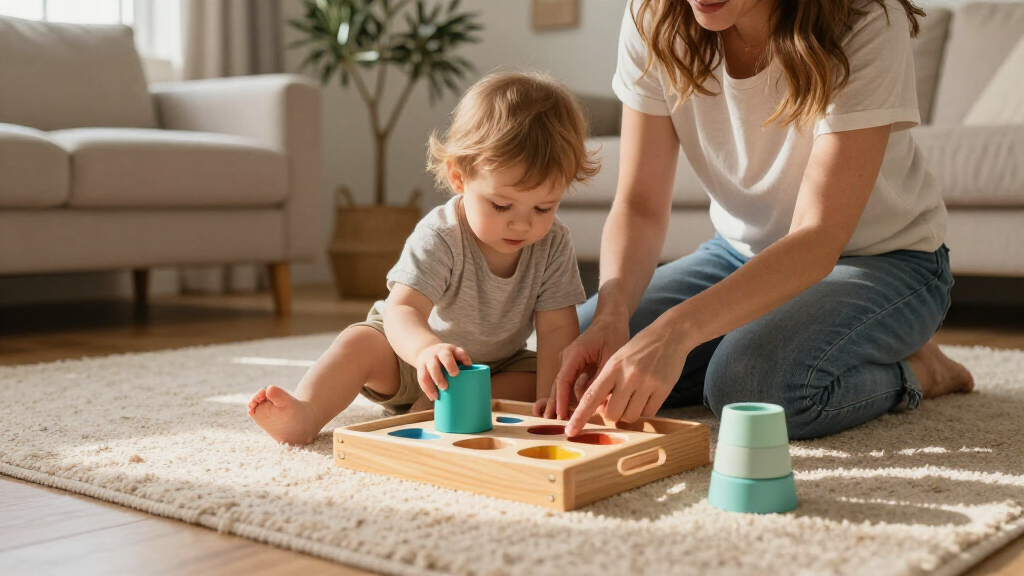
I compared the 15 options by the learning activity they make easiest to repeat: matching, sorting, counting, early literacy, vocabulary, or fine-motor practice. I also weighed how much adult help a toy appears to need, whether its play format suits a toddler’s attention and abilities, and how readily it can support more than one kind of play. Age guidance and piece handling matter because a toy aimed at preschoolers may be a poor fit for a younger toddler.
The order favors toys with a clear toddler-friendly activity, useful repeat play, and a focused role in a household’s toy mix. The Shape-Sorting Cube leads as a straightforward hands-on choice; picks with sound, screens, or a narrower skill focus rank for families who specifically want those features. Sorting sets and puzzles remain useful, but overlap among them means the best one depends on the child’s interests, age, and tolerance for loose pieces.
| learning toys for toddler | Material |
|---|---|
| LeapFrog Mr. Pencil’s Scribble | — |
| Montessori Color Sorting Busy | Extra-thick tear-resistant cardboard; non-toxic |
| Montessori Farm Train Sorting | — |
| LeapFrog 2-in-1 LeapTop Touch | — |
| Melissa & Doug Shape-Sorting C | Wood |
| Airbition Talking Flash Cards | — |
| Montessori Wooden Sorting and | Wood |
| Zeoddler Wooden Alphabet Puzzl | Natural wood |
| Learning Resources Original Fa | Soft, durable, rubber-like plastic |
| NASHRIO Wooden Alphabet | Wood |
| LeapFrog Learning Friends 100 | — |
| 20-Piece Farm Animal Montessor | — |
| Skrtuan Counting Animals Color | Rubber |
| Learning Resources Spike The O | — |
| Magnetic Wooden Fishing Game T | Wood |
Factors to Consider When Choosing Learning Toys For Toddlers
I’d start with the kind of play a child returns to, then match the toy’s challenge and setup to that child. A useful learning toy does not need to teach every skill at once; it should make one or two activities inviting and manageable.
Match the challenge to the child, not just the age label
Age guidance is a starting point, while a child’s coordination, attention, and tendency to mouth objects affect day-to-day fit. A toddler who enjoys simple drop-in matching may find multi-step puzzles frustrating, even if the package age seems appropriate. Check the number and size of pieces, especially with animal sets, counters, and fishing games. For a younger child, choose a toy with a small number of large, easy-to-grasp parts. As skills grow, extra pieces or more precise matching can add challenge without requiring a completely different play style.
Choose between guided prompts and open-ended play
Some toys speak, play sounds, or direct the next action; others leave the child to decide what to sort, stack, or match. Guided feedback can help when a child is learning how a task works or when an adult wants an activity with built-in prompts. Open-ended toys allow children to invent their own sorting rules and repeat a movement without waiting for a device. A common mistake is treating more sounds or buttons as more learning. Think about whether your child responds to prompts or prefers to explore quietly, and choose accordingly.
Pick one main skill to practice at a time
Letter, number, color, shape, vocabulary, and fine-motor toys each ask a child to focus in a different way. A toy that combines several skills can be appealing, but too many instructions may distract a toddler from the basic action. If a child is beginning to recognize colors, a focused sorting activity may be easier to understand than a set that also introduces counting and matching. Rotate activities when interest fades rather than expecting one toy to cover every developmental goal. The clearest match is often the toy that supports a skill your child already wants to practice.
Account for setup, supervision, and storage
Loose pieces can make sorting and pretend play more flexible, but they also take time to gather and store. A bound busy book keeps its activities together, while puzzles and farm sets may spread across the floor. Sound-based toys can work independently for short periods, though adults may still need to help with navigation or turn-taking. Before choosing a larger set, consider where it will be played and whether the pieces have a dedicated container. A toy that is easy to bring out and put away is more likely to become part of a regular routine.
Pay for a real change in play, not simply more pieces
A bigger set can offer more sorting combinations, but it can also add clutter without extending the child’s interest. Extra cost is easier to justify when a toy changes the play experience: for example, adding spoken word prompts, several distinct puzzle types, or enough varied pieces for shared play. If two toys practice the same skill in nearly the same way, the simpler one may be the better fit. Consider durability and how often the child can use the toy independently alongside the feature list. Choose an expanded set when its added activities match a clear need at home.
Frequently Asked Questions
Which learning toy is a good first choice for a toddler?
I’d start with an activity the child can understand quickly, such as simple shape matching or stacking. A straightforward task lets a toddler repeat the action and notice what changes without needing many instructions. The Melissa & Doug Shape-Sorting Cube is the most direct fit in this lineup for that kind of play. Check the piece size and your child’s comfort with fitting shapes before choosing. If a child loses interest in puzzles, a sorting or stacking toy may be a better entry point.
Are electronic learning toys better than wooden toys?
Neither format is automatically better; they support different play habits. Electronic options such as the LeapFrog toys and talking cards provide audio prompts or guided activities, which may appeal to children who enjoy listening and pressing buttons. Wooden puzzles and sorting toys encourage hands-on matching and repeated exploration without sound. Think about whether audio will help your child stay engaged or become a distraction in your home. A mix can work, but each toy should have a distinct use.
How many small pieces are appropriate for a toddler?
There is no single piece count that fits every toddler, because age, supervision, and mouthing behavior all matter. Read the manufacturer’s age guidance and inspect the size of individual pieces before buying. Sets with many loose animals, counters, or fish require more oversight and a reliable cleanup routine than a bound activity book. If your child still mouths objects, prioritize toys designed for that age and avoid pieces that could pose a choking risk. Keep small parts out of reach when the toy is not in use.
Should I buy an alphabet toy or a counting toy first?
Follow the interest your child already shows rather than trying to teach skills in a fixed order. A child who points at letters or enjoys books may respond to alphabet puzzles or a word book, while a child who sorts objects may enjoy counting animals or color bowls. Many early learning toys build several skills at once through naming, matching, and handling pieces. Keep sessions playful and stop when attention fades. You can add another skill area later if the first activity remains enjoyable.
Are multi-activity learning sets worth choosing over a single-purpose toy?
Multi-activity sets make sense when a child enjoys switching between tasks and the pieces are easy to manage. They can provide variety, but more pieces may mean more setup, storage, and adult help. A focused toy often makes it easier for a toddler to repeat one action and build confidence. Compare the activities rather than counting them: several versions of the same match may add less value than one new kind of play. Choose the larger set when its variety fits your child’s attention and your available play space.
Conclusion
For the best overall fit, I’d choose the Melissa & Doug Shape-Sorting Cube for clear, hands-on matching. The best value in learning variety depends on the child’s interests: the Montessori Farm Train combines farm play with sorting and counting, while the Learning Friends 100 Words Book offers spoken vocabulary practice. For beginners, start with the wooden sorting and stacking toy or the shape cube, which keep the task easy to grasp. Families seeking a premium, guided experience may prefer a LeapFrog option for its audio or touch-based activities. For specific needs, pick Spike for fine-motor practice, an alphabet puzzle or fishing game for letter play, and a sorting set for color matching. Match the activity to your toddler’s age, interests, and comfort with small pieces to make the choice.
Fall Picks
fall essentials
As an affiliate, we earn on qualifying purchases.