
For winter heater use, my best overall pick is the Kidde Plug-In Carbon Monoxide Detector with Battery Backup and Digital Display: it combines continuous outlet-powered monitoring, backup power, and a readable CO level display. The Kidde Battery-Powered Carbon Monoxide Detector with 10-Year Battery and Digital Display is a strong alternative where outlets are scarce, while the First Alert CO710 suits buyers who want a sealed long-life battery and display. The main tradeoff is between straightforward household alarms and portable meters or multi-gas monitors, which serve different jobs and should not be treated as interchangeable. Placement, backup power, sensor lifespan, and whether you need a visible reading all affect the right choice. Read on for the full breakdown of all 15 options and guidance for matching one to your heater setup.

Turn the school run and nap time into listening time
- Thousands of audiobooks, podcasts and originals
- Listen on your phone, tablet or Echo — also offline
- Cancel anytime
Complete the kit


Key Takeaways
- Household alarms lead this winter-use roundup: plug-in models with battery backup offer a practical fit near an outlet, while battery-powered alarms avoid reliance on a particular wall location.
- A display changes what you can see, not the alarm’s purpose: models such as the Kidde plug-in digital-display alarm and First Alert CO710 show a reading, while simpler alarms focus on alerting when CO reaches an alarm condition.
- Sealed long-life batteries reduce routine battery changes: the HEIMAN C1-S and select Kidde and First Alert models offer long product or battery life, but the stated service life and replacement needs still matter.
- Portable meters and multi-gas units are specialist tools: TOPTES and Klein Tools models add portability, exposure information, or other gas readings, but they are not direct substitutes for a listed household alarm.
- Gas-combination alarms involve a tradeoff: Kidde carbon monoxide and explosive-gas models can cover an additional hazard, but buyers should choose them only if that extra detection matches the home’s fuel setup and follow the maker’s placement instructions.
| Kidde Battery-Powered Carbon Monoxide Alarm with LEDs |  | Best for Outage-Ready Fixed Placement | Sensor: Electrochemical | Power: 2 AA batteries | Alarm volume: 85 dB | VIEW ON AMAZON | See Our Full Breakdown |
| Kidde Plug-In Carbon Monoxide Detector with AA Battery Backup |  | Best for a Readable In-Home Display | Model: KN-COB-DP2 | Sensor: Electrochemical | Power: 120V plug-in with 2 AA backup batteries | VIEW ON AMAZON | See Our Full Breakdown |
| TOPTES CT-580 Portable Carbon Monoxide Detector |  | Best for Portable CO Spot Checks | Model: CT-580 | Detection range: 0–1000 PPM | Response time: 0.3 seconds | VIEW ON AMAZON | See Our Full Breakdown |
| First Alert CO400 Battery-Powered Carbon Monoxide Alarm |  | Best for Simple Battery-Powered Basics | Model: CO400 | Sensor: Electrochemical | Power: Replaceable 9V battery | VIEW ON AMAZON | See Our Full Breakdown |
| Kidde Battery-Powered Carbon Monoxide Detector with 85 dB Alarm | 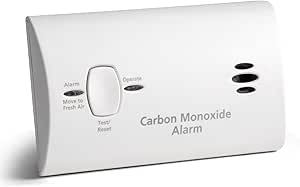 | Best Lightweight Placement Flexibility | Models: 9CO5LP2 / KN-COB-LP2 | Sensor: Electrochemical | Power: 2 AA batteries | VIEW ON AMAZON | See Our Full Breakdown |
| HEIMAN C1-S Carbon Monoxide Detector with 10-Year Product Life |  | Best for Flexible Placement | Sensor: FIGARO electrochemical | Power: Lithium battery | Alarm: 85 dB audible alarm with LED indicator | VIEW ON AMAZON | See Our Full Breakdown |
| Kidde Plug-In Carbon Monoxide Detector with Battery Backup and Digital Display |  | Best for Readable CO Levels | Model: KN-COPP-3 | Power: 120V AC plug-in | Battery backup: 9V alkaline battery | VIEW ON AMAZON | See Our Full Breakdown |
| TOPTES Guard-101 4-Gas Detector with Alarms, 14-Hour Battery, and Data Storage |  | Best for Multi-Gas Monitoring | Detected gases: H2S, CO, LEL, O2 | Alarm types: LED, vibration, audible | Alarm response time: 0.5 seconds | VIEW ON AMAZON | See Our Full Breakdown |
| First Alert CO605 Plug-In Carbon Monoxide Detector with Battery Backup, White | | Best Simple Plug-In Backup | Model: CO606 (listed product title: CO605) | Power source: Corded electric with battery backup | Sensor type: Electrochemical | VIEW ON AMAZON | See Our Full Breakdown |
| Klein Tools ET110 Carbon Monoxide Meter with Exposure Limit Alarm |  | Best for Spot Checks | Measurement range: 0–1,000 ppm CO | Alarm thresholds: Low alarm at 35 ppm; high alarm at 200 ppm | Temperature display: Fahrenheit and Celsius | VIEW ON AMAZON | See Our Full Breakdown |
| TopTes Guard-156 4-Gas Monitor for H2S, CO, LEL, and O2 |  | Best for Multi-Gas Monitoring | Gas detection: H2S, CO, LEL, and O2 | Stated response time: 0.5 seconds | Alarm modes: LED light, vibration, and sound | VIEW ON AMAZON | See Our Full Breakdown |
| Kidde COPDLG Carbon Monoxide and Explosive Gas Alarm |  | Best for Low-Level CO Alerts | Detection: Carbon monoxide, natural gas, and propane | Power: 120V plug-in with two AA battery backup batteries | Alarm volume: 85 dB | VIEW ON AMAZON | See Our Full Breakdown |
| Kidde Plug-In Carbon Monoxide and Explosive Gas Alarm with Battery Backup |  | Best for Broad Household Gas Coverage | Detected gases: Carbon monoxide, methane, sewer gas, propane, and natural gas | Power: 120V AC plug-in | Battery backup: 9V battery | VIEW ON AMAZON | See Our Full Breakdown |
| Kidde Carbon Monoxide Detector, 10-Year Battery Powered, Digital Display, LED Status Indicators, 85 dB Alarm, 3rd Edition |  | Best for Simple, Outlet-Free Placement | Model: C3010D | Sensor technology: Electrochemical | Battery life: 10-year sealed lithium battery | VIEW ON AMAZON | See Our Full Breakdown |
| First Alert CO710 Carbon Monoxide Alarm with 10-Year Battery and Digital Display |  | Best for Readable CO and Temperature Checks | Model: CO710 | Power: Built-in 10-year lithium battery | Sensor: Electrochemical carbon monoxide sensor | VIEW ON AMAZON | See Our Full Breakdown |
| co detector for winter heater use | Warranty | Power | Sensor | Display |
|---|---|---|---|---|
| Kidde Battery-Powered Carbon M | 10-year limited warranty on the alarm | 2 AA batteries | Electrochemical | — |
| Kidde Plug-In Carbon Monoxide | 10-year limited manufacturer’s warranty | 120V plug-in with 2 AA backup batteries | Electrochemical | Digital CO level display, updates every 15 seconds |
| TOPTES CT-580 Portable Carbon | — | Rechargeable battery via USB-C | Electrochemical | TFT color display |
| First Alert CO400 Battery-Powe | 5-year limited warranty | Replaceable 9V battery | Electrochemical | — |
| Kidde Battery-Powered Carbon M | 10-year limited manufacturer’s warranty | 2 AA batteries | Electrochemical | — |
| HEIMAN C1-S Carbon Monoxide De | Product information lists both 7 and 10 years | Lithium battery | FIGARO electrochemical | — |
| Kidde Plug-In Carbon Monoxide | 10-year limited | 120V AC plug-in | Electrochemical | Digital LED; displays 30–999 ppm |
| TOPTES Guard-101 4-Gas Detecto | 36 months | — | — | — |
| First Alert CO605 Plug-In Carb | 7-year limited | — | — | — |
| Klein Tools ET110 Carbon Monox | — | 4 AAA batteries | — | Backlit LCD |
| TopTes Guard-156 4-Gas Monitor | — | — | — | — |
| Kidde COPDLG Carbon Monoxide a | 10-year limited warranty | 120V plug-in with two AA battery backup batteries | — | Backlit digital display |
| Kidde Plug-In Carbon Monoxide | 6 years | 120V AC plug-in | — | Digital LED |
| Kidde Carbon Monoxide Detector | 10-year limited manufacturer warranty | — | — | Digital; updates every 15 seconds |
| First Alert CO710 Carbon Monox | 10-year limited warranty | Built-in 10-year lithium battery | Electrochemical carbon monoxide sensor | Backlit digital display with temperature and current and peak CO readings |
More Details on Our Top Picks
Kidde Battery-Powered Carbon Monoxide Alarm with LEDs
For winter heater use, my priority is a detector that keeps monitoring when household power fails. This two-AA battery-powered Kidde does that without relying on an outlet, and its 85 dB alarm, status LEDs, and peak-level memory cover the basics of an at-home setup. Wall mounting or tabletop placement also makes it easier to position where a heater is used than the handheld TOPTES CT-580, which requires someone to carry it and check readings.
The tradeoff is that this model gives an alarm rather than a numerical CO reading, so it offers less information for tracking changing levels. Battery replacement is also part of upkeep. I’d choose it over the First Alert CO400 for its stated 10-year alarm warranty, while buyers wanting a display should look at the plug-in Kidde model instead.
Pros:- Two AA batteries allow monitoring during power outages
- Wall or tabletop placement suits different room layouts
- Peak-level memory can show that a CO event or test occurred
- Test-hush button and 85 dB alarm support basic alert and checking functions
Cons:- No digital display for viewing a CO concentration
- Requires periodic AA battery replacement
Best for: Households seeking a portable, fixed-placement alarm that continues monitoring through power outages and does not need a digital display.
Not ideal for: Buyers who want to see numerical CO levels or avoid replacing batteries; the plug-in Kidde with digital display is a better fit for that preference.
- Sensor:Electrochemical
- Power:2 AA batteries
- Alarm volume:85 dB
- Indicators:Green power LED and red alarm LED
- Memory:Peak-level memory
- Installation:Wall-mounted or tabletop
- Certification:UL listed
- Warranty:10-year limited warranty on the alarm
Our verdict“Choose this Kidde for straightforward, outage-ready placement near winter heating areas, but pick the plug-in Kidde if seeing CO readings matters more than fully battery-powered operation.”
Kidde Plug-In Carbon Monoxide Detector with AA Battery Backup
This is my strongest pick for buyers who want a fixed detector with visible CO readings as well as an audible warning. Its digital display updates every 15 seconds, while two AA backup batteries keep it operating if power is lost—useful protection when a winter outage affects a home relying on electric heating controls or ventilation. Compared with the battery-only Kidde B004Y6V5CI, this model adds at-a-glance readings but depends on a nearby 120V outlet for normal operation.
The 85 dB alarm, peak-level memory, and test-hush button make it more informative than the basic First Alert CO400, though that simpler alarm is not tied to an outlet. The display provides added context, not a substitute for responding to an alarm or addressing a heater problem. I’d skip this if the intended location has no suitable outlet.
Pros:- Digital display shows CO level and updates every 15 seconds
- Two AA backup batteries provide operation during power outages
- Peak Level Memory records a previous CO event
- 85 dB alarm and test-hush button support audible alerts and testing
Cons:- Requires a standard 120V outlet for normal operation
- Backup AA batteries need replacement over time
Best for: Homeowners who have a suitable outlet near the heater area and want digital CO readings alongside backup battery operation.
Not ideal for: People needing fully independent battery operation or placement far from an outlet; the battery-powered Kidde B004Y6V5CI avoids the plug-in requirement.
- Model:KN-COB-DP2
- Sensor:Electrochemical
- Power:120V plug-in with 2 AA backup batteries
- Alarm:85 dB
- Display:Digital CO level display, updates every 15 seconds
- Hush duration:Approximately 8 minutes
- Dimensions:2.32 × 2.83 × 4.72 in (D × W × H)
- Certification:UL certified; meets UL 2034 and UL 217 requirements
- Warranty:10-year limited manufacturer’s warranty
Our verdict“Pick this model if you want a readable CO display at a fixed outlet location, and choose the battery-only Kidde instead if flexible placement is the priority.”
TOPTES CT-580 Portable Carbon Monoxide Detector
The TOPTES CT-580 plays a different role from the household alarms here: it is a rechargeable handheld meter for checking CO readings where you carry it, not a set-and-forget alarm for a room with a winter heater. Its 0–1000 PPM range, stated 0.3-second response, and color display provide more measurement detail than the Kidde B004Y6V5CI, which alerts without showing a numerical level. Audible, visual, and vibration alarms can also help when a user may not hear a single sound cue.
That extra flexibility brings a meaningful limitation: it requires manual inspection, so it should not replace continuous fixed monitoring. Battery life is not specified, which makes charging plans less clear than the AA-powered Kidde alarms. I’d choose this for portable checks and keep a dedicated household alarm in place; buyers seeking one stationary winter safety device should favor the plug-in Kidde or a battery-powered alarm.
Pros:- Measures from 0 to 1000 PPM with a stated 0.3-second response
- Audible, visual, and vibration alarm modes provide multiple alert types
- Rechargeable USB-C power avoids disposable batteries for routine charging
- Color display, calibration options, alarm history, and built-in flashlight add utility for spot checks
Cons:- Requires a person to carry and inspect it rather than providing fixed continuous room monitoring
- Battery life is not specified in the product data
- Portable readings do not replace a dedicated household CO alarm
Best for: People who need a portable meter for occasional CO spot checks around equipment or in multiple locations, alongside a dedicated household alarm.
Not ideal for: Households seeking continuous, unattended monitoring near a winter heater; the battery-powered Kidde alarm is designed for fixed placement instead.
- Model:CT-580
- Detection range:0–1000 PPM
- Response time:0.3 seconds
- Sensor:Electrochemical
- Alarm modes:Audible, visual, and vibration
- Power:Rechargeable battery via USB-C
- Display:TFT color display
- Included accessories:Protective case, Type-C charging cable, and user manual
Our verdict“Choose the CT-580 for portable measurement and varied alerts, but pair it with a fixed household alarm such as the Kidde B004Y6V5CI for winter heater monitoring.”
First Alert CO400 Battery-Powered Carbon Monoxide Alarm
The First Alert CO400 is the straightforward choice for someone who wants basic battery-powered CO alerting without a plug-in location or a display to interpret. Its included 9V battery and optional wall mount make setup simple, and battery power keeps it independent of household electricity during an outage. Compared with the Kidde B004Y6V5CI, it offers a similar portable, no-outlet approach but has a stated sensor life of up to five years and a shorter five-year limited warranty rather than the Kidde’s 10-year alarm warranty.
The 85 dB alarm and test/silence button cover core functions, but this is a leaner option: it does not list peak-level memory or LED status indicators. For buyers who value event history or a longer stated warranty, the Kidde battery alarms are stronger candidates. I’d reserve the CO400 for someone prioritizing simple setup over added feedback.
Pros:- Runs on an included replaceable 9V battery rather than requiring an outlet
- Optional wall mount supports fixed placement near a heating area
- 85 dB alarm and test/silence button provide basic alert and test functions
- No wiring or electrical installation is required
Cons:- Sensor lifespan is stated as up to five years
- Requires periodic 9V battery replacement
- No digital CO display or peak-level memory is listed
Best for: Renters or homeowners who want a simple, battery-powered alarm with an included battery and optional wall mounting.
Not ideal for: Buyers who want event memory, status LEDs, or a longer stated sensor and warranty period; the Kidde battery-powered options offer more listed features.
- Model:CO400
- Sensor:Electrochemical
- Power:Replaceable 9V battery
- Alarm volume:85 dB
- Sensor lifespan:Up to 5 years
- Mounting:Optional wall mount
- Included items:Mounting bracket, user manual, and 9V battery
- Warranty:5-year limited warranty
Our verdict“Choose the CO400 for simple, outlet-free alarm coverage, but pick a Kidde battery alarm if longer stated coverage and event memory matter more.”
Kidde Battery-Powered Carbon Monoxide Detector with 85 dB Alarm
For homes where a winter heater’s location or nearby outlet makes placement awkward, this compact, two-AA Kidde offers a practical alternative to the plug-in Kidde B0DT1MYBNV. It can sit on a tabletop or be wall mounted, runs during power failures, and weighs 3.68 oz. Its 85 dB alarm, LED indicators, and event memory give it useful feedback without adding a digital display, keeping the setup simpler than the plug-in model.
The cost of that simplicity is no numerical CO reading; buyers who want to watch displayed levels should choose the plug-in Kidde. It also requires battery changes, so it is not maintenance-free. Compared with the First Alert CO400, this model lists a 10-year limited warranty and event memory, making it the better fit for buyers who want battery-powered placement with more status information. I’d skip it if an on-screen reading is a must.
Pros:- Two included AA batteries support operation without household power
- Wall or tabletop placement offers flexibility around room layouts
- Event memory records the last CO detection or test
- Compact 3.68 oz design and 85 dB alarm suit a simple portable alarm setup
Cons:- Does not display a numerical CO level
- AA batteries require periodic replacement
Best for: People needing a lightweight, no-outlet alarm they can place on a tabletop or wall near a winter heating area.
Not ideal for: Buyers who want to see numerical CO levels or avoid battery upkeep; the plug-in Kidde with a digital display is a stronger match.
- Models:9CO5LP2 / KN-COB-LP2
- Sensor:Electrochemical
- Power:2 AA batteries
- Alarm level:85 dB
- Indicators:Green power LED and red CO alarm LED
- Event memory:Records the last CO detection or test
- Dimensions and weight:1.65 × 4.72 × 2.83 in; 3.68 oz
- Certification:UL certified
- Warranty:10-year limited manufacturer’s warranty
Our verdict“Choose this Kidde for lightweight, flexible battery-powered placement and event memory, or select the plug-in Kidde if a visible CO reading is more useful to you.”
HEIMAN C1-S Carbon Monoxide Detector with 10-Year Product Life
For winter heater use, the HEIMAN C1-S suits buyers who want a dedicated household CO alarm without relying on an outlet. Its lithium battery power and wall-or-ceiling mounting give more placement flexibility than the Kidde KN-COPP-3, which needs a nearby outlet unless positioned with its cord. The C1-S uses a FIGARO electrochemical sensor and pairs an 85 dB alarm with an LED, so alerts are both audible and visual. Its compact 70 mm diameter may also be easier to place discreetly. The tradeoff is less information during an event: unlike the Kidde’s digital display and peak-level memory, this unit’s listed features do not show CO readings. I’d also confirm the warranty before buying, since the supplied information lists both seven and ten years.
Pros:- Lithium battery power avoids dependence on an outlet
- Wall or ceiling mounting offers flexible placement
- 85 dB alarm is paired with an LED indicator
- UL 2034 5th Edition certification is listed
Cons:- No digital CO reading or peak-level memory is listed
- Warranty information conflicts between seven and ten years
- Battery replacement details are not specified in the supplied product data
Best for: Households that need a battery-powered CO alarm they can mount where heater-related risk is monitored without a convenient outlet.
Not ideal for: Buyers who want displayed CO readings or peak-level history, or who need clear warranty terms before purchase.
- Sensor:FIGARO electrochemical
- Power:Lithium battery
- Alarm:85 dB audible alarm with LED indicator
- Mounting:Wall or ceiling
- Dimensions:70 mm diameter
- Certification:UL 2034 5th Edition; CSFM approved
- Product life:10 years
- Warranty:Product information lists both 7 and 10 years
Our verdict“Choose the C1-S if flexible battery-powered placement matters more than displayed CO levels or a clearly stated warranty.”
Kidde Plug-In Carbon Monoxide Detector with Battery Backup and Digital Display
The Kidde KN-COPP-3 is the strongest fit here for someone who wants more than an alarm during winter heater season. Its digital display shows 30–999 ppm, and peak level memory can retain the highest detected reading, giving you information the HEIMAN C1-S and First Alert CO605 do not list. It plugs into a 120V outlet but includes a 9V backup battery, so monitoring can continue through a power outage. The three placement options—outlet, tabletop with its 8-foot cord, or wall mount—help when the most convenient outlet is not the preferred location. The tradeoff is that placement remains tied to a cord or outlet, and the manufacturer’s stated replacement interval of five to seven years is shorter than the HEIMAN’s listed ten-year product life.
Pros:- Digital display shows CO levels from 30 to 999 ppm
- Peak level memory records the highest detected level
- 9V backup battery supports operation during power outages
- Outlet, tabletop, and wall placement options
Cons:- Requires a 120V outlet or use of the cord for placement
- Manufacturer recommends replacement every five to seven years
- 9V alkaline backup battery requires periodic replacement
Best for: Homeowners who want to see CO readings and peak-level history near a winter-heated room, with battery backup for outages.
Not ideal for: People who need an entirely cordless alarm or want a longer stated replacement interval than five to seven years.
- Model:KN-COPP-3
- Power:120V AC plug-in
- Battery backup:9V alkaline battery
- Alarm:85 dB
- Display:Digital LED; displays 30–999 ppm
- Sensor:Electrochemical
- Peak level memory:Yes
- Mounting options:AC outlet, tabletop with 8-foot cord, or wall mount
- Warranty:10-year limited
Our verdict“Pick the KN-COPP-3 if visible readings and peak memory matter more than cordless placement or a longer service interval.”
TOPTES Guard-101 4-Gas Detector with Alarms, 14-Hour Battery, and Data Storage
The Guard-101 is a different kind of choice from household alarms such as the First Alert CO605: it monitors four gases—H2S, CO, LEL, and O2 and is built as a portable detector rather than a simple plug-in home alarm. Its LED, vibration, and audible alerts can be useful for people working around fuel-burning heaters in agricultural, emergency, or other higher-risk settings, while stored alarm records offer information beyond the CO605’s basic alarm functions. The stated 0.5-second response and water- and dust-resistant construction add to its field-oriented appeal. That broader capability brings real compromises for ordinary winter home use: it weighs 0.6 kg, runs for up to 14 hours per charge, and requires charging. I would not treat it as a direct replacement for a household CO alarm.
Pros:- Monitors H2S, CO, LEL, and O2 in one device
- LED, vibration, and audible alarm types
- Stores alarm records for later review
- Portable design with listed water- and dust-resistant features
Cons:- Up to 14 hours of battery life requires regular charging for extended use
- At 0.6 kg, it is heavier than a typical household CO alarm
- Its multi-gas field-monitoring design is more specialized than a dedicated home alarm
Best for: Workers or property operators who need portable monitoring of CO alongside H2S, combustible gases, and oxygen.
Not ideal for: Households seeking a low-maintenance, continuously powered CO alarm for a bedroom or living area.
- Detected gases:H2S, CO, LEL, O2
- Alarm types:LED, vibration, audible
- Alarm response time:0.5 seconds
- Battery life:Up to 14 hours
- Material:ABS engineering plastic
- Features:Waterproof, dustproof, explosion-proof, password protection, alarm record storage
- Weight:0.6 kg
- Power source:Battery powered
- Warranty:36 months
Our verdict“Choose the Guard-101 for portable multi-gas work monitoring, not as the simplest always-on household heater alarm.”
First Alert CO605 Plug-In Carbon Monoxide Detector with Battery Backup, White
The First Alert CO605 makes sense for buyers who want a straightforward outlet-powered CO alarm, with a backup battery to keep monitoring during a winter power cut. Its electrochemical sensor, 85 dB alarm, and test-and-silence button cover the core functions without the display and memory features found on the Kidde KN-COPP-3. That simpler setup may suit someone who wants an alarm rather than ongoing readings to interpret. A low-battery mute and end-of-life signal also provide useful status cues. The compromise is limited information: the CO605 has no digital display or listed peak-level memory, so it cannot show a detected concentration the way the Kidde can. Compared with the battery-powered HEIMAN C1-S, it also depends on an outlet for normal operation, despite its outage backup.
Pros:- Battery backup supports monitoring during power outages
- Electrochemical sensor is specified
- Test-and-silence button keeps basic operation straightforward
- End-of-life signal and low-battery mute are listed
Cons:- No digital display or CO-level settings
- Normal operation depends on an electrical outlet
- Seven-year limited warranty is shorter than the Kidde KN-COPP-3’s listed warranty
Best for: People who want an uncomplicated plug-in CO alarm with backup power and clear alert and status signals.
Not ideal for: Buyers who need displayed CO readings, peak-level history, or placement away from an electrical outlet.
- Model:CO606 (listed product title: CO605)
- Power source:Corded electric with battery backup
- Sensor type:Electrochemical
- Alarm volume:85 dB
- Dimensions:1.38 x 5 x 3.4 inches
- Operating humidity:10–95% RH
- Features:Test and silence button, low-battery mute, end-of-life signal
- Warranty:7-year limited
Our verdict“Choose the CO605 for basic plug-in monitoring and outage backup if displayed readings are not a priority.”
Klein Tools ET110 Carbon Monoxide Meter with Exposure Limit Alarm
The Klein Tools ET110 serves a different purpose from household alarms like the HEIMAN C1-S: it is a portable CO meter for checking readings, not a listed always-on alarm for a room. Its range of 0–1,000 ppm, backlit LCD, and temperature display can help a technician or building operator check conditions around a winter heater and read the result on site. Audible and visual alarms are listed, with thresholds of 35 ppm and 200 ppm; four included AAA batteries and a carrying pouch make it ready to carry between checks. Compared with the TOPTES Guard-101, the ET110 is focused on CO rather than four gases, and its 20-minute inactivity shutoff limits battery drain. That shutoff and its four-battery requirement are less convenient for ongoing monitoring, so I would pair it with a dedicated home alarm rather than use it in place of one.
Pros:- Measures CO from 0 to 1,000 ppm
- Backlit LCD displays readings in low-light conditions
- Shows temperature in Fahrenheit or Celsius
- Includes audible and visual alarms, pouch, and four AAA batteries
Cons:- Requires four AAA batteries
- Automatically powers off after 20 minutes of inactivity
- Portable meter format is not a substitute for an always-on household alarm
Best for: Technicians and property operators who need a portable meter for checking CO and temperature near heaters.
Not ideal for: Households seeking a permanent bedroom or living-room alarm that monitors continuously without manual checks.
- Measurement range:0–1,000 ppm CO
- Alarm thresholds:Low alarm at 35 ppm; high alarm at 200 ppm
- Temperature display:Fahrenheit and Celsius
- Display:Backlit LCD
- Power:4 AAA batteries
- Auto power-off:After 20 minutes of inactivity
- Included accessories:Carrying pouch and 4 AAA batteries
Our verdict“Choose the ET110 for on-site heater checks, while keeping a dedicated household CO alarm in place for continuous protection.”
TopTes Guard-156 4-Gas Monitor for H2S, CO, LEL, and O2
For winter heater use, the Guard-156 is the specialist choice here: it monitors carbon monoxide alongside hydrogen sulfide, combustible gases, and oxygen. Its sound, light, and vibration alerts offer more ways to notice an alarm than the household-focused Kidde COPDLG, while the clip and portable build suit users who need to carry a monitor between work areas or locations.
That range comes with a different kind of tradeoff. This is not a simple plug-in home alarm, and the listed details do not provide measurement ranges or accuracy figures, making it harder to judge for routine household placement. The 18-hour battery life is useful away from an outlet, but four hours of charging means it needs planned recharging. For a fixed home heater, a dedicated CO alarm may be the clearer fit.
Pros:- Detects CO, H2S, combustible gases, and oxygen in one portable unit.
- Combines audible, visual, and vibration alerts.
- Up to 18 hours of battery life supports mobile use.
- Alarm history and a back clip add utility for users carrying it between locations.
Cons:- Four-hour charging time requires planning between uses.
- Product details do not state measurement ranges or accuracy figures.
- More specialized than a simple household CO alarm for a single heater area.
Best for: People who need a portable monitor for CO and other gases in work areas where fuel-burning heaters operate.
Not ideal for: Households looking for a straightforward fixed CO alarm, or buyers who need stated measurement ranges and accuracy figures.
- Gas detection:H2S, CO, LEL, and O2
- Stated response time:0.5 seconds
- Alarm modes:LED light, vibration, and sound
- Battery life:Up to 18 hours
- Charging time:4 hours
- Material:ABS engineering plastic
- Additional features:Alarm history storage, battery indicator, low-battery alert, and back clip
- Included accessories:User manual, charging cable, and standard gas hood
Our verdict“Choose the Guard-156 if you need portable multi-gas monitoring around heater work, rather than a basic fixed home CO alarm.”
Kidde COPDLG Carbon Monoxide and Explosive Gas Alarm
The Kidde COPDLG is a strong fit for homes where winter heating raises concern about both CO and fuel leaks. It detects carbon monoxide, natural gas, and propane, and its display can show CO levels or indicate gas detection. Compared with the battery-only Kidde C3010D, it adds explosive-gas monitoring and a plug-in power source, while AA backup batteries keep it operating during an outage.
Its standout distinction is the separate alerting for lower and dangerous CO levels, which gives occupants more information than an alarm that only signals a dangerous event. The tradeoff is dependence on a 120V outlet for normal operation, so placement is constrained by available sockets. Its 85 dB alarm may also feel forceful in a small room. This makes more sense for a powered household location than for portable or outlet-free use.
Pros:- Detects carbon monoxide, natural gas, and propane.
- Provides distinct alerts for lower-level and dangerous CO.
- AA battery backup supports monitoring during power outages.
- Backlit display shows CO levels or gas detection.
Cons:- Normal operation requires a standard 120V outlet.
- The 85 dB alarm may be loud in a small room.
- Outlet placement can limit where the display is easiest to see.
Best for: Households with a suitable outlet near the heater area that want CO and natural-gas or propane alerts, plus lower-level CO notification.
Not ideal for: People who need a battery-only alarm or want to place the detector somewhere without a 120V outlet.
- Detection:Carbon monoxide, natural gas, and propane
- Power:120V plug-in with two AA battery backup batteries
- Alarm volume:85 dB
- Display:Backlit digital display
- CO alert levels:Alerts at 30–70 ppm; separate pattern at 70 ppm
- Standards:UL 2034 5th Edition; ETL Listed
- Warranty:10-year limited warranty
Our verdict“Pick the COPDLG for outlet-powered heater areas where low-level CO and explosive-gas alerts matter more than flexible placement.”
Kidde Plug-In Carbon Monoxide and Explosive Gas Alarm with Battery Backup
This Kidde model covers a wider list of fuel and sewer gases than the COPDLG, pairing CO detection with methane, propane, natural gas, and sewer gas. That breadth can suit a home where the concern is not limited to a single heater fuel. Its digital display and peak-level memory also help occupants check CO readings and see whether a higher level was recorded while they were away.
Compared with the COPDLG, this model adds an extension cord and hush function, but its listed details do not describe the COPDLG’s separate lower-level CO alerts. It relies on a 120V outlet for primary power, with a 9V backup for outages, so it is less flexible than the battery-powered C3010D. Choose it for outlet-based multi-gas coverage; skip it if you need a standalone CO-only device or the clearest documented low-level alerting.
Pros:- Detects CO, methane, sewer gas, propane, and natural gas.
- Digital display provides CO readings and gas indications.
- 9V battery backup supports operation during power interruptions.
- Peak-level memory, hush button, and extension cord support practical placement and use.
Cons:- Requires a 120V outlet for primary power.
- The listed specifications do not identify a separate low-level CO alert.
- An 85 dB alarm may be loud in compact rooms.
Best for: Households using fuel-burning appliances that want one plug-in alarm for CO and several explosive gases, with peak-level memory.
Not ideal for: Buyers who need a battery-only detector, or who prioritize documented low-level CO alerts over broad gas detection.
- Detected gases:Carbon monoxide, methane, sewer gas, propane, and natural gas
- Power:120V AC plug-in
- Battery backup:9V battery
- Alarm volume:85 dB
- Display:Digital LED
- Hush duration:Approximately 8 minutes
- Operating humidity:5–95% RH
- Certification:UL certified; meets UL 2034 and UL 1484
- Warranty:6 years
Our verdict“Choose this Kidde when broad gas detection and peak memory are priorities and an outlet is available near the heater area.”
Kidde Carbon Monoxide Detector, 10-Year Battery Powered, Digital Display, LED Status Indicators, 85 dB Alarm, 3rd Edition
The Kidde C3010D is the straightforward choice for a heater area where wiring or a convenient outlet is not available. Its sealed 10-year battery avoids routine battery changes and keeps the detector operating through household power outages. A display that updates every 15 seconds, clear status LEDs, and peak-level memory offer more information than a basic alarm, while keeping setup simpler than the plug-in Kidde COPDLG.
The compromise is focus: this model detects CO only, unlike the COPDLG and KN-COEG-3, which also cover explosive gases. It also does not interconnect with other detectors, limiting whole-home alerts if the alarm is installed away from sleeping areas. For a dedicated CO monitor with no outlet dependence, those omissions may be acceptable; buyers wanting multi-gas coverage or linked alarms should look elsewhere.
Pros:- Sealed lithium battery is designed to last 10 years.
- Operates without wiring or household power.
- Digital display updates every 15 seconds and LEDs show status.
- Peak-level memory and test/hush button add useful monitoring controls.
Cons:- Detects carbon monoxide only.
- Does not interconnect with other detectors for whole-home alerts.
- The sealed battery is not intended for routine replacement.
Best for: Homeowners who want a standalone, battery-powered CO alarm near a winter heater without wiring or battery replacement chores.
Not ideal for: Households seeking explosive-gas detection, interconnected alarms, or a detector that reports other gases.
- Model:C3010D
- Sensor technology:Electrochemical
- Battery life:10-year sealed lithium battery
- Power source:Battery; no wiring required
- Alarm sound level:85 dB
- Display:Digital; updates every 15 seconds
- LED indicators:Green for normal, red for CO detected, amber for replacement
- Peak-level memory:Yes
- Warranty:10-year limited manufacturer warranty
Our verdict“Choose the C3010D for low-maintenance, outlet-free CO monitoring when multi-gas detection and interconnection are not needed.”
First Alert CO710 Carbon Monoxide Alarm with 10-Year Battery and Digital Display
The First Alert CO710 suits buyers who want a portable household CO alarm with more than an alert light. Its backlit display shows temperature and current or peak CO readings, making it easier to check conditions around a winter heater without relying on a phone or separate thermometer. Like the Kidde C3010D, it uses a built-in 10-year battery, so it continues monitoring during a power failure and avoids regular battery swaps.
The CO710’s display adds useful context, but it is designed to sit on a dresser or tabletop, rather than offering a documented clip or plug-in format. It also detects CO only; the Kidde COPDLG and KN-COEG-3 are better fits if detecting natural gas or propane matters. Since the battery is built in and not intended for routine replacement, this is a set-in-place choice rather than one for users who want replaceable batteries or flexible mounting.
Pros:- Built-in lithium battery is designed to last 10 years and works during power failures.
- Backlit display shows temperature and current and peak CO readings.
- Electrochemical sensor detects carbon monoxide.
- Test/silence button supports routine checks and alarm silencing.
Cons:- Built-in battery is not intended for routine replacement.
- Designed to sit on a dresser or tabletop.
- Detects carbon monoxide only, unlike the multi-gas Kidde plug-in models.
Best for: People who want a tabletop CO alarm with a readable display for temperature and current or peak CO levels near a heater.
Not ideal for: Buyers needing explosive-gas detection, wall or clip placement, or a replaceable battery.
- Model:CO710
- Power:Built-in 10-year lithium battery
- Sensor:Electrochemical carbon monoxide sensor
- Display:Backlit digital display with temperature and current and peak CO readings
- Alarm:85-decibel horn
- Test/silence button:Included
- Warranty:10-year limited warranty
- Unit count:1
Our verdict“Choose the CO710 if you want a tabletop, battery-powered CO alarm with temperature and peak-level information on its display.”

How We Picked
I ranked these products for winter heater use in a home, giving the most weight to their role as household CO alarms, backup power, practical placement, clear alerts, and the burden of battery or unit replacement. A display can help a buyer interpret a reading, but I did not treat it as a replacement for an alarm or as proof that a product is suited to every monitoring task. Product-life claims, audible alerts, and installation format also shaped the ranking because they affect long-term household use.
Household alarms rank ahead of specialist meters for this query: a portable meter, exposure-limit meter, or four-gas monitor can answer different questions, but buyers need to confirm its intended use before relying on it for home life safety. I also separated CO-only alarms from devices that detect explosive gas, since broader detection can be useful but adds a different selection and placement decision. The supplied product names do not establish certification, sensor performance, or exact installation requirements, so buyers should verify those details in the manufacturer documentation and local code before purchase.
| co detector for winter heater use | Sensor |
|---|---|
| Kidde Battery-Powered Carbon M | Electrochemical |
| Kidde Plug-In Carbon Monoxide | Electrochemical |
| TOPTES CT-580 Portable Carbon | Electrochemical |
| First Alert CO400 Battery-Powe | Electrochemical |
| Kidde Battery-Powered Carbon M | Electrochemical |
| HEIMAN C1-S Carbon Monoxide De | FIGARO electrochemical |
| Kidde Plug-In Carbon Monoxide | Electrochemical |
| TOPTES Guard-101 4-Gas Detecto | — |
| First Alert CO605 Plug-In Carb | — |
| Klein Tools ET110 Carbon Monox | — |
| TopTes Guard-156 4-Gas Monitor | — |
| Kidde COPDLG Carbon Monoxide a | — |
| Kidde Plug-In Carbon Monoxide | — |
| Kidde Carbon Monoxide Detector | — |
| First Alert CO710 Carbon Monox | Electrochemical carbon monoxide sensor |
Factors to Consider When Choosing Co Detector For Winter Heater Use
Choosing a winter CO detector is less about collecting the most features and more about matching the device to the heater, room, and monitoring job. These checks help distinguish a dependable household alarm from a portable instrument or a model with extra gas detection.
Choose a household alarm before a meter
For routine home protection, start with a carbon monoxide alarm designed and labeled for household use. Portable meters such as the Klein Tools ET110 and TOPTES CT-580, along with the four-gas monitors, serve measurement or workplace-style monitoring needs that differ from an installed alarm’s role. A display or data log can be useful, but neither feature alone confirms that a unit is suitable as the home’s primary alarm. Check the package and manual for the intended application and applicable safety listing. A common mistake is buying a more instrument-like device because it appears more capable, then assuming it replaces an alarm in bedrooms and living areas. If the intended use is unclear, select a clearly identified household alarm and ask the manufacturer before relying on a meter for life safety.
Match power to the outlet and outage risk
A plug-in alarm can keep a wall outlet in use and may be easy to install, but the outlet must be available and the device must be positioned according to its instructions. Battery backup helps keep an outlet-powered unit active during a power interruption; it does not remove the need to inspect and replace backup batteries as directed. A battery-only alarm avoids outlet dependence and can suit a spot without a convenient receptacle. Long-life or sealed-battery models can reduce routine battery handling, though the complete alarm still has a service life and must be replaced when due. Do not place a detector where a heater, furniture, curtains, or seasonal items block access or violate the manual’s placement guidance. For homes with frequent outages, compare backup arrangements rather than choosing by power format alone.
Treat a digital display as an extra, not the safety plan
A display can show a CO reading or past peak information on some models, which may help explain what the alarm is reporting. A basic alarm without a display can still provide an audible warning, so the absence of a screen does not by itself make it unsuitable. Read the manual to learn what the displayed number represents, when it updates, and what action the manufacturer directs. Do not wait for a reading to rise or use a low displayed value to dismiss symptoms or an alarm. Buyers who value at-a-glance information may prefer a digital model, while those seeking simpler operation may favor a straightforward audible alarm. In either case, treat an alarm as a signal to follow emergency guidance, not as a diagnostic tool for a heater.
Check product life, replacement signals, and maintenance
Battery life, sensor life, and the product’s stated service life are related but not interchangeable. A long-life battery does not mean the sensor lasts indefinitely, and an alarm can need replacement even if it still powers on. Before buying, identify the end-of-life signal, any test procedure, and the date or method used to track replacement. Seasonal heater use can make it tempting to store an alarm or ignore it outside winter, but CO hazards are not limited to one season. Keep vents clear, test alarms as instructed, and never disable a device because of nuisance alarms without finding and correcting the cause. A model with simple maintenance may suit a busy household better than a feature-rich unit that needs more interpretation.
Use placement instructions for the heater and the sleeping area
Detector placement affects whether an alarm can provide the intended warning, so follow the exact locations and distances in the device manual and local rules. Avoid assuming that the heater itself is the only place that needs protection; household coverage should account for sleeping areas and the home’s layout. Do not put a detector directly beside a fuel-burning appliance unless its instructions call for that location, since unsuitable placement can lead to nuisance alarms or missed coverage. Multi-story homes and enclosed rooms may need more than one alarm, depending on local requirements and the manufacturer’s guidance. A portable monitor carried from room to room is not automatically a substitute for installed alarms. Plan placement before buying so the selected plug-in or battery model can actually be mounted where needed.
Pay for extra gas detection only when it fits your fuel setup
CO-only alarms focus on carbon monoxide, while Kidde combination models add explosive-gas detection. That broader function may suit a home with the relevant fuel appliances, but it does not mean the device detects every hazardous gas or replaces smoke alarms. Confirm which gases the product detects, its placement rules, and whether the additional sensor is appropriate for the home. Four-gas monitors that include substances such as hydrogen sulfide, oxygen, or combustible gas are specialized instruments, not a simple upgrade for every household. Extra readings can add complexity without improving the basic alarm coverage a household needs. Choose a multi-gas product for a defined monitoring task, not just because its feature list is longer.
Frequently Asked Questions
Should I choose a plug-in or battery-powered CO alarm for a winter heater?
Choose based on where the alarm needs to go and how you want it powered, rather than on the heater alone. A plug-in model with battery backup can work well near a suitable outlet and provides backup during an outage, while a battery-powered model offers more placement flexibility. Check whether the outlet location follows the alarm’s instructions and does not leave sleeping areas without appropriate coverage. Backup batteries still need attention according to the manual. If you need alarms in several locations, a mix of formats may fit the home better than forcing every unit into one power style.
Is a CO detector with a digital display safer than one without a display?
A display can provide extra information, but it does not automatically make an alarm safer or replace its audible warning. A non-display household alarm can still alert when its sensor reaches the alarm condition specified by the manufacturer. If you choose a display model, learn whether it shows current or peak readings and what actions its manual recommends. Never use a displayed number to ignore symptoms or silence an alarm without addressing the situation. Prioritize a suitable household alarm, correct placement, and working power before treating a screen as a deciding factor.
Can I use a portable CO meter instead of an installed home alarm?
Do not assume a portable meter is a substitute for an installed household alarm. Portable meters may be intended for spot readings, exposure monitoring, or professional tasks, and their alarms and use instructions can differ from residential alarm requirements. Check the product’s stated purpose and applicable safety listings before relying on it for home protection. A meter can be useful for a separate measurement task while household alarms provide ongoing coverage in appropriate locations. If the manufacturer does not clearly identify the device as a household alarm, choose a dedicated alarm for that role.
Do I need a combination CO and explosive-gas alarm for a heater?
That depends on the home’s appliances and fuel sources; a CO alarm and an explosive-gas sensor address different hazards. A combination model may suit a setup where its additional gas detection applies, but it will not detect every gas or replace smoke alarms. Verify the gases covered and follow the placement instructions for that specific device, since requirements can differ by sensor. For a heater that does not use the fuel relevant to explosive-gas detection, the added function may not be a useful reason to choose the model. When uncertain about the fuel or placement, consult the appliance and alarm manuals or a qualified professional.
How many CO alarms should I have in a multi-story home?
The right number depends on local requirements, the home layout, and each alarm manufacturer’s placement instructions. One alarm near a heater should not be assumed to cover bedrooms or other levels. Check local code and the device manual for guidance on alarms near sleeping areas and on each story. Before buying, map the proposed locations and confirm that each can be installed as directed, particularly if you are considering plug-in models with limited outlet choices. If the layout is unusual or local rules are unclear, ask the local fire authority or a qualified installer.
Conclusion
For most households seeking a winter-heater alarm, my best overall choice is the Kidde Plug-In Carbon Monoxide Detector with Battery Backup and Digital Display, combining outlet power, backup, and visible readings. The best value-style fit is the Kidde Battery-Powered Carbon Monoxide Alarm with LEDs for buyers who want a simpler battery-operated household option without a display. For beginners, I’d choose a clearly identified household alarm with straightforward alerts, such as the First Alert CO400, and follow its manual for placement and testing. My premium-feature pick is the Kidde 10-Year Battery Powered Digital Display model for buyers who want long-life power and a screen in one unit. For portable measurement or specialized gas monitoring, consider the TOPTES or Klein Tools instruments only for their stated tasks, not as automatic replacements for household alarms; choose a Kidde combination model when its extra explosive-gas detection matches your home’s fuel setup.