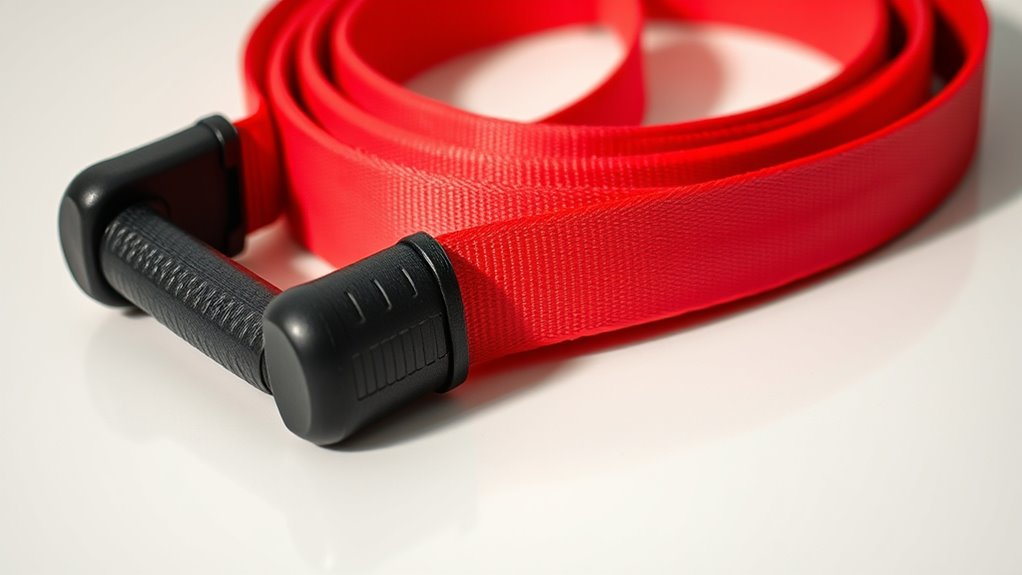

Gait belts with handles give caregivers more places to grip during assisted walking and transfers, but handle count, padding, width, and buckle design affect how each belt fits different needs. My best overall pick is the Vive Gait Belt Transfer Belt with Handles, which stands out for its stated 350-pound capacity; the MDSTOP belt is a notable choice for its anti-slip design and five handles, while the Vive belt with seven padded handles suits shoppers seeking more grip points. The main tradeoff is between a simpler, less bulky belt and a wider or more heavily handled design that offers caregivers more hand positions. Fit, secure fastening, and the user’s care plan matter more than handle count alone. Read on for my comparison of all 13 options and guidance on choosing a belt for your particular use.

Turn the school run and nap time into listening time
- Thousands of audiobooks, podcasts and originals
- Listen on your phone, tablet or Echo — also offline
- Cancel anytime
Complete the kit


Key Takeaways
- More handles do not automatically mean a better belt: several picks offer seven handles, while the MDSTOP has five and Medical King has six, so grip placement and caregiver access are more useful comparisons than count alone.
- The two Vive options have distinct strengths: the standard Vive model states a 350-pound capacity, while the seven-handle Vive emphasizes padded grip points; check the product details for fit and construction before choosing between them.
- Width can affect handling: the 5-inch-wide model may appeal to shoppers seeking a broader belt, but a larger belt may feel less manageable for some users or caregivers.
- Quick-release buckles recur across the lineup: they may make fastening and removal more straightforward, but buyers still need to verify adjustment range and that the buckle closes securely.
- Product names alone leave important questions unanswered: confirm waist range, care instructions, material, and intended use on the listing, especially for models whose titles do not specify capacity or handle padding.
| Transfer Belt for Seniors, Safety Walking Support with Quick Release Buckle |  | Best for Easy-Care Daily Transfers | Waist size range: 29–48 inches | Materials: Nylon and thick mesh fabric | Handle grips: Padded soft sponge | VIEW ON AMAZON | See Our Full Breakdown |
| MDSTOP Gait Belt Transfer Belt for Seniors with Quick-Release Buckle, Anti-Slip Design, and 5 Handles (Purple) |  | Best for Multiple Grip Positions | Material: Nylon with sponge padding | Color: Purple | Adjustable length: 29–47 inches | VIEW ON AMAZON | See Our Full Breakdown |
| Gait Belt with 7 Handles for Seniors and Caregivers – 5″ Wide |  | Best for Broad, Breathable Support | Width: 5 inches | Adjustable length: 30–50 inches | Weight capacity: 300 pounds | VIEW ON AMAZON | See Our Full Breakdown |
| Gait Belt for Seniors with Quick-Release Buckle and 3 Handles |  | Best for a Simpler, Lighter Setup | Dimensions: 51.18 × 2.95 × 1.38 inches | Weight: 6.4 ounces | Waist size: 26.7–45.7 inches | VIEW ON AMAZON | See Our Full Breakdown |
| Vive Gait Belt Transfer Belt with Handles, 350 lbs Capacity |  | Best for Higher Stated Capacity | Maximum capacity: 350 pounds | Adjustable waist size: Up to 51 inches | Belt width: 4 inches | VIEW ON AMAZON | See Our Full Breakdown |
| Gait Belt for Seniors with 7 Handles and Quick Release Buckle |  | Best for a Broad Fit Range | Material: 80% polyester, 20% nylon | Adjustable length: 29–50 inches | Back pad width: 4.13 inches | VIEW ON AMAZON | See Our Full Breakdown |
| Gait Belt for Seniors – Transfer Belt with 7 Handles and Quick‑Release Buckle |  | Best for a More Padded Back | Material: 80% polyester, 20% nylon | Adjustable length: 30–43 inches | Back pad width: 5 inches | VIEW ON AMAZON | See Our Full Breakdown |
| Vive Gait Belt with 7 Padded Handles |  | Best for Stated Load Capacity | Weight capacity: 350 pounds | Waist adjustment: Up to 51 inches | Belt width: 4 inches | VIEW ON AMAZON | See Our Full Breakdown |
| Gait Belt for Seniors with 7 Handles |  | Best for Stability Features | Handle count: 7 padded handles | Waist size: 30–46 inches | Weight capacity: Up to 360 pounds | VIEW ON AMAZON | See Our Full Breakdown |
| Jacobable Gait Belt with 7 Padded Handles |  | Best for Foam Padding | Handle count: 7 padded handles | Weight capacity: 300 pounds | Material: Leather and breathable nylon | VIEW ON AMAZON | See Our Full Breakdown |
| Medical King Gait Belt with 6 Handles |  | Best for Multiple Caregiver Grip Positions | Handle count: 6 | Belt width: Extra wide; exact measurement not provided | Fit: Adjustable | VIEW ON AMAZON | See Our Full Breakdown |
| Silimore Gait Belt for Seniors with 7 Handles |  | Best for Clearly Defined Grip Positions | Waist range: 32–55 in (81–140 cm) | Handle count: 7 | Handle layout: 4 vertical, 3 horizontal | VIEW ON AMAZON | See Our Full Breakdown |
| Supregear Gait Belt with 7 Handles |  | Best for Frequent Use and Measured Coverage | Handle count: 7 | Belt width: 5.7 in | Adjustable range: 27–50 in | VIEW ON AMAZON | See Our Full Breakdown |
| gait belts with handle | Buckle | Handle count | Material |
|---|---|---|---|
| Transfer Belt for Seniors | Adjustable quick-release polymer buckle | — | — |
| MDSTOP Gait Belt Transfer Belt | Quick-release | — | Nylon with sponge padding |
| Gait Belt with 7 Handles for S | Quick-release with one-handed operation | — | High-strength nylon with breathable, tear-resistant fabric |
| Gait Belt for Seniors with Qui | Quick-release | — | — |
| Vive Gait Belt Transfer Belt w | Metal buckle with quick-release latch | — | — |
| Gait Belt for Seniors with 7 H | Quick-release polymer plastic with locking teeth | 7 | 80% polyester, 20% nylon |
| Gait Belt for Seniors | Quick-release polymer plastic with locking teeth | 7 | 80% polyester, 20% nylon |
| Vive Gait Belt with 7 Padded H | Plastic quick-release buckle | 7 padded handles | Nylon webbing with reinforced stitching |
| Gait Belt for Seniors with 7 H | Quick-release | 7 padded handles | — |
| Jacobable Gait Belt with 7 Pad | Quick-release | 7 padded handles | Leather and breathable nylon |
| Medical King Gait Belt with 6 | Quick-release | 6 | — |
| Silimore Gait Belt for Seniors | Quick-release | 7 | Heavy-duty nylon with reinforced stitching |
| Supregear Gait Belt with 7 Han | Quick-release polymer plastic safety buckle | 7 | — |
More Details on Our Top Picks
Transfer Belt for Seniors, Safety Walking Support with Quick Release Buckle
For caregivers who want padded handles and straightforward cleanup, this belt pairs a nylon-and-mesh build with a machine-washable design. Its 29–48-inch adjustment range covers a useful span of waist sizes, while the quick-release buckle makes fitting and removal less fiddly. Compared with the MDSTOP Gait Belt, it does not specify an anti-slip interior or a five-handle layout, so buyers get less detail about grip placement and belt stability. Its appeal is the practical combination of adjustable fit and washable materials, rather than a particularly specialized handle arrangement. The tradeoff is bulk: the padding may feel cumbersome on smaller users, and the polymer buckle may be a concern for caregivers expecting frequent, heavy-duty use.
Pros:- Adjusts to waist sizes from 29 to 48 inches
- Padded sponge-grip handles provide cushioned hold points
- Nylon and thick mesh construction is machine-washable
- Quick-release buckle simplifies fitting and removal
Cons:- Padded construction may feel bulky, especially on smaller users
- Polymer buckle may be less reassuring for prolonged heavy-duty use
Best for: Caregivers assisting users across a range of waist sizes who want a padded belt that can be machine-washed after routine use.
Not ideal for: Care teams that need a specified anti-slip lining, a stated weight capacity, or a metal buckle for demanding repeated transfers.
- Waist size range:29–48 inches
- Materials:Nylon and thick mesh fabric
- Handle grips:Padded soft sponge
- Buckle:Adjustable quick-release polymer buckle
- Care:Machine washable
- Intended use:Transfers and walking support
Our verdict“Choose this belt for washable, adjustable support during everyday assisted transfers, but look elsewhere if anti-slip details or heavy-duty buckle construction are priorities.”
MDSTOP Gait Belt Transfer Belt for Seniors with Quick-Release Buckle, Anti-Slip Design, and 5 Handles (Purple)
The MDSTOP stands out for caregivers who want five reinforced handles arranged for different approaches: two vertical and three horizontal. That layout, paired with an anti-slip interior and a six-inch padded back, gives it a more explicitly stability-focused design than the simpler Transfer Belt for Seniors. Its 29–47-inch adjustment range is close to that model’s, though slightly shorter at the upper end. The wide back may spread contact across more of the torso, but it can also feel substantial under clothing or on a smaller user. A key limitation is that the supplied details do not state a weight capacity, so it is harder to judge suitability for higher-demand transfers. This is a grip-position pick, not the clearest choice for capacity-led decisions.
Pros:- Five reinforced handles offer vertical and horizontal grip positions
- Anti-slip interior is designed to limit belt movement
- Six-inch padded back offers broad contact across the torso
- Washable nylon construction and quick-release buckle
Cons:- No weight capacity is specified in the product details
- Six-inch back width may feel bulky on smaller users
- Adjustment range ends at 47 inches
Best for: Caregivers who assist from different angles and want several handle orientations plus an anti-slip interior for routine transfers.
Not ideal for: Buyers who need a stated weight capacity or users whose waist size falls outside the listed 29–47-inch adjustment range.
- Material:Nylon with sponge padding
- Color:Purple
- Adjustable length:29–47 inches
- Back width:6 inches
- Handles:5: 2 vertical and 3 horizontal
- Buckle:Quick-release
- Care:Machine washable and dryable
Our verdict“Pick the MDSTOP for varied grip orientations and anti-slip design, provided its unstated capacity and 47-inch fit limit work for your needs.”
Gait Belt with 7 Handles for Seniors and Caregivers – 5″ Wide
This model’s main distinction is its five-inch breathable belt, which pairs a broad contact area with seven padded handles. Compared with the Vive Gait Belt Transfer Belt with Handles, it is one inch wider, while the Vive lists a higher 350-pound capacity and a longer waist adjustment at the upper end. Here, the specified capacity is 300 pounds and the fit range is 30–50 inches, giving buyers clearer limits but less headroom than the Vive. A one-handed quick-release buckle may help caregivers fasten or remove it with less effort, and tear-resistant fabric suits regular assistance. The larger, wider build is not a universal advantage: it may feel cumbersome on smaller users or in tight spaces. Choose it for broad padded support rather than a compact profile.
Pros:- Seven padded handles offer multiple grip points
- Five-inch breathable width spreads contact across a broader area
- One-handed quick-release buckle supports easier fastening and release
- Stated 300-pound capacity and 30–50-inch adjustment range
Cons:- Bulkier design may be cumbersome on smaller users
- Five-inch width may be awkward in tight spaces
- Capacity is below the Vive belt’s stated 350 pounds
Best for: Caregivers seeking a wide, breathable belt with several padded grip points for users within the stated 30–50-inch fit and 300-pound capacity.
Not ideal for: Buyers needing a capacity above 300 pounds, a waist adjustment beyond 50 inches, or a less bulky belt for tight spaces.
- Width:5 inches
- Adjustable length:30–50 inches
- Weight capacity:300 pounds
- Material:High-strength nylon with breathable, tear-resistant fabric
- Handles:7 padded handles
- Buckle:Quick-release with one-handed operation
- Construction:Reinforced stitching
Our verdict“Choose this model for broad, breathable support and seven padded handles, but favor the Vive if you need its higher stated capacity or longer fit range.”
Gait Belt for Seniors with Quick-Release Buckle and 3 Handles
With three padded handles instead of the five or seven found on the MDSTOP and Vive belts, this option keeps the grip layout simple and avoids the extra handle coverage of more specialized designs. Its listed weight is just 6.4 ounces, and the 2.95-inch width makes it a comparatively lean choice for short-distance assistance and transfers. The 26.7–45.7-inch waist range also starts lower than the other two belts, which may suit some smaller users. It specifies support up to 320 pounds, but the product is described for caregiver-assisted use and short distances—not independent mobility or extended walking. The tradeoff is fewer places to hold, so caregivers who need access from several angles may prefer a multi-handle belt such as the Vive.
Pros:- Three padded handles keep the grip layout simple
- Listed weight of 6.4 ounces is comparatively light
- Waist range starts at 26.7 inches
- Quick-release buckle and stated 320-pound maximum supported weight
Cons:- Three handles offer fewer grip positions than the MDSTOP or Vive belts
- Product is intended for short-distance assistance and transfers
- Requires caregiver assistance
Best for: Caregivers assisting smaller-waisted users with short transfers or standing support who prefer a lighter belt with a straightforward three-handle layout.
Not ideal for: Caregivers who need numerous grip points for varied transfer angles or a belt intended for extended walking assistance.
- Dimensions:51.18 × 2.95 × 1.38 inches
- Weight:6.4 ounces
- Waist size:26.7–45.7 inches
- Maximum supported weight:320 pounds
- Handles:3 padded handles
- Materials:Nylon and polyester fiber
- Buckle:Quick-release
- Model:YS0043
Our verdict“Choose this lighter, simpler belt for caregiver-led short transfers, but select a model with more handles for frequent assistance from multiple angles.”
Vive Gait Belt Transfer Belt with Handles, 350 lbs Capacity
The Vive is the strongest capacity-led pick in this group, with a stated 350-pound limit, seven padded handles, and waist adjustment up to 51 inches. That gives it an edge over the seven-handle, five-inch belt, which lists a 300-pound capacity and adjusts to 50 inches; the Vive also uses a metal quick-release buckle rather than a polymer one like the first Transfer Belt for Seniors. Its four-inch width is broad enough to distribute contact, though it is narrower than the five-inch alternative. That can make it a more balanced choice for buyers who want multiple padded grips without the widest profile in the lineup. The tradeoff is still bulk: the extra-wide construction may not suit smaller users, and its upper capacity should not replace professional guidance about safe transfers.
Pros:- Highest stated capacity in this batch at 350 pounds
- Seven padded handles provide multiple caregiver grip points
- Adjusts to a waist size up to 51 inches
- Metal buckle with quick-release latch and reinforced nylon webbing
Cons:- Four-inch-wide construction may feel bulky on some users
- Product details specify an upper waist size but no minimum
- Capacity alone does not establish suitability for every transfer
Best for: Caregivers seeking seven padded handles, adjustment up to 51 inches, and a stated capacity higher than the other products in this batch.
Not ideal for: Users who need a slimmer, less bulky belt or buyers seeking a listed fit range with a specified minimum waist size.
- Maximum capacity:350 pounds
- Adjustable waist size:Up to 51 inches
- Belt width:4 inches
- Handles:7 padded handles
- Materials:Nylon webbing, plastic, and metal
- Buckle:Metal buckle with quick-release latch
- Construction:Reinforced stitching
Our verdict“Choose the Vive when its 350-pound stated capacity and 51-inch upper fit matter most, and skip it if a compact profile is your priority.”
Gait Belt for Seniors with 7 Handles and Quick Release Buckle
This model is the strongest fit-range choice in this group: its 29–50-inch adjustment covers more waist sizes than the 30–43-inch Gait Belt for Seniors – Transfer Belt with 7 Handles and Quick-Release Buckle. Seven padded grips give a caregiver options for positioning during assisted transfers, while the 4.13-inch back pad spreads contact across a wider area than a narrow strap. The locking-tooth quick-release buckle also makes removal straightforward after assistance. The tradeoff is bulk: that broad padded section may feel cumbersome on smaller users or in confined spaces. Its maximum fit is also 50 inches, a little short of the Vive Gait Belt with 7 Padded Handles, which adjusts up to 51 inches. I’d choose this for varied waist sizing, not for the least bulky setup.
Pros:- Seven handles offer multiple grip positions for assisted transfers.
- 29–50-inch adjustment accommodates a broad range of waist sizes.
- 4.13-inch padded back spreads contact across a wider area.
- Machine-washable polyester/nylon construction supports routine cleaning.
Cons:- The padded back may be bulky on smaller users or in confined spaces.
- The stated adjustment range stops at 50 inches.
Best for: Caregivers assisting people whose waist measurements vary, especially households needing one belt that adjusts from 29 to 50 inches.
Not ideal for: People with smaller frames or caregivers working in tight spaces, since the wide padded back may feel bulky; also skip it if the wearer needs a fit beyond 50 inches.
- Material:80% polyester, 20% nylon
- Adjustable length:29–50 inches
- Back pad width:4.13 inches
- Handle count:7
- Handle grip:Soft sponge grip with reinforced stitching
- Buckle:Quick-release polymer plastic with locking teeth
- Care:Machine washable
Our verdict“Choose this belt if broad waist adjustment and multiple caregiver grip positions matter more than a low-bulk fit.”
Gait Belt for Seniors – Transfer Belt with 7 Handles and Quick‑Release Buckle
The defining feature here is its 5-inch padded back, wider than the 4.13-inch panel on the Gait Belt for Seniors with 7 Handles and Quick Release Buckle. That extra coverage may appeal to caregivers who want a broader contact area during assisted movement, while seven reinforced handles provide several places to hold the belt. The locking-tooth buckle is quick to operate, and the polyester/nylon fabric can be cleaned with water or dry cleaned. The tradeoff is the fit: 30–43 inches is a narrower adjustment range than that competing model’s 29–50 inches, so this is less adaptable across different users. The wide back can also feel bulky in tight spaces. I’d favor it when back coverage is the priority and the wearer falls within its more limited waist range.
Pros:- 5-inch padded back offers more width than several other options in this group.
- Seven reinforced handles provide varied caregiver grip positions.
- Locking-tooth quick-release buckle supports straightforward fastening and removal.
- Fabric can be cleaned with water or dry cleaned.
Cons:- 30–43-inch adjustment range is narrower than the 29–50-inch range of the B0GFSJRZD8 model.
- The wide padded back may feel bulky in tight spaces.
Best for: Caregivers assisting seniors with waist sizes from 30 to 43 inches who prefer a wider padded back section for transfers.
Not ideal for: Households sharing a belt among people with widely different waist sizes, or caregivers who need a less bulky belt for narrow rooms.
- Material:80% polyester, 20% nylon
- Adjustable length:30–43 inches
- Back pad width:5 inches
- Handle count:7
- Buckle:Quick-release polymer plastic with locking teeth
- Handle construction:Reinforced stitching
- Care:Water clean or dry clean
Our verdict“Pick this model when a broad padded back matters more than a wide waist adjustment range or a compact profile.”
Vive Gait Belt with 7 Padded Handles
Among these five picks, the Vive is the clearest choice for shoppers who want an explicit capacity specification: it lists support up to 350 pounds. Its seven padded handles and 4-inch nylon webbing pair multiple caregiver grip points with a wider belt intended to distribute pressure. The fit extends up to 51 inches, slightly beyond the 29–50-inch Gait Belt for Seniors with 7 Handles and Quick Release Buckle. That extra inch may matter near the upper end of the range, though the product data does not give a lower adjustment limit. The compromises are its broad profile, which may feel bulky, and a plastic quick-release buckle that may be less durable than metal alternatives. I’d choose it for capacity information and a stated upper fit limit, not for the most compact design.
Pros:- Lists a weight capacity of up to 350 pounds.
- Seven padded handles provide several caregiver grip positions.
- Adjustment reaches up to 51 inches, slightly beyond the B0GFSJRZD8 model.
- Four-inch nylon webbing is designed to spread pressure.
Cons:- Plastic quick-release buckle may be less durable than a metal alternative.
- The extra-wide belt can feel bulky for some users.
- A lower waist adjustment limit is not specified in the provided product data.
Best for: Caregivers who want a stated 350-pound capacity, seven padded grips, and an adjustment limit reaching up to 51 inches.
Not ideal for: Buyers who need a documented lower waist limit or who prefer a narrow belt and a buckle material other than plastic.
- Weight capacity:350 pounds
- Waist adjustment:Up to 51 inches
- Belt width:4 inches
- Material:Nylon webbing with reinforced stitching
- Handle count:7 padded handles
- Buckle:Plastic quick-release buckle
Our verdict“Choose the Vive if its stated 350-pound capacity and 51-inch upper fit limit suit your needs, and its wide profile is acceptable.”
Gait Belt for Seniors with 7 Handles
This belt stands out for pairing seven padded handles with a non-slip waistband, a combination aimed at keeping the belt more stable while a caregiver assists with short-distance walking or transfers. It also states a 360-pound capacity, higher than the 350-pound rating listed for the Vive Gait Belt with 7 Padded Handles. Its 30–46-inch fit sits between the broader 29–50-inch adjustment on the B0GFSJRZD8 model and the narrower 30–43-inch range of the B0BHF3797V. That middle range may suit a single wearer well, but it is less flexible for sharing across different waist sizes. The product is specified for short-distance support, not independent mobility, and it requires caregiver assistance. I’d put it ahead for stated capacity and waistband stability, while buyers needing the broadest fit range should look elsewhere.
Pros:- Non-slip waistband is intended to help keep the belt stable during assisted movement.
- Seven padded handles offer grip options from different angles.
- States a capacity of up to 360 pounds, above the Vive model’s listed 350 pounds.
- Quick-release buckle supports rapid removal.
Cons:- Designed for short-distance support and transfers rather than independent mobility.
- Requires a caregiver to assist with use.
- 30–46-inch fit range is narrower than the 29–50-inch adjustment on the B0GFSJRZD8 model.
Best for: Caregivers seeking a non-slip waistband and a stated 360-pound capacity for short-distance walking assistance and transfers.
Not ideal for: People who need independent mobility support, or households seeking one belt with the broadest adjustment range for multiple users.
- Handle count:7 padded handles
- Waist size:30–46 inches
- Weight capacity:Up to 360 pounds
- Dimensions:51.18 × 5.31 × 1.38 inches
- Item weight:11.7 ounces
- Materials:Nylon and polyester
- Buckle:Quick-release
- Waistband:Non-slip
Our verdict“Choose this for caregiver-assisted transfers when waistband stability and a stated 360-pound capacity take priority over a broader fit range.”
Jacobable Gait Belt with 7 Padded Handles
Jacobable focuses on foam interior padding and reinforced seams, giving it a distinct comfort-and-construction profile among these seven-handle belts. The padded grips and multiple handle positions help caregivers choose where to hold during bed-to-wheelchair transfers or assisted walking. Its stated 300-pound capacity is lower than the 350-pound Vive and 360-pound B09JF3JQK1 models, so those options make more sense for buyers prioritizing a higher listed limit. Jacobable also gives no numeric waist range, which makes it harder to judge fit before purchase compared with the 29–50-inch B0GFSJRZD8 belt. The leather and breathable nylon material description adds another point of difference, though the product data does not clarify their construction in detail. I’d choose this for foam padding and reinforced seams when the wearer’s fit can be confirmed.
Pros:- Seven padded handles provide multiple caregiver grip positions.
- Foam interior padding is intended to reduce skin abrasion.
- Reinforced seams support the belt’s construction.
- Designed for assisted walking and bed-to-wheelchair transfers.
Cons:- Its stated 300-pound capacity is below the listed limits of the Vive and B09JF3JQK1 models.
- No numeric waist adjustment range is provided.
- Designed for caregiver assistance, not independent transfers.
Best for: Caregivers assisting with bed-to-wheelchair transfers who prioritize foam padding and reinforced seams, and can confirm the adjustable fit works for the wearer.
Not ideal for: Buyers who need a clearly stated waist range or a listed capacity above 300 pounds; it is also not meant for independent transfers.
- Handle count:7 padded handles
- Weight capacity:300 pounds
- Material:Leather and breathable nylon
- Buckle:Quick-release
- Padding:Foam interior
- Fit:Adjustable
- Construction:Reinforced seams
Our verdict“Pick Jacobable if foam padding is your priority and its adjustable fit and 300-pound capacity meet the wearer’s needs.”
Medical King Gait Belt with 6 Handles
The six padded handles give caregivers several places to hold during walking support or transfers, making this a practical choice when assistance may come from different angles. Compared with the Silimore Gait Belt for Seniors with 7 Handles, it has one fewer handle, but its extra-wide design may appeal to buyers who prioritize a broader support surface over maximum grip count. The adjustable fit and quick-release buckle keep fastening straightforward, while padding is intended to make caregiver grips more comfortable. The main limitation is that no exact belt width is supplied, so I can’t compare its coverage precisely with Supregear’s stated 5.7-inch belt. Choose it for flexible hand placement, but skip it if a measured width is a deciding factor.
Pros:- Six handles provide grip options around the belt for different assistance angles
- Padded handles are designed to make caregiver holds more comfortable
- Adjustable fit accommodates different users
- Quick-release buckle simplifies fastening and removal
Cons:- No exact belt-width measurement is provided
- Has fewer handles than the seven-handle Silimore and Supregear options
Best for: Caregivers who want several padded grip positions and an extra-wide belt for assisted walking or transfers.
Not ideal for: Buyers who need a confirmed belt-width measurement to check fit or compare coverage before choosing.
- Handle count:6
- Belt width:Extra wide; exact measurement not provided
- Fit:Adjustable
- Handles:Padded
- Buckle:Quick-release
- Intended use:Caregiving, therapy, and rehabilitation
Our verdict“Choose this belt if flexible handle placement and an extra-wide design matter more to you than a stated width or a seventh handle.”
Silimore Gait Belt for Seniors with 7 Handles
Silimore makes its handle layout unusually clear: four vertical and three horizontal padded handles give caregivers distinct grip orientations for assisted movement. That detail sets it apart from the Medical King Gait Belt with 6 Handles, which offers fewer handles and does not specify their arrangement. Its stated 32–55-inch waist range also gives shoppers a concrete fit check, unlike Medical King’s unspecified sizing details. Reinforced nylon and a quick-release buckle suit routine caregiver-assisted transfers, though the product description says it is not a medical device and requires caregiver assistance for users with balance issues. The seven handles provide versatility, but they do not make unsupported walking safe. I’d favor this option when handle layout and a published fit range matter more than a specified belt width, such as Supregear’s.
Pros:- Seven handles include four vertical and three horizontal grip positions
- Published 32–55-inch waist range helps buyers check fit
- Reinforced nylon construction is specified for caregiver-assisted use
- Quick-release buckle makes fastening and removal more straightforward
Cons:- Requires caregiver assistance for users with balance issues
- The product description states it is not a medical device
- No belt-width measurement is provided
Best for: Caregivers who want a published waist range and clearly differentiated handle orientations for assisted transfers.
Not ideal for: People seeking a belt for independent mobility or a medical device, and buyers who need a listed belt-width measurement.
- Waist range:32–55 in (81–140 cm)
- Handle count:7
- Handle layout:4 vertical, 3 horizontal
- Handle design:Padded, non-slip
- Material:Heavy-duty nylon with reinforced stitching
- Buckle:Quick-release
- Use:Caregiver-assisted transfers and mobility support
Our verdict“Pick Silimore if you want a stated fit range and a specific mix of vertical and horizontal handles for caregiver-assisted mobility.”
Supregear Gait Belt with 7 Handles
Supregear is the most spec-specific option here for shoppers checking coverage and fit before buying: it lists a 5.7-inch belt width and a 27–50-inch adjustable range. That makes comparison easier than with the Medical King belt, whose width is only described as extra wide, and it offers seven handles like Silimore. Its 1680D polyester and sandwich mesh construction is described as quick-drying, a useful detail for caregivers handling frequent use. The widened, padded belt is intended to distribute pressure during transfers, while the quick-release polymer buckle supports easier fastening. The tradeoff is its narrower stated fit ceiling than Silimore’s 55 inches; buyers outside the listed range should skip it. The one-year limited warranty is a defined support term, but it does not replace checking fit first.
Pros:- Stated 5.7-inch width makes belt coverage easier to compare
- Seven handles provide multiple caregiver grip positions
- 1680D polyester and sandwich mesh are described as quick-drying
- Published 27–50-inch adjustment range and one-year limited warranty
Cons:- Listed fit range may not suit body sizes outside 27–50 inches
- Its maximum listed waist size is smaller than Silimore’s 55-inch range
- Quick-release buckle is polymer plastic
Best for: Caregivers who want a measured, wide belt and quick-drying materials for frequent assisted transfers, with a user in the 27–50-inch fit range.
Not ideal for: People whose waist falls outside 27–50 inches or buyers who prefer the broader listed fit range of Silimore.
- Handle count:7
- Belt width:5.7 in
- Adjustable range:27–50 in
- Materials:1680D polyester fiber and sandwich mesh fabric
- Buckle:Quick-release polymer plastic safety buckle
- Belt design:Padded and widened
- Warranty:1-year limited warranty
- Return period:1 month
Our verdict“Choose Supregear if you want a published belt width, quick-drying materials, and a fit within its 27–50-inch range.”

How We Picked
I compared the 13 listed gait belts with handles on the features most likely to affect assisted walking and transfers: handle placement and count, padding, belt width, buckle type, stated capacity, and how clearly the product title communicates its design. I gave more weight to details that can guide a real purchase than to broad claims such as “for seniors.” A stated capacity or a defined handle configuration provides a more useful point of comparison than a title that leaves those details unclear.
The ordering favors options with distinctive, decision-ready features, then separates similar seven-handle models by the specific details named in their listings. That puts the Vive model with a stated 350-pound capacity and the Vive model with seven padded handles near the top for different reasons; MDSTOP follows as a differentiated five-handle option with an anti-slip design. The remaining products can still suit shoppers who prefer a particular handle count or a simpler design, but their titles reveal fewer distinguishing details. I did not treat handle count as proof of safety or assume a belt is appropriate for every user or transfer.
Factors to Consider When Choosing Gait Belts With Handles
Choosing among gait belts with handles is less about finding the biggest number of grips and more about matching the belt to the person, caregiver, and movement involved. I would check fit and intended use before comparing extras, since a feature-rich belt that fits poorly is not a good match.
Match the Belt to the User’s Mobility and Care Plan
A gait belt is an aid for caregiver support, not a substitute for a transfer device, trained assistance, or a clinician’s instructions. Before buying, clarify whether the intended use is assisted walking, standing support, or a specific transfer, since not every belt or grip technique suits every movement. A person who cannot bear weight, has fragile skin, pain, recent surgery, or a medical device near the waist may need another method. Ask a clinician or physical therapist which aid and technique fit the person’s abilities. Choosing by the phrase “for seniors” alone can obscure these important differences.
Check Waist Fit, Adjustment Range, and Placement
Measure the intended wearer over the clothing or layer that will usually sit beneath the belt, then compare that measurement with the listing’s adjustment range. Do not assume a one-size label will fit every body shape or that the listed maximum waist measurement allows a secure fit at the lower end. A belt that is too loose can shift during movement; one that is too tight can cause discomfort or pressure. Think about where the buckle and handles will sit once the belt is fastened. If the listing does not clearly state its range, contact the seller or choose an option with more complete sizing information.
Choose Handle Layout for the Caregiver’s Grip
Handle count tells only part of the story: placement determines whether a caregiver can reach a stable grip without pulling on the wearer’s clothing or arms. Multiple handles may offer more grip positions for different caregiver heights or approaches, while a simpler layout can be easier to understand and less cluttered. Padded handles may feel more comfortable to grasp, but they do not by themselves confirm that a belt is easier to control. Consider who will assist and whether more than one caregiver needs access to different grip points. Avoid choosing the seven-handle models simply because seven sounds safer than five or six.
Compare Buckles and Belt Width for Ease of Use
A quick-release buckle can make fastening and removal more direct, but buyers should still check how the belt adjusts and whether the buckle is easy for the caregiver to operate. Look for clear instructions on fastening, adjustment, and release rather than relying on the buckle label alone. Width changes how much of the torso the belt covers and may affect comfort, grip access, and ease of positioning. The roundup includes a 5-inch-wide option, but a wider belt is not automatically the better fit for every wearer. If possible, compare the belt’s dimensions with the person’s torso and clothing before purchasing.
Treat Capacity and Safety Information as Purchase Checks
When a product states a weight capacity, compare it with the wearer’s needs and follow the manufacturer’s instructions. A capacity figure does not describe every factor involved in a transfer, such as the wearer’s balance, caregiver technique, or the belt’s fit. Several product titles in this roundup do not state a capacity, so check the full listing rather than assuming their limits. Look for specific use directions and warnings, and ask a care professional about technique if you are uncertain. Do not use the belt to lift a person or for a movement the manufacturer or clinician has not approved.
Check Cleaning and Wear Before You Commit
Care needs can shape the best choice as much as grip design. Read the care label or listing for cleaning instructions, since belts used regularly may need frequent washing and not every material or buckle handles the same routine. Inspect stitching, handle attachment points, webbing, and the buckle before each use; stop using the belt if any part is frayed, torn, or no longer fastens securely. A low-maintenance design can be more practical for repeated use, while padded or more complex designs may require extra attention. If the seller does not describe cleaning or inspection guidance, ask before relying on the belt for ongoing care.
Frequently Asked Questions
Are seven handles safer than five or six?
Not by handle count alone. More grip points can give caregivers additional places to hold, but placement, stitching, belt fit, and correct technique matter more than the number printed in the product name. In this roundup, MDSTOP has five handles, Medical King has six, and several other options have seven, yet those numbers do not establish which belt suits a particular transfer. Compare the layout and instructions, then ask a clinician or physical therapist whether the belt is appropriate for the intended movement.
Can I use a gait belt with handles to lift someone from a chair?
Do not assume a gait belt is meant to lift a person. These belts are generally intended to give a caregiver a grip for support during certain assisted movements, and lifting can put the wearer and caregiver at risk. The right technique depends on the person’s strength, balance, and care plan. Follow the manufacturer’s instructions and consult a physical therapist or other qualified clinician before attempting a transfer you have not been taught. If the person cannot participate safely, ask whether a different transfer aid is needed.
How do I know whether a gait belt will fit?
Measure the wearer’s waist where the belt will sit, including typical clothing, and compare it with the product’s stated adjustment range. Check that the belt can be fastened securely without being uncomfortably tight or loose enough to shift. If the listing gives only a general size label, seek exact dimensions from the manufacturer before buying. A fit check should also account for where the buckle and handles fall on the wearer. Ask a care professional for guidance if body shape, pain, or a medical condition makes positioning difficult.
Should I choose padded handles or a wider belt?
These features address different preferences, and neither guarantees a better fit. Padded handles may be more comfortable for a caregiver to grasp, while a wider belt changes how much of the wearer’s torso the belt covers. The Vive model with seven padded handles is the clearest match for shoppers prioritizing padded grip points, and the roundup also includes a 5-inch-wide design. Check whether the wearer can tolerate the belt’s placement and whether the caregiver can reach the handles comfortably. If comfort or pressure is a concern, seek clinical advice before using a belt.
What should I verify before using a belt for the first time?
Read the instructions for fastening, adjustment, intended use, and cleaning, and confirm that the product’s stated capacity and size suit the wearer. Inspect the webbing, stitching, handles, and buckle for damage before use. Have a trained caregiver or clinician demonstrate the movement if the technique is unfamiliar, and agree on how the wearer will participate. Do not use a belt for a lift or transfer outside its instructions or the person’s care plan. Recheck fit and condition over time, particularly after washing or frequent use.
Conclusion
For the broadest mix of a stated capacity and handle support, my best overall choice is the Vive Gait Belt Transfer Belt with Handles, which lists a 350-pound capacity; verify fit and use instructions before purchase. For best value in practical features, the MDSTOP stands apart with its anti-slip design and five handles, though shoppers wanting more grip points may prefer a seven-handle model. My best premium-style pick is the Vive Gait Belt with 7 Padded Handles for buyers who prioritize padded grip points, while the simpler Transfer Belt for Seniors with Quick Release Buckle is the most approachable starting point for someone who does not need a specialized handle layout. For specific needs, consider the 5-inch-wide belt if broader coverage is your priority, or Medical King’s six-handle design if you want a middle ground between five and seven handles. Whichever you choose, confirm the fit, care instructions, and suitability for the wearer’s movement with a qualified professional when needed.
Veterans Day Picks

Shark Matrix Plus 2-in-1 Robot Vacuum and Mop with 60-Day Self-Emptying Base
As an affiliate, we earn on qualifying purchases.