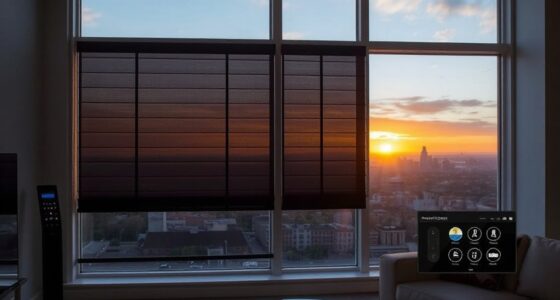
For apartment backup without gasoline, I’d start with the STARY LINE 1800W kit for its 1,024Wh battery and stronger appliance output, or the MARBERO M82MAX if portability and a panel included matter more than runtime. The two ECO-WORTHY systems offer far more storage or solar capacity, but their panels, installation needs, and delivery scale make them poor fits for many balconies and renters. My ranking weighs usable apartment practicality—not just headline wattage—alongside portability, battery capacity, solar input, and the effort needed to set up each system.

Turn the school run and nap time into listening time
- Thousands of audiobooks, podcasts and originals
- Listen on your phone, tablet or Echo — also offline
- Cancel anytime
These are gasless options: they store electricity in batteries and can recharge from solar, with some also able to charge from a wall outlet. That does not make every kit apartment-ready. Before choosing, check your building’s rules for panels, exterior wiring, equipment storage, and backup power use. None of these kits should be treated as a substitute for a professionally installed, code-compliant home electrical system.
Complete the kit


Key Takeaways
- The STARY LINE is my strongest middle-ground pick: a 1,024Wh LiFePO4 battery and 1,800W rated output suit a broader set of backup loads than the MARBERO, though its included-kit description is unclear.
- The MARBERO is the easiest option here to keep in a small apartment or closet, but its 111Wh battery and 80W AC limit restrict it to small electronics and light-duty charging.
- The ECO-WORTHY 1200W kit stores 2,560Wh and includes a 3,500W inverter, yet six full-size panels and a 58.4-pound battery make it a substantial project rather than a casual apartment kit.
- The ECO-WORTHY 30kWh+ system has the most stated storage, but pallet delivery, six large panels, and a 10kW inverter make it a poor match for most renters and compact balconies.
- Solar output depends on location, weather, orientation, and permitted panel placement; a listed panel wattage does not promise a particular daily charge in an apartment.
| STARY LINE 1800W Portable Power Station Kit with 1024Wh LiFePO4 Battery and 200W Solar Panel |  | Best Overall for Apartment Backup | Battery capacity: 1,024Wh | Battery chemistry: LiFePO4 | Solar panel: 200W stated in title | VIEW ON AMAZON | See Our Full Breakdown |
| MARBERO M82MAX 111Wh Portable Power Station with 30W Solar Panel |  | Best Compact Pick for Small Electronics | Battery capacity: 111Wh (30,000mAh) | Battery chemistry: Lithium-ion | Solar panel: 30W foldable panel | VIEW ON AMAZON | See Our Full Breakdown |
| ECO-WORTHY 1200W 48V Solar Power Kit with 48V 50Ah LiFePO4 Battery and 3500W Inverter |  | Best for a Permitted Balcony or Small Off-Grid Setup | Solar panels: Six 195W N-type bifacial panels | Maximum system power: 1,200W | Battery: 48V 50Ah LiFePO4 | VIEW ON AMAZON | See Our Full Breakdown |
| ECO-WORTHY Solar Panel Kit with LiFePO4 Energy Storage for Home Backup |  | Best Premium-Capacity System for Property Owners | Solar panels: Six 590W N-type monocrystalline panels | Battery bank: Two 48V 314Ah LiFePO4 batteries | Usable energy: 30kWh+ | VIEW ON AMAZON | See Our Full Breakdown |
| gasless solar backup kits for apartment | Battery capacity | Battery chemistry | Solar panel | Battery cycle life |
|---|---|---|---|---|
| STARY LINE 1800W Portable Powe | 1,024Wh | LiFePO4 | 200W stated in title | 3,000+ cycles to 80% capacity |
| MARBERO M82MAX 111Wh Portable | 111Wh (30,000mAh) | Lithium-ion | 30W foldable panel | — |
| ECO-WORTHY 1200W 48V Solar Pow | — | — | — | — |
| ECO-WORTHY Solar Panel Kit wit | — | — | — | 9,000+ cycles at 80% depth of discharge |
More Details on Our Top Picks
STARY LINE 1800W Portable Power Station Kit with 1024Wh LiFePO4 Battery and 200W Solar Panel
I rank the STARY LINE first because it makes the most convincing compromise between meaningful backup capacity and a size that is more plausible indoors than either ECO-WORTHY system. Its 1,024Wh LiFePO4 battery is a sizable step up from the MARBERO’s 111Wh, while the 1,800W rated output gives it a much wider range of potential loads than that compact unit’s 80W AC limit. Four pure sine wave AC outlets and USB ports also let one station serve several small devices at once.
The included 200W solar panel gives it a better stated solar input than MARBERO’s 30W panel, although panel performance still depends on where it can be placed and how much direct sun it receives. For an apartment buyer, the ability to recharge from a wall outlet in about 90 minutes may matter more day to day than relying on balcony sun. Its 45dB noise rating is another practical detail for shared indoor space, though that figure is not silent operation.
There are meaningful uncertainties. The listing’s one-hour runtime statement is not a useful prediction for every household device; actual runtime varies with load and conversion losses. The included components are also described inconsistently, so I would verify exactly what ships before relying on the solar panel being part of the delivered kit. Compared with the ECO-WORTHY 1200W system, this is less of a fixed installation project, but it has less stated storage and no stated 48V home-system architecture. I’d skip it if I need a tiny, grab-and-go station or verified whole-room backup.
Pros:- 1,024Wh LiFePO4 battery and 1,800W rated output offer a more versatile backup range than the MARBERO.
- Includes a stated 200W solar panel and supports about 90-minute AC recharging.
- Four pure sine wave AC outlets plus USB and 12V outputs serve multiple device types.
- LiFePO4 battery is rated for 3,000+ cycles to 80% capacity.
Cons:- Listing’s one-hour runtime claim cannot predict runtime without knowing the connected load.
- Included kit components are described inconsistently, so solar-panel inclusion should be confirmed.
- At 45dB, operation is not silent for a bedroom or noise-sensitive shared space.
Best for: Apartment residents who want a portable station for phones, networking equipment, lights, and selected moderate loads, with a larger battery than a pocket-size unit.
Not ideal for: Buyers who need a very small carryable station, dependable whole-home backup, or a kit whose included solar components are unambiguously documented.
- Battery capacity:1,024Wh
- Battery chemistry:LiFePO4
- Solar panel:200W stated in title
- AC outlets:Four pure sine wave outlets
- USB:Two USB-C ports up to 60W; two USB-A ports
- AC recharge time:About 90 minutes
- Battery cycle life:3,000+ cycles to 80% capacity
Our verdict“I’d choose the STARY LINE for the strongest balance of apartment-scale portability, battery capacity, and output, provided the seller confirms the exact kit contents.”
MARBERO M82MAX 111Wh Portable Power Station with 30W Solar Panel
For a renter with limited storage, the MARBERO M82MAX is the easiest system here to live with physically. The power station weighs 2.3 pounds, measures 6.5 by 3.2 by 4.6 inches, and comes with a foldable 30W panel. That makes it much less of a commitment than the STARY LINE or either ECO-WORTHY setup. I’d treat it as a small-device backup kit rather than a compact version of a whole-home battery.
Its 111Wh capacity and 80W AC output set a firm ceiling on what it can do. Phones, tablets, small lights, and other modest electronics are a more sensible match than appliances with heating elements or larger motors. The four USB-A ports, USB-C, two AC outlets, and DC output give it useful connection flexibility, but multiple ports do not mean the battery can run several power-hungry devices for long. In contrast, the STARY LINE’s 1,024Wh capacity is over nine times as large on paper and its 1,800W output supports a substantially broader class of loads.
The included 30W solar panel is convenient, but slow input is the tradeoff for a small, light kit. In weak sun or when a balcony is shaded, replenishing the battery may be limited. The built-in overcharge, overload, and short-circuit protections are reassuring features, but they do not change its power limits. I’d pick this over the larger systems when storage space and easy handling lead the decision; I’d skip it if a router, refrigerator, or several devices must run through an extended outage.
Pros:- Power station weighs only 2.3 pounds and has a compact footprint.
- Foldable 30W solar panel is included for portable charging.
- USB-A, USB-C, AC, and DC outputs cover a range of small electronics.
- Includes overcharge, overload, and short-circuit protection.
Cons:- 111Wh capacity is far below the STARY LINE and both ECO-WORTHY batteries.
- 80W AC output rules out many appliances and higher-power devices.
- 30W solar input is limited for recharging during short or cloudy daylight.
Best for: Apartment dwellers who need a lightweight kit for charging phones, tablets, small lights, and other low-power electronics, and want a panel included.
Not ideal for: Anyone seeking extended outage runtime, higher-wattage appliance support, or fast solar replenishment.
- Battery capacity:111Wh (30,000mAh)
- Battery chemistry:Lithium-ion
- Solar panel:30W foldable panel
- AC output:80W rated; 120W peak
- Ports:Four USB-A, one USB-C, two AC, one DC
- Power station weight:2.3 lbs
- Power station dimensions:6.5 × 3.2 × 4.6 in
- Panel conversion rate:21.5–23.5%
Our verdict“I’d choose the MARBERO for compact, low-power backup where easy storage matters more than appliance support or long runtime.”
ECO-WORTHY 1200W 48V Solar Power Kit with 48V 50Ah LiFePO4 Battery and 3500W Inverter
This ECO-WORTHY kit is for buyers who want a more substantial fixed solar setup, not simply a battery to carry into the apartment. Its six 195W N-type bifacial panels, 48V 50Ah LiFePO4 battery, and 3,500W inverter offer a different kind of backup proposition from the STARY LINE: it pairs more stated battery energy with a high-output inverter and solar charging hardware intended to operate as a system. The 2,560Wh usable energy figure is well above the STARY LINE’s 1,024Wh, although the MARBERO remains far easier to store and move.
The inverter’s 80A MPPT controller, Wi-Fi monitoring, and UPS switching are useful on paper for a buyer planning a more organized setup. The 48V architecture and 3,500W inverter also point toward loads beyond the MARBERO’s small-device role. Still, these specifications do not make it a plug-in replacement for a building’s electrical service. Apartment wiring, panel placement, electrical codes, and landlord or building approval all affect whether this kit can be used safely and legally.
Six panels measuring about 59 by 26 inches each create a major placement problem for many balconies. The stated 4.68kWh daily generation assumes four hours of full sunlight; a shaded or partly obstructed apartment location can produce much less. The 58.4-pound battery is also not a lightweight station, and multiple packages may arrive separately. Compared with the 30kWh+ ECO-WORTHY system, this is the more plausible of the two large solar kits for a small property, but it is still not a renter-friendly default. I’d choose it only if panel placement and installation are genuinely workable.
Pros:- 2,560Wh stated usable battery energy exceeds the STARY LINE and MARBERO capacities.
- Includes six 195W panels, a 48V LiFePO4 battery, inverter, and installation accessories.
- 3,500W inverter includes an 80A MPPT controller, Wi-Fi monitoring, and UPS switching.
- Battery is rated for more than 4,000 cycles.
Cons:- Six full-size panels are difficult to place on many apartment balconies.
- The 58.4-pound battery and multi-package delivery make setup less convenient than a portable station.
- Daily solar generation depends on full-sun conditions and may be lower at an apartment site.
Best for: Owners or renters with explicit approval, adequate outdoor panel space, and a plan for a larger battery-and-inverter system rather than a portable station.
Not ideal for: Apartment residents without permitted panel placement, those who need a simple carry-in backup unit, or buyers seeking a clearly documented single-box setup.
- Solar panels:Six 195W N-type bifacial panels
- Maximum system power:1,200W
- Battery:48V 50Ah LiFePO4
- Usable battery energy:2,560Wh
- Inverter output:3,500W; 7,000W surge
- AC output voltage:110/120V
- MPPT controller:80A
- Battery weight:58.4 lbs
Our verdict“I’d consider this kit only for an apartment with approved panel space and a planned installation, not as a straightforward portable backup purchase.”
ECO-WORTHY Solar Panel Kit with LiFePO4 Energy Storage for Home Backup
The ECO-WORTHY 30kWh+ package has the largest stated storage capacity in this comparison, but that is not the same as being the best apartment kit. It includes six 590W panels, a 10kW hybrid inverter, and two 48V 314Ah LiFePO4 batteries, with more than 30kWh of usable energy. For someone planning a large home backup or off-grid installation, that is a very different scale from the STARY LINE’s portable 1,024Wh battery or the MARBERO’s 111Wh pack.
Its 120V and 240V output, battery monitoring options, and stated safety features make it the most system-oriented entry. The batteries support RS485, CAN, and RS232 communication, alongside Bluetooth, Wi-Fi, and an LCD screen for monitoring. An active balancing BMS, circuit breaker, aerosol fire suppression, and buzzer alarm are also listed. Those features may matter in a professionally planned installation, but they do not remove the need for qualified assessment of location, electrical integration, and local requirements.
For typical apartment use, the drawbacks dominate. Each panel measures about 89.68 by 44.65 inches, and the shipment is large enough to require pallet delivery by truck. That creates a logistics and installation burden that neither the STARY LINE nor MARBERO has. The listing also says the inverter exterior version is selected randomly, which introduces uncertainty about the exact unit appearance or version supplied. I rank it last for apartment practicality, despite its substantial specifications. I’d choose it only when the buyer has a property, space, and installation plan that can accommodate an entire home-energy system.
Pros:- More than 30kWh of stated usable energy is the largest capacity in this lineup.
- Includes six 590W panels, two LiFePO4 batteries, a 10kW hybrid inverter, and cables.
- 120V and 240V output supports a larger planned home system than the portable stations.
- Provides multiple monitoring and battery communication options plus listed safety protections.
Cons:- Large panels and pallet delivery make it impractical for most apartment setups.
- Requires planning and installation beyond the plug-and-use approach of the portable stations.
- The inverter exterior version is selected randomly.
Best for: Property owners seeking a high-capacity home backup or off-grid system and able to manage pallet delivery, panel installation, and professional electrical planning.
Not ideal for: Most renters, apartment residents with limited balcony space, or anyone looking for a portable, ready-to-use outage station.
- Solar panels:Six 590W N-type monocrystalline panels
- Battery bank:Two 48V 314Ah LiFePO4 batteries
- Usable energy:30kWh+
- Inverter:10kW hybrid inverter
- Output voltage:120V and 240V
- MPPT tracking efficiency:99.9%
- Battery cycle life:9,000+ cycles at 80% depth of discharge
- Monitoring and communication:Bluetooth, Wi-Fi, LCD; RS485, CAN, RS232
Our verdict“I’d reserve this high-capacity system for property owners with installation space and expertise, rather than apartment buyers seeking simple gas-free backup.”

How We Picked
I ranked these products around the problem implied by gasless apartment backup: keeping essential devices powered without a fuel supply, exhaust, or a permanent installation by default. I compared battery capacity and chemistry, inverter output, included solar equipment, physical scale, and the likely gap between a product’s headline specifications and what a buyer can practically set up in an apartment.
Portability and fit mattered as much as power. The MARBERO is tiny beside the two ECO-WORTHY kits, while the STARY LINE occupies a middle ground with enough stated capacity for a more meaningful set of loads. Large solar panels may be useful for a property with permitted ground or roof space, but they are not automatically useful to someone limited to a small balcony or indoor window. Solar panels also need appropriate placement and sunlight; I do not treat indoor window charging or a shaded balcony as equivalent to open-sun conditions.
I gave weight to clear, useful specifications, while flagging uncertainty rather than filling gaps with assumptions. The STARY LINE listing gives a runtime statement of one hour that depends heavily on load, and its kit contents are described inconsistently. The ECO-WORTHY 1200W listing supplies a daily generation figure tied to four hours of full sunlight, not a guarantee for every apartment. The larger ECO-WORTHY system’s scale and delivery needs count against it for this particular use, even though its storage figure is impressive. I did not rank any option by claims that cannot be translated into a realistic apartment setup.
| gasless solar backup kits for apartment | Battery chemistry | Solar panels |
|---|---|---|
| STARY LINE 1800W Portable Powe | LiFePO4 | — |
| MARBERO M82MAX 111Wh Portable | Lithium-ion | — |
| ECO-WORTHY 1200W 48V Solar Pow | — | Six 195W N-type bifacial panels |
| ECO-WORTHY Solar Panel Kit wit | — | Six 590W N-type monocrystalline panels |
Factors to Consider When Choosing Gasless Solar Backup Kits For Apartments
I’d decide first whether the goal is portable device backup or a property-scale solar installation. The four products span both ends of that range, and the biggest battery or inverter is not automatically the best apartment choice.
Start with the loads you actually need
List the devices you expect to power and check their wattage, not just their plug type. A phone, lamp, and small network device are a different assignment from a refrigerator or kettle. The MARBERO’s 80W AC output puts it in a small-electronics category. STARY LINE’s 1,800W rated output gives it a wider potential load range, but the actual runtime still depends on the total draw and battery capacity. An inverter rating describes supported power at a point in time; it does not tell you how many hours a device will run.
For a rough runtime estimate, divide the battery’s watt-hours by the device’s watts, then allow for conversion losses and other system limits. Treat the result as an estimate, not a promise. If your essential device has a startup surge, compare that demand with the station’s surge rating too.
Match battery capacity to outage length
Battery capacity answers a different question from inverter output: how much energy is stored, rather than how much power can be delivered at once. The MARBERO’s 111Wh is best viewed as a compact reserve for small electronics. STARY LINE’s 1,024Wh offers substantially more stored energy, while ECO-WORTHY’s 2,560Wh and 30kWh+ systems belong to larger installation plans.
More capacity brings added weight, bulk, cost, and setup complexity, even though cost is not the only deciding factor. For apartment storage, I’d measure the place where the unit will live and think through how it can be moved. LiFePO4 chemistry appears in the larger options and is listed with cycle-life figures, while MARBERO uses lithium-ion; compare the stated battery chemistry and lifecycle information without assuming that a cycle-life claim alone predicts your real service life.
Be realistic about apartment solar
A panel’s wattage is a laboratory-style maximum under suitable conditions, not a daily energy guarantee. Direct sun, orientation, shade, season, and placement all affect charging. The MARBERO’s 30W panel is easy to fold and store, but it collects less power than the STARY LINE’s stated 200W panel. ECO-WORTHY’s panel arrays are much larger and may require balcony, roof, or ground space that an apartment resident does not control.
Check lease terms, condominium rules, fire-safety policies, and local requirements before attaching panels or routing cables. Do not assume a window, railing, or shared roof is permitted. If your space cannot receive useful sunlight, prioritize battery size and wall charging rather than paying attention only to panel wattage.
Choose portable backup or installed equipment
The MARBERO and STARY LINE are power stations designed around portability; they are the more natural starting points for an apartment. The two ECO-WORTHY packages include panel arrays, batteries, inverters, and supporting hardware for larger systems. Their listed output and storage can be attractive, but they raise installation, delivery, placement, and safety questions that a compact station does not.
Do not connect a power station or inverter to apartment wiring through an improvised cable or wall outlet. A system connected to building circuits requires proper equipment and qualified installation. For simple emergency use, plug individual devices into approved station outlets and follow the manufacturer’s instructions.
Check the listing and the building rules
Product titles and package details can differ, so confirm what is actually included before ordering. STARY LINE’s listing description is inconsistent about kit contents; ask whether the 200W panel, charging cables, and other accessories ship together. ECO-WORTHY’s 1200W kit may arrive in multiple packages, and the larger 30kWh+ system requires pallet delivery. Plan for delivery access, storage, and help handling heavy components.
Finally, check warranty terms, return conditions, connector compatibility, and battery charging limits directly with the seller or manufacturer. For the large ECO-WORTHY systems, seek qualified installation guidance before purchase. The right apartment backup kit is the one you can legally place, safely use, and recharge—not merely the one with the biggest number in its title.
Frequently Asked Questions
Which of these kits is the best fit for most apartment residents?
I’d start with the STARY LINE for a broader mix of backup devices because its 1,024Wh battery and 1,800W rated output exceed the MARBERO’s small-device limits while avoiding the scale of the ECO-WORTHY systems. It is not the right choice for everyone: its listing is unclear about kit contents, and a 1,024Wh battery still does not promise a particular runtime. Buyers who mainly need phone and tablet charging may prefer the smaller MARBERO.
Can I use solar panels on an apartment balcony?
Possibly, but permission and practical conditions vary by building and location. Ask the landlord or building management about panel placement, railing attachments, cables, and shared spaces, then check applicable local rules. The MARBERO panel is the easiest to store, while the ECO-WORTHY arrays are physically large and harder to accommodate. Shade, direction, and seasonal sunlight also affect how much energy a panel can provide.
Can these kits power a refrigerator during an outage?
Do not assume so from the product title or inverter rating alone. A refrigerator’s running demand, compressor startup surge, outage duration, and the station’s usable battery energy all matter. The MARBERO’s 80W AC output makes it a poor candidate for many refrigerators. STARY LINE has a higher stated output, but you should compare your refrigerator’s specifications with both its surge limit and the station’s actual capacity before relying on it.
Are the ECO-WORTHY systems practical for renters?
Usually they are less practical than portable power stations. Both ECO-WORTHY kits include multiple full-size panels and equipment intended for larger systems; the 30kWh+ package also requires pallet delivery, while the 1200W kit has a heavy battery and six panels. Renters should confirm permission for panel placement and installation before buying. If the plan is simply to charge personal electronics during an outage, the MARBERO or STARY LINE is a more manageable scale.
What does gasless mean for these solar backup kits?
Here, gasless means the backup power comes from stored electricity rather than a gasoline generator. These products use batteries and can recharge from solar panels; the STARY LINE and portable stations can also use wall charging as specified. Battery power avoids the fuel and exhaust associated with gasoline generators, but it does not remove electrical, fire-safety, ventilation, or installation requirements. Follow each manufacturer’s instructions and never improvise a connection to apartment wiring.
Conclusion
For most apartment buyers, I’d choose the STARY LINE when a larger battery and wider device support matter, after confirming the listed solar-panel contents. Pick the MARBERO if your priority is light, compact backup for small electronics and you can accept limited output and runtime. The ECO-WORTHY 1200W kit makes sense only for a buyer with approved panel space and a workable installation plan. I’d reserve the ECO-WORTHY 30kWh+ system for property owners planning a large home installation, not renters looking for a simple apartment station.
Before buying, measure your storage space, check your essential devices’ power needs, and confirm that your building permits the charging and panel setup you intend to use. Those practical checks matter more than choosing the largest capacity on paper.