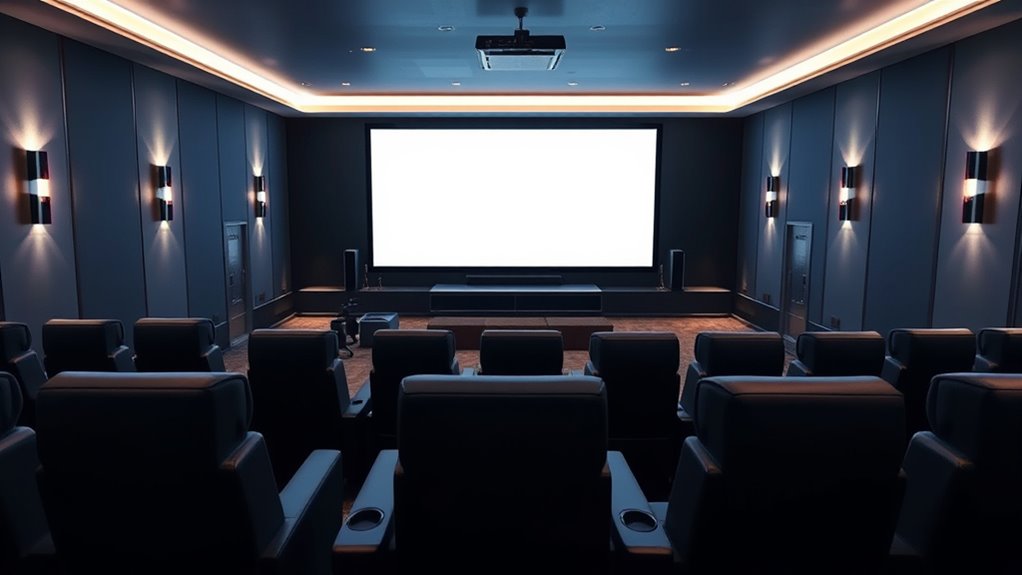
Among these high-end home theater projectors, I rank the Sony BRAVIA Projector 8 as the best overall for buyers seeking a current native 4K laser model with strong HDR-focused home theater credentials. The JVC DLA-NZ500 is a compelling alternative for viewers who put contrast and dark-room film watching first, while the Epson LS11000 offers a more approachable route to laser projection. The main tradeoffs are image performance versus installation flexibility, laser convenience versus older lamp-based designs, and premium features versus how much of them your room can reveal. Several older Sony models remain relevant to comparison, but their age and lamp-based light sources make condition and upkeep central questions. Read on for the full breakdown and guidance on matching a projector to your room and priorities.

Turn the school run and nap time into listening time
- Thousands of audiobooks, podcasts and originals
- Listen on your phone, tablet or Echo — also offline
- Cancel anytime
Complete the kit


Key Takeaways
- The BRAVIA Projector 8 leads the current-model comparison: it pairs native 4K imaging with a laser light source, while older Sony models require closer scrutiny of age and light-source condition.
- JVC and Sony represent different priorities: the DLA-NZ500 is the dark-room contrast-focused alternative, while Sony‘s higher-tier models appeal to buyers weighing HDR presentation and installation needs.
- The Epson LS11000 is a practical counterpoint to the premium native-4K group: it brings laser convenience without making every buyer pay for the highest-end Sony feature set.
- Laser models have a practical ownership advantage over older lamp designs: fewer lamp changes can simplify long-term use, but laser life and serviceability still matter.
- Room fit can outweigh headline specifications: throw distance, screen size, ambient light, mounting position, and calibration potential determine how much performance a projector can deliver.
| Sony VPL-VW1000ES 4K Home Theater ES Projector (2012 Model) |  | Best for Native 4K Detail | Native resolution: 4096 × 2160 | Display technology: SXRD | Brightness: 2,000 ANSI lumens | VIEW ON AMAZON | See Our Full Breakdown |
| Sony VPL-VW1100ES Native 4K 3D SXRD Home Theater Projector |  | Best for 3D and Anamorphic Setups | Resolution: 4096 × 2160 | Display type: LCoS | Brightness: 2,000 lumens; 1,315 calibrated lumens | VIEW ON AMAZON | See Our Full Breakdown |
| Epson Home Cinema LS11000 4K HDR Laser Projector |  | Best Overall for Modern Mixed Use | Display technology: 3-chip 3LCD | Resolution: 4K, 8.29 million on-screen pixels | Light source: Laser array | VIEW ON AMAZON | See Our Full Breakdown |
| Sony VPL-VW995ES 4K HDR Laser Home Theater Projector |  | Best Premium Sony Laser Cinema | Native resolution: 4096 × 2160 | Display type: LCoS | Brightness: 2,200 lumens | VIEW ON AMAZON | See Our Full Breakdown |
| AWOL Valerion VisionMaster Max 4K Laser Projector with Ceiling Mount and 4-Pack of DLP-Link 3D Glasses |  | Best for Bright, Flexible Large-Screen Setups | Native resolution: 3840 × 2160 | Display type: Laser | Brightness: 3,500 lumens | VIEW ON AMAZON | See Our Full Breakdown |
| JMGO N3 Ultimate 4K Triple Laser Projector |  | Best for Bright, Flexible Rooms | Resolution: 3840 × 2160 (4K UHD) | Brightness: 5800 ISO lumens | Contrast ratio: 20000:1 (AI Dynamic Black Level) | VIEW ON AMAZON | See Our Full Breakdown |
| Sony VPL-VW695ES 4K HDR Home Theater Projector |  | Best for Contrast-Focused Cinema | Native resolution: 4096 × 2160 | Display type: LCoS | Brightness: 1,800 lumens | VIEW ON AMAZON | See Our Full Breakdown |
| JVC DLA-NZ500 Native 4K Laser Projector |  | Best for HDR Film Enthusiasts | Native resolution: 4096 × 2160 | Brightness: 2,000 lumens | Native contrast ratio: 40,000:1 | VIEW ON AMAZON | See Our Full Breakdown |
| Sony VPL-XW5000ES Native 4K HDR Laser Home Theater Projector |  | Best for Long-Term Laser Simplicity | Native resolution: 3840 × 2160 | Display type: LCoS | Brightness: 2,000 lumens | VIEW ON AMAZON | See Our Full Breakdown |
| Sony VPL-VW715ES 4K SXRD HDR Home Theater Projector |  | Best for Motion and Scene-Based Picture Controls | Native resolution: 4K | Maximum display resolution: 3840 × 2160 | Display type: LCoS | VIEW ON AMAZON | See Our Full Breakdown |
| Sony VPL-VW915ES 4K HDR Laser Home Theater Projector |  | Best for Motion Clarity | Native resolution: 3840 × 2160 | Display type: LCoS | Brightness: 2,000 lumens | VIEW ON AMAZON | See Our Full Breakdown |
| Sony VPL-XW7000ES Native 4K HDR Laser Home Theater Projector |  | Best for Bright Dedicated Theaters | Native resolution: 4096 × 2160 | Maximum display resolution: 3840 × 2160 | Display type: LCoS | VIEW ON AMAZON | See Our Full Breakdown |
| Sony BRAVIA Projector 8 4K HDR Laser Home Theater Projector (VPL-XW6100ES), White |  | Best for Multi-Format Screens | Native resolution: 3840 × 2160 | Brightness: 2,700 lumens | Light source: Laser | VIEW ON AMAZON | See Our Full Breakdown |
| highend home theater projector | Brightness | Native resolution | Connectivity | Display type |
|---|---|---|---|---|
| Sony VPL-VW1000ES 4K Home Thea | 2,000 ANSI lumens | 4096 × 2160 | HDMI, D-Sub, VGA | — |
| Sony VPL-VW1100ES Native 4K 3D | 2,000 lumens; 1,315 calibrated lumens | — | Dual HDMI, component video, D-Sub | LCoS |
| Epson Home Cinema LS11000 4K H | — | — | Dual HDMI; one port with eARC | — |
| Sony VPL-VW995ES 4K HDR Laser | 2,200 lumens | 4096 × 2160 | HDMI, USB, D-Sub, LAN, RS-232C | LCoS |
| AWOL Valerion VisionMaster Max | 3,500 lumens | 3840 × 2160 | — | Laser |
| JMGO N3 Ultimate 4K Triple Las | 5800 ISO lumens | — | — | — |
| Sony VPL-VW695ES 4K HDR Home T | 1,800 lumens | 4096 × 2160 | 2 HDMI inputs, USB, RJ-45 LAN, IR input, RS-232C, 2 trigger inputs | LCoS |
| JVC DLA-NZ500 Native 4K Laser | 2,000 lumens | 4096 × 2160 | — | — |
| Sony VPL-XW5000ES Native 4K HD | 2,000 lumens | 3840 × 2160 | — | LCoS |
| Sony VPL-VW715ES 4K SXRD HDR H | 1,800 lumens | 4K | — | LCoS |
| Sony VPL-VW915ES 4K HDR Laser | 2,000 lumens | 3840 × 2160 | HDMI | LCoS |
| Sony VPL-XW7000ES Native 4K HD | 3,200 lumens | 4096 × 2160 | HDMI | LCoS |
| Sony BRAVIA Projector 8 4K HDR | 2,700 lumens | 3840 × 2160 | HDMI | — |
More Details on Our Top Picks
Sony VPL-VW1000ES 4K Home Theater ES Projector (2012 Model)
I’d choose the Sony VPL-VW1000ES for a dedicated theater where native 4K detail and flexible placement matter more than newer light-source features. Its 4096 × 2160 SXRD imaging and motorized zoom and lens shift make it easier to fit a large image to a room than a fixed-lens setup, while the stated 2,000 lumens suit a controlled home theater. Against the Sony VPL-VW1100ES, it offers a similar native-resolution and brightness profile, but the VW1100ES adds explicit anamorphic 3D and HD-to-4K upscaling support. The VW1000ES’s 200-inch maximum image claim also gives it more stated screen-size headroom than the VW1100ES’s 172 inches. Its age is the central tradeoff: buyers prioritizing laser longevity or current gaming features should look to the Epson LS11000 or newer laser options. The large chassis and premium positioning also make it a poor fit for portable or budget-conscious setups.
Pros:- Native 4096 × 2160 SXRD resolution delivers fine image detail.
- Motorized zoom and lens shift offer installation flexibility.
- Stated 2,000 ANSI lumens suit a light-controlled theater.
- Supports a maximum image size of up to 200 inches.
Cons:- The 2012 model designation makes it an older-generation choice beside newer laser projectors.
- Large form factor can complicate placement and ceiling installation.
- The listed connectivity does not specify newer gaming-focused features such as high-refresh-rate HDMI.
Best for: Dedicated-theater owners who want native 4K SXRD detail, a large screen, and motorized installation adjustments.
Not ideal for: Buyers seeking a modern laser light source, compact installation, or explicitly specified high-refresh-rate gaming features.
- Native resolution:4096 × 2160
- Display technology:SXRD
- Brightness:2,000 ANSI lumens
- Dynamic contrast ratio:1,000,000:1
- Throw ratio:1.27–2.73
- Maximum image size:200 inches
- Connectivity:HDMI, D-Sub, VGA
- Control:Remote, RS232/IP
Our verdict“Choose the VW1000ES for native 4K SXRD and flexible big-screen installation if its older design and bulky chassis fit your theater.”
Sony VPL-VW1100ES Native 4K 3D SXRD Home Theater Projector
The Sony VPL-VW1100ES earns its place for theater owners who want native 4K alongside specific format support: it handles anamorphic 3D and HD-to-4K upscaling. Its ±80% vertical and ±31% horizontal lens shift also give installers meaningful room to position the projector without relying on digital correction. Compared with the VPL-VW1000ES, it specifies a smaller maximum screen size of 172 inches rather than 200, but its 42-pound weight and 14-foot maximum throw distance give buyers more concrete planning information. The tradeoff is its lamp-based design: the listed 2,500-hour lamp life requires more upkeep than the laser sources in the Sony VPL-VW995ES and Epson LS11000. Its weight still calls for a sturdy mount, and this is a specialized fit for buyers who will actually use its 3D and upscaling capabilities.
Pros:- Native 4096 × 2160 resolution with SXRD/LCoS imaging.
- Supports anamorphic 3D and HD-to-4K upscaling.
- Generous vertical and horizontal lens shift aids room installation.
- Dual HDMI connectivity and a stated 3-year limited warranty.
Cons:- Listed lamp life is 2,500 hours, bringing more maintenance than laser models.
- At 44 pounds, it needs a substantial shelf or ceiling mount.
- Maximum listed screen size is 172 inches, below the VW1000ES’s stated 200 inches.
Best for: Home theater enthusiasts with an anamorphic 3D setup who want native 4K and broad mechanical lens adjustment.
Not ideal for: Buyers who want long-life laser illumination, a lightweight projector, or a screen larger than the stated 172-inch limit.
- Resolution:4096 × 2160
- Display type:LCoS
- Brightness:2,000 lumens; 1,315 calibrated lumens
- Contrast ratio:1,000,000:1
- Screen size:42–172 inches
- Lens shift:Vertical ±80%; horizontal ±31%
- Lamp life:2,500 hours
- Connectivity:Dual HDMI, component video, D-Sub
- Weight:44 pounds
Our verdict“Pick the VW1100ES if anamorphic 3D and expansive lens shift matter more to your theater than laser longevity or a very large screen.”
Epson Home Cinema LS11000 4K HDR Laser Projector
I rank the Epson LS11000 first for buyers who want a high-end theater projector that can also handle gaming and varied HDR sources. Its laser light source pairs 2,500 lumens of both color and white brightness with HDR10+, while motorized focus, zoom, shift, and lens-memory presets make switching between screen formats less fiddly. Unlike the older lamp-based Sony VPL-VW1100ES, it supports up to 120Hz, input lag below 20ms, and eARC on one of its dual HDMI ports—useful when a theater doubles as a gaming and streaming room. It also lists a maximum screen size of 300 inches, far beyond the Sony models in this batch. The compromise is that its 4K specification is 8.29 million on-screen pixels, not the native 4096 × 2160 resolution of those Sony SXRD models. Buyers focused solely on native 4K cinema reproduction may prefer that distinction.
Pros:- Laser illumination provides 2,500 lumens of color and white brightness.
- HDR10+ support and real-time HDR adjustment support varied HDR content.
- Motorized lens shift, zoom, focus, and preset memory simplify setup and format changes.
- Up to 120Hz refresh rate and below-20ms input lag suit gaming.
Cons:- Its 8.29-million-pixel 4K display specification differs from the native 4096 × 2160 Sony models.
- A 300-inch maximum image claim may exceed what many rooms and screens can practically support.
- The 2-year limited warranty is shorter than the VW1100ES’s stated 3-year coverage.
Best for: Home theater owners who split viewing between HDR films, streaming, and high-refresh-rate gaming and want motorized lens presets.
Not ideal for: Purists who specifically require native 4096 × 2160 imaging or buyers who will not benefit from its gaming and lens-memory features.
- Display technology:3-chip 3LCD
- Resolution:4K, 8.29 million on-screen pixels
- Light source:Laser array
- Color and white brightness:2,500 lumens each
- Dynamic contrast ratio:1,200,000:1
- HDR formats:HDR, HDR10, HDR10+, HLG
- Lens shift:±47% horizontal, ±96% vertical
- Refresh rate and input lag:Up to 120Hz; below 20ms
- Connectivity:Dual HDMI; one port with eARC
Our verdict“Choose the LS11000 for a versatile laser theater that needs HDR flexibility, motorized setup, and gaming support rather than native 4096 × 2160 resolution.”
Sony VPL-VW995ES 4K HDR Laser Home Theater Projector
For a buyer prioritizing native 4K cinema projection and a long-life light source, the Sony VPL-VW995ES makes a stronger premium case than the older lamp-based VPL-VW1100ES. It combines 4096 × 2160 LCoS imaging with a 2,200-lumen laser rated for up to 20,000 hours, reducing the lamp-replacement concern that comes with the VW1100ES’s listed 2,500-hour lamp life. The ARC-F lens and Motionflow support image clarity and smoother motion, making this a dedicated-room choice rather than a feature-led gaming pick like the Epson LS11000, which lists 120Hz and below-20ms input lag. This Sony’s tradeoffs are its 54-pound chassis and the lack of a supplied contrast ratio, screen-size range, or lens-shift figures in the available specifications. I’d shortlist it for premium cinema use, but verify room fit and installation requirements before committing.
Pros:- Native 4096 × 2160 resolution with LCoS imaging.
- Laser light source is rated for up to 20,000 hours.
- 2,200-lumen brightness supports a substantial home theater image.
- ARC-F lens and Motionflow target image clarity and smooth motion.
Cons:- The 54-pound weight requires a robust installation plan.
- The supplied product data does not state lens-shift range, throw ratio, or maximum screen size.
- No gaming refresh-rate or input-lag specification is provided.
Best for: Dedicated-theater owners seeking native 4K Sony LCoS imaging with laser illumination and long stated light-source life.
Not ideal for: Buyers who need a lightweight installation, published gaming-latency details, or complete lens and screen-fit specifications before choosing.
- Native resolution:4096 × 2160
- Display type:LCoS
- Brightness:2,200 lumens
- Light source:Laser; rated up to 20,000 hours
- Lens:ARC-F
- Motion processing:Motionflow
- Weight:54 pounds
- Connectivity:HDMI, USB, D-Sub, LAN, RS-232C
- Wattage:310 watts
Our verdict“Choose the VW995ES for a premium native-4K laser cinema setup if its heavy chassis fits your room and installation plan.”
AWOL Valerion VisionMaster Max 4K Laser Projector with Ceiling Mount and 4-Pack of DLP-Link 3D Glasses
The Valerion VisionMaster Max stands apart from the Sony models here by emphasizing installation range, brightness, and gaming speed. Its stated 3,500 lumens, 0.9–1.5:1 throw ratio, optical zoom, and ±105% vertical lens shift give room planners more placement flexibility than the supplied VW995ES specifications describe. The package also includes a ceiling mount and four DLP-Link 3D glasses, while its gaming mode is rated at 4ms at 240Hz—a much more explicit gaming target than the Sony VPL-VW1000ES. The stated 300-inch maximum image size and Wi-Fi 6E add versatility, but the projector uses 3840 × 2160 resolution rather than the native 4096 × 2160 listed for those Sony models. Its 50,000:1 contrast and rainbow-effect reduction figures are manufacturer claims, so I’d treat them cautiously against the Sony and Epson options. It is also stationary, not a portable room-to-room pick.
Pros:- Stated 3,500-lumen brightness and support for screens up to 300 inches.
- 0.9–1.5:1 throw ratio, optical zoom, and ±105% vertical lens shift aid placement.
- Gaming mode is rated at 4ms at 240Hz.
- Includes a ceiling mount and four DLP-Link 3D glasses.
Cons:- 3840 × 2160 resolution is not the 4096 × 2160 native resolution listed for the Sony models.
- The contrast ratio and rainbow-effect reduction figures are manufacturer claims.
- Stationary form factor limits use as a portable projector.
Best for: Buyers planning a large-screen installation who want flexible throw placement, high stated brightness, fast gaming, and bundled 3D accessories.
Not ideal for: Cinema purists who prioritize native 4096 × 2160 resolution or buyers who need independently verified contrast and rainbow-effect performance.
- Native resolution:3840 × 2160
- Display type:Laser
- Brightness:3,500 lumens
- Claimed contrast ratio:Up to 50,000:1
- Throw ratio:0.9–1.5:1
- Vertical lens shift:±105%
- Maximum image size:300 inches
- Gaming mode:Rated 4ms at 240Hz
- Connectivity and included accessories:Ethernet, Wi-Fi 6E; ceiling mount and four DLP-Link 3D glasses
Our verdict“Pick the VisionMaster Max for a bright, flexible large-screen setup and fast gaming if its resolution and manufacturer-claimed performance figures suit your priorities.”
JMGO N3 Ultimate 4K Triple Laser Projector
The JMGO N3 Ultimate takes a different route from the fixed-install Sony and JVC models here: its standout advantage is placement flexibility paired with 5,800 ISO lumens. That brightness is useful in rooms where full light control is difficult, while the gimbal, lens shift, and optical zoom help adapt the image without relying on digital keystone correction. Its Google TV and Chromecast also make it a more self-contained setup than the Sony VPL-XW5000ES. Gaming is another clear distinction, with support for up to 240 Hz and a stated 1 ms input lag. The tradeoff is a sizable, power-hungry chassis that still needs an outlet, so “portable” does not mean grab-and-go. Its many adjustments may also be more than a simple living-room setup needs.
Pros:- Very high stated brightness suits rooms with some ambient light.
- Gimbal movement, lens shift, and optical zoom allow adaptable placement.
- High refresh-rate support and stated 1 ms input lag target responsive gaming.
- Google TV and Chromecast provide integrated streaming and casting.
Cons:- Large form factor and 300 W power consumption limit practical portability.
- No built-in battery; the projector needs continuous external power.
- Numerous placement controls may complicate setup for less technical users.
Best for: Viewers who need a bright projector for a multipurpose room and want flexible placement, built-in streaming, and gaming features.
Not ideal for: Dedicated theater owners seeking a quiet, permanently installed cinema projector, or anyone who needs a battery-powered unit for truly untethered use.
- Resolution:3840 × 2160 (4K UHD)
- Brightness:5800 ISO lumens
- Contrast ratio:20000:1 (AI Dynamic Black Level)
- Image size:40–300 inches
- Optical zoom:0.88–1.7×
- Lens shift:Horizontal ±53%; vertical ±130%
- Refresh rate:Up to 240 Hz
- Smart platform:Google TV
- Speakers:2 × 12.5 W
Our verdict“Choose the JMGO N3 Ultimate if room flexibility and bright, gaming-friendly performance matter more than a compact chassis or a traditional theater-first installation.”
Sony VPL-VW695ES 4K HDR Home Theater Projector
The Sony VPL-VW695ES is the contrast-led choice among these models, pairing native 4096 × 2160 resolution with a stated 350,000:1 dynamic contrast ratio and Advanced Iris. That combination is suited to a dedicated theater where shadow detail and controlled lighting matter more than the JMGO N3 Ultimate’s high brightness or gaming flexibility. Its 1,800-lumen output is lower than the JVC DLA-NZ500’s 2,000 lumens, so screen size and room darkness deserve careful planning. Motionflow supports smoother motion, and picture-position memories can help when switching between screen formats. This is a substantial, 37.5-pound installation piece, not a casual repositioning option; the listed maximum throw distance of 10 feet also narrows placement choices compared with more flexible designs.
Pros:- Native 4096 × 2160 resolution delivers detailed 4K images.
- Advanced Iris and stated 350,000:1 dynamic contrast suit dark-room viewing.
- Motionflow supports smoother presentation of moving content.
- Lens shift and picture-position memories help with permanent theater alignment.
Cons:- At 37.5 pounds, it calls for a secure, planned installation.
- Its 1,800-lumen brightness is below the JVC DLA-NZ500 and JMGO N3 Ultimate figures.
- Listed maximum throw distance of 10 feet can restrict room and screen placement.
Best for: Dedicated theater owners prioritizing native 4K detail, controlled-room contrast, and motion handling over portability or high ambient-light brightness.
Not ideal for: Buyers with bright multipurpose rooms, large screens needing more light output, or installations that require a long throw distance.
- Native resolution:4096 × 2160
- Display type:LCoS
- Brightness:1,800 lumens
- Dynamic contrast ratio:350,000:1
- Maximum image size:300 inches
- Lens shift:Vertical +85% to −80%; horizontal ±31%
- Connectivity:2 HDMI inputs, USB, RJ-45 LAN, IR input, RS-232C, 2 trigger inputs
- Weight:37.5 pounds
Our verdict“Pick the VPL-VW695ES for a fixed, light-controlled theater where contrast and native 4K matter more than brightness headroom or installation flexibility.”
JVC DLA-NZ500 Native 4K Laser Projector
The JVC DLA-NZ500 makes its case through native 4K D-ILA imaging, 40,000:1 native contrast, and unusually broad HDR format support: HDR10, HLG, and HDR10+. Frame-by-frame tone mapping is especially relevant for movie fans who want HDR highlights and darker scenes handled with more scene-specific adjustment than a basic fixed tone curve. Compared with the Sony VPL-VW695ES, the JVC offers a laser light source rated for approximately 20,000 hours and a higher stated brightness of 2,000 lumens; the Sony lists a much higher dynamic contrast figure. The JVC is built for a ceiling-mounted theater, not flexible room-to-room use. Its listed throw-distance range is unusually narrow, so buyers should confirm the installation geometry before choosing it.
Pros:- Three native 4K D-ILA devices provide native 4096 × 2160 resolution.
- HDR10, HLG, and HDR10+ support broaden compatibility with HDR content.
- Frame-by-frame tone mapping can adapt HDR presentation scene by scene.
- Laser light source is rated for approximately 20,000 hours.
Cons:- Designed for a stationary, ceiling-mounted installation rather than portable use.
- Listed throw-distance range of 1.34–2.14 feet may not suit many room layouts.
- Its 2,000-lumen brightness is lower than the JMGO N3 Ultimate’s stated output.
Best for: Movie enthusiasts building a permanent, ceiling-mounted theater who value native 4K, strong native contrast, and support for multiple HDR formats.
Not ideal for: Renters, people who need a portable projector, or buyers whose room dimensions do not fit the listed throw-distance range.
- Native resolution:4096 × 2160
- Brightness:2,000 lumens
- Native contrast ratio:40,000:1
- Dynamic contrast ratio:Infinite:1
- Light source:BLU-Escent laser phosphor
- Light source life:Approximately 20,000 hours
- HDR formats:HDR10, HLG, HDR10+
- Lens shift:70% vertical; 28% horizontal
- HDMI inputs:2; 4K/60p, 32 Gbps, HDCP 2.3
Our verdict“Choose the DLA-NZ500 when a fixed cinema room and HDR film handling take priority over portability and broad placement options.”
Sony VPL-XW5000ES Native 4K HDR Laser Home Theater Projector
The Sony VPL-XW5000ES is a straightforward fit for buyers who want a fixed-install, native 4K laser projector without the JMGO N3 Ultimate’s all-in-one smart features or elaborate positioning system. Its up to 20,000-hour laser life removes the need for routine lamp replacement, while Sony X1 Ultimate processing and TRILUMINOS PRO support image processing and color reproduction. At 2,000 lumens, it matches the JVC DLA-NZ500’s stated brightness, but the JVC offers more extensive listed HDR-format support and frame-by-frame tone mapping. The Sony’s gaming support is useful for mixed-use theaters, with 2K at 120 Hz and stated input lag under 13 ms in that mode. Buyers should note its ceiling-mount design and the absence of listed lens-shift or zoom specifications.
Pros:- Native 3840 × 2160 resolution supports detailed 4K viewing.
- Laser light source is rated for up to 20,000 hours.
- Sony X1 Ultimate processing and TRILUMINOS PRO are designed for image and color processing.
- Supports 2K at 120 Hz with stated input lag under 13 ms.
Cons:- Ceiling-mount design does not suit buyers who need a portable or frequently moved projector.
- Listed specifications do not provide lens shift or optical zoom details.
- JVC DLA-NZ500 lists more HDR formats and frame-by-frame tone mapping.
Best for: Home theater owners who want native 4K laser projection, long rated light-source life, and occasional gaming in a permanent installation.
Not ideal for: Buyers who need a portable setup, detailed placement specifications before purchase, or the JVC DLA-NZ500’s listed HDR10+ and frame-by-frame tone mapping.
- Native resolution:3840 × 2160
- Display type:LCoS
- Brightness:2,000 lumens
- Light source:Laser
- Light source operating life:Up to 20,000 hours
- Color gamut:95% DCI-P3
- Input support:4K at 60 Hz; 2K at 120 Hz
- Input lag:Under 21 ms at 4K/60 Hz; under 13 ms at 2K/120 Hz
- Mounting type:Ceiling mount
Our verdict“Choose the VPL-XW5000ES for a permanent theater that needs native 4K laser projection and flexible gaming modes without requiring a built-in streaming platform.”
Sony VPL-VW715ES 4K SXRD HDR Home Theater Projector
The Sony VPL-VW715ES is aimed at a permanent theater where picture refinement matters more than mobility. Its 4K SXRD/LCoS imaging, Dynamic HDR Enhancer, and Digital Focus Optimizer offer scene-level contrast adjustment and focus correction, while Motionflow addresses smoother movement. Compared with the VPL-VW695ES, it shares a stated 1,800-lumen output and 350,000:1 contrast ratio, but adds the listed X1 Ultimate processing and Digital Focus Optimizer. That makes it a more feature-led alternative, though the supplied specifications do not establish a brightness or contrast advantage over its sibling. It is stationary, and the listed maximum throw distance is 13 feet; the VPL-XW5000ES is the more natural comparison for buyers prioritizing a laser light source and its rated service life.
Pros:- 4K SXRD/LCoS imaging supports detailed home theater presentation.
- Dynamic HDR Enhancer adjusts contrast scene by scene.
- Digital Focus Optimizer is designed to improve focus accuracy.
- Motionflow supports smoother motion for 4K and HD content.
Cons:- Stationary design is not suited to frequent repositioning.
- The listed maximum throw distance of 13 feet may constrain room layouts.
- Unlike the VPL-XW5000ES, the provided specifications do not list a laser light source or its operating life.
Best for: Dedicated theater owners who want scene-based HDR adjustment, focus optimization, and motion processing in a stationary Sony projector.
Not ideal for: Buyers seeking portability, a laser light source with a stated long operating life, or placement flexibility beyond the listed throw distance.
- Native resolution:4K
- Maximum display resolution:3840 × 2160
- Display type:LCoS
- Brightness:1,800 lumens
- Contrast ratio:350,000:1
- Maximum throw distance:13 feet
- Lamp wattage:280 watts
- Mounting type:Tabletop mount
Our verdict“Pick the VPL-VW715ES for a fixed theater centered on HDR and focus processing, but favor the VPL-XW5000ES if laser longevity is your priority.”
Sony VPL-VW915ES 4K HDR Laser Home Theater Projector
The Sony VPL-VW915ES is a strong fit for a dedicated theater where smooth motion and detailed HDR matter more than a compact installation. Its native 4K SXRD imaging, X1 Ultimate processing, and Motionflow give films and fast-moving content a polished presentation, while the laser source avoids the regular lamp replacement associated with lamp-based models such as the Sony VPL-VW695ES. At 2,000 lumens, though, it has less brightness headroom than the VPL-XW7000ES and its 3,200-lumen output, so it is better suited to controlled lighting than a room with ambient light. The stationary chassis and stated minimum throw distance of 7.55 m also make room planning a serious constraint; check the throw specification against your screen placement before choosing it.
Pros:- Native 3840 × 2160 resolution with X1 Ultimate image processing for detailed 4K HDR presentation.
- Motionflow supports smooth motion with both 4K and HD content.
- Laser light source is rated for up to 20,000 hours, reducing lamp replacement needs.
- 2,000-lumen output provides more brightness than many lower-output theater-focused options.
Cons:- Lower brightness than the 3,200-lumen Sony VPL-XW7000ES, limiting flexibility in rooms with ambient light.
- Stationary design requires a planned home installation rather than portable use.
- The listed 7.55 m minimum throw distance can rule it out for rooms without substantial projector-to-screen space.
Best for: Dedicated-theater owners who prioritize smooth motion, native 4K detail, and a long-life laser light source in a room with controlled lighting.
Not ideal for: Buyers with a bright or multipurpose room, or a shorter installation distance; the 2,000-lumen output and listed 7.55 m minimum throw distance may not fit their setup.
- Native resolution:3840 × 2160
- Display type:LCoS
- Brightness:2,000 lumens
- Light source:Laser diode
- Light-source life:Up to 20,000 hours
- Connectivity:HDMI
- Listed minimum throw distance:7.55 m
- Warranty:1 year
Our verdict“Choose the VPL-VW915ES for a planned, light-controlled theater where Motionflow and 4K HDR matter more than high brightness or flexible placement.”
Sony VPL-XW7000ES Native 4K HDR Laser Home Theater Projector
The Sony VPL-XW7000ES earns its place here through brightness: its 3,200-lumen laser output gives a dedicated theater more latitude with larger screens or some ambient light than the 2,000-lumen VPL-VW915ES. Native 4096 × 2160 SXRD resolution and 95% DCI-P3 color coverage support fine detail and a broad palette, while X1 Ultimate processing and HDR enhancement shape the image without relying on brightness alone. It is the better fit for buyers who want a premium fixed installation with extra light output, not for someone seeking a flexible projector to move between rooms. The supplied data also lists a maximum display resolution of 3840 × 2160 despite the 4096 × 2160 native resolution, so buyers should verify signal and display specifications for their sources. Its claimed 150-inch maximum image size is another useful planning reference.
Pros:- 3,200-lumen laser output offers more brightness headroom than the VPL-VW915ES.
- Native 4096 × 2160 SXRD resolution delivers detailed 4K imagery.
- 95% DCI-P3 color gamut supports a wide range of cinematic colors.
- X1 Ultimate processing includes noise reduction, upscaling, and HDR enhancement.
Cons:- Stationary, ceiling-mount-oriented design is not suited to frequent relocation.
- Listed maximum display resolution of 3840 × 2160 differs from the native 4096 × 2160 resolution.
- The provided throw-distance figures are unusually short for a home theater projector and should be confirmed before installation.
Best for: Home theater owners with larger screens or some ambient light who want native 4K imaging, wide color, and greater brightness headroom.
Not ideal for: Buyers seeking a portable or casual-use projector, or those who need specifications with no resolution ambiguity; the product is intended for fixed installation and lists differing native and maximum display resolutions.
- Native resolution:4096 × 2160
- Maximum display resolution:3840 × 2160
- Display type:LCoS
- Brightness:3,200 lumens
- Color gamut:95% DCI-P3
- Maximum image size:150 inches
- Mounting type:Ceiling mount
- Connectivity:HDMI
Our verdict“Pick the VPL-XW7000ES if your fixed theater needs more brightness and wide color than the VPL-VW915ES can offer, and verify the installation details first.”
Sony BRAVIA Projector 8 4K HDR Laser Home Theater Projector (VPL-XW6100ES), White
The Sony BRAVIA Projector 8 stands apart from the VPL-VW915ES by pairing 2,700 lumens with picture-position memory for up to three screen formats. That memory is useful for a theater that switches between aspect ratios: stored lens settings reduce the need to reposition the image each time. Its native 3840 × 2160 resolution, 95% DCI-P3 color gamut, and laser source rated for up to 20,000 hours make it a well-equipped fixed-room option, with more brightness than the VW915ES but less than the VPL-XW7000ES. That middle position is the main tradeoff: it offers a practical screen-format feature without matching the XW7000ES’s 3,200-lumen output. The supplied data lists tabletop mounting and a white finish, so buyers should confirm that the placement and room styling suit a permanent installation.
Pros:- Picture-position memory stores settings for up to three screen formats, simplifying aspect-ratio changes.
- 2,700-lumen brightness exceeds the VPL-VW915ES output.
- Native 3840 × 2160 resolution and 95% DCI-P3 color gamut support detailed, wide-color HDR images.
- Laser source is rated for up to 20,000 hours.
Cons:- Less bright than the 3,200-lumen VPL-XW7000ES for larger screens or rooms with ambient light.
- Stationary tabletop design does not suit buyers looking for portable use.
- Picture-position memory is most useful in a theater that actually changes screen formats.
Best for: Dedicated theater owners who switch among up to three screen formats and want native 4K, wide color, and a long-life laser source.
Not ideal for: Buyers who need a portable projector, maximum brightness for a bright room, or a ceiling-mount setup specified in the supplied product details.
- Native resolution:3840 × 2160
- Brightness:2,700 lumens
- Light source:Laser
- Light-source life:Up to 20,000 hours
- Contrast ratio:3000:1
- Color gamut:95% DCI-P3
- Mounting type:Tabletop
- Connectivity:HDMI
Our verdict“Choose the BRAVIA Projector 8 if your fixed theater uses several screen formats and you want more brightness than the VW915ES without prioritizing the XW7000ES’s higher output.”

How We Picked
I ranked these projectors for dedicated home theater use, weighing image quality and light-source design alongside the practical demands of installation and ownership. Native 4K resolution, HDR handling, contrast potential, brightness suitability, lens and placement flexibility, 3D support where relevant, and the upkeep associated with laser or lamp illumination all informed the comparison. I also considered the products’ age: a legacy model may still interest a knowledgeable buyer, but its condition, remaining lamp life, and support prospects need more scrutiny than a current-generation projector.
The order reflects overall fit for today’s home theater buyer, not a simple specification contest. Current laser models rise when they pair strong image capability with easier ownership, while specialist choices rank well for a defined priority such as dark-room contrast or flexible value. Older Sony models remain in the roundup for buyers comparing established native-4K designs, but they rank behind newer alternatives when age and maintenance create meaningful uncertainty. Individual results depend on screen, room, source, installation, and calibration.
Factors to Consider When Choosing Highend Home Theater Projectors
Before choosing among these high-end home theater projectors, I would work from the room outward: establish placement and screen needs, then decide which image traits matter most. That order helps prevent paying for performance your room cannot show or buying a model that cannot be installed where you need it.
Match Throw Distance and Lens Range to the Room
Start by measuring the distance from the proposed lens position to the screen, then compare that range with the projector’s throw specifications. A projector that cannot fill your screen from the available location may force a ceiling-mount change or a smaller image. Lens shift can make alignment easier, but it does not replace checking throw distance and zoom range. Avoid relying on digital keystone correction as a routine placement fix, since it can reduce usable image detail. Also account for the projector’s physical dimensions, ventilation clearance, and access for service. I would confirm a proposed screen size and mount position before choosing between close-performing models.
Choose Brightness for the Screen and the Room
Brightness needs depend on screen size, screen gain, image mode, and how much stray light reaches the viewing area. A larger screen spreads the available light over more area, so a projector that looks bright enough on a modest screen may feel dimmer at a cinematic large format. A dedicated dark room lets you prioritize contrast and shadow detail more freely than a multipurpose room with light-colored walls or windows. High-output modes can help with brighter viewing, but may alter fan noise, color presentation, or perceived black levels. Do not treat a stated brightness figure as a guarantee of a preferred calibrated image. Choose the screen and room plan alongside the projector, not as an afterthought.
Decide How Much Native 4K and HDR Matter
Native 4K imaging can be a meaningful priority for a large screen and close seating, but resolution alone does not determine picture quality. Contrast, lens performance, processing, source quality, and calibration all shape the detail viewers actually see. HDR is especially room-dependent: a projector cannot reproduce the same highlights as a high-brightness television, so tone mapping and the room’s light control matter. Buyers should check which HDR formats and processing features are supported rather than assuming every 4K projector handles HDR in the same way. If most viewing is older HD material, strong processing and contrast may matter more than a resolution label. Spend on the capabilities that match your content and viewing distance.
Weigh Laser Convenience Against Lamp Ownership
Laser illumination typically reduces the routine lamp-replacement burden and can offer more consistent day-to-day operation, which is valuable in a frequently used theater. It does not mean maintenance disappears: filters, ventilation, dust management, and eventual service remain part of ownership. Older lamp-based projectors can make sense for buyers who understand their condition and can source suitable replacement lamps, but they call for a more careful inspection. Ask about operating hours, service history, replacement-part availability, and warranty coverage before buying used or discontinued equipment. A lower-maintenance design may be worth prioritizing for a room used often. For occasional viewing, a carefully vetted older model may still fit a buyer’s priorities.
Prioritize Contrast, Brightness, or Flexibility—Not Every Spec
Dark-room movie viewers often benefit more from strong contrast and careful black-level performance than from maximum light output. A multipurpose room may call for more brightness and greater tolerance for ambient light, even if that means accepting less impressive blacks. Placement flexibility can also decide the purchase: lens shift, zoom, and available inputs may matter more than a small image-quality advantage if the room has fixed seating or awkward mounting points. Consider fan noise as well, since a projector mounted near the seats can be distracting during quiet scenes. Avoid paying for a feature that your room, sources, or viewing habits will rarely use. Write down your two highest priorities before comparing specifications.
Plan for Installation, Sources, and Long-Term Support
A projector is part of a system, so check that its connections support your sources and planned video formats before committing. Verify cable distance and signal requirements for a ceiling-mounted setup; long runs can complicate high-bandwidth connections. Confirm whether 3D, gaming features, or external video processing matter to your household, since support varies across this lineup. For a legacy projector, investigate parts and service availability rather than assuming a repair will be straightforward. Include calibration and mounting needs in the overall ownership plan, even if you handle some setup yourself. A capable projector is a poor match if the supporting equipment or service path does not fit your room.
Frequently Asked Questions
Should I buy an older Sony native 4K projector or a newer laser model?
I would choose based on condition, ownership needs, and the features your room requires rather than the native-4K label alone. Older Sony models such as the VW1000ES, VW1100ES, and VW695ES may appeal to buyers who want an established theater design and can verify its history. Newer laser options reduce lamp-related upkeep and are generally the more straightforward fit for frequent viewing. Before choosing a legacy model, confirm lamp hours, image uniformity, operating condition, parts availability, and service options. If those details are uncertain, a current laser projector is usually the safer long-term direction.
Is the JVC DLA-NZ500 a better choice than the Sony BRAVIA Projector 8?
Neither is automatically better for every room: the decision depends on whether your priority is dark-room contrast or the broader feature and image balance you want from a current Sony model. I would give the JVC closer attention if movie watching takes place in a light-controlled room and black-level performance is high on your list. The BRAVIA Projector 8 is the stronger candidate for a buyer seeking a current Sony native 4K laser option. Compare placement, screen size, supported sources, and image preferences before deciding. If possible, evaluate both with familiar content in a room similar to yours.
Is the Epson LS11000 enough for a dedicated theater, or should I step up to a premium Sony?
The LS11000 can suit a dedicated theater if its image performance, placement options, and feature set match your screen and viewing habits. A premium Sony may make more sense if you are specifically seeking its native 4K presentation or other model-specific capabilities and can take advantage of them. The step up is harder to justify when the room, screen, or content source limits visible differences. Compare the total system, including screen, mount, calibration, and source equipment, rather than treating the projector as the only expense. For many buyers, a well-matched room setup delivers more value than moving to a higher tier without a clear need.
What should I check before buying a discontinued or used home theater projector?
Ask for the exact model and operating history, then check lamp hours on lamp-based units and request a clear image showing uniformity and focus across the screen. Look for discoloration, dust blobs, unusual noise, dead pixels, and signs of overheating or physical damage. Confirm that the remote, lens cover, and any required accessories are included, and check whether replacement lamps or service remain available. For a laser model, ask about service records and warranty status rather than assuming the light source is easily replaceable. A unit with unclear history can carry more risk than its specifications suggest.
How do I know whether my room needs a brighter projector or better light control?
First identify where ambient light enters and whether you can control it with curtains, dimmers, or darker wall treatments. If you can darken the room, contrast and screen choice may matter more than selecting the brightest projector available. If the space must remain partly lit, a larger image can lose impact, so brightness and a suitable screen gain become more important. Test the planned screen size and seating distance before committing, since a smaller image may look more vivid without changing projectors. Avoid expecting any projector to overcome substantial room light while preserving deep blacks.
Conclusion
For most buyers building a dedicated theater around a current native 4K laser model, I recommend the Sony BRAVIA Projector 8 as the best overall choice in this lineup. The Epson LS11000 is my value-oriented pick for buyers who want laser convenience without reaching for the highest Sony tier, while the JVC DLA-NZ500 is the best fit for a dark-room viewer who puts contrast first. Buyers seeking a premium Sony option can compare the VPL-XW7000ES and VPL-VW995ES against their room and installation needs rather than paying for features they will not use. For beginners, I would start with the LS11000 and spend time confirming throw distance, screen size, and room light before moving up. The older VW-series models suit knowledgeable buyers willing to check condition and service support; for a flexible triple-laser setup with included 3D glasses, consider the JMGO N3 Ultimate or the Valerion VisionMaster Max. The best choice is the one that fits your room and ownership expectations, not simply the most ambitious specification sheet.
Veterans Day Picks

Shark Matrix Plus 2-in-1 Robot Vacuum and Mop with 60-Day Self-Emptying Base
As an affiliate, we earn on qualifying purchases.