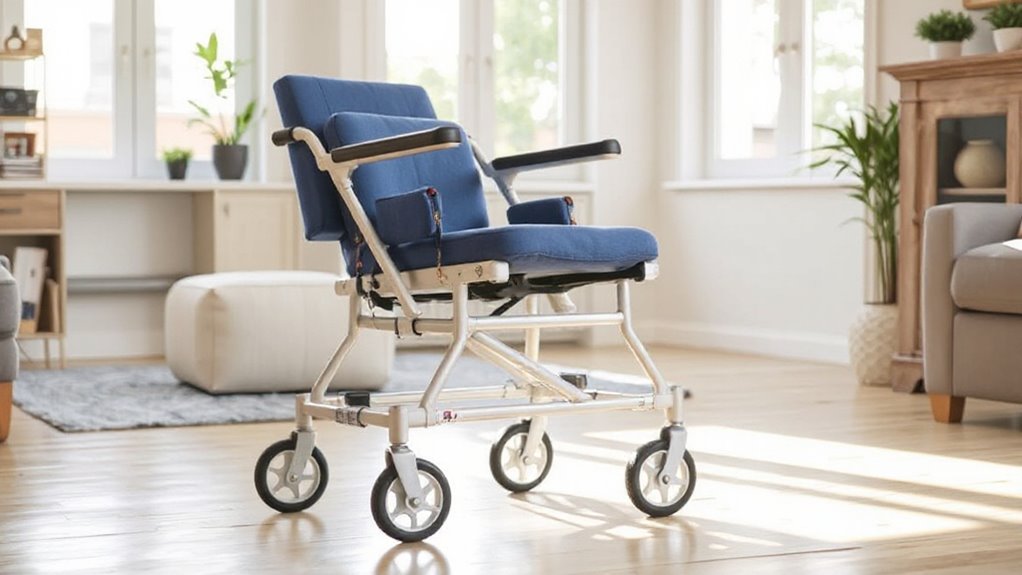

For most home caregivers, the 6-in-1 Patient Lift Transfer Chair with 180° Split Seat is my best overall pick because its open-seat design supports a wider range of transfers than a basic sit-to-stand lift. The Electric Patient Lift Transfer Chair, Foldable, 400 lb Capacity models stand out for caregivers who need powered lifting and a higher stated capacity, while the VOCIC Electric Transfer Lift AY06 is a more portable choice for moving between home and car. The main tradeoffs are powered versus manual lifting, transfer-seat access, weight capacity, and how much room the equipment takes up. A chair that works well beside a bed may not fit a narrow bathroom or doorway. Read on for the full comparison and guidance on matching a lift to the person, caregiver, and home.

Turn the school run and nap time into listening time
- Thousands of audiobooks, podcasts and originals
- Listen on your phone, tablet or Echo — also offline
- Cancel anytime
Complete the kit


Key Takeaways
- The 6-in-1 chair with a 180° split seat leads for versatility: its open-seat approach is better suited to varied transfer positions than a sit-to-stand lift, which depends more on the user’s ability to bear weight and follow cues.
- Two listings share the Electric Patient Lift Transfer Chair, Foldable, 400 lb Capacity name: they appear to target similar needs, so buyers should verify the exact model, dimensions, controls, and included components rather than assume the listings are identical.
- Stated capacity ranges affect the shortlist: several options list 275 lb, while the electric foldable and some hydraulic models list 400 lb; capacity alone does not confirm fit, stability, or safe use for a particular person.
- Manual hydraulics and powered lifts solve different caregiver problems: hydraulic designs avoid relying on a battery, while electric models reduce the caregiver’s lifting effort but add charging and powered-control considerations.
- Special-purpose designs can be more useful than feature counts: the VOCIC AY06 focuses on portability for car and home use, and the commode-cushion model addresses toileting, while neither automatically suits every transfer route.
| RESTISLAND Electric Patient Lift with Sit-to-Stand Sling |  | Best for Full-Body Support | Type: Electric patient lift | Capacity: 500 lb | Adjustable base width: 24–44.4 in | VIEW ON AMAZON | See Our Full Breakdown |
| Adjustable Patient Lift Transfer Chair for Home Care, 275 lb Capacity |  | Best Manual Option | Maximum weight capacity: 275 lbs | Frame material: Steel | Base width: 22.8–29.5 in | VIEW ON AMAZON | See Our Full Breakdown |
| 6-in-1 Patient Lift Transfer Chair with 180° Split Seat |  | Best for Multi-Use Care | Weight capacity: 350 lbs | Seat width: 45.5 cm | Minimum height: 12 cm | VIEW ON AMAZON | See Our Full Breakdown |
| Electric Patient Lift Transfer Chair, Foldable, 400 lb Capacity |  | Best Electric Height Adjustment | Type: Electric patient lift transfer chair | Maximum weight capacity: 400 lbs | Seat height range: 34–46 in | VIEW ON AMAZON | See Our Full Breakdown |
| ProTraverce Sit-to-Stand Lift, 400 lb Capacity, Blue |  | Best Sit-to-Stand Support | Model: SAL02 | Weight capacity: 400 lbs | User height range: 5’1″ to 6’6″ | VIEW ON AMAZON | See Our Full Breakdown |
| Folding Electric Patient Lift Transfer Chair |  | Best for Shower Transfers | Weight: 62 lbs | Maximum capacity: 330 lbs | Height range: 39.4–51.2 in | VIEW ON AMAZON | See Our Full Breakdown |
| Hydraulic Patient Lift Transfer Chair with Adjustable Height and 180° Open Design |  | Best Manual Option for Narrower Doorways | Seat height: 15.7–25.5 in | Width: 21 in | Weight capacity: 330 lb | VIEW ON AMAZON | See Our Full Breakdown |
| 4-in-1 Patient Lift Transfer Chair for Elderly and Disabled Users |  | Best Multi-Use Manual Chair | Functions: Transfer, bedside commode, shower, and transport chair | Frame: Steel | Seat: Split seat with commode opening | VIEW ON AMAZON | See Our Full Breakdown |
| Electric Patient Lift Transfer Chair, Foldable, 400 lb Capacity |  | Best for Higher Listed Capacity | Brand and model: Toptople TP-002 | Maximum weight recommendation: 450 lb | Item weight: 80 lb | VIEW ON AMAZON | See Our Full Breakdown |
| VOCIC Electric Transfer Lift for Car and Home, Portable Folding Patient Lift Chair for Seniors and Adults (Model AY06) |  | Best for Adjustable Base Width | Model: AY06 | Item weight: 77 lbs | Maximum weight capacity: 330 lbs | VIEW ON AMAZON | See Our Full Breakdown |
| Adjustable Patient Transfer Lift Chair for Home |  | Best for Flexible Room-to-Room Fit | Frame: Heavy-duty steel | Bottom inner width: 20.4–27.1 in | Seat cushion size: 17.7 × 17 in | VIEW ON AMAZON | See Our Full Breakdown |
| VOCIC Sit-to-Stand Patient Lift with Wheels |  | Best for Strong Sit-to-Stand Users | Model: AY03 2026 Upgraded | Frame material: Aluminum | Maximum weight capacity: 400 lb (approximately 180 kg) | VIEW ON AMAZON | See Our Full Breakdown |
| Patient Lift Transfer Chair with Commode Cushion |  | Best for Toileting Transfers | Weight capacity: 275 lb | Base width: 22.8–29.5 in | Height adjustment: 37–50.8 in | VIEW ON AMAZON | See Our Full Breakdown |
| Patient Lift Transfer Chair for Home, Adjustable Bedside and Bathroom Wheelchair, 275 lb Capacity |  | Best for Straightforward Bedside Transfers | Weight capacity: 275 lb | Base width: 22.8–29.5 in | Height adjustment range: 37–50.7 in | VIEW ON AMAZON | See Our Full Breakdown |
| Toptople Hydraulic Patient Lift Transfer Chair, 400 lb Capacity |  | Best for Caregiver-Controlled Height Adjustment | Model: TP-001 | Lift height: 32–40 in | Maximum weight recommendation: 450 lb | VIEW ON AMAZON | See Our Full Breakdown |
| patient transfer chair for home caregiver | Casters |
|---|---|
| RESTISLAND Electric Patient Li | — |
| Adjustable Patient Lift Transf | 360° swivel with independent brakes |
| 6-in-1 Patient Lift Transfer C | 360° swivel with locking brakes |
| Electric Patient Lift Transfer | — |
| ProTraverce Sit-to-Stand Lift | — |
| Folding Electric Patient Lift | — |
| Hydraulic Patient Lift Transfe | 360° swivel with foot-operated brakes |
| 4-in-1 Patient Lift Transfer C | Locking |
| Electric Patient Lift Transfer | — |
| VOCIC Electric Transfer Lift f | — |
| Adjustable Patient Transfer Li | 360° lockable silent casters |
| VOCIC Sit-to-Stand Patient Lif | 3-in rear and 4-in front; locking |
| Patient Lift Transfer Chair wi | Four 360° swivel casters with independent brakes |
| Patient Lift Transfer Chair fo | 360° lockable silent casters |
| Toptople Hydraulic Patient Lif | — |
More Details on Our Top Picks
RESTISLAND Electric Patient Lift with Sit-to-Stand Sling
For home caregivers who need to move someone who cannot reliably sit upright, the RESTISLAND electric patient lift offers broader transfer support than the sit-to-sit Adjustable Patient Lift Transfer Chair. Its six-point sling includes head support and an open bottom, and the lift is described for transfers from the floor as well as between beds, wheelchairs, and commodes. The 500 lb capacity is the highest in this group of five.
The tradeoff is the footprint and handling: at 105.8 lb, it is a heavy piece of equipment, and the doorway must be wider than 25 inches. It also cannot operate while charging, so battery readiness needs attention. I’d choose it when sling-based support and emergency manual descent matter more than easy storage or quick repositioning.
Pros:- Six-point washable sling includes head support for supported transfers.
- Described for moves between floor, bed, wheelchair, and commode.
- 500 lb capacity exceeds the other four products in this batch.
- Manual emergency stop and descent functions provide a backup to powered operation.
Cons:- At 105.8 lb, it is difficult to move or store compared with the 54 lb manual transfer chair.
- Cannot be used while charging, so battery status must be managed.
- Requires doorways wider than 25 inches.
Best for: Home caregivers supporting a person who needs head and body support during transfers, including moves from the floor, and whose home has doorways wider than 25 inches.
Not ideal for: Caregivers who need a lightweight chair they can fold away or move between tight rooms; this lift weighs 105.8 lb and needs adequate doorway clearance.
- Type:Electric patient lift
- Capacity:500 lb
- Adjustable base width:24–44.4 in
- Boom lift range:41.3–71.6 in
- Sling:Six-point, breathable, machine-washable; head support and open bottom
- Controls:Dual controls
- Emergency functions:Manual emergency descent and stop button
- Product dimensions:46.6 × 24 × 41.3 in
- Item weight:105.8 lb
Our verdict“Choose the RESTISLAND when full-body sling support and floor transfers matter more than a light, compact caregiver chair.”
Adjustable Patient Lift Transfer Chair for Home Care, 275 lb Capacity
This manual chair is a straightforward fit for caregivers who need sit-to-sit transfers and prefer not to depend on charging or powered controls. Its tool-free assembly, foldable frame, and adjustable seat height make it more adaptable to home routines than the RESTISLAND electric patient lift, which is heavier and designed around a sling. The two washable cushions also let caregivers switch between uses without relying on a single seat surface.
Its limits are central to the buying decision: the user must sit upright with support, and the chair cannot lift from a reclined position. It also needs flat, hard floors and at least six inches of clearance under the bed. I’d skip it for users who need full-body lifting or have carpeted routes; the electric RESTISLAND is better suited to those needs, though it is much heavier.
Pros:- Manual operation avoids reliance on batteries or charging.
- Foldable frame and tool-free assembly suit home storage and setup.
- Adjustable base width and seat height help accommodate different transfer points.
- Two detachable, washable cushions support different care tasks.
Cons:- Cannot transfer a user from a reclined position or support someone unable to sit upright.
- Requires flat, hard flooring and at least six inches of under-bed clearance.
- 275 lb capacity is lower than the RESTISLAND and ProTraverce lifts.
Best for: Caregivers who move a person able to sit upright with support between beds, chairs, toilets, showers, and wheelchairs on hard, level flooring.
Not ideal for: Households needing floor-to-chair or reclined transfers, or homes with carpeted routes or less than six inches of clearance under the bed.
- Maximum weight capacity:275 lbs
- Frame material:Steel
- Base width:22.8–29.5 in
- Seat height:37–50.8 in
- Cushion size:17 × 17 in
- Weight:54 lbs
- Operation:Manual; no electricity required
- Casters:360° swivel with independent brakes
- Cushions:Two detachable, washable cushions
Our verdict“Pick this manual chair for supported upright transfers on hard floors when simple, battery-free operation matters more than lifting versatility.”
6-in-1 Patient Lift Transfer Chair with 180° Split Seat
The 6-in-1 chair stands out for households that want one caregiver-assisted seat for several routines: it converts for wheelchair, shower, and commode use, with a detachable bucket and lid, tabletop, cushion, and safety strap included. That gives it more built-in care configurations than the Adjustable Patient Lift Transfer Chair, whose emphasis is simpler manual movement between surfaces. Its 350 lb capacity also sits between that chair’s 275 lb limit and the RESTISLAND lift’s 500 lb rating.
The broad role brings uncertainty: the supplied specifications give a seat width and minimum height, but not full dimensions, making room-fit planning harder. It also requires caregiver assistance, so the multiple configurations do not make it an independent mobility chair. I’d favor it when toileting and bathing are regular parts of the transfer routine, but choose the simpler manual chair if those extra functions are not needed.
Pros:- Converts for wheelchair, shower, and commode use.
- Includes a detachable commode bucket with lid, tabletop, cushion, and safety strap.
- Locking swivel casters and an anti-tipping design support controlled movement.
- 350 lb capacity is higher than the 275 lb manual transfer chair.
Cons:- Caregiver assistance is required for transfers.
- Full dimensions are not provided, complicating fit checks for smaller homes.
- Its range of configurations may be unnecessary for buyers who only need basic bed-to-chair transfers.
Best for: Caregivers who want a single assisted chair for transfers plus regular commode and shower use, and can confirm the chair fits their rooms.
Not ideal for: Buyers who need full published dimensions for tight-space planning or users who need a chair for independent mobility.
- Weight capacity:350 lbs
- Seat width:45.5 cm
- Minimum height:12 cm
- Height adjustment:5 levels
- Seat design:180° split seat
- Casters:360° swivel with locking brakes
- Footrest:90° foldable
- Included accessories:Detachable commode bucket with lid, tabletop, seat cushion, safety strap
Our verdict“Choose this model when showering and toileting are part of the same assisted-care routine and its limited published dimensions are sufficient for fit planning.”
Electric Patient Lift Transfer Chair, Foldable, 400 lb Capacity
Compared with the manual Adjustable Patient Lift Transfer Chair, this model adds electric height adjustment for moving a seated user between surfaces at different heights. Its 34–46 inch range and two cushion styles make it suitable for a mix of everyday sitting and toileting or bathing tasks. The foldable frame is also a practical distinction from the heavier RESTISLAND sling lift, though the two serve different transfer needs: this chair is for users who can sit upright, while the RESTISLAND includes head support in a full sling.
This is not an independent mobility solution; a caregiver must assist, and the user must be able to sit upright. Room measurements matter too: the chair needs at least 5.2 inches of bed-to-sofa clearance and a doorway at least 22.6 inches wide. I’d favor it over the manual option when powered height changes are useful, but not for reclined or floor transfers.
Pros:- Electric height adjustment helps match the chair to different transfer surfaces.
- Open-seat and flat cushions support toileting, bathing, and everyday sitting.
- Foldable frame simplifies storage compared with the 105.8 lb RESTISLAND lift.
- Front locking casters help keep the chair in place when stopped.
Cons:- Requires caregiver assistance and is not suitable for users unable to sit upright.
- Needs at least 5.2 inches of bed-to-sofa clearance and 22.6 inches of doorway width.
- Does not provide the head-support sling or floor-transfer capability described for the RESTISLAND.
Best for: Caregivers who need powered height changes for upright, assisted transfers among beds, sofas, wheelchairs, toilets, and car seats.
Not ideal for: Users who cannot sit upright, households needing floor or reclined transfers, or homes that cannot provide the stated doorway and furniture clearance.
- Type:Electric patient lift transfer chair
- Maximum weight capacity:400 lbs
- Seat height range:34–46 in
- Frame:Foldable
- Cushions:Open-seat cushion and flat cushion
- Wheels:360° swivel wheels with two front locking casters
- Minimum bed-to-sofa gap:5.2 in
- Minimum door width:22.6 in
Our verdict“Choose this foldable electric chair for caregiver-assisted upright transfers when adjustable seat height matters and the room meets its clearance requirements.”
ProTraverce Sit-to-Stand Lift, 400 lb Capacity, Blue
The ProTraverce is the clearest match here for a person who can bear some weight through the legs but needs help rising and moving between nearby surfaces. Its padded leg supports, non-slip footrests, and ergonomic handrails provide contact points that the general-purpose 6-in-1 chair does not emphasize. Five height settings and an adjustable base are intended to accommodate a broad range of beds, chairs, wheelchairs, and toilets, with a stated user-height range of 5’1″ to 6’6″.
That sit-to-stand focus narrows its audience: the user needs some lower-limb strength, and a transfer sling is sold separately. The 26-inch doorway requirement is wider than the foldable electric transfer chair’s 22.6-inch minimum. I’d choose this over that electric chair when active standing participation is possible, but not when the user needs full-body sling support.
Pros:- Padded leg supports, non-slip footrests, and ergonomic handrails provide several points of support.
- 400 lb capacity and five height settings suit a range of users and transfer surfaces.
- Adjustable base width helps fit different indoor transfer locations.
- Stainless steel construction is specified for the frame material.
Cons:- Requires the user to have some lower-limb strength.
- Needs a doorway at least 26 inches wide, more than the foldable electric transfer chair.
- Transfer sling is sold separately.
Best for: Caregivers assisting users 5’1″ to 6’6″ who can contribute lower-limb strength during sit-to-stand transfers.
Not ideal for: Users unable to bear some weight through their legs, households with doorways under 26 inches, or buyers who expect a transfer sling to be included.
- Model:SAL02
- Weight capacity:400 lbs
- User height range:5’1″ to 6’6″
- Height settings:5
- Leg pad positions:2
- Dimensions:29 × 25.5 × 42.5 in
- Material:Stainless steel
- Doorway width requirement:26 in or more
- Usage:Indoor
Our verdict“Choose the ProTraverce when the user can assist with standing and needs supported sit-to-stand transfers, not full-body lifting.”
Folding Electric Patient Lift Transfer Chair
For home caregivers who need one chair to move a seated person between rooms and support shower or toileting routines, this model combines electric height adjustment with two purpose-specific cushions. Its IPX6 waterproof design is a stronger fit for shower use than the splash-resistant Toptople Electric Patient Lift Transfer Chair, while the included daily-use cushion lets caregivers switch setups for other transfers. It folds for vehicle storage, but at 27.6 inches wide, it needs a wider route than the 21-inch Hydraulic Patient Lift Transfer Chair with Adjustable Height and 180° Open Design. Check the doorway and toilet dimensions before choosing it: the listed requirements are unusually specific. Caregiver operation is required, and the user must remain upright; this is not a lift for someone who cannot sit steadily.
Pros:- Electric height adjustment helps align the seat with beds, sofas, and other transfer surfaces.
- IPX6 waterproof design supports shower use.
- Includes separate cushions for daily transfers and shower or toilet routines.
- Folds for storage and transport in many vehicle trunks.
Cons:- At 27.6 inches wide, it needs a doorway wider than 28.5 inches.
- Toilet and wheelchair widths must be less than 17.9 inches, limiting compatibility.
- Caregiver assistance and the ability to sit upright are required.
Best for: Caregivers who need electric height adjustment and a waterproof chair for seated transfers that include shower use, and whose home meets the width and clearance requirements.
Not ideal for: Households with narrow doorways, toilets wider than the stated limit, or users who cannot sit upright; its 27.6-inch frame needs more room than narrower options.
- Weight:62 lbs
- Maximum capacity:330 lbs
- Height range:39.4–51.2 in
- Width:27.6 in
- Wheels:Four 360° wheels with individual brakes
- Water resistance:IPX6
- Minimum doorway width:More than 28.5 in
- Cushions included:Daily-use cushion and shower/toilet cushion
Our verdict“Choose this model for electric, shower-capable transfers if your home fits its wider frame and the user can sit upright with caregiver support.”
Hydraulic Patient Lift Transfer Chair with Adjustable Height and 180° Open Design
This hydraulic chair suits caregivers who want a 21-inch-wide frame and an integrated commode setup without relying on electric lifting. Its seat adjusts from 15.7 to 25.5 inches, while braked swivel casters and a locking seat support controlled movement between nearby surfaces. Compared with the electric Folding Electric Patient Lift Transfer Chair, it is narrower and includes a detachable commode bucket and removable tray, but it does not offer electric height adjustment. The padded seat and detachable parts can make daily bathroom care more practical; the tradeoff is that transfers still call for caregiver effort and the user must sit upright independently. Despite the 180° open-design name, the supplied details do not describe how the opening works, so I would confirm the transfer approach and fit before buying.
Pros:- 21-inch width is narrower than the electric folding chair in this roundup.
- Adjustable seat height supports transfers across a range of household surfaces.
- Includes a detachable commode bucket, removable tray, and padded cushion.
- Swivel casters with foot brakes and a locking seat support controlled positioning.
Cons:- Hydraulic operation does not provide the electric lifting offered by several alternatives.
- Caregiver assistance is recommended, and the user must sit upright independently.
- Requires doorways wider than 25.2 inches and furniture clearance over 4.7 inches.
Best for: Caregivers seeking a narrower manual chair with an included commode bucket and tray for indoor transfers in a home with doorways wider than 25.2 inches.
Not ideal for: Caregivers who need powered lifting or users who cannot sit upright independently; skip it if the home has doorways at or below the stated width.
- Seat height:15.7–25.5 in
- Width:21 in
- Weight capacity:330 lb
- Frame material:Metal
- Seat material:Foam
- Casters:360° swivel with foot-operated brakes
- Included components:Cushion, commode bucket, removable tray
- Recommended doorway width:More than 25.2 in
Our verdict“Pick this manual chair if its narrower frame and included commode parts matter more than electric lifting.”
4-in-1 Patient Lift Transfer Chair for Elderly and Disabled Users
This is the simplest fit for caregivers who want a single manual chair for transfers, toileting, showering, and transport. Its split seat includes a commode opening, and the steel frame and locking casters support routine movement around the home. Unlike the electric VOCIC Electric Transfer Lift, this model has no powered lift or adjustable base width, so caregivers should expect a more hands-on transfer process. Its stated transfer height reaches 22.4 inches, which may suit some beds and furniture but is less flexible than the height-adjustable electric choices. It also has a lower 290 lb capacity than the 330 lb options in this batch. The pre-installed footrest and safety strap reduce assembly work, though this chair is not intended for fully bedridden users and requires upright sitting and some cooperation.
Pros:- Combines transfer, bedside commode, shower, and transport functions.
- Steel frame and locking casters support routine home use.
- Split seat provides a commode opening for toileting.
- Footrest and safety strap come pre-installed.
Cons:- Manual operation demands more caregiver effort than the electric VOCIC or Toptople chairs.
- 290 lb capacity is lower than the 330 lb options in this batch.
- Requires at least 4.7 inches of furniture clearance and an upright, cooperative user.
Best for: Caregivers who want one manually operated chair for seated transfers, bedside commode use, showering, and transport, with a user capacity within 290 lb.
Not ideal for: Households needing powered lifting or a higher weight capacity, and users who are fully bedridden or cannot sit upright and cooperate slightly.
- Functions:Transfer, bedside commode, shower, and transport chair
- Frame:Steel
- Seat:Split seat with commode opening
- Casters:Locking
- Weight capacity:290 lb
- Maximum transfer height:22.4 in / 57 cm
- Furniture clearance:At least 4.7 in / 12 cm
- Operation:Manual lift; not electric
Our verdict“Choose this chair for four manual care functions in one unit if the user can sit upright and the 290 lb limit fits.”
Electric Patient Lift Transfer Chair, Foldable, 400 lb Capacity
Among this batch’s electric chairs, this Toptople model is the clearest choice for caregivers prioritizing a higher stated weight limit: its product data lists a maximum weight recommendation of 450 pounds, above the 330-pound limits of the Folding Electric Patient Lift Transfer Chair and VOCIC AY06. Electric height adjustment, push handles, and a foldable frame suit assisted moves around the home or for transport. Its IPX54 splash resistance is a more limited bathroom claim than the IPX6 rating on the Folding Electric chair, so I would not treat the two as equivalent for shower exposure. Two cushions support seated or toileting setups, but the chair weighs 80 pounds and its front-wheel locks differ from models with brakes on every wheel. Confirm fit, since the listed doorway and gap requirements may rule out some rooms.
Pros:- Product data lists a 450 lb maximum weight recommendation, higher than the other electric chairs in this batch.
- Electric lift adjusts from 34 to 46 inches for transfers between household surfaces.
- Foldable design and two cushions support storage and different care routines.
- Two front locking casters help steady the chair during transfers.
Cons:- At 80 lb, it may be difficult for one caregiver to move or load.
- IPX54 splash resistance is less suited to shower exposure than the IPX6-rated Folding Electric chair.
- Requires caregiver assistance, upright sitting, a doorway at least 22.6 inches wide, and a gap of at least 5.2 inches.
Best for: Caregivers who need an electric folding chair with a higher stated capacity and can accommodate an 80 lb unit and its clearance requirements.
Not ideal for: Users who cannot sit upright, caregivers needing independent operation, or households seeking a chair specifically rated IPX6 for shower use.
- Brand and model:Toptople TP-002
- Maximum weight recommendation:450 lb
- Item weight:80 lb
- Material:Alloy steel
- Dimensions:35.7 × 24.2 × 46 in
- Adjustable height:34–46 in
- Wheels:Four 360° swivel wheels; two front locking casters
- Water resistance:IPX54 splash resistant
Our verdict“Consider this Toptople if its higher listed capacity is your priority and its weight, fit, and splash-only protection suit your care routine.”
VOCIC Electric Transfer Lift for Car and Home, Portable Folding Patient Lift Chair for Seniors and Adults (Model AY06)
The VOCIC AY06 stands out for caregivers who need an electric chair that can adapt to different transfer spaces: its base width adjusts from 19.3 to 33.1 inches, unlike the fixed-width Folding Electric Patient Lift Transfer Chair. One-button lifting covers a 35.8–49.7-inch range, and the foldable aluminum frame is intended for home use and car transport. Support straps and a cushioned seat add useful reassurance during caregiver-assisted moves. The flexibility comes with practical limits: the unit weighs 77 pounds, the listed bed gap is more than 6 inches, and a doorway wider than 23 inches is required. Compared with the lighter 62-pound Folding Electric chair, it may be harder to handle between uses; it also has a lower 330 lb capacity than the Toptople model’s listed recommendation.
Pros:- Adjustable base width accommodates a range of transfer spaces.
- One-button electric lifting supports caregiver-assisted transfers.
- Folds for storage and transport, including in a car trunk.
- Aluminum frame, cushioned seat, and support straps are included.
Cons:- At 77 lb, it can be cumbersome for a caregiver to move or load alone.
- Requires a doorway wider than 23 inches and a bed gap over 6 inches.
- Its 330 lb capacity is lower than the Toptople chair’s listed 450 lb recommendation.
Best for: Caregivers moving a seated user between household furniture and vehicles who need an electric lift with an adjustable base width and can manage a 77 lb unit.
Not ideal for: Homes with narrow doorways or less than 6 inches of bed clearance, and users who cannot sit upright or need a capacity above 330 lb.
- Model:AY06
- Item weight:77 lbs
- Maximum weight capacity:330 lbs
- Dimensions:31.9 in D × 22.8 in W × 35.8 in H
- Lifting height range:35.8–49.7 in
- Base width range:19.3–33.1 in
- Frame material:Aluminum
- Power source:Electric
Our verdict“Choose the AY06 when adjustable base width and car-to-home use matter more than low unit weight or a higher capacity.”
Adjustable Patient Transfer Lift Chair for Home
I rank this chair for homes where doorways, beds, and seating heights vary. Its adjustable base width and seat height give caregivers more room to match the chair to the transfer point than the fixed dimensions of the VOCIC Sit-to-Stand Patient Lift with Wheels. It also covers several daily jobs: the listed functions include bath chair, wheelchair, commode chair, and sofa chair, while the two seat cushion options add flexibility for different transfers.
The tradeoff is that it still depends on the user being able to sit upright and on a caregiver to assist; it is not a lift for someone who cannot participate in a seated transfer. The footprint also needs planning: the product calls for door clearance over 24 inches and bed or sofa clearance over 5.5 inches. I would skip it for carpeted or uneven routes, since it requires hard, even floors.
Pros:- Adjustable base width and seat height help accommodate different transfer points.
- Designed for bath, wheelchair, commode, and sofa-chair functions.
- 360-degree lockable silent casters and a seat belt support controlled transfers.
- Can be disassembled for car-trunk transport.
Cons:- Requires caregiver assistance and user participation in a seated transfer.
- Needs hard, even floors and adequate doorway and furniture clearance.
- Not suitable for users who are completely paralyzed or unable to sit upright.
Best for: Caregivers in homes with varied bed and doorway clearances who want one chair for seated transfers, toileting, and bathing.
Not ideal for: Households moving someone who cannot sit upright, or homes with uneven floors or doorways that do not provide more than 24 inches of clearance.
- Frame:Heavy-duty steel
- Bottom inner width:20.4–27.1 in
- Seat cushion size:17.7 × 17 in
- Seat height:Adjustable
- Casters:360° lockable silent casters
- Functions:Bath chair, wheelchair, commode chair, and sofa chair
- Clearance:More than 24 in at doorways; more than 5.5 in under bed or sofa
- Caregiver required:Yes
Our verdict“Choose this chair if your home has varied transfer spaces and you need a multi-purpose seated aid, but not if the user cannot sit upright or your routes are uneven.”
VOCIC Sit-to-Stand Patient Lift with Wheels
This is the most clearly defined sit-to-stand option in this group: it is intended for adults who can sit upright and support their upper body, rather than for people who need a full lift from bed. Its padded handgrips, shin pads, and split-seat cushions give the user several contact points during a seated transfer. Compared with the Adjustable Patient Transfer Lift Chair for Home, its stated 400-pound capacity is higher, but the VOCIC is less flexible as an all-purpose bath, commode, and sofa chair.
The low-profile base and adjustable knee pad may help caregivers position it near a chair, while locking casters help keep it still during use. The important compromise is the missing safety belt: caregivers should not treat the unit as a restraint or rely on it for users who cannot support themselves. At 58 pounds, it is also a substantial piece of equipment to move or store.
Pros:- Stated maximum weight capacity of 400 pounds.
- Padded handgrips, shin pads, and split-seat foam cushions provide multiple support points.
- Adjustable knee pad and low-profile base aid positioning.
- Locking front and rear casters help hold the unit in place.
Cons:- No safety belt is included or supported.
- Not intended for completely immobile or paralyzed users.
- At 58 pounds, it may be difficult for one caregiver to move or store.
Best for: Caregivers supporting an adult who can sit upright, hold the padded grips, and assist with sit-to-stand transfers, especially when a higher stated capacity is needed.
Not ideal for: People who are paralyzed, fully immobile, unable to support their upper body, or those needing a safety belt or a lighter unit for frequent transport.
- Model:AY03 2026 Upgraded
- Frame material:Aluminum
- Maximum weight capacity:400 lb (approximately 180 kg)
- Item weight:58 lb
- Dimensions:31 × 17 × 43 in
- Knee pad adjustment range:51–56 cm
- Base height:6 cm
- Casters:3-in rear and 4-in front; locking
Our verdict“Pick the VOCIC for a user who can actively help with seated standing transfers and needs a 400-pound-capacity frame, not for passive lifting or restraint.”
Patient Lift Transfer Chair with Commode Cushion
The removable open commode cushion is the reason I place this model ahead of the Patient Lift Transfer Chair for Home, Adjustable Bedside and Bathroom Wheelchair for toileting-focused care: both include an aperture cushion, but this chair also specifies a washable cushion and a detachable backrest. A second, regular cushion lets the caregiver switch the seating surface when toileting is not needed. Its adjustable height and base width help with alignment at beds and chairs, provided the home has the required under-bed clearance.
This is a seated transfer aid, not a device for lifting someone directly from lying down. Compared with the VOCIC Sit-to-Stand Patient Lift with Wheels, it is more explicitly configured for commode use, but its 275-pound capacity is lower and it is not suitable for carpet. A user must sit upright, and the floor surface needs to support smooth rolling.
Pros:- Includes both a regular cushion and a removable open commode cushion.
- Adjustable base width and seat height support alignment at different transfer points.
- Four swivel casters have independent brakes.
- Detachable backrest and washable cushions support care and cleanup.
Cons:- Not suitable for carpeted floors.
- Requires at least 6 inches of under-bed clearance.
- 275-pound capacity and seated-use design rule out some users and transfer needs.
Best for: Home caregivers who regularly need a rolling transfer chair that can also serve as a commode, for a user able to sit upright and within the stated weight capacity.
Not ideal for: Users who cannot maintain an upright seated position, homes with carpeted floors or less than 6 inches of under-bed clearance, or anyone needing a lift from lying down.
- Weight capacity:275 lb
- Base width:22.8–29.5 in
- Height adjustment:37–50.8 in
- Minimum under-bed clearance:6 in
- Cushions:Two 17 × 17 in cushions, including an open commode cushion
- Frame:High-strength steel with rust-proof and waterproof coating
- Casters:Four 360° swivel casters with independent brakes
- Backrest:Detachable PU short backrest
Our verdict“Choose this model when commode access is a frequent part of care and the home has hard floors, adequate clearance, and a user who can sit upright.”
Patient Lift Transfer Chair for Home, Adjustable Bedside and Bathroom Wheelchair, 275 lb Capacity
This model suits caregivers who want adjustable positioning for routine seated moves among a bed, chair, toilet, and wheelchair. Its adjustable base and height, detachable backrest, and two Oxford cushions—including one with a toileting aperture—cover the core tasks without adding a hydraulic lifting mechanism. Compared with the Patient Lift Transfer Chair with Commode Cushion, the setup is broadly similar; the latter specifies washable cushions and independent caster brakes, while this model lists silent, lockable swivel casters and a defined assembly estimate.
The limits matter as much as the convenience. The user must be able to sit upright and have sufficient upper-body strength, and the chair cannot lift someone from a lying position. It also shares the other chair’s carpet restriction and 6-inch under-bed clearance requirement. I would not choose it for hospice care, which the product description explicitly excludes, or for a home where caregivers need a passive lift.
Pros:- Adjustable base width and height help position the chair at beds and seats.
- Includes two Oxford cushions, one with a toileting aperture.
- Detachable backrest and design support storage and transport.
- Lockable swivel casters and a heavy-duty steel structure support controlled movement.
Cons:- Not suitable for carpeted floors.
- Requires the user to sit upright and have sufficient upper-body strength.
- Cannot lift a person from a lying position and is listed as unsuitable for hospice use.
Best for: Caregivers seeking an adjustable seated transfer chair for a user who can participate, with a toileting cushion for bathroom trips.
Not ideal for: Hospice use, carpeted rooms, users unable to sit upright, or households needing to lift someone from bed while they are lying down.
- Weight capacity:275 lb
- Base width:22.8–29.5 in
- Height adjustment range:37–50.7 in
- Minimum bed or sofa clearance:6 in
- Seat cushions:Two Oxford cushions, including one with a toileting aperture
- Casters:360° lockable silent casters
- Assembly:Required; estimated 10 minutes
- Warranty/service:One-year replacement parts service; 30-day return and refund guarantee
Our verdict“This is a practical choice for routine seated bedside and bathroom transfers when the user can assist and the route has hard flooring.”
Toptople Hydraulic Patient Lift Transfer Chair, 400 lb Capacity
The Toptople stands apart from the height-adjustable chairs above because its seat height is raised by a manual hydraulic lift, while the 360-degree swivel seat lets a caregiver reposition the user without relying only on moving the whole chair. That can make it a better fit for homes where matching different seat heights is a recurring task. It also includes open and full cushions, much like the commode-focused Patient Lift Transfer Chair with Commode Cushion, but the supplied details do not give this model the same explicit base-width or under-bed-clearance ranges.
Capacity figures need careful reading: the specs list a 450-pound maximum weight recommendation and a 400-pound frame capacity, so I would not treat those numbers as interchangeable. It remains an indoor, caregiver-assisted chair for users who can sit upright with support—not a passive lift from bed. Two front locking wheels are specified, rather than locks on all four casters.
Pros:- Manual hydraulic lift adjusts the seat from 32 to 40 inches.
- 360-degree swivel seat can help position the user for transfers.
- Includes open-seat and full cushions for different care tasks.
- Four quiet casters and two front locking wheels support indoor movement.
Cons:- Requires caregiver assistance and a user who can sit upright with support.
- The specifications list different figures for maximum weight recommendation and frame capacity.
- Only two front locking wheels are specified.
Best for: Caregivers who need manual seat-height adjustment and swivel positioning for an upright user during indoor transfers.
Not ideal for: People who cannot sit upright with support, caregivers seeking a powered or passive lift, or buyers who need clearly specified bed-clearance dimensions and locks on every caster.
- Model:TP-001
- Lift height:32–40 in
- Maximum weight recommendation:450 lb
- Stated frame capacity:400 lb
- Seat:360° swivel
- Wheels:Four quiet casters; two front locking wheels
- Included cushions:Open-seat cushion and full cushion
- Usage:Indoor
Our verdict“Choose the Toptople if caregiver-operated hydraulic height changes and a swivel seat suit your transfer routine, but verify capacity and fit before purchase.”

How We Picked
I compared the 15 listed options by how well their stated designs address real home-care tasks: bed-to-chair moves, bathroom access, toileting, sit-to-stand assistance, and transport between rooms or a vehicle. I gave weight to transfer access, adjustability, stated capacity, foldability, power source, and the practical demands each design may place on the caregiver and user. A higher capacity or longer feature list did not automatically earn a higher position; the chair also needs to suit the user’s movement ability and the home’s clearances.
The ranking favors options with broader transfer usefulness and clearly identified features, then separates specialized picks for portability, toileting, and sit-to-stand support. Product names alone do not establish details such as seat dimensions, base width, battery runtime, or whether a sling is included, so I treat those as points buyers should confirm with the seller and care team. Similar and repeated listings are not treated as separate proof of better performance. No chair here should be selected on capacity or convenience alone when a clinician or trained supplier can assess safe transfer technique.
Factors to Consider When Choosing Patient Transfer Chair For Home Caregivers
A transfer chair is only a good fit when its lifting method, opening, and footprint suit both the person being moved and the caregiver assisting. Before comparing add-on features, I would map the actual route and transfer tasks the chair must handle. These broader checks can prevent a mismatch that a product title or capacity figure cannot reveal.
Match the lifting method to the user’s abilities
Sit-to-stand devices generally call for some ability to bear weight, hold a supported position, and follow instructions. A user who cannot reliably do those things may need a different transfer method selected with a clinician or trained equipment provider. Powered lifting can reduce the caregiver’s physical effort, but it does not make an unsuitable transfer safe by itself. Hydraulic models avoid battery charging, though the caregiver still operates the mechanism and should learn its limits. A common mistake is buying for the caregiver’s strength without checking what the user can actively contribute.
Measure the entire transfer route, not just the chair
Measure door clearances, turns, bed and toilet approach space, and the width available around furniture. Check the chair’s base width and height range against those spaces, and ask how much room is needed to position or open the seat. A foldable frame may help with storage but can still be cumbersome to maneuver through a tight bathroom. Also check whether the floor surface, thresholds, and rugs could obstruct the wheels. A paper floor plan or taped outline can expose a fit problem before delivery.
Treat capacity as a threshold, not a complete fit check
Choose a stated weight capacity that accommodates the user with an appropriate margin, then check the manufacturer’s instructions for any use limits. Capacity does not tell you whether the seat opening, sling, leg support, or frame will fit the user’s body. Ask for the seat and base dimensions, and confirm whether listed capacity applies to the complete device configuration. Do not infer that two products with the same capacity have the same stability or transfer range. When fit is uncertain, seek assessment from a qualified clinician or equipment professional rather than guessing from a listing title.
Compare transfer access with the tasks you actually do
A split or open seat can make access from a bed or toilet easier, but the opening must match the transfer method and the user’s positioning needs. A commode cushion may be useful for toileting tasks, yet buyers should check hygiene instructions, compatibility, and whether it can be removed for cleaning. If the chair will serve several rooms, prioritize a design that can approach each surface safely instead of relying on a long feature list. Think through where the caregiver stands and how the user’s legs and arms are supported. Have the intended transfer route reviewed before using a new configuration.
Account for charging, cleaning, and storage
Electric lifts can make repeated lifting less physically demanding, but the household must manage charging, controls, and any battery-care instructions. Ask about charging location and whether the device can still be moved safely if the battery is low; do not assume it has a manual backup. For toileting or bathing use, review cleaning directions for cushions, slings, and joints where moisture or residue may collect. Foldability matters only if one caregiver can safely fold and store the equipment and has a suitable storage space. A lower-maintenance manual option may suit occasional transfers better, while frequent daily use may justify the added powered components.
Plan for training and caregiver availability
Some transfers call for two caregivers, specific sling placement, or close attention to the user’s posture. Ask the supplier or care team to show the exact transfer sequence with the selected chair and the intended bed, toilet, or vehicle setup. Check whether one caregiver can control the lift while also positioning the user safely. Do not treat product instructions as a substitute for hands-on training when the person has limited balance, pain, or unpredictable movement. The best choice is one the available caregiver can operate consistently, not simply the one with the most functions.
Frequently Asked Questions
Is a sit-to-stand lift suitable if the person cannot support their own weight?
Not automatically. Sit-to-stand designs usually depend on the user contributing some weight-bearing ability and following positioning instructions, so inability to support weight may rule them out. A caregiver should not compensate by pulling or lifting the person manually. Ask a clinician or trained equipment provider to assess the user’s abilities and recommend a transfer method. The choice should reflect the person’s condition on a typical day, not just their strongest moments.
Should I choose an electric or hydraulic transfer chair for home use?
Electric models may reduce the caregiver’s effort during repeated lifts, but they add charging, controls, and battery-related checks. Hydraulic models do not depend on an electric battery, though operation still requires the caregiver to manage the lift and follow its instructions. Compare how often transfers happen, who will operate the chair, and whether charging is practical in the home. Neither power source makes a chair suitable if the user’s transfer needs or room dimensions do not match. Ask the supplier how the device behaves if power is unavailable.
Can one transfer chair serve a bed, bathroom, and car?
Some designs are marketed for several locations, but that does not mean they fit every bed height, toilet layout, or vehicle opening. Door width, turning room, seat access, and the height of each transfer surface can differ sharply. A portable model may be easier to move between locations but still need a clear, level area to operate. Measure each route and surface, then confirm the product’s dimensions and approved uses. For car transfers, get specific guidance on vehicle compatibility and safe positioning rather than relying on a general home-use description.
Does a 400 lb capacity make a chair a better choice than a 275 lb model?
Only if the higher capacity is needed and the rest of the chair fits the user and home. Capacity is one limit, not a measure of seat comfort, opening size, stability, or ease of maneuvering. Confirm the exact model’s published specifications because similarly named listings can differ. Also check whether accessories such as a sling or cushion have separate limits or compatibility requirements. If the user’s fit is uncertain, consult a qualified equipment provider before ordering.
What should I verify before using a transfer chair for toileting?
Confirm that the chair is designed for the intended toileting setup and that its seat opening or commode cushion matches the toilet and the user’s positioning needs. Read the cleaning and moisture-care instructions for every component that may be soiled or wet. Check whether the chair can approach the toilet with enough space for the caregiver to assist safely. Ask whether any removable cushion or accessory is included and compatible with the exact model. Have a trained professional review the transfer method before the first use, especially if balance or weight-bearing is limited.
Conclusion
My best overall choice is the 6-in-1 Patient Lift Transfer Chair with 180° Split Seat for buyers seeking broader transfer access, while the best value candidate is the Adjustable Patient Lift Transfer Chair for Home Care, 275 lb Capacity when its capacity and simpler feature set fit the user. For a best premium-style pick, I would shortlist the Electric Patient Lift Transfer Chair, Foldable, 400 lb Capacity, after confirming which of the similarly named listings matches the required dimensions and controls. The best option for beginners is not a particular feature set: it is the chair a clinician or supplier can demonstrate for the caregiver’s exact transfer routine. For specific needs, consider the VOCIC AY06 when portability between car and home matters, or the commode-cushion model when toileting access is the priority. Before choosing, verify fit, capacity, room clearance, and training needs; if any of those remain uncertain, get a professional assessment rather than relying on the product title alone.