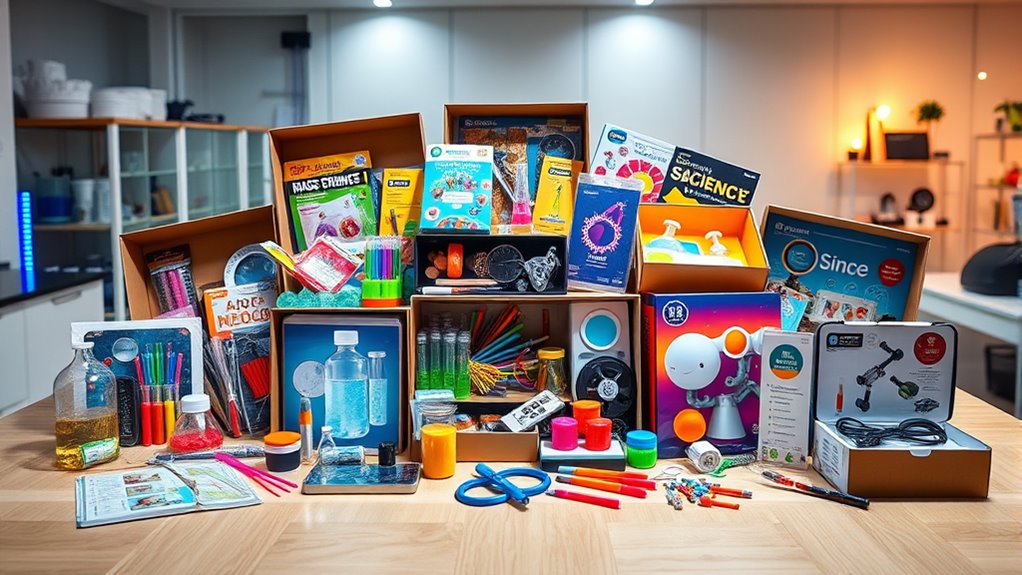

The best science kits for teenagers give young experimenters more than a quick reaction or a one-time build: they offer room to ask questions, troubleshoot, and learn by doing. My best overall pick is the Thames & Kosmos CHEM C1000 Beginner Chemistry Set, which pairs a substantial experiment count with a focused subject. For teens drawn to engineering, the ELEGOO UNO R3 Smart Robot Car Kit adds programmable robotics, while the Teach Tech HydroBot Arm offers a hands-on introduction to hydraulics. The main tradeoff is between broad experiment collections and kits that teach one skill in greater depth; age labels also matter, since several options here target younger children. Continue reading for my full breakdown, selection criteria, buying advice, and picks by learner type.

Turn the school run and nap time into listening time
- Thousands of audiobooks, podcasts and originals
- Listen on your phone, tablet or Echo — also offline
- Cancel anytime
Complete the kit


Key Takeaways
- The chemistry-focused Thames & Kosmos CHEM C1000 stands out as the best overall choice because its 125 experiments center on a defined subject rather than spreading attention across unrelated activities.
- The ELEGOO robot car is the clearest fit for teens who want programming and robotics, but it asks for more patience and troubleshooting than a ready-to-run experiment kit.
- The HydroBot Arm and Mega Cyborg Hand turn mechanical principles into buildable projects; they suit hands-on learners better than teens seeking a wide range of experiments.
- Many National Geographic and other broad experiment kits list ages that top out at 12, so older teens should check project depth and challenge level rather than relying on a large experiment count.
- The EUDAX electricity and magnetism kit is the most subject-specific route into circuits, while the geode kit is better for a short geology activity than sustained experimentation.
| National Geographic Gross Science Kit with 45 Experiments for Kids Ages 8–12 |  | Best for Gross-Themed Chemistry | Brand: Blue Marble | Age range: 8 years and up | Experiments: 45 total: 15 with included materials and 30 using household items | VIEW ON AMAZON | See Our Full Breakdown |
| ANNISOKA Wooden Robot Arm STEM Building Kit |  | Best for Robot-Arm Engineering | Brand: ANNISOKA | Material: Wood | Recommended age: 8 years and up | VIEW ON AMAZON | See Our Full Breakdown |
| Smartivity DIY Robotic Mechanical Hand STEM Toy for Kids Ages 8–14 |  | Best for Guided Mechanical Building | Brand: Smartivity | Model: SMRT1135 | Age range: 8–14 years | VIEW ON AMAZON | See Our Full Breakdown |
| National Geographic Mega Science Lab: 75 Experiments for Kids Ages 8–12 |  | Best for Broad Science Variety | Brand: Blue Marble | Age range: 8 years and up | Experiments: 75 total: 45 kit experiments and 30 household-item experiments | VIEW ON AMAZON | See Our Full Breakdown |
| National Geographic Break Open 10 Premium Geodes Kit |  | Best for Hands-On Geology | Brand: Blue Marble | Age range: 8 years and up | Set contents: 10 geodes, safety goggles, magnifying glass, display stand, and learning guide | VIEW ON AMAZON | See Our Full Breakdown |
| ELEGOO UNO R3 Smart Robot Car Kit V4 with Camera |  | Best for Teen Programmers | Controller: UNO R3 | Camera and Wi-Fi module: ESP32-WROVER-based | Programming: Arduino IDE | VIEW ON AMAZON | See Our Full Breakdown |
| National Geographic Science Magic Kit with 100+ Experiments for Kids Ages 8–12 |  | Best for Science-Magic Demonstrations | Experiments: 100+ | Recommended age: 8–12 years | Brand: National Geographic | VIEW ON AMAZON | See Our Full Breakdown |
| UNGLINGA 150-Experiment Science Kit for Kids | 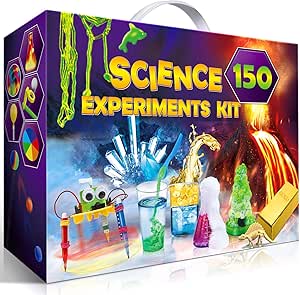 | Best for Broad Experiment Variety | Experiments: 150 | Recommended age: 8 years and up | Topics: Chemistry, physics, earth science, and more | VIEW ON AMAZON | See Our Full Breakdown |
| Sillbird 12-in-1 Solar Robot Building Kit, 190 Pieces |  | Best for Renewable-Energy Building | Pieces: 190 | Buildable models: 12 | Power source: Solar; can also use a strong artificial light source | VIEW ON AMAZON | See Our Full Breakdown |
| EUDAX Basic Electricity and Magnetism Experiment Kit |  | Best for Circuit Fundamentals | Number of items: 79 | Electricity components: 56 | Magnetism components: 21 | VIEW ON AMAZON | See Our Full Breakdown |
| Thames & Kosmos CHEM C1000 Beginner Chemistry Set, 125 Experiments |  | Best for Serious Chemistry Exploration | Experiments: 125 | Manual: 80-page full-color experiment manual | Chemicals: 7 included | VIEW ON AMAZON | See Our Full Breakdown |
| Teach Tech HydroBot Arm Hydraulic STEM Building Kit for Ages 12+ |  | Best for Hydraulic Engineering | Recommended age: 12 years and up | Model: TTR-632 | Power source: Water-powered hydraulics | VIEW ON AMAZON | See Our Full Breakdown |
| Thames & Kosmos Mega Cyborg Hand STEM Experiment Kit |  | Best Wearable Engineering Build | Age range: 7 years and up | Pieces: Over 200 | Configurations: Left hand, right hand, or claw | VIEW ON AMAZON | See Our Full Breakdown |
| Doctor Jupiter Ultimate Science Experiments Kit for Kids Ages 8+ |  | Best for a Broad Starter Collection | Age range: 8 years and up | Included experiments: 135+ | Bonus experiments: Access to 90+ activities using household items | VIEW ON AMAZON | See Our Full Breakdown |
| National Geographic Amazing Chemistry Set with 100+ Experiments |  | Best Compact Chemistry Starter | Brand: Blue Marble | Age range: 8 years and up | Experiments: 15 with included materials, plus 85 bonus activities | VIEW ON AMAZON | See Our Full Breakdown |
| science kits for teenager | Age range |
|---|---|
| National Geographic Gross Scie | 8 years and up |
| ANNISOKA Wooden Robot Arm STEM | — |
| Smartivity DIY Robotic Mechani | 8–14 years |
| National Geographic Mega Scien | 8 years and up |
| National Geographic Break Open | 8 years and up |
| ELEGOO UNO R3 Smart Robot Car | — |
| National Geographic Science Ma | — |
| UNGLINGA 150-Experiment Scienc | — |
| Sillbird 12-in-1 Solar Robot B | — |
| EUDAX Basic Electricity and Ma | — |
| Thames & Kosmos CHEM C1000 Beg | 10 years and up |
| Teach Tech HydroBot Arm Hydrau | — |
| Thames & Kosmos Mega Cyborg Ha | 7 years and up |
| Doctor Jupiter Ultimate Scienc | 8 years and up |
| National Geographic Amazing Ch | 8 years and up |
More Details on Our Top Picks
National Geographic Gross Science Kit with 45 Experiments for Kids Ages 8–12
For teenagers who enjoy messy demonstrations, this kit offers a playful entry point to polymers, chemical reactions, and pH science. Its 45 activities sound extensive, but only 15 include materials in the box; the other 30 rely on household items. That makes it less self-contained than the National Geographic Mega Science Lab, which supplies materials for 45 of its 75 experiments and also spans earth science. The gross-out theme can help younger teens stay engaged, though the age guidance of 8–12 may feel elementary to older teenagers seeking deeper explanations or more open-ended projects. Illustrated directions make the activities approachable, but the household-supply portion means some preparation falls to an adult. I’d choose it for a teen who likes short, entertaining experiments rather than a sustained engineering build.
Pros:- Introduces polymers, chemical reactions, and pH through hands-on activities
- Includes materials for 15 experiments and instructions for 30 more
- Illustrated directions make the activities easier for younger users to follow
- No batteries are required
Cons:- Only 15 of the 45 experiments include materials in the kit
- The age range and gross-out theme may feel young to older teenagers
- Household-item experiments require extra preparation and supplies
Best for: Younger teenagers who are motivated by gross-out demonstrations and want approachable introductions to basic chemistry concepts.
Not ideal for: Older teens seeking advanced theory, independent project design, or a kit with materials supplied for every activity.
- Brand:Blue Marble
- Age range:8 years and up
- Experiments:45 total: 15 with included materials and 30 using household items
- Educational objective:STEM
- Included components:Gross Science Kit
- Batteries:Not required
- Model number:NGMEGAGRS
Our verdict“Choose this for a younger teen who wants entertaining, gross-themed chemistry activities and is comfortable sourcing household supplies for many of them.”
ANNISOKA Wooden Robot Arm STEM Building Kit
This kit puts mechanical movement and circuits at the center, giving teens a build with a more engineering-focused payoff than the National Geographic experiment kits. It includes a wooden arm, motors, a microcontroller board, wires, and assembly instructions, and no soldering is required. That keeps the electronics accessible, but the assembly is described as challenging, so younger builders may need patient adult help. Compared with the Smartivity DIY Robotic Mechanical Hand, this is the more direct choice for exploring a motorized arm; Smartivity instead focuses on a hand-shaped mechanism and includes lifetime replacement parts. The ANNISOKA requires six AA batteries, which are not included, adding a supply step before operation. I’d pick it for a teen who enjoys following a complex build and wants to see electrical components produce mechanical motion.
Pros:- Combines a robotic arm build with motors, wiring, and a microcontroller board
- Introduces circuits and mechanical movement in one project
- No soldering is required
- Compact listed dimensions of 6.8 × 4.48 × 4.3 inches
Cons:- Assembly is described as challenging and may need adult assistance
- Six AA batteries are required but not included
- The product data does not specify a project count or additional activities
Best for: Teenagers interested in robotics who want to assemble a motorized mechanism and have an adult available for help if the build gets difficult.
Not ideal for: Teens looking for a ready-to-use activity, a battery-ready kit, or a project with simpler assembly and less troubleshooting.
- Brand:ANNISOKA
- Material:Wood
- Recommended age:8 years and up
- Power requirement:6 AA batteries, not included
- Soldering:Not required
- Item dimensions:6.8 × 4.48 × 4.3 inches
- Manufacturer part number:A-48
Our verdict“Choose this for a teen who wants a focused robotics build and is ready for a more demanding assembly than the Smartivity mechanical hand.”
Smartivity DIY Robotic Mechanical Hand STEM Toy for Kids Ages 8–14
The mechanical-hand design makes this a clear pick for teens curious about how movement can be built into a structure without adding motors or batteries. The kit uses engineered wood and comes with all parts, while its illustrated, step-by-step guide supports a more self-directed build. Compared with the ANNISOKA Wooden Robot Arm, Smartivity offers a hand-shaped mechanism and lifetime replacement parts, but the ANNISOKA includes motors and electronic components for a more explicitly circuit-based project. This kit still requires assembly, and the supplied dimensions are partial, so it is harder to plan storage or workspace around the finished model. Its 8–14 age range also positions it toward younger teens rather than those looking for advanced robotics. I’d favor it for a patient builder who wants a tactile mechanism and clear instructions over powered electronics.
Pros:- Explores mechanical movement and robotics through a hand-shaped build
- Illustrated, step-by-step instructions support independent assembly
- Made from engineered wood
- Lifetime replacement parts are included
Cons:- Requires assembly and patience to complete
- Does not offer the motorized electronics included with the ANNISOKA robot arm
- Full item dimensions are not provided
Best for: Younger teenagers who want a guided, hands-on mechanical build and prefer a physical model over wiring and battery-powered robotics.
Not ideal for: Teens seeking motorized robotics, advanced electronics, or complete dimensions for planning a display or work area.
- Brand:Smartivity
- Model:SMRT1135
- Age range:8–14 years
- Material:Engineered wood
- Theme:Anatomy and robotics
- Educational objective:STEM
- Included parts:All parts included; lifetime replacement parts
- Item dimensions:11.81 × 9.8 inches; partial dimensions provided
Our verdict“Choose this for a younger teen who wants a well-guided mechanical model and values replacement parts more than motors or circuit work.”
National Geographic Mega Science Lab: 75 Experiments for Kids Ages 8–12
This is the broadest all-in-one pick among these five: earth science, chemistry, and science magic give a teen more ways to find a subject that holds attention. It offers 75 activities, including 45 with kit materials and 30 that use household items, plus rock, mineral, and crystal specimens. That range makes it more versatile than the Gross Science Kit, which centers on one theme and supplies materials for only 15 experiments. Still, the 8–12 age guidance and accessible activity format may not satisfy older teens who want deeper theory or a sustained build like the ANNISOKA robot arm. Household-supply activities also require some advance preparation. I’d choose the Mega Science Lab for a younger teen who wants variety across physical specimens, reactions, and demonstrations rather than a single subject to pursue in depth.
Pros:- Combines earth science, chemistry, and science magic activities
- Includes materials for 45 experiments and instructions for 30 household-item experiments
- Contains rock, mineral, and crystal specimens for hands-on observation
- Activities encourage critical thinking, observation, and STEM learning
Cons:- Thirty activities require household items that are not supplied
- The age guidance may make the activities feel basic to older teenagers
- Its broad subject mix offers less focus than a dedicated robotics or geology kit
Best for: Younger teenagers who want to sample several science subjects and enjoy a mix of experiments, demonstrations, and real specimens.
Not ideal for: Older teens seeking advanced explanations, a single in-depth subject, or projects that require no household supplies.
- Brand:Blue Marble
- Age range:8 years and up
- Experiments:75 total: 45 kit experiments and 30 household-item experiments
- Subjects:Earth science, chemistry, and science magic
- Educational objectives:Critical thinking, observation skills, and STEM
- Included components:Three-in-one science kit, earth science kit, chemistry kit, and science magic kit
- Specimens:Rock, mineral, and crystal specimens
- Model number:NGMEGASCIKIT
Our verdict“Choose this for a younger teen who wants the widest subject variety here and does not mind gathering supplies for some activities.”
National Geographic Break Open 10 Premium Geodes Kit
For a teen drawn to rocks and natural formations, this kit offers a more tangible geology activity than the Mega Science Lab’s broad mix of demonstrations. It includes 10 natural geodes to crack open, along with safety goggles, a magnifying glass, a display stand, and a guide explaining how geodes form. The supplied specimens give the activity a clear focus: reveal the crystals, inspect them closely, and learn about their formation. That is less varied than the Mega Science Lab’s 75 experiments, but the narrower theme can suit a teen who prefers examining real geological materials to moving between subjects. The tradeoff is that cracking geodes takes physical effort and the stones vary in size and crystal contents, so results are not uniform. I’d choose this for a geology-minded teen with suitable adult supervision for opening the specimens.
Pros:- Includes 10 natural geodes to open and examine
- Supplies safety goggles, a magnifying glass, and a display stand
- Learning guide explains how geodes form
- Provides a focused introduction to geology and STEM
Cons:- Geodes vary in size and crystal contents, so results differ between specimens
- Opening the geodes requires cracking them and appropriate supervision
- Offers a narrower activity range than the National Geographic Mega Science Lab
Best for: Teenagers interested in geology who would rather examine and display natural specimens than complete a wide range of experiments.
Not ideal for: Teens seeking repeatable, self-contained experiments or buyers who cannot provide appropriate supervision for cracking geodes.
- Brand:Blue Marble
- Age range:8 years and up
- Set contents:10 geodes, safety goggles, magnifying glass, display stand, and learning guide
- Geode size:Ranges from ping-pong-ball size to tennis-ball size
- Dimensions:2.75 × 7.75 × 12 inches
- Weight:2.1 pounds
- Educational objective:STEM
Our verdict“Choose this for a teen who is specifically curious about geology and values real specimens over a large collection of varied experiments.”
ELEGOO UNO R3 Smart Robot Car Kit V4 with Camera
For teenagers who want to connect coding with a moving machine, this kit offers more programming depth than the Sillbird 12-in-1 Solar Robot Building Kit. Its UNO R3 controller works with Arduino IDE, while an ESP32-WROVER-based camera module adds live FPV video alongside line tracking, obstacle avoidance, and app or IR control. Guided instructions and example programs can help beginners get started, though building and programming still call for patience—and younger or first-time builders may need adult help. Compared with the simpler solar models, this car gives teens more control over how a robot behaves, but it also has a steeper setup process. The rechargeable battery is included, although its 2000 mAh capacity and the kit’s assembly requirements make this a hands-on project, not a ready-to-run toy.
Pros:- Arduino IDE programming creates a hands-on route into coding and robotics.
- FPV camera adds live video to the robot’s driving features.
- Multiple modes include line tracking, obstacle avoidance, and auto follow.
- Rechargeable battery, guided tutorial, and example programs are included.
Cons:- Assembly and programming may require adult guidance for first-time builders.
- Setup involves more steps and troubleshooting than a solar model kit.
Best for: Teenagers who want to learn Arduino programming while building and controlling a camera-equipped robot car.
Not ideal for: Beginners seeking an assembly-free activity or teens who would rather build models without programming.
- Controller:UNO R3
- Camera and Wi-Fi module:ESP32-WROVER-based
- Programming:Arduino IDE
- Driving features:FPV video, line tracking, obstacle avoidance, auto follow, app and IR control
- Battery:2000 mAh rechargeable lithium-ion
- Recommended age:12 years and up
- Dimensions:8 x 7 x 6 inches
- Weight:1.23 kg
Our verdict“Choose this kit for a teenager ready to combine Arduino coding with interactive robot-car building.”
National Geographic Science Magic Kit with 100+ Experiments for Kids Ages 8–12
This kit’s strongest appeal is the promise of science presented as magic tricks, which can make demonstrations an inviting starting point for younger learners. Its 100-plus experiments offer plenty of variety on paper, but the available product details do not name the activities, so buyers cannot judge how many will hold a teenager’s interest. Compared with the UNGLINGA 150-Experiment Science Kit, it has fewer stated experiments and less detail about included materials and subject coverage. That makes the UNGLINGA a clearer pick for families who want a broad, explicitly described hands-on program, while this National Geographic option may suit younger siblings or teens who enjoy performing science demonstrations. The stated age range is 8–12, so older teenagers may find its content less suited to their level.
Pros:- Offers more than 100 experiments.
- Science-magic framing may encourage interest in demonstrations and explanation.
- Developed by Blue Marble, identified as a Toy of the Year Award winner.
- U.S. support team is listed.
Cons:- Available details do not identify the experiments or their subject areas.
- The stated 8–12 age range may be a poor fit for older teenagers.
- The information provided does not clarify which materials are included.
Best for: Families with younger teens who enjoy performing science demonstrations and want a large number of activities to explore.
Not ideal for: Older teenagers looking for clearly described projects or more advanced, subject-focused experiments.
- Experiments:100+
- Recommended age:8–12 years
- Brand:National Geographic
- Developer:Blue Marble
- Support:U.S. support team
- Product focus:Science magic experiments
Our verdict“Pick this for a younger teen who likes science demonstrations, but favor a more clearly documented kit for an older student.”
UNGLINGA 150-Experiment Science Kit for Kids
Among this group, the UNGLINGA kit makes its range easiest to judge: it lists 150 experiments across chemistry, physics, earth science, and more. An illustrated step-by-step manual gives children a route through the activities, and some projects use household items, which can make it easier to continue exploring beyond the kit’s supplied tools. Compared with the National Geographic Science Magic Kit, UNGLINGA names subject areas and gives a higher experiment count; that detail helps families looking for breadth, though it does not by itself show how challenging the projects are for teenagers. The recommended age begins at 8, so older teens seeking focused or advanced work may prefer a more specialized option, such as the ELEGOO robot car for coding. Some experiments also call for household materials that are not included.
Pros:- Lists 150 experiments across several science areas.
- Illustrated, step-by-step manual supports guided activities.
- Includes science experiment tools and materials.
- Some projects use common household items, extending the activities beyond kit components.
Cons:- Some household materials must be supplied separately.
- The age range starts at 8, and the product details do not establish advanced difficulty for teens.
- A broad mix of topics may offer less depth than a specialized kit.
Best for: Families seeking a varied, guided activity kit for a younger teen who enjoys sampling several science subjects.
Not ideal for: Older teens who want advanced projects in one subject or need every experiment’s materials supplied.
- Experiments:150
- Recommended age:8 years and up
- Topics:Chemistry, physics, earth science, and more
- Included components:Science experiment tools and materials
- Instructions:Illustrated, step-by-step manual
- Dimensions:11.42 x 8.67 x 3.94 inches
- Material:Plastic
- Packs:1
Our verdict“Choose UNGLINGA for a wide menu of guided science activities, provided the teen does not need advanced depth or every supply in the box.”
Sillbird 12-in-1 Solar Robot Building Kit, 190 Pieces
Sillbird takes a build-first approach: teenagers assemble one of 12 solar-powered models from 190 pieces, then see how light can power motion. That makes it more focused on mechanical construction and renewable energy than the ELEGOO UNO R3 Smart Robot Car Kit, which adds Arduino programming, camera video, and app control. The solar panel can work under sunlight or a strong artificial light source, but the models’ performance depends on having enough light; this is less dependable for an indoor activity than a battery-powered kit. Step-by-step instructions support assembly, while the range of models can give builders a reason to revisit the pieces. Buyers should also note that no battery is included, although the listed power source is solar.
Pros:- 190 pieces can be assembled into 12 different models.
- Solar power connects model building with renewable-energy concepts.
- Can operate in sunlight or under a strong artificial light source.
- Step-by-step instructions support the assembly process.
Cons:- Performance depends on access to sufficient sunlight or strong artificial light.
- Does not offer the programmable control or FPV camera features of the ELEGOO robot car.
- Battery is not included.
Best for: Teenagers who enjoy assembling moving models and want a straightforward introduction to solar power and engineering.
Not ideal for: Builders who want programmable behavior, reliable operation in dim rooms, or a single advanced project.
- Pieces:190
- Buildable models:12
- Power source:Solar; can also use a strong artificial light source
- Material:ABS
- Recommended age:10 years and up
- Battery included:No
- Dimensions:10.24 x 7.87 x 2.56 inches
- Model number:US-SB-SolarRobot
Our verdict“Choose Sillbird for hands-on model variety and solar-power learning, not for coding or dependable movement in low light.”
EUDAX Basic Electricity and Magnetism Experiment Kit
For a teenager studying school physics, the EUDAX kit is the most directly focused option here: its parts support circuit building, Ohm’s law, electromagnets, an electric bell, and a hand-crank generator. That subject focus gives it a more structured learning purpose than the broad experiment menus from UNGLINGA or National Geographic, though those kits may offer more variety for casual exploration. EUDAX includes a full-color manual and storage bag, but the product details do not describe each project’s instructions, so buyers cannot gauge how much independent guidance a teen will get. The kit also needs three AA batteries, which are not included. Its suggested grade levels of 9–11 and stated age span of 8–18 make it a better match for school-age learners than for teens seeking robotics or open-ended construction.
Pros:- Supports circuit building and experiments involving Ohm’s law.
- Includes components for an electromagnet, electric bell, and hand-crank generator.
- Full-color manual and storage bag are included.
- Electricity and magnetism give the kit a clear connection to school physics.
Cons:- Requires three AA batteries, which are not included.
- Product details do not specify the instructions for each project.
- Its focused subject matter offers less variety than the UNGLINGA experiment kit.
Best for: Teenagers in grades 9–11 who want guided, hands-on practice with basic circuits and magnetism.
Not ideal for: Teens seeking coding, mechanical robot builds, or a fully specified project guide—and families who do not have three AA batteries available.
- Number of items:79
- Electricity components:56
- Magnetism components:21
- Repair tools:2
- Battery requirement:3 AA batteries, not included
- Suggested grade levels:9–11
- Recommended age:8–18 years
- Included:Full-color manual and storage bag
- Weight:1.43 kg
Our verdict“Choose EUDAX for school-linked circuit and magnetism practice, but look elsewhere for broader experiments or detailed project guidance.”
Thames & Kosmos CHEM C1000 Beginner Chemistry Set, 125 Experiments
For teenagers ready to spend time on chemistry itself, the CHEM C1000 offers a broader lab-style experience than the Doctor Jupiter kit. Its 125 experiments across 10 themed chapters cover techniques and topics such as chromatography, electrochemistry, crystals, and electrolysis, while the illustrated manual connects procedures to scientific ideas. Real glass labware and seven included chemicals make the activities feel more like structured experiments than quick demonstrations. That depth comes with a real tradeoff: adult supervision and careful chemical handling are required, including attention to disposal. The National Geographic Amazing Chemistry Set is a lighter alternative, with fewer supplied-material experiments and more household-item activities. I’d favor this set for a teen who wants sustained chemistry practice, not a mostly self-directed activity kit.
Pros:- 125 experiments provide a substantial sequence of hands-on chemistry activities
- Real lab equipment and seven chemicals support experiments beyond household demonstrations
- The 80-page illustrated manual covers 10 themed chapters and explains scientific concepts
- Topics include chromatography, electrochemistry, crystals, and electrolysis
Cons:- Adult supervision is required, which limits independent use
- Included chemicals need careful handling and disposal
- The lab-style activities call for more attention to safety and procedure than simpler experiment collections
Best for: Teenagers who want a structured introduction to laboratory-style chemistry and have an adult available to supervise experiments and chemical handling.
Not ideal for: Younger teens seeking independent activities, or households that do not want to manage chemical storage, supervision, and disposal.
- Experiments:125
- Manual:80-page full-color experiment manual
- Chemicals:7 included
- Age range:10 years and up
- Chapters:10 themed chapters
- Safety:Adult supervision required; meets EN 71-4 safety standard
- Origin:Designed and manufactured in Germany
- Included equipment:Glass test tubes, graduated beakers, funnel, dropper pipettes, safety goggles, and other lab tools
Our verdict“Choose the CHEM C1000 if a teen wants a wide-ranging, supervised chemistry course at home rather than a lighter collection of demonstrations.”
Teach Tech HydroBot Arm Hydraulic STEM Building Kit for Ages 12+
The HydroBot is the clearest choice here for a teenager more interested in mechanical engineering than chemical experiments. Building and operating a water-powered arm demonstrates how hydraulic levers control movement, and its six axes, rotating base, and movable wrist give the finished model several kinds of motion to explore. Unlike the Thames & Kosmos Mega Cyborg Hand, this is a tabletop arm rather than a wearable mechanism, so it suits teens who want to manipulate objects without fitting the build to their hand. The tradeoff is a multi-hour assembly project followed by limited lifting capacity: it can handle objects up to 50 g, not substantial loads. Its step-by-step instructions help with the build, but buyers should expect construction to be part of the activity, not a quick prelude.
Pros:- Water-powered hydraulics demonstrate mechanical control without batteries
- Six axes and rotating joints give the arm varied movement to explore
- Interchangeable gripper and suction components add different ways to handle objects
- Step-by-step instructions guide the assembly process
Cons:- Assembly takes multiple hours and requires patience
- The 50 g lifting limit restricts the objects it can handle
- The experience centers on one engineering build rather than a range of science experiments
Best for: Teens aged 12 and up who enjoy patient model building and want to see hydraulic principles control a multi-jointed robotic arm.
Not ideal for: Teens looking for chemistry experiments, a ready-to-use toy, or an arm that can lift heavier objects.
- Recommended age:12 years and up
- Model:TTR-632
- Power source:Water-powered hydraulics
- Axes:6
- Base rotation:270 degrees
- Wrist joint rotation:180 degrees
- Reach:16.35-inch vertical; 12.42-inch horizontal
- Lifting capacity:50 g
- Gripper opening:47 mm
Our verdict“Pick the HydroBot for a teen who wants an involved hydraulic robotics build and is content with light-duty grabbing rather than chemistry activities.”
Thames & Kosmos Mega Cyborg Hand STEM Experiment Kit
The Mega Cyborg Hand turns hydraulics into a wearable, moving mechanism, giving teens a direct way to connect finger motion with mechanical action. Its water-filled pistons power a hand that can be assembled for left- or right-hand use or reconfigured as a claw. That makes it more body-focused than the Teach Tech HydroBot Arm, which is a separate tabletop machine with broader reach but no wearable fit. The 40-page full-color manual introduces hydraulics, pneumatics, and robotics, though the central experience remains one substantial build rather than a sequence of experiments like the CHEM C1000. More than 200 pieces offer plenty of assembly work, but they also mean a longer, more involved setup, and the hydraulic pistons need filling. I’d choose it for a teen who learns by building and operating a mechanism.
Pros:- Water-powered pistons create a working wearable mechanism without motors or batteries
- Can be configured for the left hand, right hand, or as a claw
- The hand can grip and lift objects
- The full-color manual introduces hydraulics, pneumatics, and robotics
Cons:- Assembly involves more than 200 pieces and takes sustained attention
- Hydraulic pistons must be filled with water
- It focuses on a single mechanical build rather than a collection of experiments
Best for: Teens who enjoy hands-on construction and want to explore how hydraulic mechanisms can make a wearable hand or claw move.
Not ideal for: Teens who prefer chemistry experiments, a short build, or a project that works without filling hydraulic pistons with water.
- Age range:7 years and up
- Pieces:Over 200
- Configurations:Left hand, right hand, or claw
- Included components:Plastic building pieces, metal springs, flexible tubing, screws, and manual
- Manual:40-page, full-color
- Model number:620501
- Warranty:1 year against manufacturer defects
Our verdict“Choose the Mega Cyborg Hand for a teen who wants to assemble and wear a hydraulic mechanism, rather than operate a tabletop arm or run chemistry experiments.”
Doctor Jupiter Ultimate Science Experiments Kit for Kids Ages 8+
Doctor Jupiter is the most approachable pick for households that want many guided activities in one package, rather than a specialized engineering build. It includes materials for more than 135 experiments, illustrated step-by-step directions, and access to over 90 bonus activities using household items. Separate leak-proof bottles help contain the supplied chemical materials, while tools such as a measuring cylinder and conical flask introduce basic lab routines. Compared with the CHEM C1000, this set offers a larger stated activity count but less emphasis on a sequenced, multi-topic chemistry curriculum; it is designed for younger children, so teens seeking more advanced chemistry may outgrow its level. The bonus activities also depend on having household supplies available. I’d pick it for a younger beginner or family activity shelf, not as the strongest choice for a teen seeking deeper chemistry.
Pros:- Includes materials for more than 135 experiments
- Illustrated, step-by-step instructions support beginner-led activities
- Access to more than 90 bonus experiments extends the activity selection
- Chemical materials come in separate leak-proof bottles
Cons:- Bonus experiments require additional household items
- Designed for ages 8 and up, so some teens may find the level too introductory
- The included activity count does not by itself indicate a deeper chemistry sequence like the CHEM C1000
Best for: Families with younger beginners who want an illustrated, varied set of experiments and are comfortable supplying common household items for bonus activities.
Not ideal for: Teenagers looking for advanced chemistry concepts, a clearly structured lab curriculum, or activities aimed specifically at their age group.
- Age range:8 years and up
- Included experiments:135+
- Bonus experiments:Access to 90+ activities using household items
- Educational objective:STEM
- Included equipment:Measuring cylinder, conical flask, spatula, stirring sticks, test tube stand, cups, funnel, and tray
- Other included materials:Glycerin flakes, soap moulds, food essences, food colours, experiment ingredients, and instruction materials
- Chemical storage:Separate leak-proof bottles
Our verdict“Choose Doctor Jupiter for a younger beginner who wants a broad, guided activity set, but favor the CHEM C1000 for a teen seeking more focused chemistry study.”
National Geographic Amazing Chemistry Set with 100+ Experiments
This National Geographic set keeps its physical kit compact while offering hands-on chemistry tools for activities such as chemical reactions and crystal growing. It includes materials for 15 experiments, then points to 85 additional activities using common household items. That balance makes it more suitable for a teen who wants test tubes, beakers, and pipettes without committing to a large chemistry collection. Compared with the CHEM C1000, however, it supplies materials for far fewer experiments and has less depth in its included lab program; the extra activity ideas rely on household supplies. The 1.8-pound kit also takes up less room than the more involved Thames & Kosmos chemistry set. Its age guidance starts at eight, so older teens seeking sustained, challenging chemistry may find it basic. I’d treat it as a compact entry point, not a substitute for a deeper course.
Pros:- Includes test tubes, beakers, and pipettes for hands-on activities
- Supplies materials for 15 experiments, including chemistry and crystal-growing activities
- Offers 85 additional activity ideas using common household items
- Compact listed dimensions and 1.8-pound weight suit limited storage space
Cons:- Materials are included for only 15 experiments; the other activities need household items
- Its introductory age guidance may not suit teens seeking advanced content
- Less extensive as a supplied-material chemistry program than the CHEM C1000
Best for: A family seeking a compact introductory chemistry set for a younger teen who wants basic lab tools and is happy to gather household items for extra activities.
Not ideal for: Teens who want many experiments with included materials, a more advanced chemistry progression, or minimal reliance on household supplies.
- Brand:Blue Marble
- Age range:8 years and up
- Experiments:15 with included materials, plus 85 bonus activities
- Included tools:Test tubes, beakers, and pipettes
- Educational objective:STEM
- Dimensions:8.78 x 3.19 x 11.93 inches
- Weight:1.8 pounds
- Model number:NGMEGACHEMAR
Our verdict“Pick this set for a compact, basic chemistry introduction, but choose the CHEM C1000 if a teen wants a much larger supplied-material lab program.”

How We Picked
I compared these science kits for teenagers by the kind of learning they support, the likely effort required, and whether a teen can build on the activity after the first session. I looked at subject depth, project variety, age guidance, hands-on involvement, and whether a kit appears better suited to guided family activities or independent work. I also considered practical fit: a kit that needs more assembly or troubleshooting may reward a motivated teen, but can frustrate someone expecting quick experiments.
The ranking favors options with a clear fit for teen interests and enough substance to hold attention, rather than treating the highest experiment count as an automatic win. The CHEM C1000 leads for its focused chemistry program; the ELEGOO car and hydraulic hand kits rank well for teens seeking engineering challenges. Broad kits aimed at younger children remain useful for beginners, but rank lower for teenagers when their age range or activity style may not offer enough challenge. The geode set serves a narrower purpose, so it is included as a geology pick rather than a full science curriculum.
Factors to Consider When Choosing Science Kits For Teenagers
Choosing a kit for a teenager takes more than matching a subject to an interest. I’d look at how much independent problem-solving it supports, whether the age guidance matches the teen’s experience, and what the project demands after the box is opened. These factors can help avoid a kit that is either too simple or too involved.
Match the challenge to experience, not just age
Age ranges are a starting point, not a reliable measure of difficulty. A teen new to chemistry may enjoy a clearly guided beginner set, while a younger hobbyist with coding experience may be ready for a robot kit with more open-ended troubleshooting. Check whether the instructions explain why an activity works or only list steps to follow. A very large experiment count can still mean short, introductory activities rather than sustained challenge. If the recipient already knows the basics, favor kits that invite adjustments, repeated trials, or problem-solving beyond the printed directions.
Choose a subject with room to grow
A broad kit can help a teen discover an interest, but a focused kit often offers a clearer path to learning a subject in more depth. Chemistry and electricity kits suit learners who want repeated experiments around related ideas; robotics and mechanical builds appeal to those who prefer constructing and debugging. A single geology activity can be memorable, but it may not hold attention as long as a kit with a sequence of projects. Avoid choosing solely by the number of listed activities: ask whether the teen would rather sample several fields or build skills in one. The best fit is the one that connects to an interest they are likely to revisit.
Account for assembly and troubleshooting
Some science kits begin with a build, while others let the learner start experimenting sooner. Robotics and hydraulic projects can involve assembly and adjusting parts, which is rewarding for a patient teen but a poor match for someone who wants immediate results. Consider whether an adult will be available to help with setup, especially if the recipient is new to tools, wiring, or following technical diagrams. A project that fails on the first try can teach useful lessons, but only if the learner has enough guidance to work out why. Choose a lower-friction experiment kit for independent beginners and a build-heavy option for teens who enjoy fixing things.
Check what the kit asks you to supply
Before choosing, read the included-materials list and instructions for any extra household supplies, tools, batteries, or workspace needs. This can affect whether a kit is ready for a weekend activity or requires advance preparation. Chemistry activities may call for careful setup and cleanup, while construction projects can benefit from a clear work surface and a place to store a part-built model. For a gift, missing components or unfamiliar supplies can delay the first project and dampen enthusiasm. A little planning helps match the kit to the home, not just the teen.
Balance variety against repeat use
A long list of experiments is appealing, yet the quality of the follow-up matters more than the headline count. Ask whether activities build on earlier ideas or simply offer separate demonstrations. Reusable builds and programmable projects can invite revisions, while one-off activities may be better for a short introduction to a topic. Teens who like independent projects may value the freedom to change a design or compare results. For a younger beginner, a guided variety pack can be a better entry point even if it offers less depth.
Set expectations for safety and supervision
Read the safety guidance before buying, especially for kits involving chemistry, small components, or electrical experiments. A teen’s age does not automatically mean every activity is appropriate without an adult nearby; experience, workspace, and the specific project all matter. Check instructions for protective gear, handling rules, and cleanup, and plan to keep supplies organized between sessions. Supervision need not take over the project: it can mean helping with setup and staying available for questions. If the recipient wants to work fully independently, pick a kit whose directions and materials fit that expectation.
Frequently Asked Questions
Are kits labeled for ages 8–12 still suitable for teenagers?
They can work for a teen who is new to the subject, enjoys guided activities, or wants a relaxed introduction rather than a demanding project. The age label does signal a possible ceiling on complexity, so an experienced teen may finish the activities quickly or find the explanations basic. Compare the instructions and activity types with what the teen already knows, not just the experiment count. For a teen seeking a serious challenge, a focused chemistry, robotics, or engineering kit is usually a better starting point.
Should I choose a broad experiment set or a focused kit?
A broad set is a sensible choice when the teen is still discovering what they enjoy or likes switching between activity types. A focused kit is usually stronger when they already have an interest, since repeated work in one field can build knowledge rather than offering only brief introductions. Broad collections can have impressive activity counts without much progression from one experiment to the next. If you are unsure, base the choice on how the teen spends free time: sampling different projects or sticking with one build or question.
Which kind of kit is better for a teen who likes coding?
A programmable robotics kit such as the ELEGOO robot car is the most direct match in this lineup because it connects a physical build with control and coding. It also asks for more patience than a kit of guided experiments, particularly if setup or debugging takes longer than expected. Check the software and instruction requirements before buying, and consider whether the teen has access to a suitable workspace and device. If their interest is in electronics without programming, a circuit-focused kit may be a more comfortable first step.
Do I need to buy extra supplies for these kits?
It depends on the kit and the activity, so check the included-materials list and instructions before purchase. Some experiments may rely on common household items, while construction or electronics projects can have specific setup needs. A kit that requires advance preparation may still be a good choice, but it is less convenient as an immediate gift activity. For a teen who will work alone, clear instructions and ready-to-use components can matter as much as the topic. Make a quick supply check before the first session to avoid an interrupted project.
How can I tell if a kit will hold a teenager’s interest?
Look for a connection between the kit’s subject and something the teen already enjoys, such as building, coding, collecting rocks, or conducting experiments. Then check whether the activities allow repetition, design changes, or troubleshooting rather than stopping after a single demonstration. A large experiment count does not guarantee lasting engagement if every activity is very brief or similar. Teens who like open-ended challenges may prefer robotics or mechanical builds, while beginners may get more out of clear, varied instructions. When possible, choose a kit that gives them a reason to return to the project.
Conclusion
For one versatile recommendation, I’d choose the Thames & Kosmos CHEM C1000 as best overall: its focused chemistry approach gives the teen a coherent set of activities. The best value in learning range is the UNGLINGA 150-Experiment Science Kit for families who want broad exploration, though teens seeking depth may prefer a subject-specific set. For a premium-style project experience, I’d point to the ELEGOO UNO R3 Smart Robot Car, which suits teens ready to build and troubleshoot. Beginners who want variety can start with the National Geographic Science Magic Kit, while hands-on engineering fans should compare the Teach Tech HydroBot Arm with the Thames & Kosmos Mega Cyborg Hand. Choose the EUDAX Electricity and Magnetism Kit for a circuits-focused learner and the National Geographic Geodes Kit for a concise geology activity; neither is as broad as the leading picks, but each serves a distinct interest.
Cold & flu season Picks
humidifiers
As an affiliate, we earn on qualifying purchases.