A smart smoke detector with app alerts can notify you about smoke when you are away, but the right pick depends on wiring, ecosystem, and whether you also want carbon monoxide detection. My best overall pick is the First Alert SC5 for its combination of smoke and CO monitoring with app connectivity. For Ring households, the Kidde Ring models offer a more natural fit, while the HEIMAN Matter over Thread detector is a standout for buyers prioritizing smart-home interoperability. The main tradeoffs are hardwired installation versus battery flexibility, direct app features versus ecosystem dependence, and single alarms versus linked coverage. Read on for the full breakdown and guidance on choosing a detector that fits your home.

Turn the school run and nap time into listening time
- Thousands of audiobooks, podcasts and originals
- Listen on your phone, tablet or Echo — also offline
- Cancel anytime
Complete the kit


Key Takeaways
- The First Alert SC5 is the strongest all-around candidate because it pairs smoke and carbon monoxide detection with app connectivity, while several alternatives focus on smoke alone or depend more heavily on Ring.
- Ring compatibility defines a clear branch of the lineup. The Kidde Ring options make the most sense for existing Ring users, but buyers should check which app, hub, and connected features their setup requires before choosing.
- Hardwired models trade installation flexibility for a fit with existing wiring. Several Kidde options add AA backup, which helps preserve alarm operation during a power outage but does not remove the need to match the home’s wiring.
- HEIMAN’s Matter over Thread model targets interoperability, while the HEIMAN six-pack with gateway emphasizes linked coverage across multiple rooms; those are different priorities, not interchangeable advantages.
- App alerts are only one part of protection. Alarm interconnection, backup power, smoke-versus-CO sensing, and the phone ecosystem determine whether a smart feature will be useful in a real household.
| HEIMAN Matter over Thread Smart Smoke Detector |  | Best for Matter Smart Homes | Model: S1-M | Sensor: Dual-beam photoelectric | Power: CR123A battery, included | VIEW ON AMAZON | See Our Full Breakdown |
| First Alert SC5 Battery Smart Smoke and Carbon Monoxide Alarm |  | Best for Voice-Guided Hazard Alerts | Model: SMCO600NV | Alarm type: Smoke and carbon monoxide | Power: Battery powered | VIEW ON AMAZON | See Our Full Breakdown |
| Kidde Smart Smoke and Carbon Monoxide Detector with Ring, Hardwired with AA Battery Backup |  | Best for Ring Homes with Existing Wiring | Detection: Smoke and carbon monoxide | Power: Hardwired with AA battery backup | App alerts: Smoke, carbon monoxide, and low battery | VIEW ON AMAZON | See Our Full Breakdown |
| Kidde Hardwired Smart Smoke and Carbon Monoxide Detector with App Alerts |  | Best for Direct Wi-Fi Phone Alerts | Model: 30CUAR-W | Detection: Smoke and carbon monoxide | Power: 120V AC wiring | VIEW ON AMAZON | See Our Full Breakdown |
| Kidde Smart Smoke Detector with Ring (RGSDR-RW) | 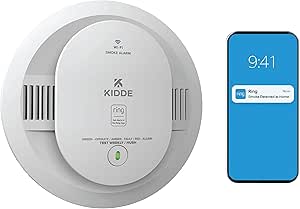 | Best Wire-Free Ring Pick | Model: RGSDR-RW | Detection: Smoke | Power: 2 AA alkaline batteries, included | VIEW ON AMAZON | See Our Full Breakdown |
| Kidde Smart Smoke and Carbon Monoxide Detector with Ring, Battery Powered |  | Best Battery-Powered Smoke and CO Pick | Detection: Smoke and carbon monoxide | Power: Two included AA alkaline batteries | Connectivity: Ring app notifications | VIEW ON AMAZON | See Our Full Breakdown |
| Kidde App-Enabled Hardwired Smart Smoke Detector with AA Battery Backup |  | Best for Replacing a Hardwired Alarm | Model: 20SAR-W | Power: 120V AC wiring with two AA backup batteries | Connectivity: 2.4 GHz Wi-Fi | VIEW ON AMAZON | See Our Full Breakdown |
| Heiman S1-R Smart Wireless Interconnected Smoke Detector 6-Pack with Gateway |  | Best Multi-Room System | Model: S1-R | Included items: Six smoke detectors and one gateway | Certification: UL 217 10th Edition, CSFM, and FCC | VIEW ON AMAZON | See Our Full Breakdown |
| Kidde Smart Smoke Detector with Ring App, Hardwired with AA Battery Backup (RGSAR-RW) |  | Best Ring Pick for Existing Hardwiring | Model: RGSAR-RW | Detection: Smoke | Power: Hardwired with AA battery backup | VIEW ON AMAZON | See Our Full Breakdown |
| smart smoke detector with app alert | Power | Model | Connectivity | Detection |
|---|---|---|---|---|
| HEIMAN Matter over Thread Smar | CR123A battery, included | S1-M | Matter over Thread | — |
| First Alert SC5 Battery Smart | Battery powered | SMCO600NV | — | — |
| Kidde Smart Smoke and Carbon M | Hardwired with AA battery backup | — | — | Smoke and carbon monoxide |
| Kidde Hardwired Smart Smoke an | 120V AC wiring | 30CUAR-W | 2.4 GHz Wi-Fi | Smoke and carbon monoxide |
| Kidde Smart Smoke Detector wit | 2 AA alkaline batteries, included | RGSDR-RW | Ring app and Wi-Fi | Smoke |
| Kidde Smart Smoke and Carbon M | Two included AA alkaline batteries | — | Ring app notifications | Smoke and carbon monoxide |
| Kidde App-Enabled Hardwired Sm | 120V AC wiring with two AA backup batteries | 20SAR-W | 2.4 GHz Wi-Fi | — |
| Heiman S1-R Smart Wireless Int | — | S1-R | — | — |
| Kidde Smart Smoke Detector wit | Hardwired with AA battery backup | RGSAR-RW | Ring app and Alexa-enabled devices | Smoke |
More Details on Our Top Picks
HEIMAN Matter over Thread Smart Smoke Detector
The HEIMAN stands out for local Matter over Thread alerts, making it a strong fit for a home already equipped with a compatible hub and Thread border router. Its dual-beam photoelectric sensor is designed to detect fine smoke from smoldering fires, while the 85 dB alarm and one-touch test and silence controls keep core functions straightforward. Unlike the First Alert SC5, which sends phone alerts through its own app, HEIMAN can join compatible platforms such as Apple Home, Google Home, Alexa, SmartThings, and Home Assistant. That flexibility can support local automations without relying on Wi-Fi. The tradeoff is setup: without the required hub, smart alerts and integrations are out of reach. It also detects smoke only, while several other picks add carbon monoxide detection.
Pros:- Matter over Thread supports local smart-home alerts and automations through a compatible hub.
- Dual-beam photoelectric sensing targets fine smoke and smoldering fires.
- Battery power avoids hardwired installation.
- One-touch test and silence controls simplify routine use.
Cons:- Smart features require a compatible Matter hub with a Thread border router.
- Detects smoke but not carbon monoxide.
- The listed 85 dB alarm may be less forceful than some buyers want for a large or noisy home.
Best for: Matter users with a Thread border router who want local smart-home smoke alerts and automations.
Not ideal for: Buyers without a compatible Matter hub and Thread border router, or anyone seeking a single alarm that also detects carbon monoxide.
- Model:S1-M
- Sensor:Dual-beam photoelectric
- Power:CR123A battery, included
- Alarm volume:85 dB
- Connectivity:Matter over Thread
- Compatible platforms:Apple Home, Google Home, Alexa, SmartThings, Home Assistant
- Smart connection requirement:Compatible Matter hub with Thread border router
- Certifications and listing:UL 217 10th Edition, FCC; CSFM listed
Our verdict“Choose HEIMAN if you already have a Thread-ready Matter setup and prioritize local smoke alerts over built-in carbon monoxide detection.”
First Alert SC5 Battery Smart Smoke and Carbon Monoxide Alarm
The First Alert SC5 is a practical choice for buyers who want smoke and carbon monoxide coverage plus phone notifications through one dedicated app. Its voice alerts identify both the type and location of danger, giving household members more useful information than a basic alarm tone alone. Compatible-alarm interconnectivity can also help alerts reach across the home. Compared with the HEIMAN Matter over Thread detector, the SC5 adds CO detection and does not call for a Thread border router; the tradeoff is that app alerts run through the First Alert app rather than a broad Matter setup. Precision Detection Technology is intended to help reduce nuisance alarms, but the supplied details do not specify cross-platform smart-home integrations. Battery power avoids wiring, though the CR123A battery remains a maintenance item.
Pros:- Detects both smoke and carbon monoxide.
- Phone alerts and voice announcements identify the hazard and its location.
- Interconnects with compatible alarms to extend alerts through the home.
- Low-battery notifications can help prompt replacement before the alarm chirps.
Cons:- Smartphone alerts require the First Alert app.
- Battery-powered design requires ongoing battery maintenance.
- The listed data does not identify broad smart-home integrations like those offered by HEIMAN Matter over Thread.
Best for: Households that want smoke and CO alerts on a phone, with spoken hazard and location details and no hardwired installation.
Not ideal for: Buyers who want Matter-based automations, broad smart-home platform integration, or app alerts outside the First Alert app.
- Model:SMCO600NV
- Alarm type:Smoke and carbon monoxide
- Power:Battery powered
- Battery:3V CR123A lithium
- App:First Alert app
- Voice alerts:Identifies hazard type and location
- Dimensions:5.75 x 1.6 x 5.75 inches
- Weight:16 ounces
Our verdict“Pick the SC5 if clear voice guidance and smoke-plus-CO app alerts matter more than Matter integration.”
Kidde Smart Smoke and Carbon Monoxide Detector with Ring, Hardwired with AA Battery Backup
For a home already set up with Ring and hardwired alarms, this Kidde combines smoke and CO detection with Ring app alerts for hazards and low battery. It also connects with Alexa, and one smart detector can relay alerts from other compatible hardwired alarms—useful when replacing a whole group at once is not practical. Unlike the battery-powered Kidde Smart Smoke Detector with Ring, this model needs hardwired installation, so it suits existing wiring rather than renters or buyers seeking a quick wire-free fit. Basic Ring app notifications do not require a subscription; optional 24/7 monitoring does. Cooking-related false alarms are a stated design concern, but this detector still depends on the Ring ecosystem for its app experience.
Pros:- Detects both smoke and carbon monoxide.
- Ring app provides smoke, CO, and low-battery alerts without a subscription.
- Can relay alerts from compatible hardwired alarms when paired with one smart detector.
- Alexa compatibility adds voice-enabled smart-home access.
Cons:- Requires hardwired installation.
- Optional 24/7 monitoring requires a separate subscription.
- App alerts depend on the Ring ecosystem.
Best for: Ring households with existing hardwired alarms that want smoke and CO alerts and interconnection through one smart detector.
Not ideal for: Renters, homes without compatible hardwiring, or buyers who want optional professional monitoring without an ongoing subscription.
- Detection:Smoke and carbon monoxide
- Power:Hardwired with AA battery backup
- App alerts:Smoke, carbon monoxide, and low battery
- Smart home compatibility:Ring app and Alexa-enabled devices
- Monitoring:Optional 24/7 monitoring subscription
- Certification:UL 217 and FCC standards
Our verdict“Choose this Kidde if you have hardwired alarms and use Ring, but skip it if you need a wire-free installation.”
Kidde Hardwired Smart Smoke and Carbon Monoxide Detector with App Alerts
This Kidde is the straightforward pick for buyers who want Wi-Fi phone alerts without a Ring setup. It reports smoke, CO, and low-battery events through mobile notifications, while voice alerts name the detected hazard. Two AA backup batteries help keep the alarm running during a power outage, an advantage over a battery-only plan if a household prefers mains power. Compared with the Kidde Smart Smoke and Carbon Monoxide Detector with Ring, this model connects to 2.4 GHz Wi-Fi rather than relying on the Ring app, but it does not list Alexa compatibility or alarm-network features. The main constraint is installation: it requires 120V AC wiring, and app connectivity depends on a compatible 2.4 GHz network.
Pros:- Sends mobile alerts for smoke, carbon monoxide, and low battery.
- Voice alerts identify the detected hazard.
- Two AA backup batteries support operation during power outages.
- Includes a wiring harness and mounting bracket for hardwired installation.
Cons:- Requires 120V AC wiring.
- App connectivity requires 2.4 GHz Wi-Fi.
- Unlike the Ring-connected Kidde model, the supplied details do not list Alexa compatibility or interconnection with other alarms.
Best for: Homeowners replacing a hardwired alarm who want direct Wi-Fi alerts for smoke, CO, and low battery.
Not ideal for: Renters, homes without 120V alarm wiring, or households whose Wi-Fi setup lacks 2.4 GHz support.
- Model:30CUAR-W
- Detection:Smoke and carbon monoxide
- Power:120V AC wiring
- Battery backup:2 AA batteries
- Connectivity:2.4 GHz Wi-Fi
- Alerts:Voice alerts and mobile notifications
- Certifications:UL 217, UL 2034, FCC
- Included items:Alarm, mounting bracket, wiring harness, 2 AA batteries, user guide, quick start guide
Our verdict“Pick this model for direct Wi-Fi alerts and smoke-plus-CO coverage when you already have hardwired alarm wiring and 2.4 GHz Wi-Fi.”
Kidde Smart Smoke Detector with Ring (RGSDR-RW)
This battery-powered Kidde makes the most sense for Ring users who need wire-free smoke alerts and want alarms to communicate across the home. It sends smoke and low-battery notifications through the Ring app, supports Alexa voice alerts, and offers wire-free interconnectivity with other Kidde alarms. Unlike the hardwired Kidde Smart Smoke and Carbon Monoxide Detector with Ring, it avoids connecting to household alarm wiring, making placement more flexible. That convenience comes with a narrower detection scope: this model detects smoke, not carbon monoxide. Its two AA batteries also need eventual replacement, and optional 24/7 monitoring is separate from the basic app notifications. The stated faster-detection claim may appeal to buyers, but app alerts and interconnectivity are the clearer reasons to choose it.
Pros:- Battery-powered installation does not require alarm wiring.
- Ring app sends smoke and low-battery alerts without requiring a subscription for basic notifications.
- Wire-free interconnectivity can spread alerts across compatible Kidde alarms.
- Works with Alexa for voice-enabled alerts.
Cons:- Detects smoke but not carbon monoxide.
- Two AA batteries require periodic replacement.
- Optional 24/7 monitoring is a separate subscription.
Best for: Ring and Alexa households seeking a battery-powered smoke alarm with app alerts and wire-free interconnection.
Not ideal for: Buyers who need carbon monoxide detection in the same unit, or who prefer a mains-powered alarm with backup batteries.
- Model:RGSDR-RW
- Detection:Smoke
- Power:2 AA alkaline batteries, included
- Connectivity:Ring app and Wi-Fi
- Smart home compatibility:Alexa integration
- Interconnectivity:Wire-free interconnectivity with Kidde alarms
- Monitoring:Optional 24/7 monitoring subscription
- Certification:UL 217 and FCC
Our verdict“Choose the RGSDR-RW for wire-free Ring smoke alerts and linked alarms, but select a combination detector if you also need CO sensing.”
Kidde Smart Smoke and Carbon Monoxide Detector with Ring, Battery Powered
For homes without a suitable hardwired alarm location, I’d put this battery-powered smoke and CO detector ahead of the hardwired Kidde Ring models: it needs no wiring yet still sends Ring app alerts for smoke, low-level carbon monoxide, and low battery. That CO coverage gives it a broader safety role than the smoke-only Kidde RGSAR-RW. It can also interconnect wirelessly with other Kidde alarms, so a local alarm can prompt other linked units to sound. Alexa compatibility adds another way to receive alerts. The tradeoff is ongoing upkeep: it runs on two AA batteries, and 24/7 monitoring requires an optional subscription. Choose it for app notifications and flexible placement, not for a subscription-free monitoring service.
Pros:- Detects both smoke and carbon monoxide, including low-level CO alerts.
- Sends Ring app notifications for alarms and low battery.
- Battery power avoids hardwired installation.
- Can wirelessly interconnect with other Kidde alarms.
Cons:- 24/7 monitoring requires an optional subscription.
- Two AA batteries need eventual replacement.
- Smart features rely on Ring app connectivity.
Best for: Renters or homeowners who need app alerts for both smoke and carbon monoxide but cannot add a hardwired detector.
Not ideal for: Buyers seeking included 24/7 professional monitoring or a long-life sealed battery, since monitoring is subscription-based and the detector uses replaceable AA batteries.
- Detection:Smoke and carbon monoxide
- Power:Two included AA alkaline batteries
- Connectivity:Ring app notifications
- Interconnection:Wire-free interconnectivity with Kidde alarms
- Smart home compatibility:Alexa-enabled devices
- Certifications:UL 217 and FCC
Our verdict“Choose this battery-powered model if you want Ring app alerts for smoke and CO without wiring, and can manage battery changes and optional monitoring costs.”
Kidde App-Enabled Hardwired Smart Smoke Detector with AA Battery Backup
This Kidde is the practical choice when you already have a hardwired alarm position and want smoke and low-battery app alerts without switching to the Ring setup. Its 120V wiring supplies normal power, while two AA backup batteries keep the detector running through an outage. Compared with the battery-powered Kidde Ring smoke-and-CO model, this one avoids routine battery-only operation but detects smoke only, not carbon monoxide. Enhanced sensing is designed to respond faster while reducing cooking-related false alarms; the hush button gives you a direct way to silence an unwanted alert. The main constraint is installation: this is not a plug-in upgrade, and smart notifications need 2.4 GHz Wi-Fi. I’d favor it for an existing compatible wiring point, not for renters or homes without hardwiring.
Pros:- Sends smoke and low-battery alerts through the Kidde app.
- 120V hardwired power includes two AA backup batteries for outages.
- Enhanced sensing is designed to reduce cooking-related false alarms.
- Hush button can silence nuisance alarms.
Cons:- Requires hardwired installation rather than simple battery placement.
- Smart features require a 2.4 GHz Wi-Fi network.
- Detects smoke but not carbon monoxide.
Best for: Homeowners replacing a hardwired smoke alarm who want app alerts, backup power, and a hush button.
Not ideal for: Renters or buyers without an existing hardwired alarm connection; also skip it if you need carbon monoxide detection in the same unit.
- Model:20SAR-W
- Power:120V AC wiring with two AA backup batteries
- Connectivity:2.4 GHz Wi-Fi
- App alerts:Smoke and low-battery notifications
- Included items:Two AA batteries, mounting bracket, alarm, user guide, quick start guide, and wiring harness
- Certifications:UL 217 8th and 9th Edition; FCC
- Replacement reminder:End-of-life alarm after 10 years
Our verdict“Pick this for app-connected smoke detection at an existing hardwired location if you do not need built-in CO sensing.”
Heiman S1-R Smart Wireless Interconnected Smoke Detector 6-Pack with Gateway
For a whole-home setup, this six-detector kit has a different advantage from the single-unit Kidde app-enabled hardwired alarm: linked alarms sound together, even when Wi-Fi is down. A gateway adds remote app or email notifications, while each detector’s 10-year CR123A battery cuts the need for frequent battery changes. Magnetic mounting also makes placement simpler than hardwired models, and the system can support up to 24 linked detectors. Its tradeoffs are scale and setup: buyers need to configure the gateway and a 2.4 GHz network for remote alerts, and some smart-home integrations require a compatible hub or ecosystem. The listed sensing is smoke detection, so I wouldn’t choose it as a substitute for a separate carbon monoxide alarm. It suits buyers outfitting several rooms at once.
Pros:- Six detectors interconnect so alarms sound together, including without Wi-Fi.
- Gateway enables remote smartphone or email notifications.
- Each detector has a 10-year CR123A battery.
- Magnetic pads or mounting hardware support flexible installation.
Cons:- Remote alerts require gateway setup and 2.4 GHz Wi-Fi.
- Some smart-home integrations may need a compatible hub or ecosystem.
- Smoke detection does not replace a carbon monoxide alarm.
Best for: Homeowners setting up smoke alarms across multiple rooms who want interconnected local alarms and gateway-based remote notifications.
Not ideal for: Buyers who need carbon monoxide detection in the same device, want a single simple alarm, or only have 5 GHz Wi-Fi for connectivity.
- Model:S1-R
- Included items:Six smoke detectors and one gateway
- Certification:UL 217 10th Edition, CSFM, and FCC
- Battery:10-year CR123A lithium battery per detector
- Sensor:Dual-beam photoelectric
- Siren:85 dB
- Wi-Fi:2.4 GHz; not compatible with 5 GHz
- Maximum linked detectors:24
- Dimensions and mounting:70 mm diameter × 37 mm height; magnetic pads or mounting hardware
Our verdict“Choose the Heiman kit when coordinated alarms across several rooms matter more than a simple single-detector setup or built-in CO sensing.”
Kidde Smart Smoke Detector with Ring App, Hardwired with AA Battery Backup (RGSAR-RW)
If your home already has hardwired alarms and you want phone alerts without paying for a monitoring plan, this smoke-only Kidde has a clear advantage: Ring app smoke and low-battery notifications require no subscription. It can also send mobile notifications for other hardwired alarms in the home, making it a stronger fit for a connected alarm network than the battery-powered Ring Kidde, which is easier to place but covers a different installation need. AA battery backup provides power protection during an outage, and enhanced sensing is designed to reduce cooking-related nuisance alarms. The tradeoff is that it requires hardwired installation and detects smoke, not carbon monoxide. A Ring subscription is still needed for optional 24/7 monitoring, so I’d separate the included app alerts from that paid service when comparing it with other options.
Pros:- Ring app smoke and low-battery alerts do not require a subscription.
- Can provide mobile alerts for other hardwired alarms in the home.
- AA battery backup supports operation during power outages.
- Enhanced sensing is designed to reduce cooking-related nuisance alarms.
Cons:- Requires hardwired installation.
- Detects smoke only, not carbon monoxide.
- Optional 24/7 smoke monitoring requires a Ring subscription.
Best for: Ring households with existing hardwired smoke alarms that want app alerts without subscribing to 24/7 monitoring.
Not ideal for: Renters or homes without hardwired alarm connections, and buyers who need carbon monoxide detection from this device.
- Model:RGSAR-RW
- Detection:Smoke
- Power:Hardwired with AA battery backup
- Connectivity:Ring app and Alexa-enabled devices
- App alerts:Smoke and low-battery notifications without a subscription
- Certifications:UL 217 and FCC
- Optional monitoring:24/7 smoke monitoring with a Ring subscription
Our verdict“Choose this if you have hardwired alarms and want Ring app notifications without a subscription, but do not need built-in CO detection.”

How We Picked
I ranked these detectors by how well they answer the specific need for dependable smoke alerts beyond the alarm itself. I weighed app and ecosystem fit, the practical value of smoke-only versus smoke-and-CO sensing, power source and backup, installation requirements, and whether the product is designed for a single location or wider linked coverage. I also treated clear setup expectations as a buyer benefit: a model that needs compatible wiring, a Ring environment, or a gateway is a weaker match for someone who expects a standalone app device.
The order favors options that combine useful alerting with broader household fit, then separates specialized picks by the buyer they serve. That puts the First Alert SC5 first as a balanced smoke-and-CO option, while Ring-specific Kidde models rank better for Ring homes than for buyers seeking platform-neutral use. HEIMAN’s Matter model and gateway six-pack stand out for different smart-home and multi-room needs. Product names alone do not confirm every app feature, interconnection method, or compatibility detail, so I would verify the current manufacturer specifications and local requirements before purchase.
| smart smoke detector with app alert | Detection |
|---|---|
| HEIMAN Matter over Thread Smar | — |
| First Alert SC5 Battery Smart | — |
| Kidde Smart Smoke and Carbon M | Smoke and carbon monoxide |
| Kidde Hardwired Smart Smoke an | Smoke and carbon monoxide |
| Kidde Smart Smoke Detector wit | Smoke |
| Kidde Smart Smoke and Carbon M | Smoke and carbon monoxide |
| Kidde App-Enabled Hardwired Sm | — |
| Heiman S1-R Smart Wireless Int | — |
| Kidde Smart Smoke Detector wit | Smoke |
Factors to Consider When Choosing Smart Smoke Detector With App Alerts
Before choosing a detector, decide how you want alerts to reach you and what has to keep working if power, Wi-Fi, or a phone connection fails. These broader checks can prevent a smart feature from becoming the deciding factor when installation or household coverage is the real issue.
Choose Alerts That Match Your Smart-Home Setup
Start with the phone app and smart-home system you already use, rather than assuming every connected alarm can join every platform. A Ring-oriented detector may be a sensible choice if Ring is already central to your home, while a Matter-over-Thread product is aimed at broader interoperability. Check whether app alerts require a particular hub, subscription, account, or network setup; the product label alone may not answer that. Also ask what happens if the internet is down: the alarm should still sound locally, but remote notifications may stop. Avoid buying on the promise of notifications without confirming which events the app reports and whether setup supports your phone and region.
Match the Power Source to Your Home
Hardwired alarms suit homes with compatible existing wiring and may be easier to maintain as part of an established alarm layout, but they are not automatically a simple swap. Battery models offer more placement flexibility, yet you still need to follow the maker’s battery replacement and maintenance guidance. A hardwired unit with AA backup adds resilience during a power outage, but it does not make the unit wireless or eliminate wiring compatibility checks. Before ordering, identify whether the existing alarm is hardwired, battery-powered, or part of an interconnected system. If you are uncertain about wiring, check the manual or consult a qualified installer rather than treating all ceiling-mounted alarms as equivalent.
Decide Whether Carbon Monoxide Detection Belongs in the Same Unit
Some choices here detect both smoke and carbon monoxide, while others are smoke-focused. A combined alarm can reduce the number of devices to manage, but it may not cover every location or replace a separate detector where local rules or the home layout call for one. Think about fuel-burning appliances, attached garages, sleeping areas, and the placement guidance for each hazard. Check which alert type the app identifies and how the local alarm signals it, since clarity matters when household members need to respond quickly. Do not choose a combined unit simply to reduce device count without confirming the required coverage for your home.
Plan for Interconnection and Whole-Home Coverage
A phone notification reaches the account holder; an interconnected alarm can help alert people inside the home when another unit detects danger. Those functions solve different problems, so do not treat app connectivity as a replacement for linked alarms. For a larger home, map current alarms by floor and sleeping area before deciding between individual units and a multi-pack with a gateway. Confirm that every alarm in the planned system can communicate with the others, since similar branding does not guarantee compatibility across product lines. A gateway-based set can simplify coordinated coverage, but it also adds another device and setup step to maintain.
Check Installation, Placement, and Local Rules Before Buying
Smart features do not change the need to install alarms in the locations specified by the manufacturer and applicable local codes. Confirm ceiling or wall placement guidance, spacing, and whether a device is intended for a particular room type before settling on a model. Existing wiring, mounting brackets, and interconnection standards can affect whether a replacement is genuinely straightforward. If you are replacing an older detector, record its power type and wiring arrangement first; a visually similar unit may not be electrically compatible. When a model requires a gateway or a specific smart-home setup, allow time for pairing and testing rather than assuming installation ends when the alarm is mounted.
Pay for Useful Coverage, Not Extra Connectivity Alone
Spending more makes sense when it buys a feature your household will use, such as carbon monoxide sensing, backup power, wider linked coverage, or compatibility with an existing smart-home system. A premium connected alarm can be poor value if its alerts depend on an ecosystem you do not have or if the household never checks that app. Conversely, choosing a basic battery unit solely to avoid installation can leave a hardwired home with an awkward mix of devices. Compare the full setup: required hubs, replacement batteries, wiring work, and the number of locations that need coverage. Prioritize reliable local alarms and correct placement first, then select app features that add a clear benefit.
Frequently Asked Questions
Will these detectors still sound if Wi-Fi or the internet goes down?
A connected alarm should be able to sound locally without an internet connection, but remote phone alerts usually rely on a working network and the manufacturer’s service. Do not treat the app as the primary warning for people inside the home. Check the manual for the specific model’s offline behavior, including what happens during a router outage or power failure. Backup batteries can help keep a hardwired alarm operating during a power interruption, but they do not restore internet access. If dependable local warning is your priority, confirm the alarm and backup behavior before comparing app features.
Can I use a Ring-compatible Kidde detector without a Ring setup?
Do not assume that Ring-labeled compatibility means every app feature works as a standalone experience. The exact setup requirements can vary by model, so check whether the detector needs a Ring account, compatible base station, or other equipment for remote notifications. Local alarm functions and connected features may have different requirements. If you do not already use Ring, compare the full setup burden with the First Alert and HEIMAN options rather than choosing by the detector’s app wording alone. Confirm current compatibility details with the manufacturer before purchasing.
Should I replace every alarm in my home with the same smart model?
Not automatically. First map the required alarm locations, then check whether your existing units are hardwired, battery-powered, or interconnected and whether the proposed models can join that system. A mix of devices can leave gaps in interconnection or create separate apps and maintenance schedules. A coordinated multi-unit system may be easier to manage, but only if its coverage and installation requirements fit the home. Follow local code and manufacturer guidance, and seek professional help if the wiring or compatibility is unclear.
Is a smoke-and-carbon-monoxide detector a better choice than a smoke-only model?
A combined detector can cover two hazards in one location, which may simplify device management. It is not automatically a full-home solution: the right number and placement of smoke and CO alarms depend on the home’s layout, fuel sources, and local requirements. Compare how clearly the unit signals each hazard locally and through its app, rather than focusing only on the sensor list. A smoke-only model may suit a location where CO detection is already handled separately, but verify that the overall home plan remains complete. Check the manufacturer’s placement instructions and applicable local rules before deciding.
What should I check before replacing a hardwired alarm with an app-enabled model?
Record the current alarm’s wiring, power type, backup battery arrangement, and any interconnection with other alarms. Then confirm that the replacement supports the home’s wiring and that connected units will still communicate as intended. A hardwired model with AA backup can address power interruption, but it may still need compatible wiring and installation work. Check the mounting and placement instructions, app setup requirements, and whether a hub or account is needed. If you cannot identify the existing wiring or system, consult a qualified installer before removing the old unit.
Conclusion
For the broadest balance in this lineup, I would start with the First Alert SC5 as the best overall pick, particularly for buyers who want smoke and CO sensing with app connectivity. The HEIMAN Matter over Thread detector is the best fit for buyers prioritizing Matter-based smart-home integration, while the HEIMAN S1-R six-pack with gateway is the specific-need choice for planning linked coverage across several rooms. For Ring households, I would compare the Kidde Ring models against the SC5 based on existing equipment and required setup; they are not the default choice for someone avoiding ecosystem dependence. Buyers seeking the simplest route should prioritize a model compatible with their current wiring and app setup, rather than assuming any connected detector is beginner-friendly. My best-value recommendation is the Kidde option that matches your existing Ring or hardwired setup without requiring a system change; verify the full compatibility and equipment requirements before choosing. That leaves the clearest decision rule: buy for the home’s wiring and coverage first, then pick the app ecosystem that will actually deliver alerts to your household.